In the early 70s Nintendo ran a line of cheap portable toys called the ‘Mini Game’ series. I guess they were the pre-digital equivalent of the Game Boy, the scaled down portable brethren of the company’s home based products.
I managed to pick up a selection a few years ago, they are all new and sealed in their hang tab boxes, though the packaging obviously has a lot of shelf wear, and the glue holding the plastic to the cardboard has given way in many cases so they’re not really ‘sealed’ anymore.
Until the mid 1980s, console gaming was dominated by the American company Atari, and their home platform the Video Computer System, or VCS for short.
Ports of Atari’s own arcade games were the main selling points of the system, alongside Atari’s made-for-home efforts and eventually games by the first third party developer, Activision.
The VCS was not officially supported in Japan in the 70s (it was eventually released in 1983 as the 2800, far too late), but was sub-distributed in the country by Epoch, who also had their own line of consoles at the time. Nintendo was still releasing their single game Color TV Game series consoles. Japan was pretty much just a minor regional market in the grand scheme of things.
However, this changed in 1978, when Space Invaders by Taito became the biggest video game hit of all time to that point.
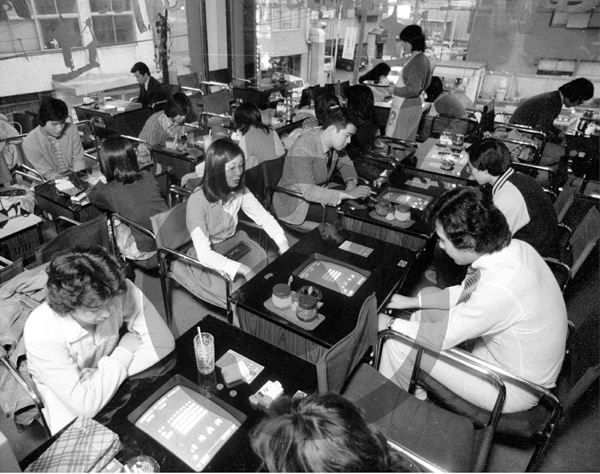
It was so big in Japan that entire arcades opened dedicated to that single game, but it was a huge hit everywhere in the world where games were played. Space Invaders was the start of what would eventually become Japanese dominance of the video game industry.
An ‘Invader House’ in Japan
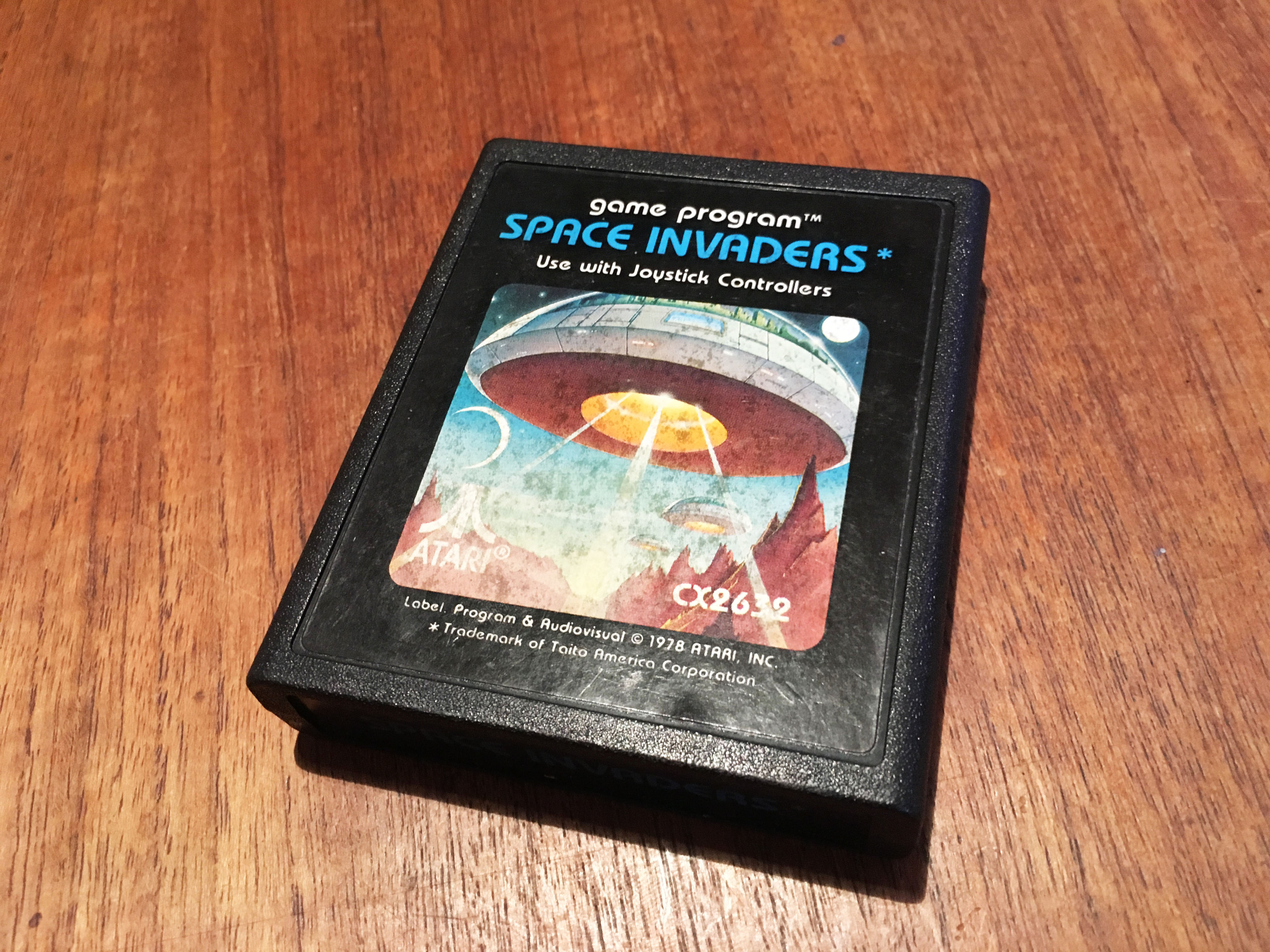
It was ported to the VCS in 1980 in the first ever licensing deal, and became the killer app for the system.
It was a decent port that resembled the arcade game well.
And was packed in with every console, leading sales to increase substantially.
From then on, all the biggest games seemed to come from Japan. Nacmo’s Puck Man (renamed Pac Man for the west) was the next big name, followed by Nintendo’s Donkey Kong.
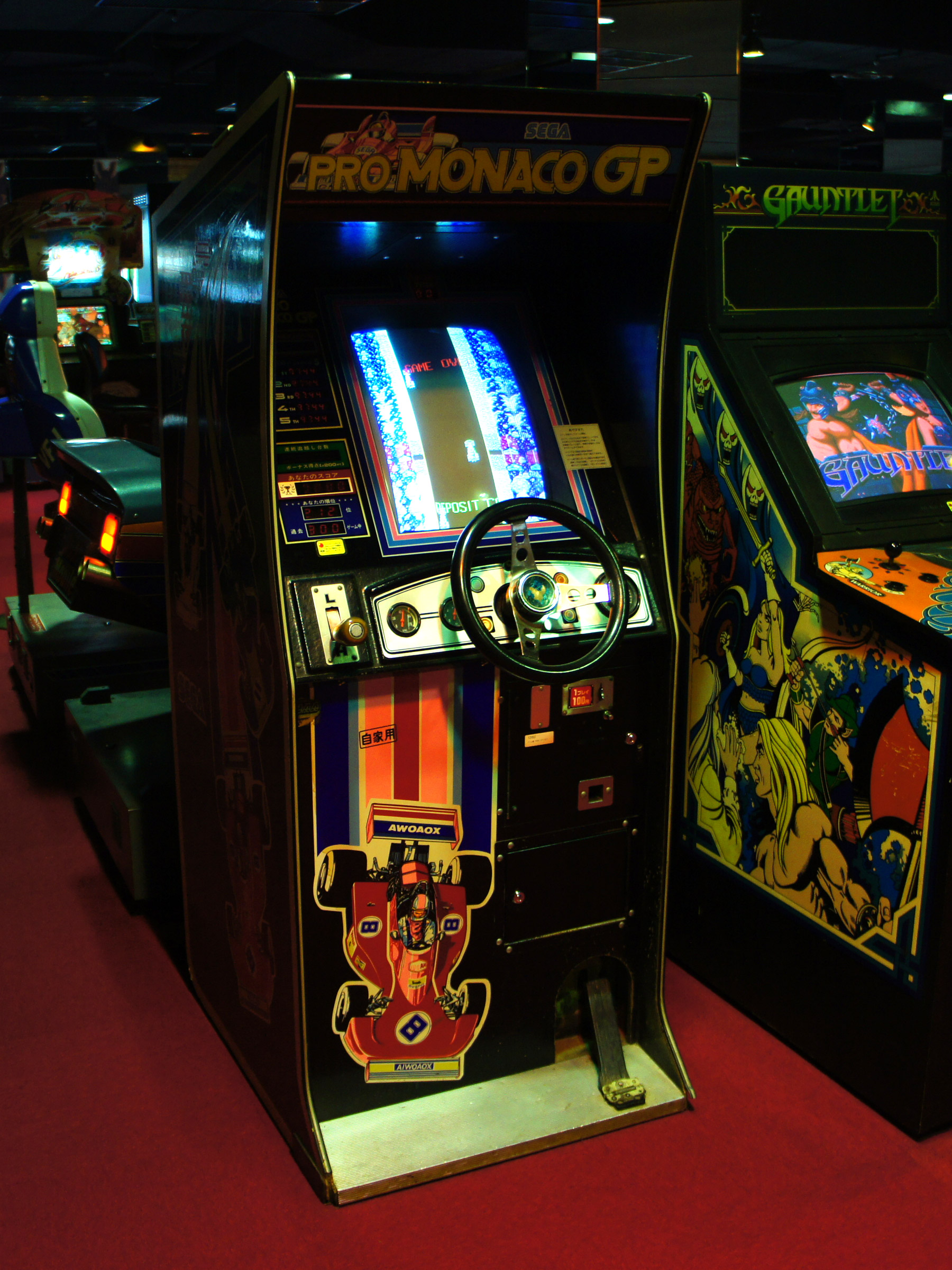
Another small Japanese firm named Sega were also making a name for themselves too, particularly with racing games like Monaco GP and Turbo. Having previously made mechanical arcade games, Sega games were known for fancy custom arcade hardware.
Steering wheels and sit down cabinets were Sega’s calling card.
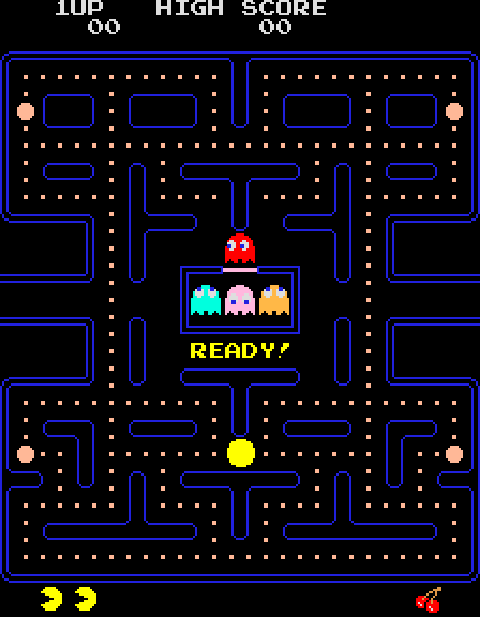
All these Japanese companies’ games made their home debuts on American systems. Pac Man had an infamously bad VCS port which was the start of a downward trajectory for Atari.
Pac Man? Is that you?
Coleco managed to sign up the rights for Donkey Kong and several Sega games for their Colecovision system, but also published them on the VCS. Though the ageing VCS hardware and shoddy ports did not do the games justice.
This was the last time for decades Nintendo and Sega games were officially published on the same platform, though some of Sega’s games turned up on Nintendo platforms in roundabout ways, such as Sunsoft’s publishing of some Sega games on the Famicom.
And thanks to Nintendo taking over Japan and then the world with the Famicom/NES, and then Nintendo or Sony winning every generation since, to this day Japanese consoles have dominated. Though admittedly western software has regained sales dominance worldwide in the last decade.
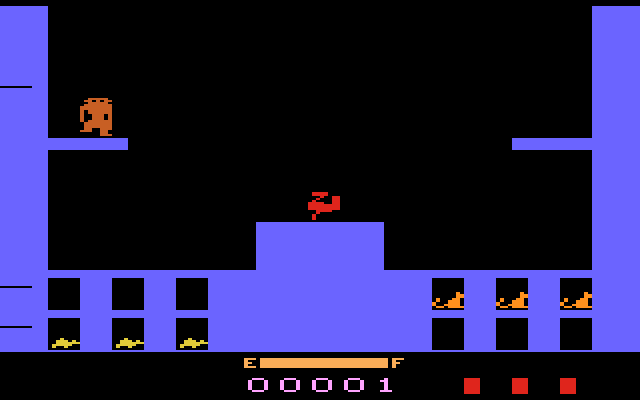
One final interesting note is that due to some licensing deals of the era, a Nintendo game was released on Atari VCS that never saw a release elsewhere. A 1981 Nintendo game called Sky Skipper was never released in arcades following poor reviews in location testing.
But a port by Parker Brothers made its way onto Atari’s system.
The port is not too bad, considering the hardware.
Sky Skipper was never released or ported to any other platform for 35 years, until it was finally released as part of the Arcade Archives series on Nintendo Switch in 2018.
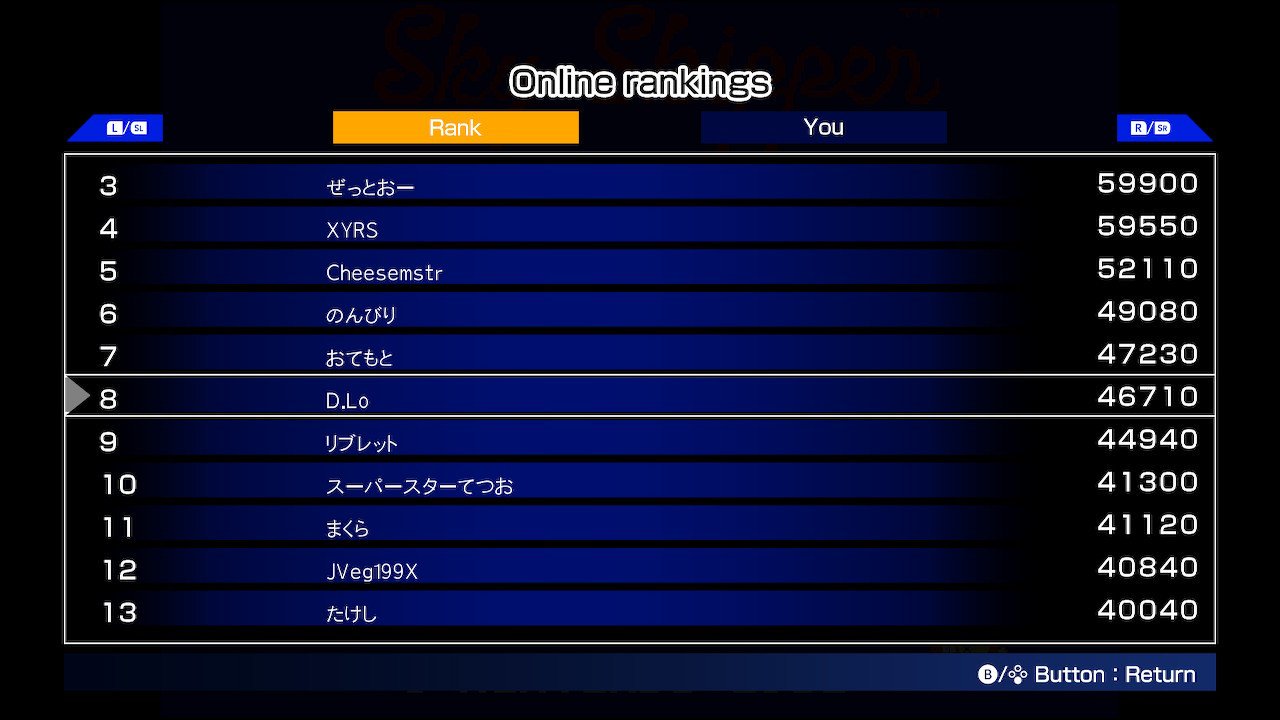
Shortly after release of Sky Skipper on Nintendo Switch, I was #8 in the world on the high score table. I’m sure scores have exploded since then…
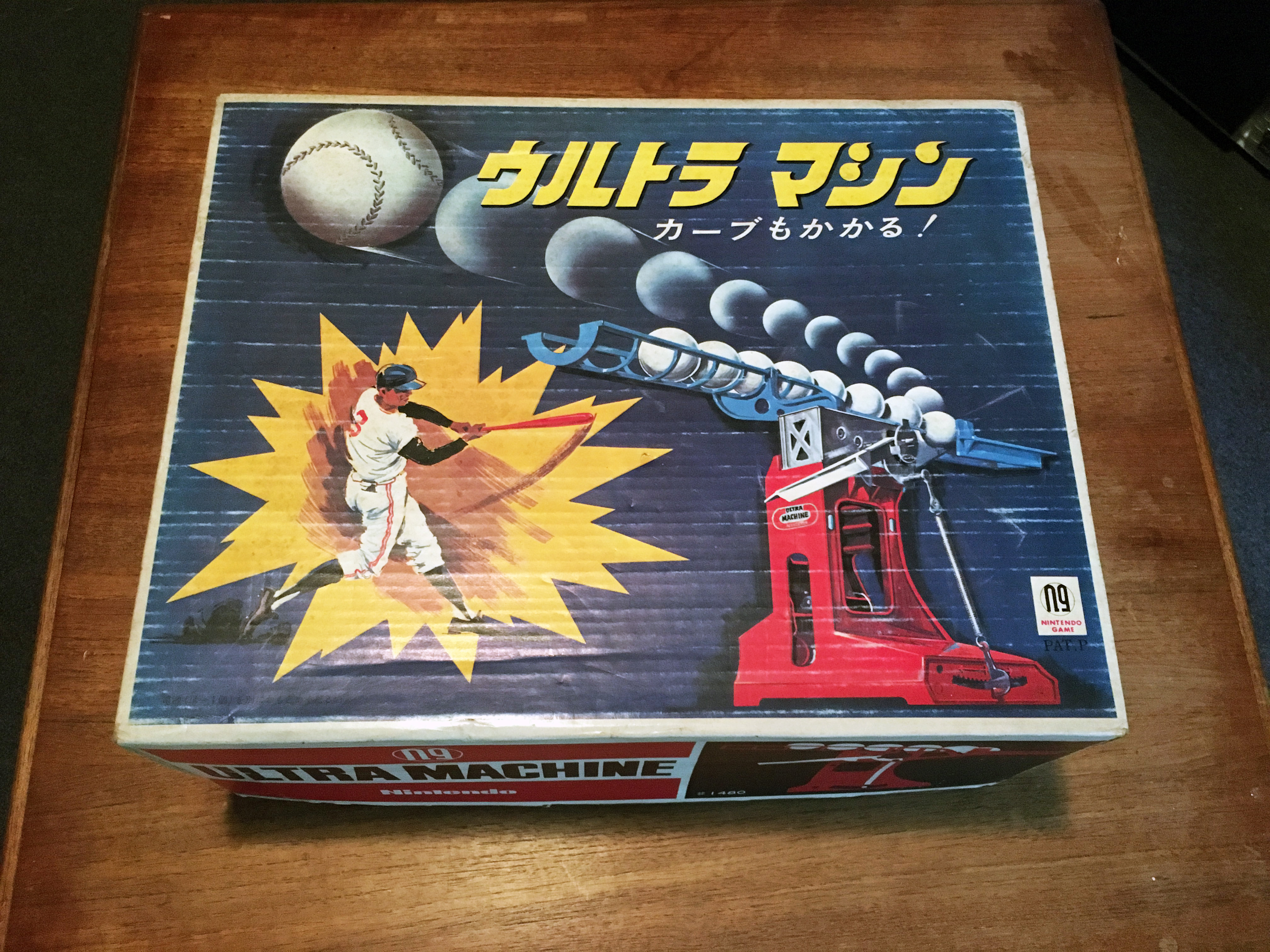
One of the famous Nintendo ‘Ultra’ line toys, the Nintendo 1967 Ultra Machine (ウルトラ マシン) forms part of Nintendo’s transition between card manufacturing to toys in the 60s and 70s.
As may be obvious from the box art, it’s an automatic baseball pitching machine.
It of course comes semi-assembled so as to fit in the box, the packable design and packaging layout is particularly elegant.
Fully assembled, with Nintendo branded bat.
A line up of included plastic balls (with slight shape variations to affect their trajectory) collect in the basket, and fall one by one into position for the flicking mechanism.
Speed selection
Here on the battery compartment is the first ever instance of the modern Nintendo logo appearing on a product. It hasn’t yet got the ‘racetrack’ border, but sits inside a squashed hexagon.
It’s one of those ‘what you see is what you get’ kind of products. The motor doesn’t work in mine but you can manually set a ball to be launched, and it throws the balls quite well.
The Ultra Machine has made several guest appearances in Nintendo video games in the years since, most often in the Warioware series
But more recently in Splatoon 2, where a jury-rigged Ultra Machine serves as a bomb launcher.
In preparation for Nintendo’s return to producing toys made out of cardboard, I thought I should try out a similar item in my vintage Nintendo collection. In 1974 Nintendo entered the paper craft market, with a series of simple cardboard DIY projects known as the Nintendo Paper Model series (ペーパーモデル).
There are dozens of designs available and I personally own around 15.
My favourite is probably the Johnny Walker licensed bus, but most of the houses look quite nice too.
Since I was going to open an item that had been in the packaging for 44 years, I wondered if my niece Emma was interested in helping…
…I took that as a yes.
We started after dinner. Emma chose the French Castle (フランスのお城 – Furansu o-jo) as our project.
In a nice coincidence 城 is one of the first Kanji I was able to recognise thanks to 悪魔城ドラキュラ(Demon Castle Dracula) – the Japanese name for Castlevania!
Here is the card laid out. It is not pop-out and requires some intricate cutting and gluing.
It was here that we realised this was actually much too fiddly for young kids. I had to do many of the cuts with a knife, and assembly was also going to be very fine work. Emma kept drawing while I did most of the grunt work (continuing after Emma’s bedtime), and we glued it together the next day.
The final result: not bad!
The design seems largely based on Château d’Azay-le-Rideau, which is situated on a river.
As such, Emma grabbed some extra paper from her craft supplies and prepared some grounds and a pond, complete with reeds and ducks.
Final result with grounds and pond:
All in all, we had a decent evening/afternoon of fun. But here’s hoping Labo will be easier for kids to be involved at each step!
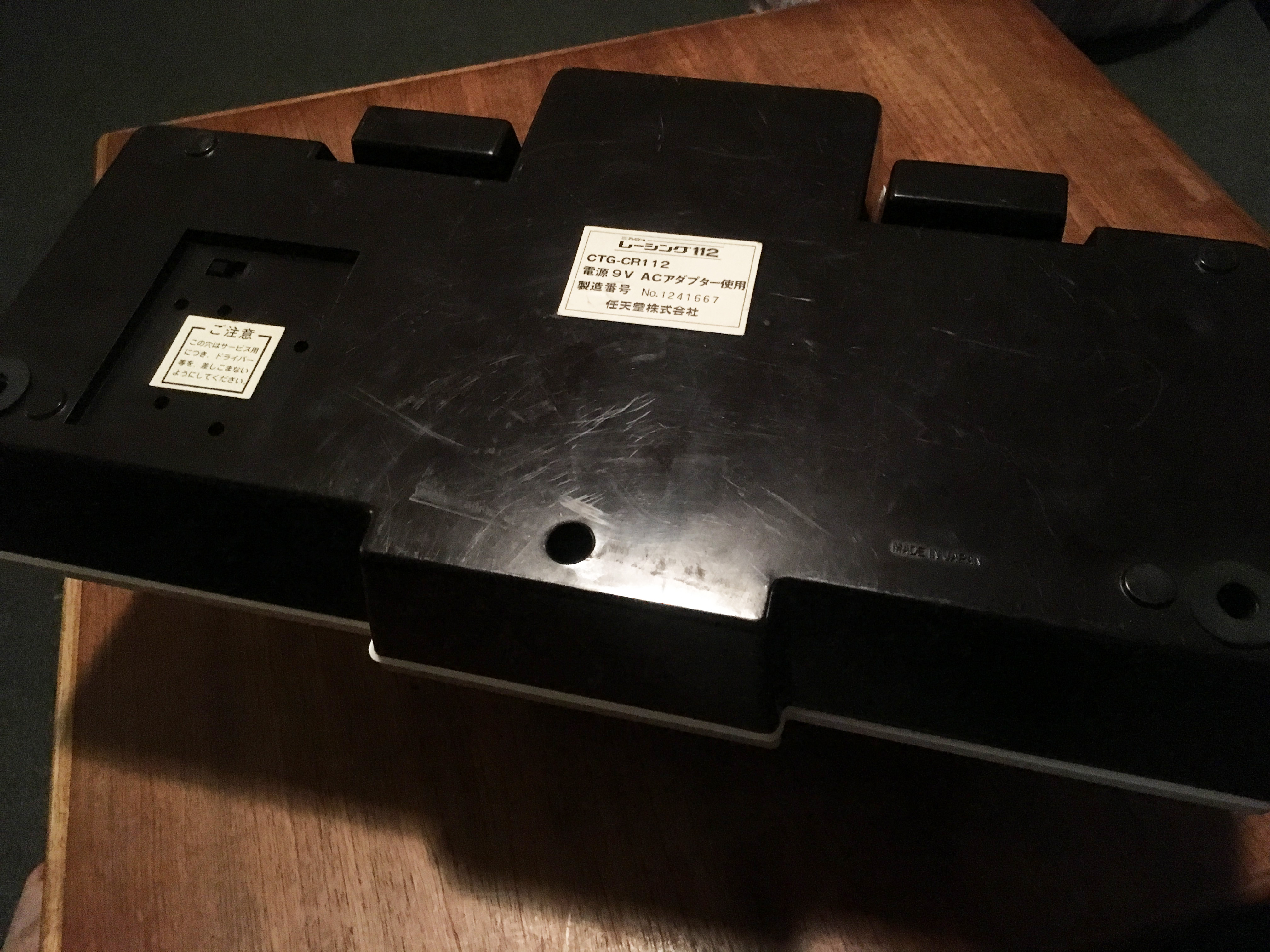
The biggest, and perhaps coolest of the Color-TV game range, 1978’s Nintendo Color-TV Game Racing 112 (カラーテレビゲームレーシング112)
It’s a huge game, due to the realistic wheel and gear stick. The wheel is removable for transport so it can fit in a smaller box, but the box is still huge, here it is next to a Famicom for scale.
The centrepiece of the system is obviously the wheel.
On the right side of the system is the game modes panel. You can select between one or two player modes, track width, speed level, enemy car behaviour (zig zagging or straight lines), if hitting the barriers counts as a crash, road hazards, and if there are one or two opposing cars at once. Down is the easier position for each of the option switches. The red button is reset/start.
And on the left is the two position gear shift.
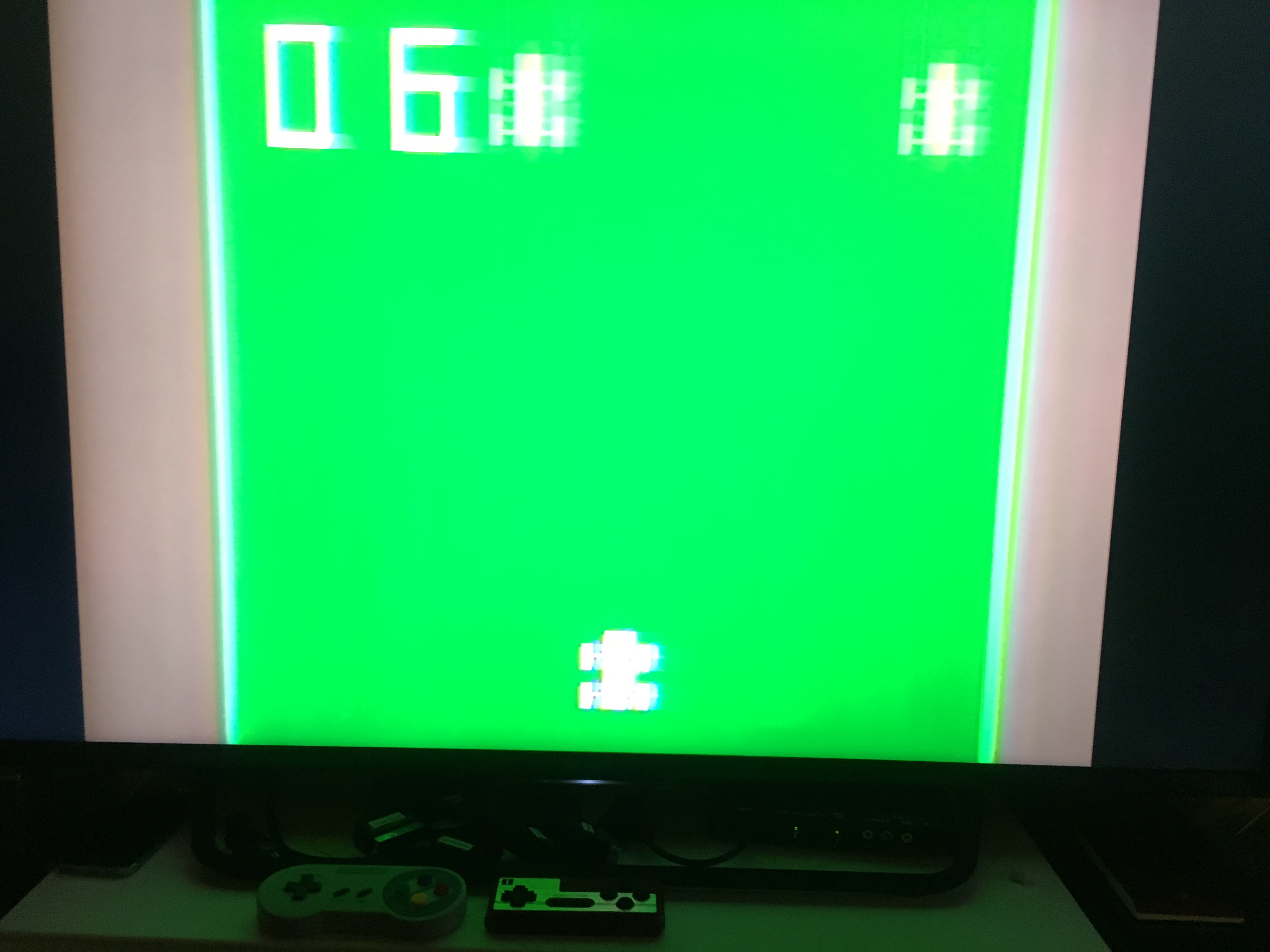
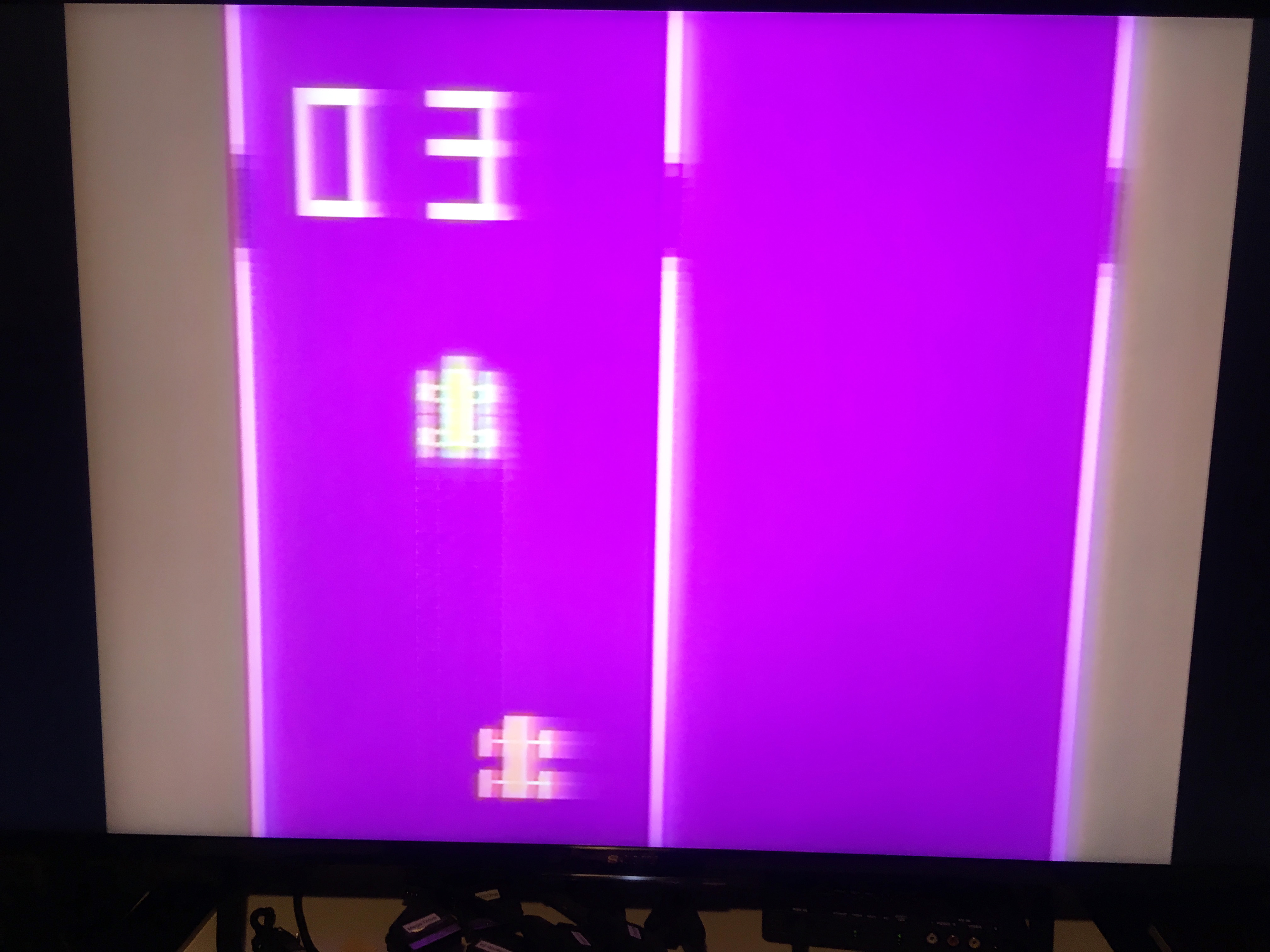
In terms of design, it’s pretty much a straight clone of Taito’s 1974 arcade game Speed Race, which was the first ever game with a scrolling background effect. You view the track from above, and steer left and right to avoid the other cars on the road. It scrolls quite smoothly, the moving effect being provided by trackside ‘stripe’ markers.
Personal side note: I remember playing Speed Race in a local (ish) arcade in the late 80s/early 90s. The arcade, know as ‘Funland’ opened in 1970 as a pinball parlour (even before there were video games) and collected and maintained games from every era over the years. I didn’t appreciate at the time, but that arcade’s maintenance of old machines gave me some early gaming history lessons!
Back to Racing 112. There are two major variations of the one player game, with wide and narrow roads. You must pass the other cars without hitting them, and last as long as you can. The feature switches allow you to adjust speed, number of cars on the road (one or two per screen/wave) and the way the cars move (straight or in patterns).
Just like the paddles in the previous Color TV games, the Steering wheel is an analogue controller, so the steering speed changes based on how far you turn the wheel. The gear shift is digital, and simply allows you to move between two speeds
It’s pretty basic, but compelling, and the basic gameplay formula remained popular well into the mid 80s with the likes of Midway’s Spy Hunter, Konami’s Road Fighter, and Sega’s Action Fighter.
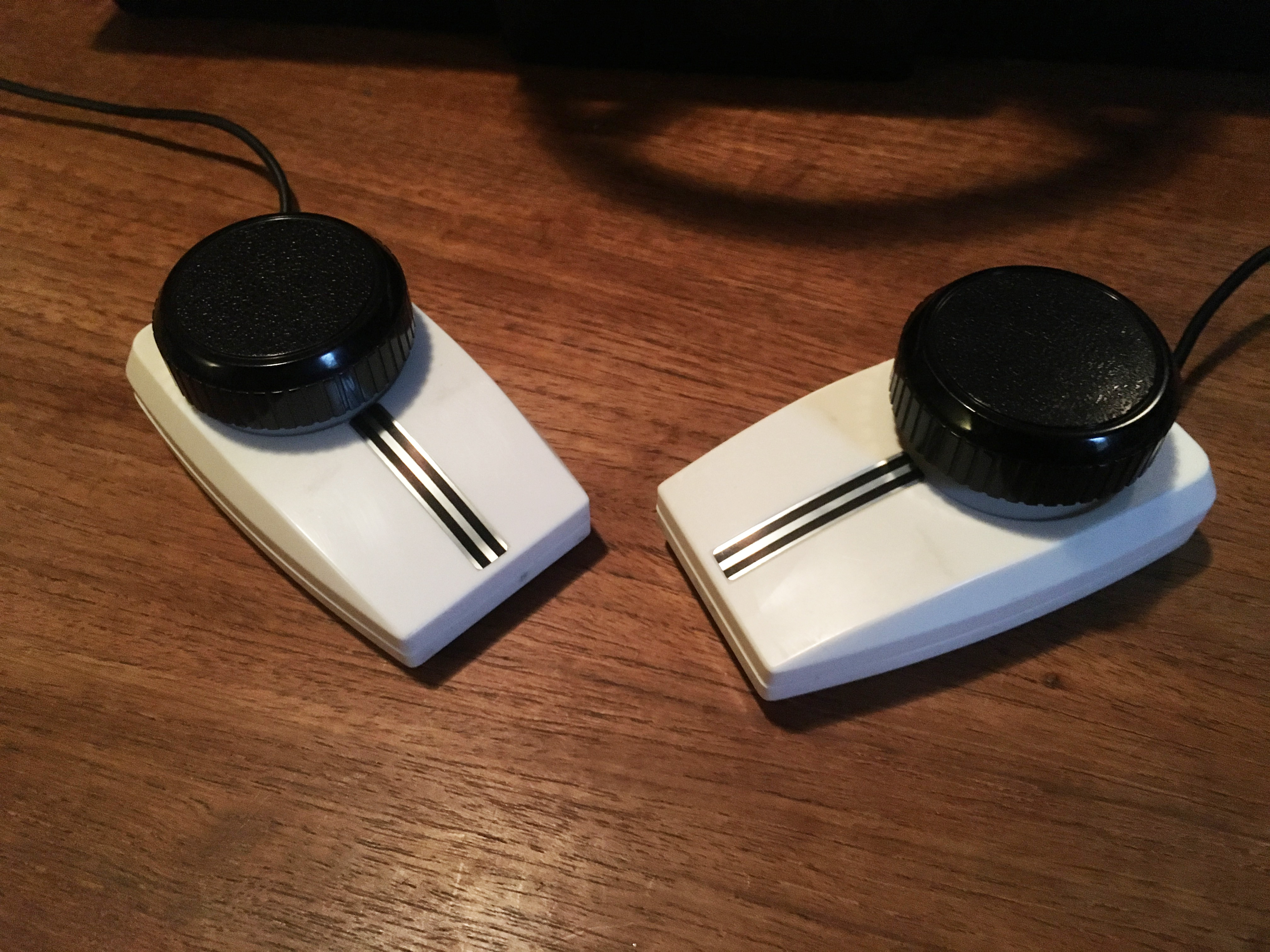
The two player mode doesn’t use the steering wheel, but instead two paddle controllers, which you can pull out from storage slots on the back. You stay at only one speed in two player, but while all game modes remain intact, it’s basically just a head to head for score, as the two players stay on their own track and do not interact with each other.
Paddle storage slots
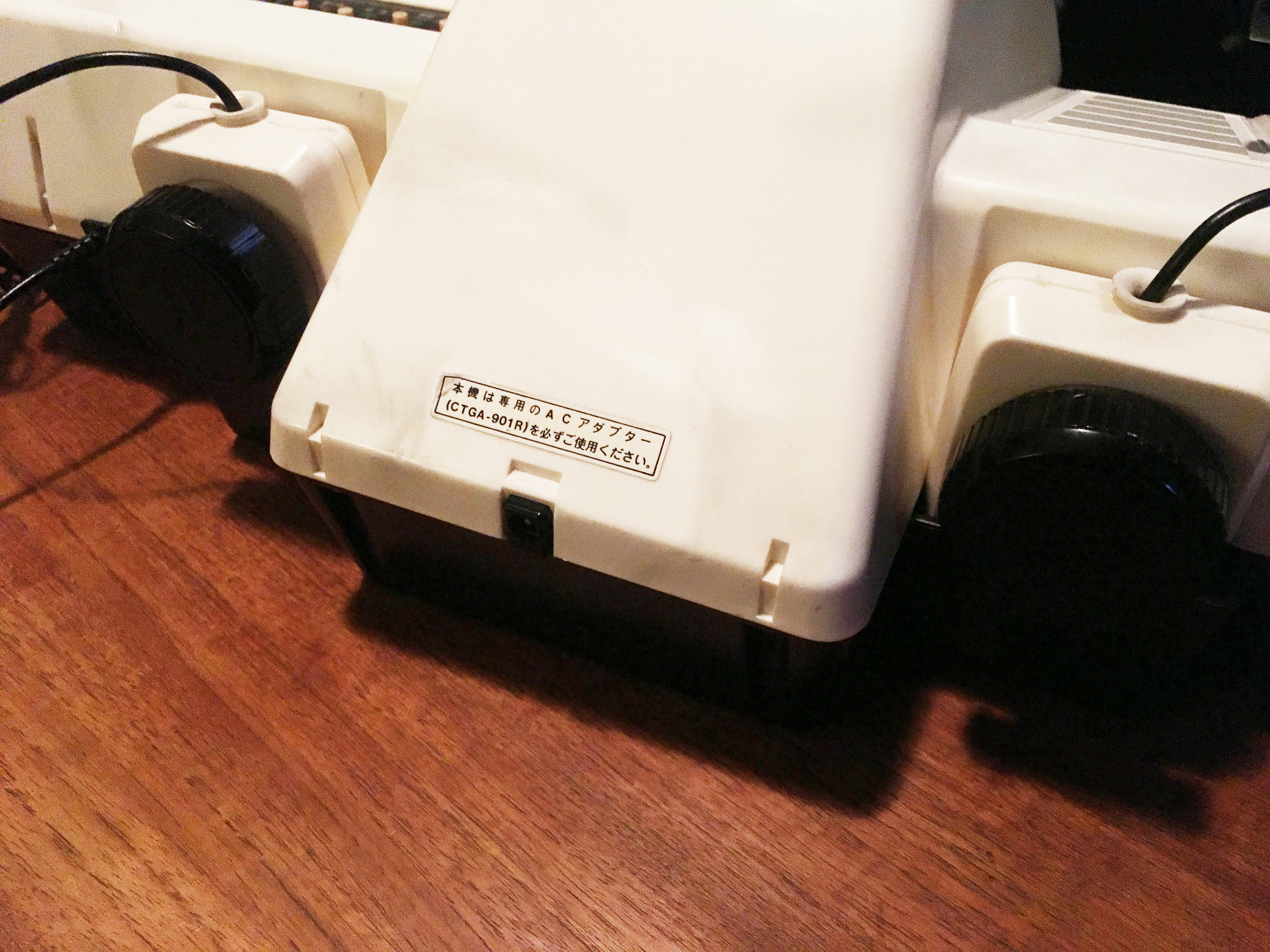
Just like all the other consoles in the CTV series, it connects via a hardwired RF cable and tunes to the same Japanese channels (1/2) as a Famicom, and uses an external 9V power supply which was sold separately and compatible with all models. A Famicom compatible power supply works perfectly too.
The Color-TV Game 6 had six Pong variations, and and the Color-TV Game 15 had either seven or about 20 Pong variations depending how minor a variation counts. Does Racing 112 have one hundred and twelve racing game variations? Technically yes, something like that. In an era where adding a feature like zig zagging cars might mean a whole new release (Super Zig Zag racing Turbo III!) saying there were over 100 game variations isn’t actually false advertising.
The Color-TV line ended the following year with the awesomeBlock Breaker, which was also the first game to feature the Nintendo brand on the casing. But for going all-out, it’s hard to beat the Racing 112.
With my recent acquisition of a Color TV-Game Racing 112, My collection now includes almost every major revision of every Nintendo home console ever released, complete in box.
Wii U
Wii
Gamecube
Nintendo 64
Virtual Boy (I’m counting it as a console, since it is really not portable)
A small confession: My Wii U is not a Japanese model.
There were a few more minor revisions of the consoles along the way – FF logo/non FF logo Famicom, output changes, different coloured consoles of various sorts (even shapes like the Pikachu N64), but these are all the major Japanese revisions. The Wii Mini revision was not released in Japan.
There’s one major item missing – the Computer TV-Game.I’ll almost certainly never get one of these. This ‘console’ is incredibly rare, insanely expensive, and its questionable if it was even a consumer product since it was literally an arcade game with TV out. It sold for ¥48,000 in 1980. For comparison the Color TV Game Racing 112 was selling for ¥5000 in 1980, and the Famicom launched in 1983 for ¥14,800.
The Sega set is on its way, but will take a few more years I think. So many revisions…
Released one week after the Color TV-Game 6, the Color TV-Game 15 was the ‘deluxe’ model. Or perhaps the 70s equivalent of the NES ‘Action Set’.
It was apparently designed to be the more profitable of the two consoles, offering more features for ¥15,000, vs ¥9,800 for the Color TV-Game 6. It dropped to half the price eventually, and outlived the CTVG6, as can be seen from the updated price listing in the later Color TV-Game Block Kuzushi manual.
It’s not too much larger, but has a more stylised design and detachable controllers for a more comfortable playing session. The first model was made of orange plastic that matched the orange CTVG6. This is the second model, which is a reddish orange colour.
The controller cords are the standard Japanese controller cord length (short) so you still needed to sit near the console to play. The controllers are pretty decent paddle controllers, definitely higher quality dials than the original white version of the CTV6.
You can still power the console by batteries or a standard 9V power supply.
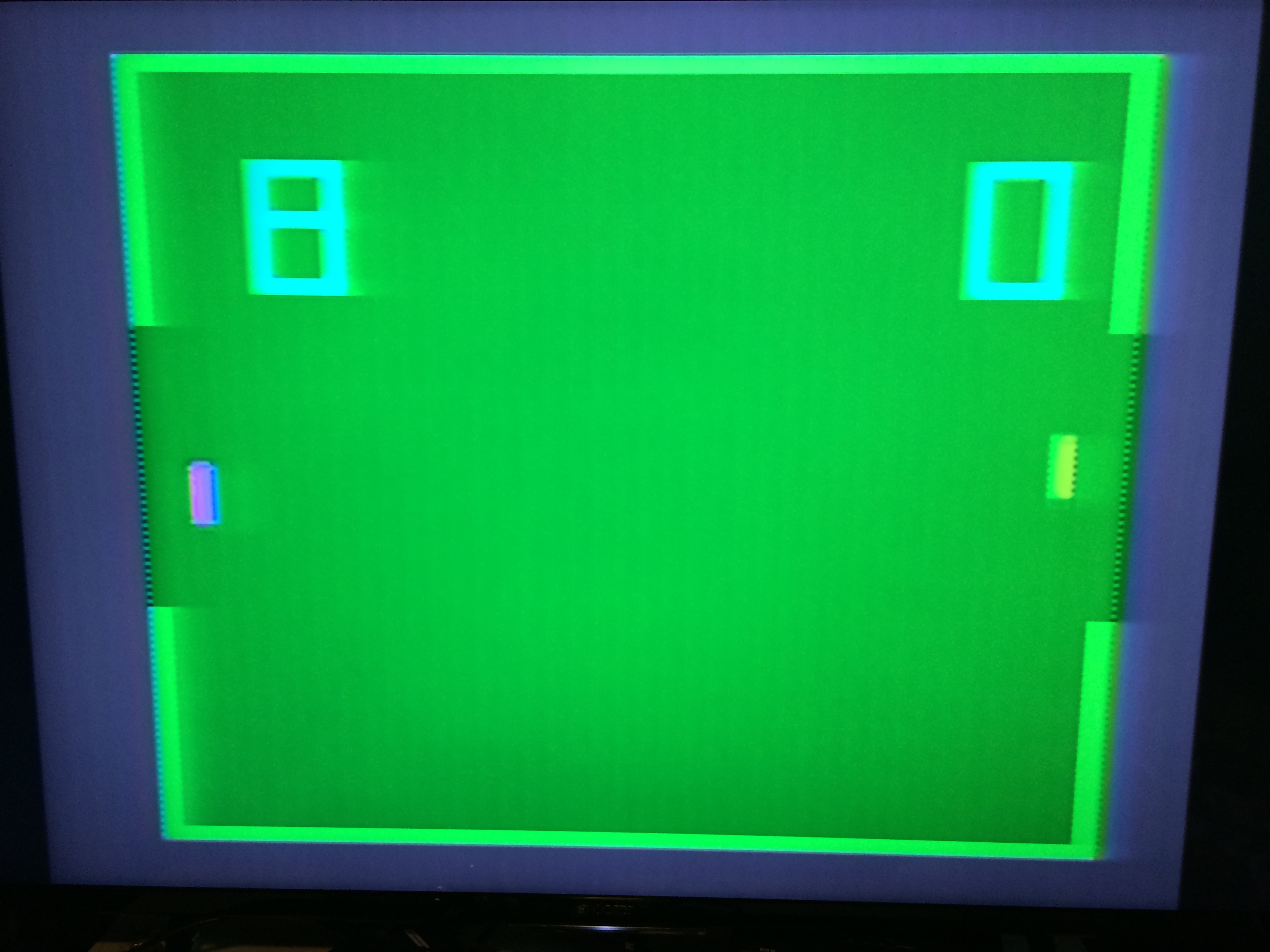
The 15 in the name is something of a misnomer. There are really about seven Pong variations, adding various board options, along with additional paddle number, size and speed changes. There are far more that 15 game types if you count every possible variation, so I’m not sure why they drew the line at 15.
Here’s a look at the basic board variations:
It doesn’t quite have the cachet of the ‘first Nintendo’ CTVG6, and isn’t anywhere near as cool as the beautiful Block Kuzushi. But it’s still a nicely engineered Pong game which is more comfortable to play and has more game options, so can be a fun retro afternoon sometime.
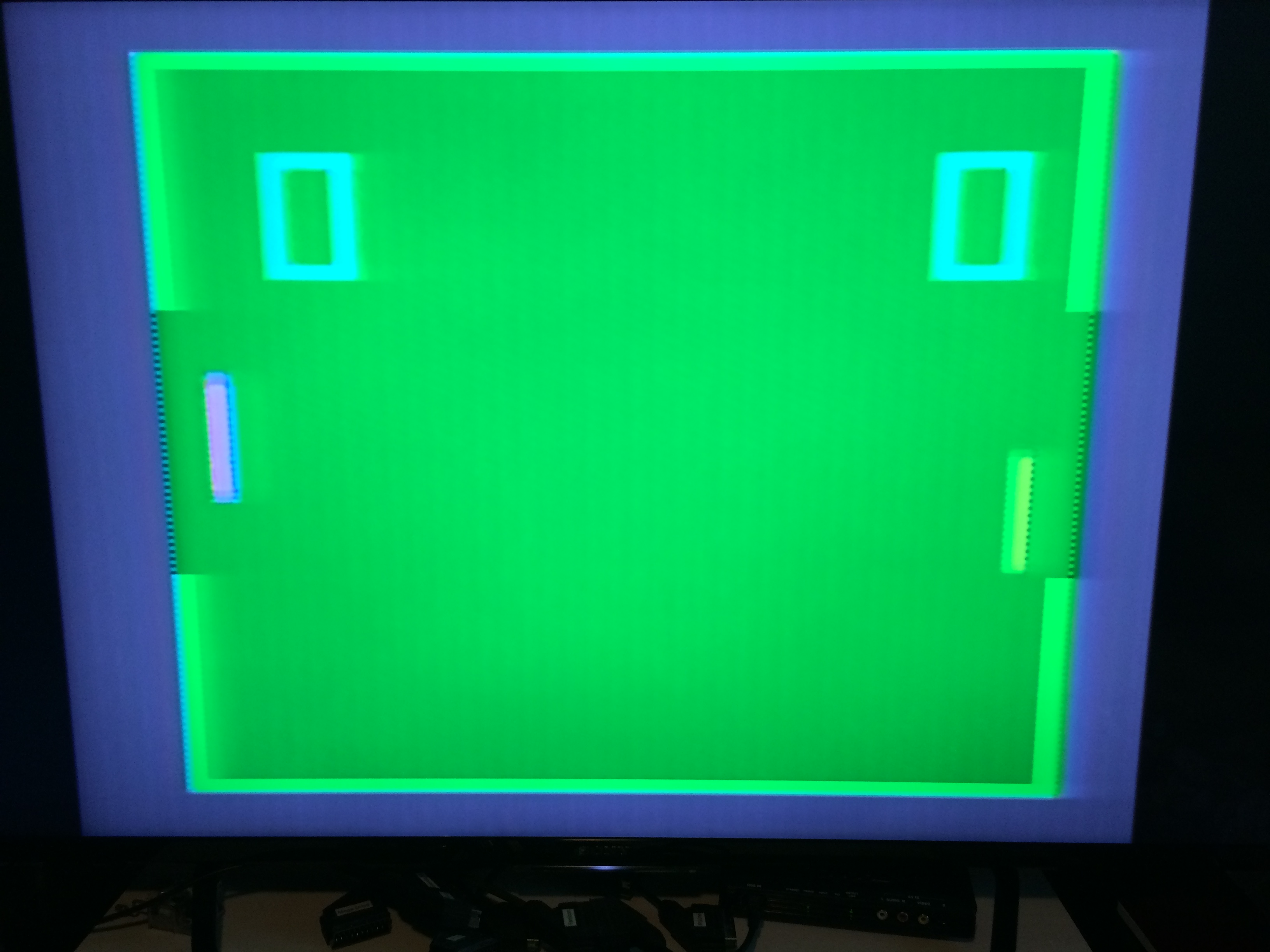
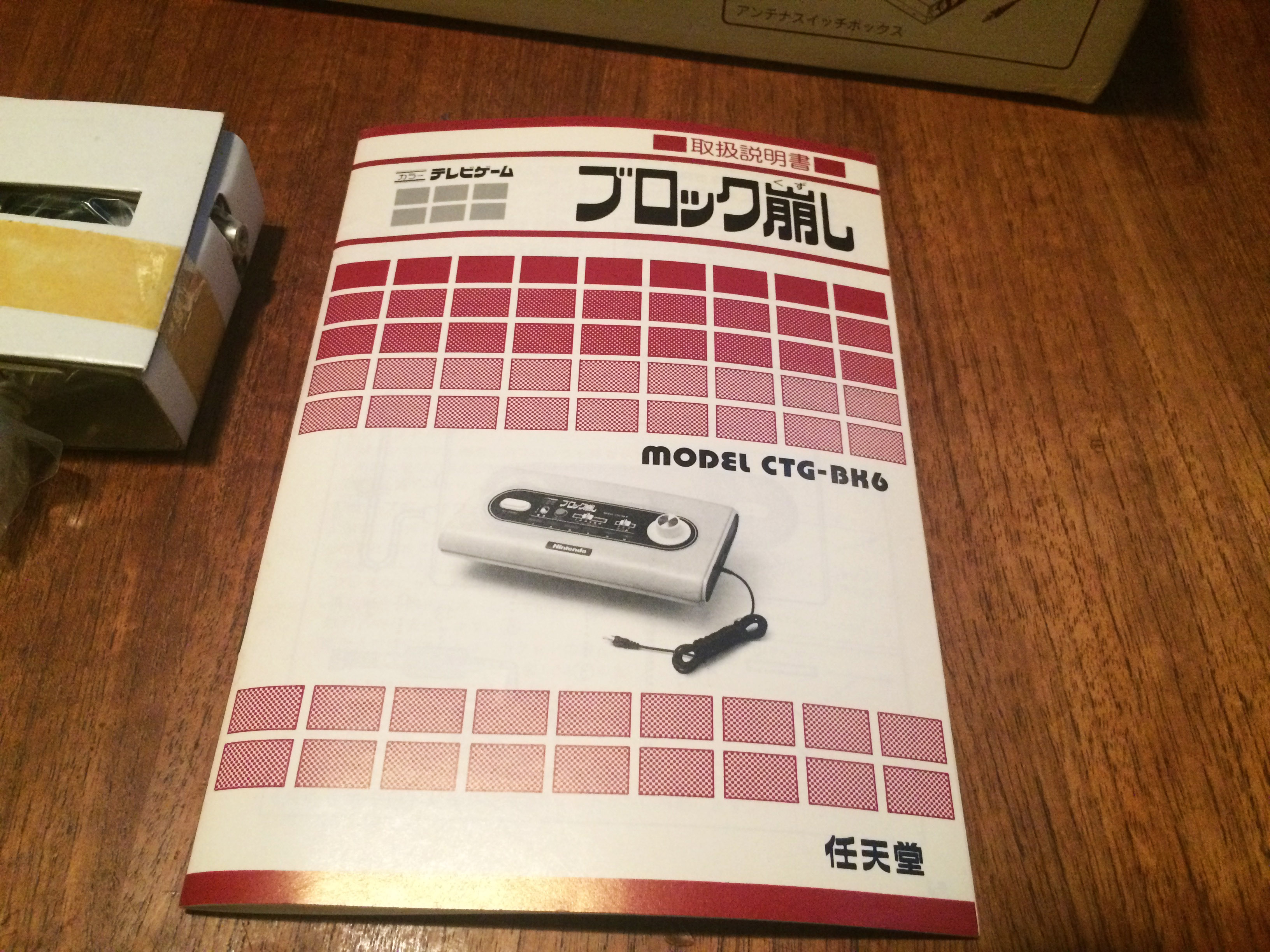
The Color TV-Game 6 was Nintendo’s first console. But there were four other single game Nintendo consoles before the Famicom. This is the second last one, the Nintendo Color TV-Game Block Kuzushi (Block Breaker). It plays several variations of Breakout.
Unbelievably, despite not being advertised as such, the one I bought was actually brand new.
It’s pretty much the most 70s looking device ever made.
It’s a really great looking device, and that may have to do with the fact it was designed by a new Nintendo recruit – a freshly graduated industrial designer named Shigeru Miyamoto! Block Kuzushi and Color TV-Game Racing were Miyamoto’s first two jobs at Nintendo.
Was the Color TV-Game Block Breaker designed here? (Most likely not as this was their 60s headquarters).
Nintendo Color TV-Game Block Kuzushi is also the first 100% Nintendo console, since Color TV-Game 6, 15 and Racing were co-developed with Mitsubishi. On a related point, it’s also the first Nintendo video game with the Nintendo name displayed prominently on the console.
The top of the device allows selection of the game, with a handy picture of each Breakout arrangement.
In order from 1-6 they are: Standard Block Kuzushi, Easy Block Kuzushi (with a line missing), Safe Block Kuzushi (with a safety net on the bottom of the screen), Block Through (a time based score game where the ball goes right through the blocks), Block Flash (where you have to get the middle blocks hitting as few of the others as possible), and Block Kill (a combination of Block Through and Block Flash, with a new block arrangement).
Game explanations in the manual.
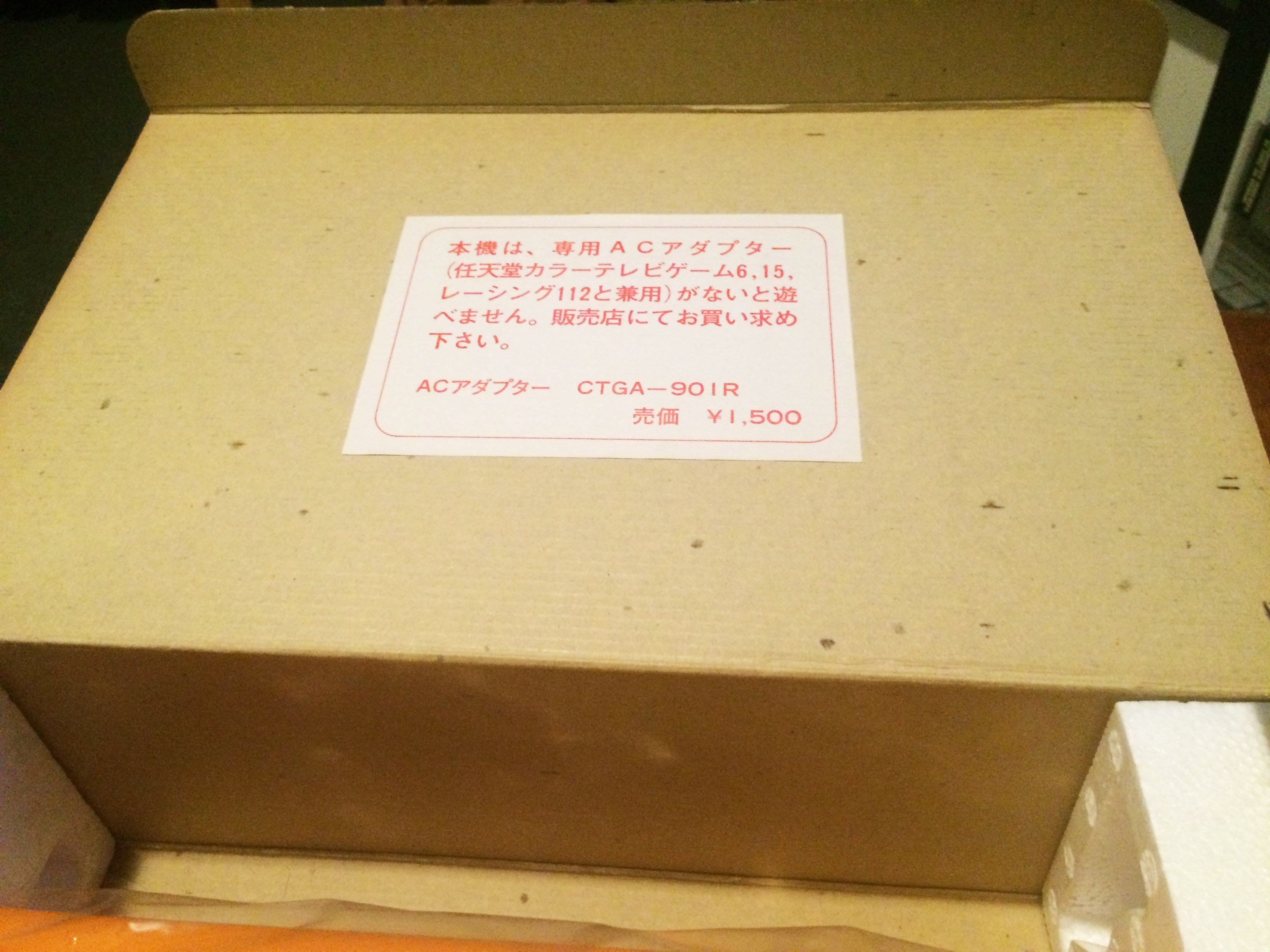
It’s powered by an external adapter, available separately for 1500 Yen. The same adapter powered all of the Color TV Game series consoles, so you only needed to buy one if you didn’t already have one (sounds familiar, New Nintendo 3DS owners?). It has the same specs as the Famicom power adapter, so can be powered anywhere with a local Mega Drive adaptor.
The adapter plugs into the right side of the console, which is also where the RF output cable is attached.
Pricing for the previous models in the manual, with price update stickers! Looks like the CTV Game 6 was discontinued between this manual’s printing and release.
Overall it’s a really cool device, and the breakout games are very tightly designed and fun. CTV 6 and 15 are kind of basic pong clones, but this one is a really classy product.
Do you think Nintendo started in home video gaming with the Famicom? The Game & Watch?
It actually all started in 1977 with this, the Color-TV Game 6.
Pre-dating the Famicom by six years, The Color-TV Game 6 was a Pong clone, offering six variations on the basic light tennis formula. Above is the first edition, CTG-6S, which came in a creamy white colour. Subsequent releases were orange, below right is the most common variant, the CTV-6V.
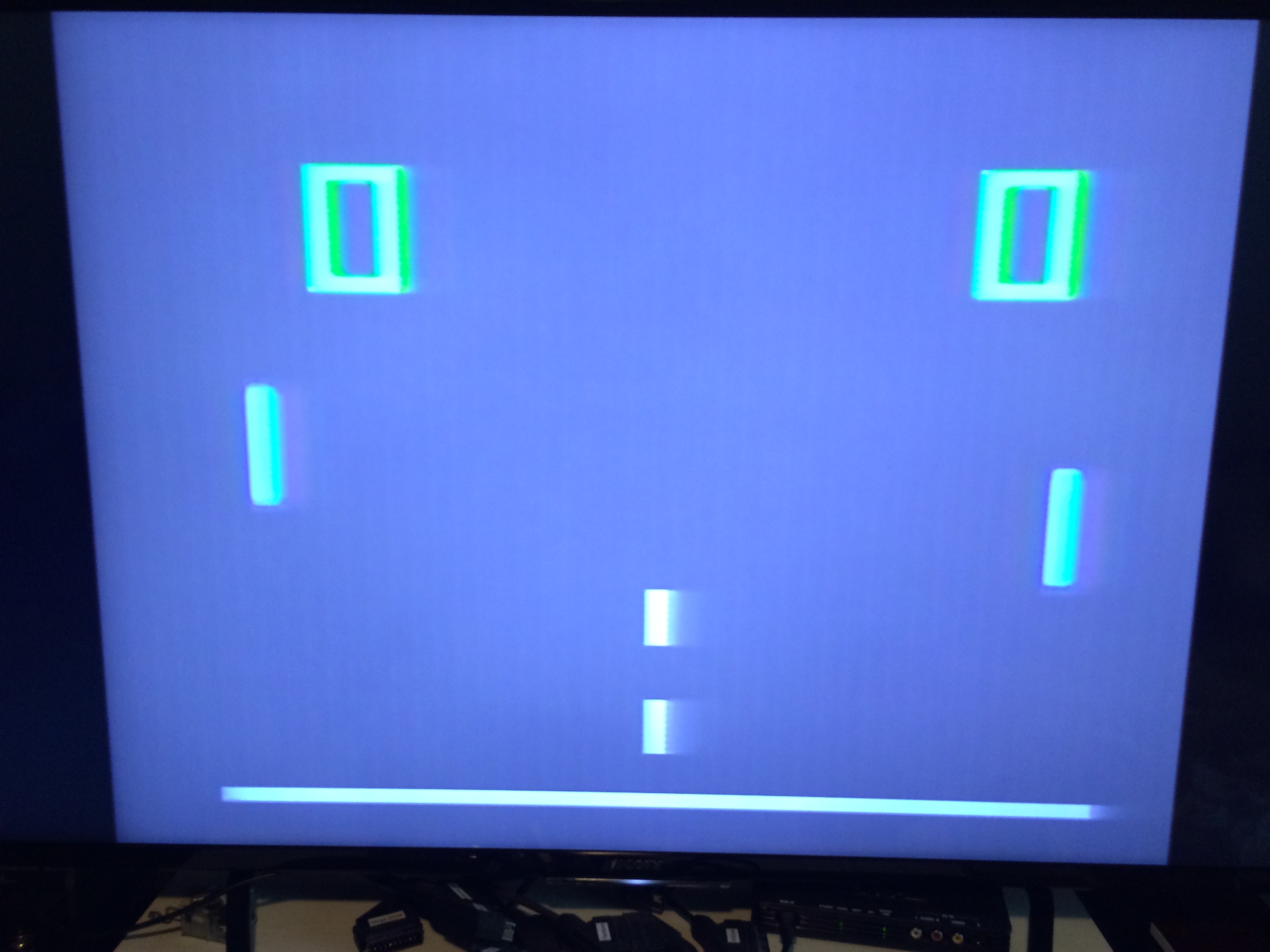
You can play a classic Pong type game, plus variations with half sized paddles, and a mode with four paddles.
It runs off six C batteries, and connects via RF as per all consoles of the era.
The orange re-releases also added the ability to use an external power adapter.
The orange ones also had improved dials. They rotate more smoothly, have less ‘give’ before they star registering, and stop rotating when your paddle is off the screen. CTG-6S dials just keep rotating, and your paddle comes back from the top of the screen after moving off the bottom, and vice versa.
The manuals of these two variants.
It’s pretty primitive but works perfectly 38 years later. The simple circuitry is pretty sturdy and will likely outlast most consoles easily.
It was followed up by the Color TV-Game 15 which featured more pong versions, Color TV-Game Racing which played a car game, Color TV-Game Block Breaker which was a Breakout clone, the Computer TV-Game which played Othello, and finally the Family Computer.





















 Nintendo Sega Japan!