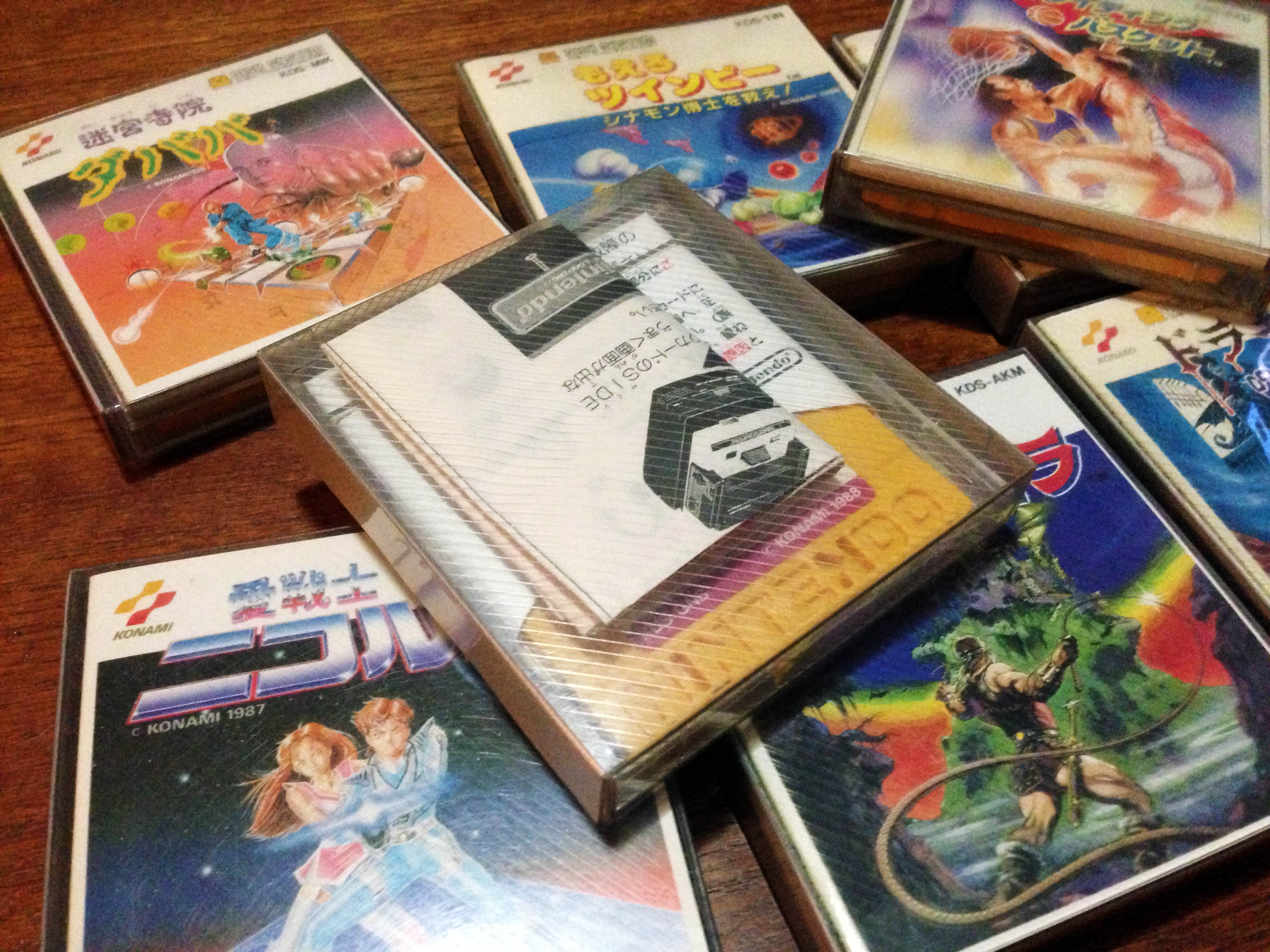
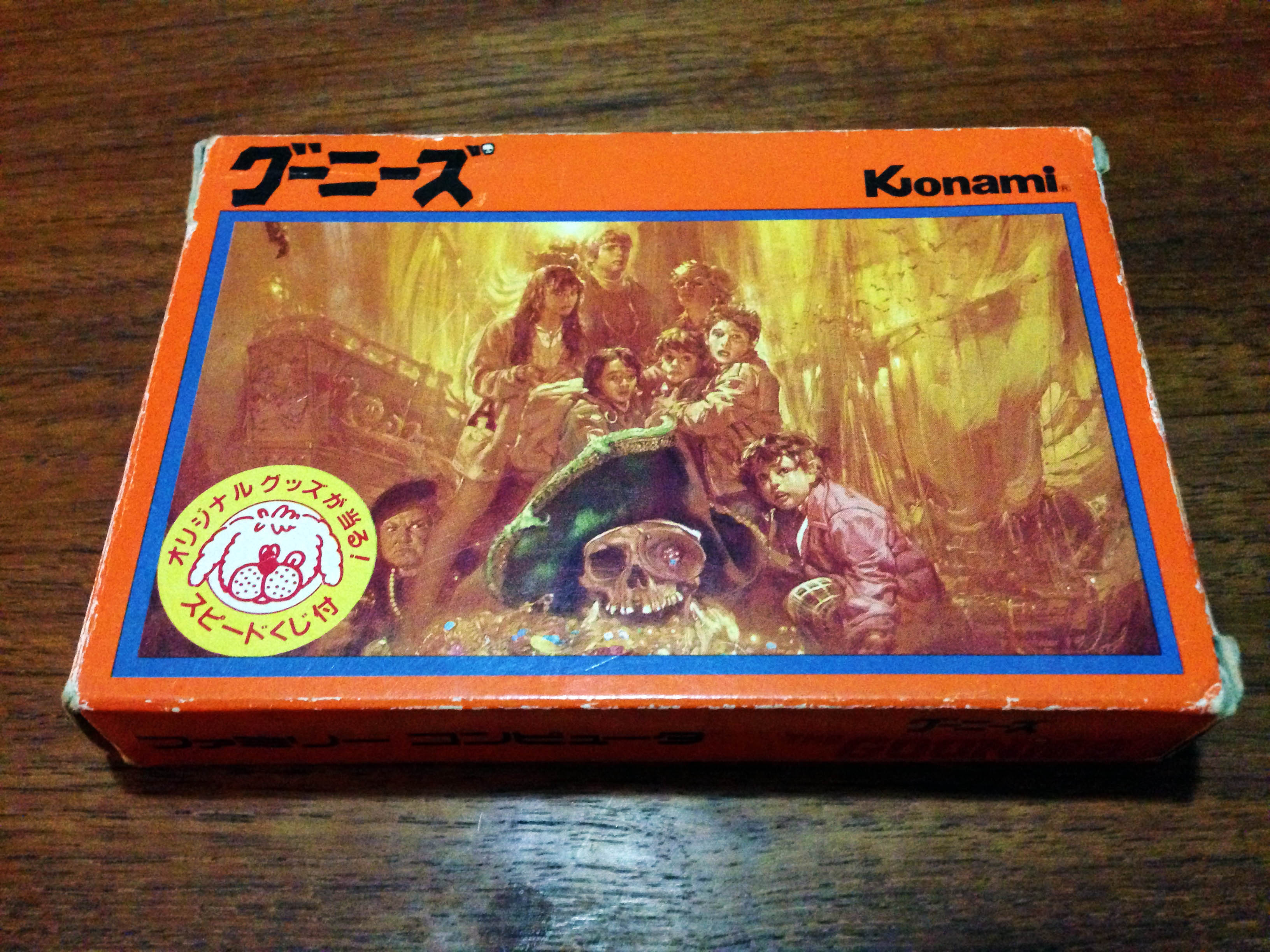
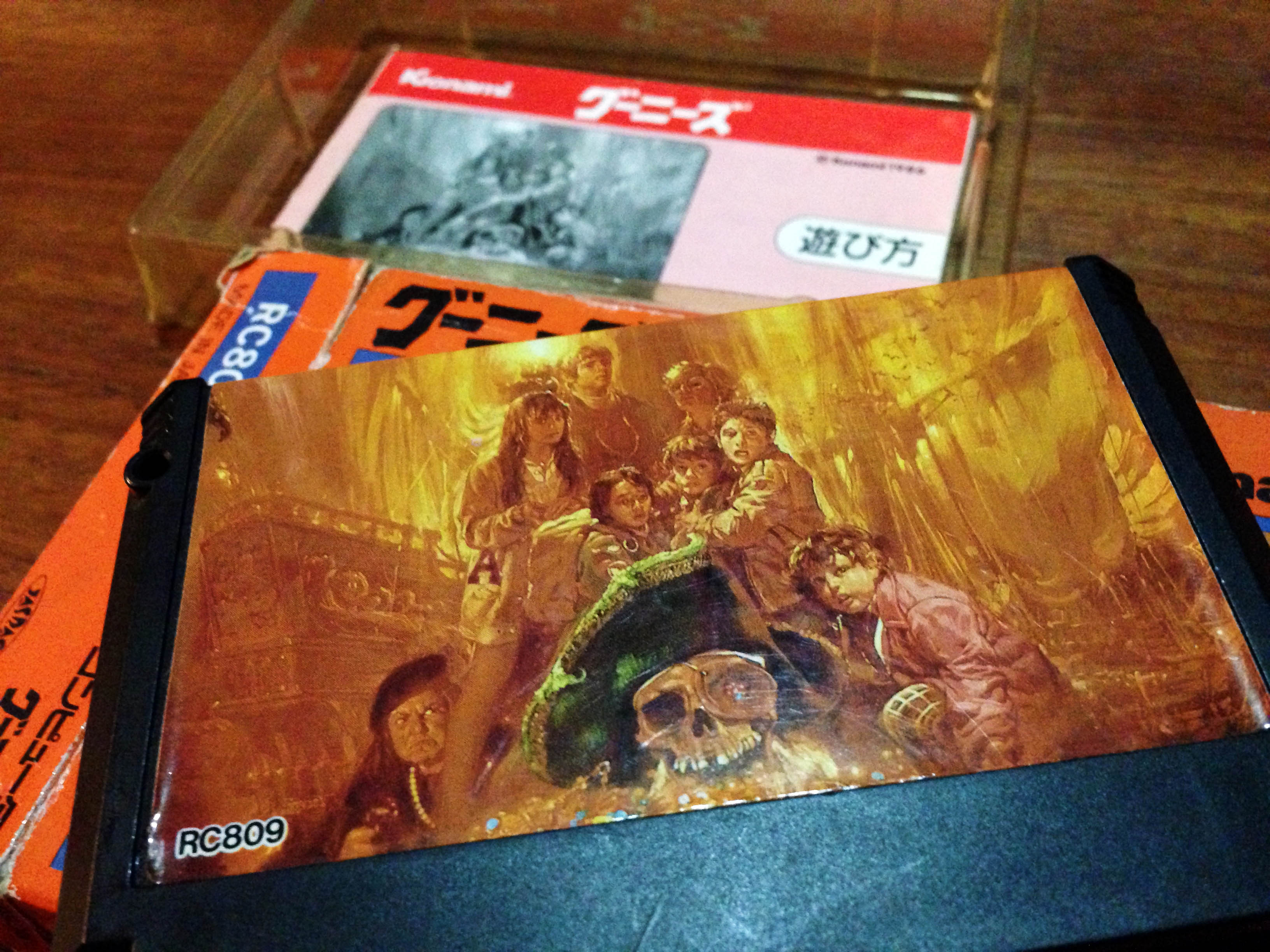
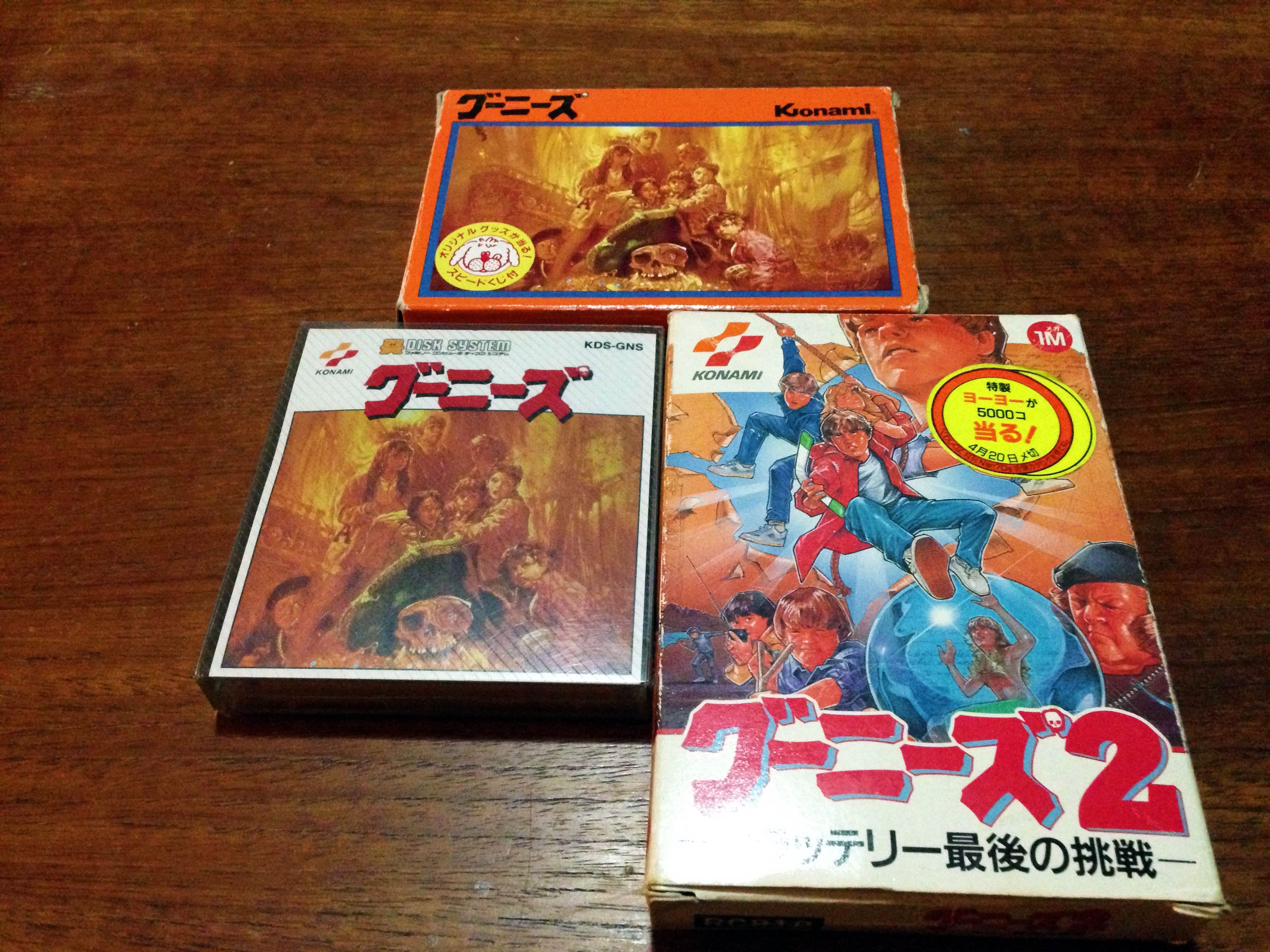
Konami’s first Famicom line was basically a direct copy of the Nintendo template, except with consistent orange colouring. There were seven games in the series, and this is the complete set Road Fighter, Antarctic Adventue, Hyper Sports, Twinbee, Hyper Olympic, Yie Air Kung Fu, and Goonies.Goonies was somewhat of a transition game – it skips the uniform ‘FAMILY COMPUTER’ branded sides of the preceding six releases and started the short-lived ‘puppy face’ icon period. The next Konami release was Gradius, which is I believe the final Konami release to feature the old 70s style logo.The next evolution is shown here in King Kong 2 – which maintained the size of Gradius and introduced the new Konami logo.Contra is an early example of the final evolution, with the artwork framed by a bright colour which covered the rest of the box, and the Konami logo on a white background in the top left corner. Almost every Konami game for the rest of the Famicom generation followed this final template.
Alex Kidd – Sega’s most direct answer to the popularity of Mario
Much has been written about Sega’s history of creating ‘answers’ to Nintendo’s ideas. The reality is almost everyone in the space has copied Nintendo to some extent and in some capacity, it’s just that Sega was the closest similar competitor for longer than anyone else, so the examples pile up higher.
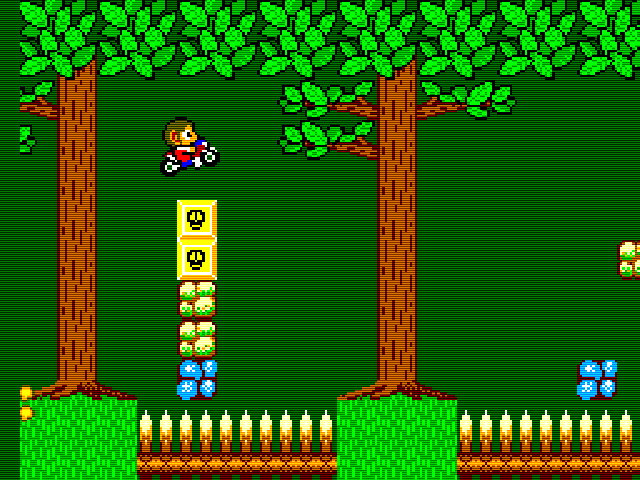
Which brings us to Alex Kidd in Miracle World, released a year into the life of the Mark III, and in the wake of Super Mario Bros. explosive popularity. Miracle World is such a straightforward answer to Super Mario Bros. nobody ever tried to deny it.
One of these things is a lot like the other…
Starring a red-jumpsuited monkey boy clearly designed to evoke ‘young Mario’
It’s quite typical of the platfomers released on Super Mario’s wake.
It has the destroyable blocks with money and power ups in them, plus land based platforming and swimming levels. Its efforts to differentiate itself from Mario include vertically scrolling levels and stores in which to buy power-ups.
It also has its own combat method (punching), and jump and attack are reversed from Mario’s rapidly-growing standard layout. You get used to it, and it can actually be advantageous depending on how you hold the pad, but it’s jarring to start with. In a later western release of the game, the buttons are reversed to the Mario standard in a full admission of defeat.
Jumps are a bit floaty, and movement a bit mushy overall, but the controls are decent. Moving carefully you can make your way through the game fairly easily, punching away at enemies with relative success.
It seems likely the game was developed by the same team as Ghost House, since the controls and graphics, and even main character, are quite similar.
What Alex Kidd has going for it are a variety of environments and gameplay styles. As mentioned, just like Mario there are swimming levels, but Alex has a few vehicles available as well. The motorcycle is an optional power-up, purchasable using the in-game cash at stores in some levels. It works somewhat like the skateboard in Wonder Boy, in that you career headfirst at a super fast pace until you hit a hard object and the bike evaporates. There’s also the Ballon Fight like helicopter levels and a water based motorcycle equivalent in the speedboat.
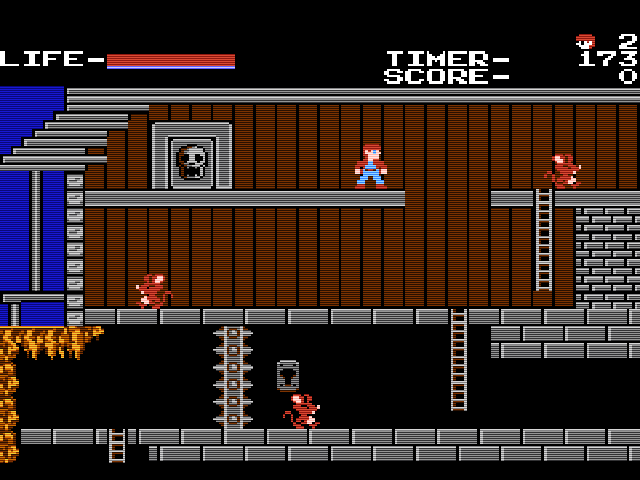
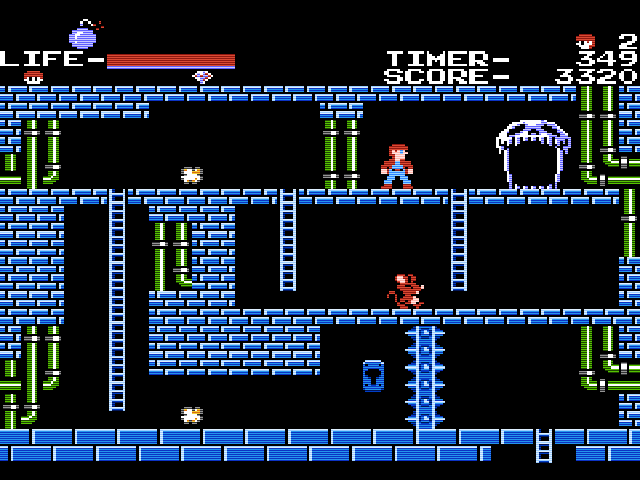
While the game is otherwise mostly a standard meandering platformer with fairly mediocre level design, some later levels resemble action puzzlers, such as Utopia’s Montezuma’s Revenge, or Konami’s Goonies, except much more basic. Overall it’s fairly boring from a gameplay perspective, even with the gimmicks.
Boss battles are the worst feature of the game. Instead of any kind of action, in most cases the battles are largely decided by a paper scissors rock game. It’s like you leave action-game land and enter a casino where your opponent can view your moves. Following the ‘Janken’ match, most bosses then attack physically in a limited fashion, usually by throwing their disembodied head around the screen in a random pattern.
It’s a pretty good game graphically for 1986. Nicely dawn characters with lots of detail, and colourful worlds to explore.
The music isn’t that great. While the tunes are catchy, they’re no Mario theme, and like SMB there are only a few pieces that repeat throughout the adventure. The Mark III has worse sound hardware than the Famicom, and unfortunately there’s no FM soundtrack.
Alex Kidd’s first adventure also unfortunately remains his best. A bunch of what were essentially spin-offs followed, none of which were much good. The only actual sequel was a 1988 Mega Drive launch game, known as The Enchanted Castle in the west, and while it’s easily the second best ‘Kidd, it’s pretty janky.
Alex Kidd in Miracle World didn’t set the world on fire in Japan, but is a fondly remembered game in many PAL territories due to it being built-in game of the majority of Master System consoles released. But while the original game isn’t exactly a classic, it’s surprising Sega never did a revival.
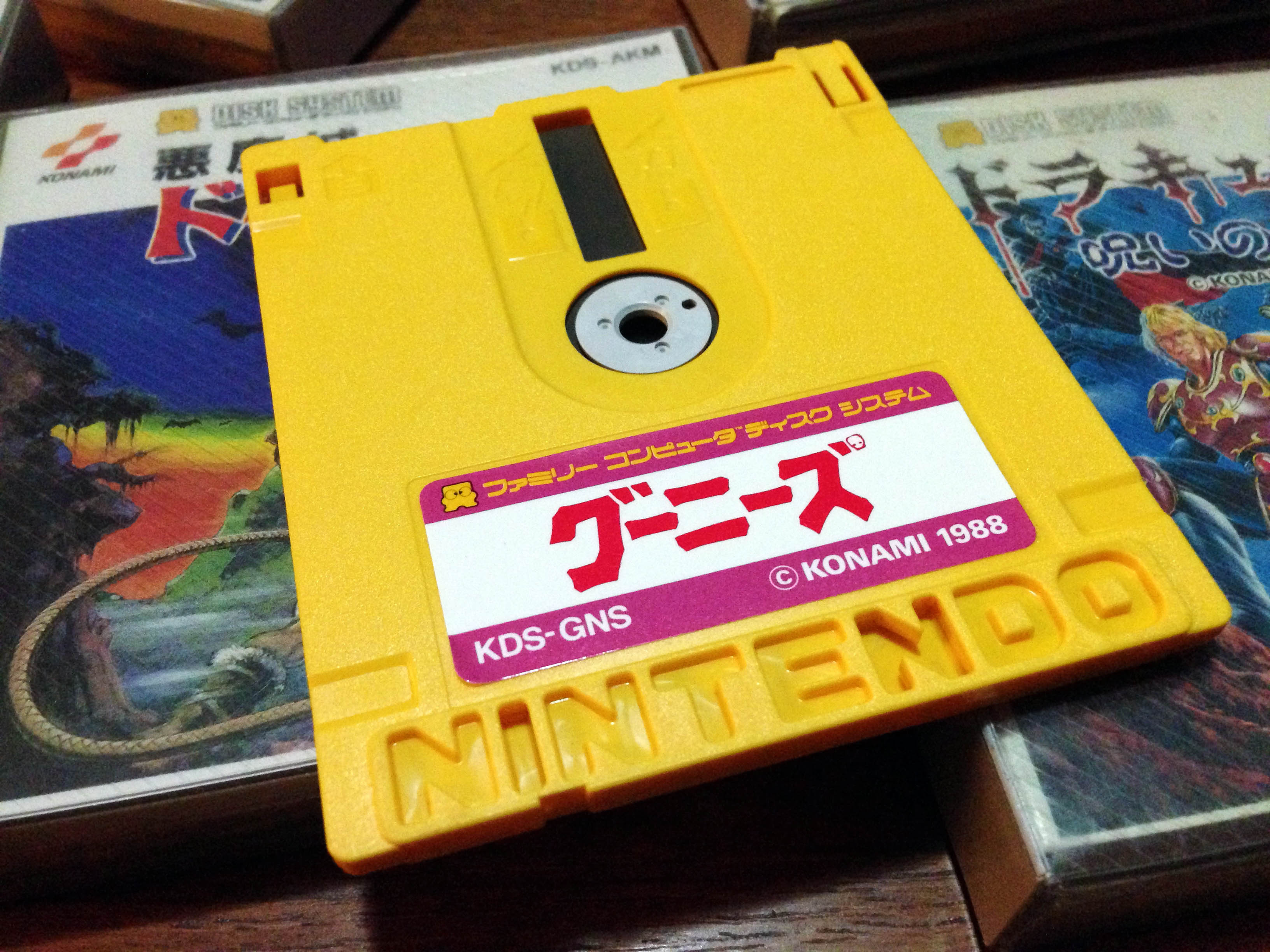
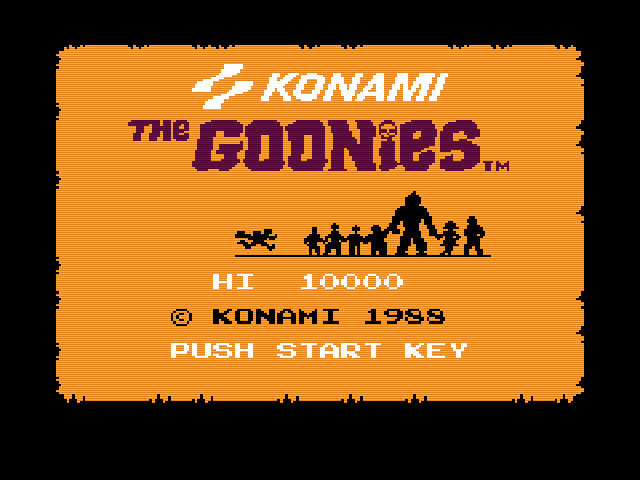
There were two Konami games on Disk System which were not released at retail, and only available as re-writes via Disk System Writer Kiosks – The Goonies and Twinbee. After much searching I managed to get my hands on a single disk with both games on it.
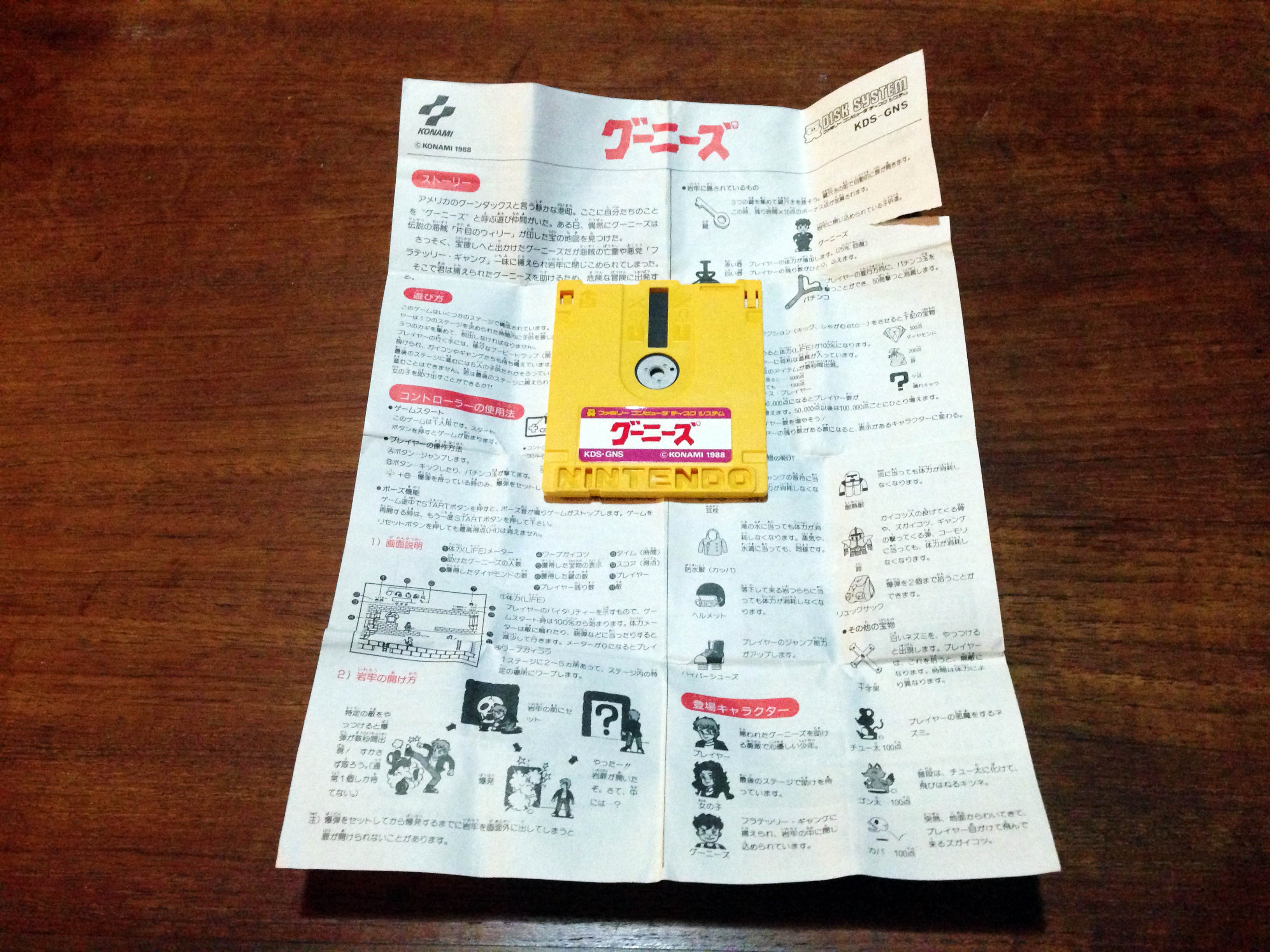
Disk Writer games came with a nice official printed disk label and fold-out paper manual.
But it doesn’t match the rest of the otherwise beautifully consistent Konami Disk System catalogue.
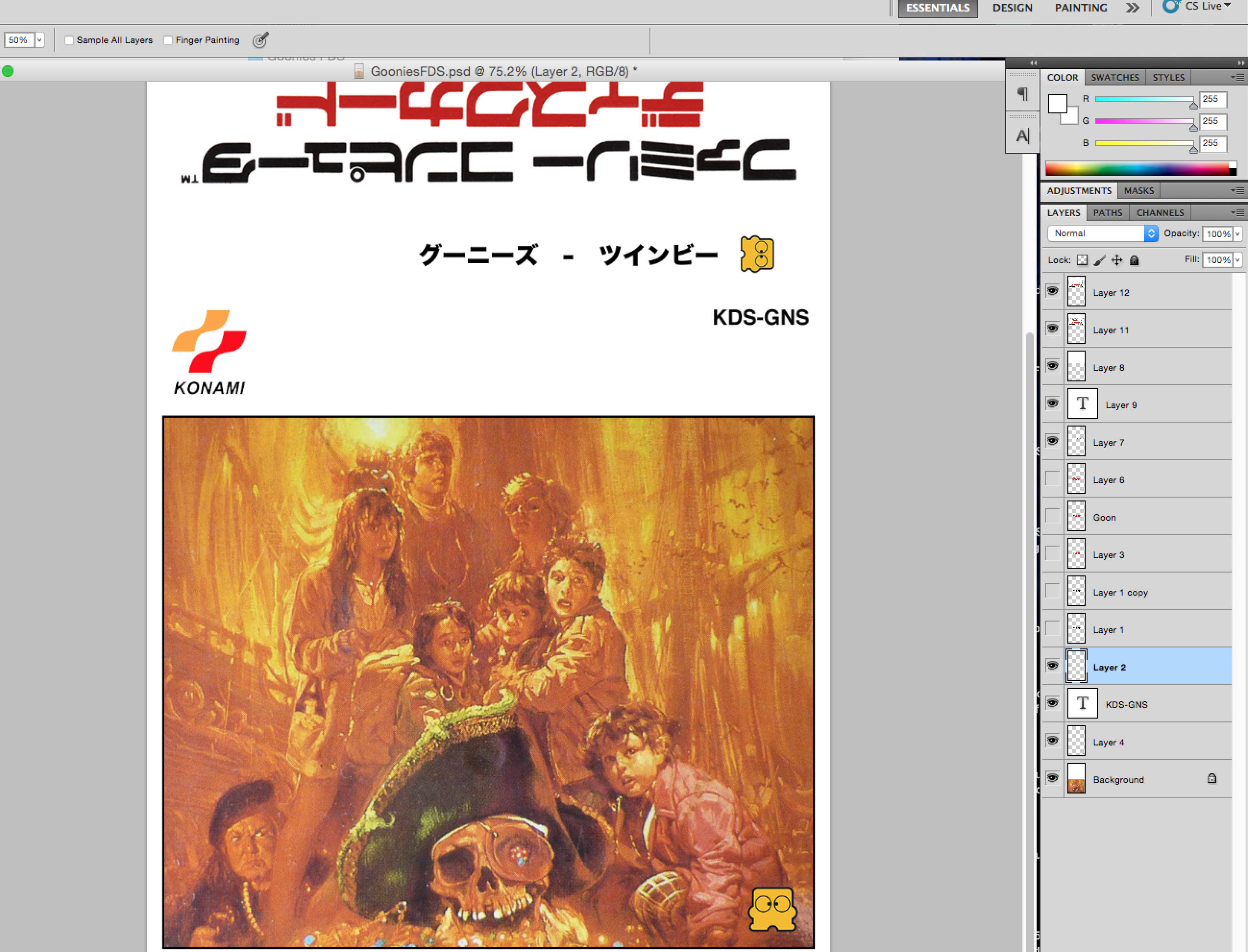
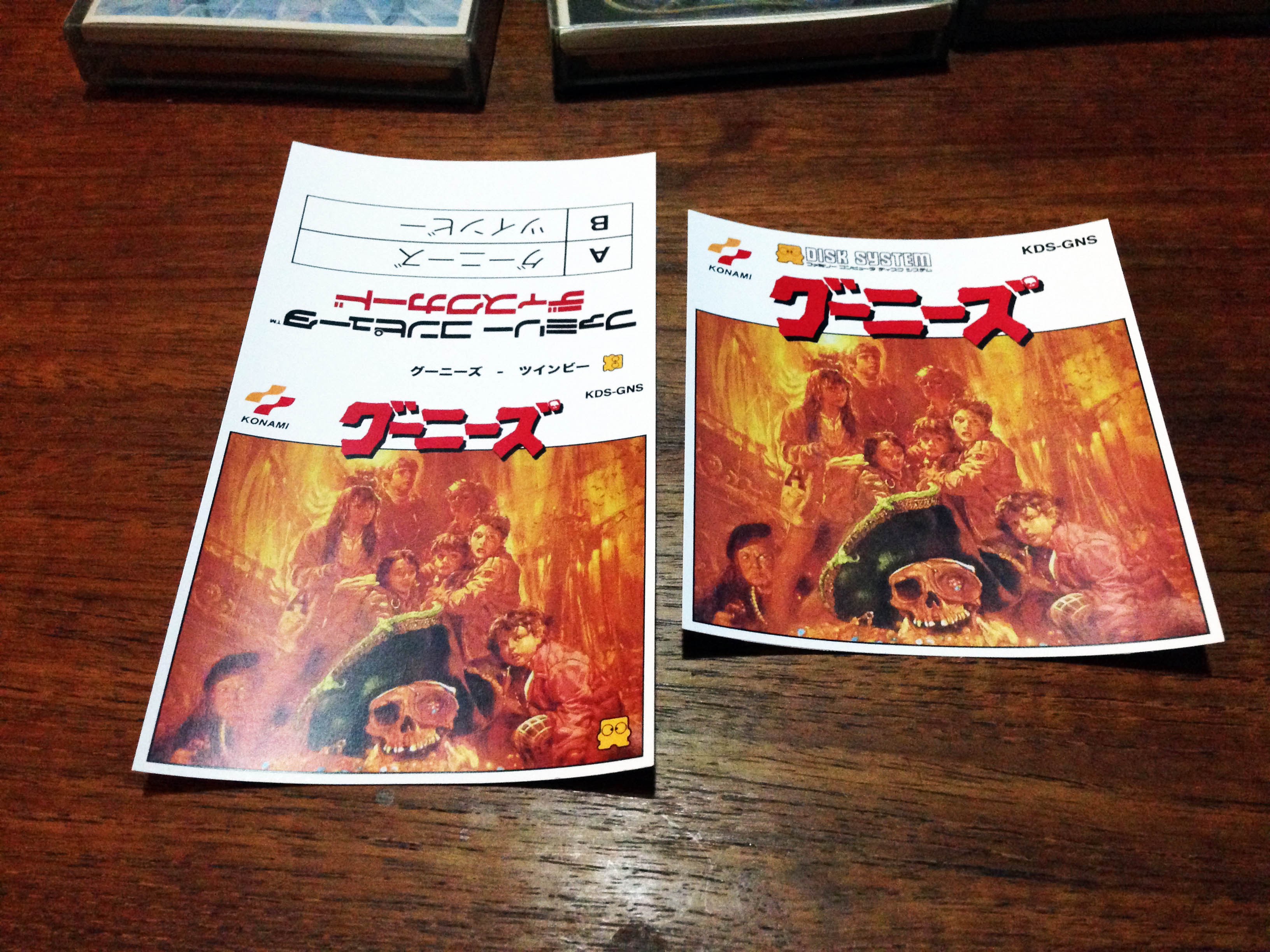
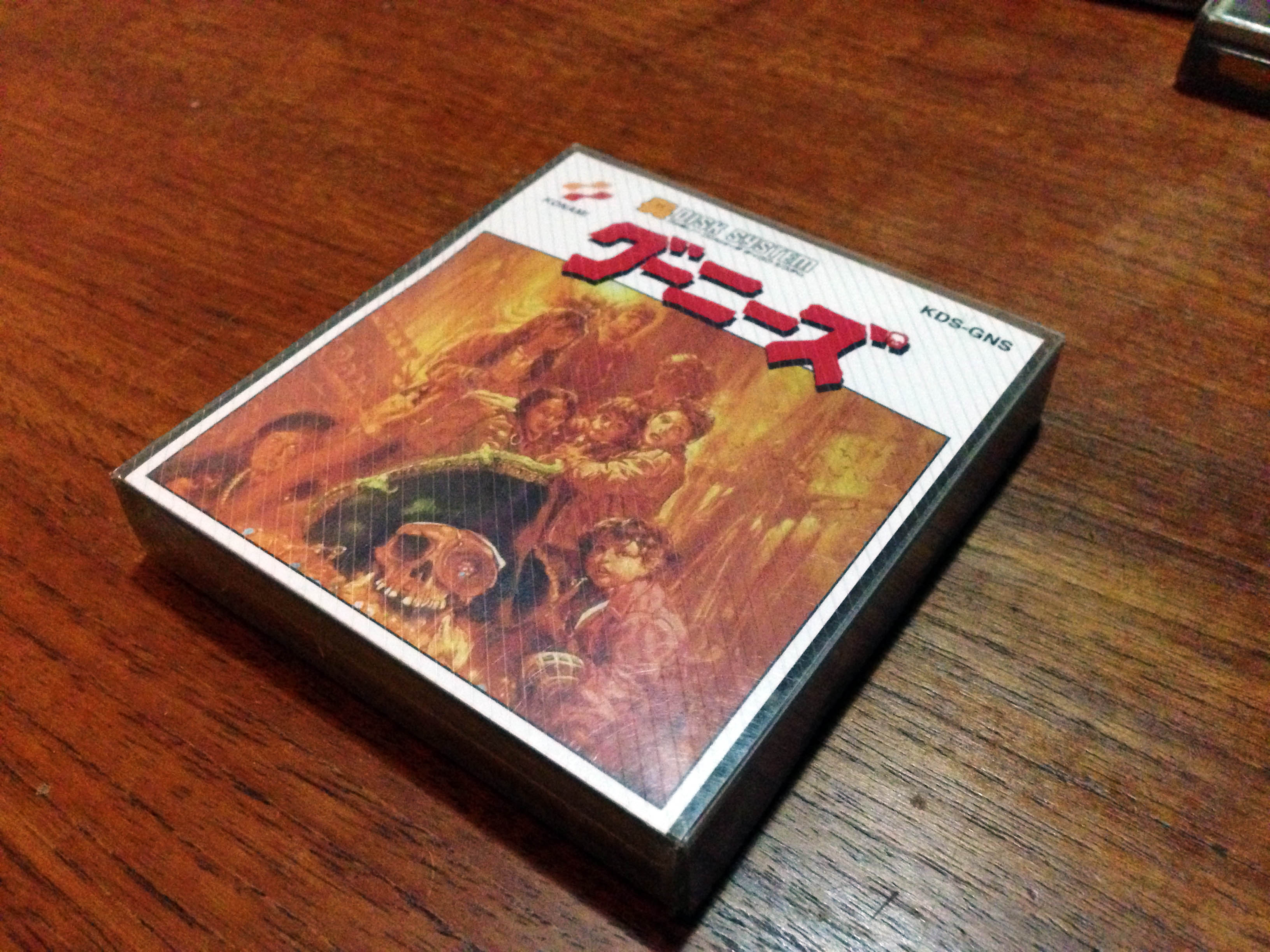
Since FDS inserts are just thin cards, I decided I could make up a reproduction retail release for Goonies, based on the cartridge box.
I scanned the nicer quality image from the cart label, and got going in photoshop.
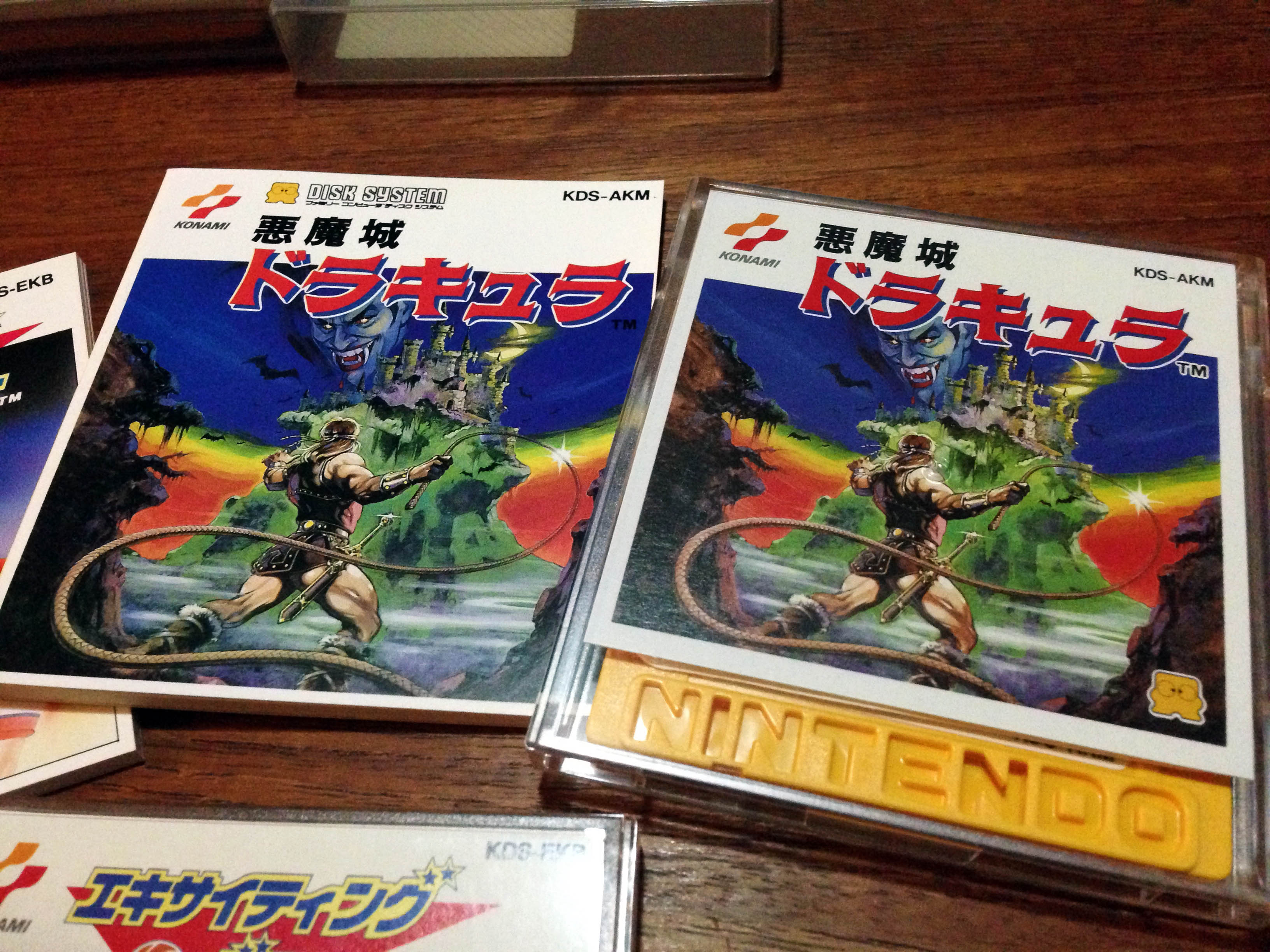
For the logo, black looked a little bland, so I took inspiration from Goonies 2 and Akumajou Dracula, and went with red, using the original black logo from the cart release as a drop-shadow. I used Akumajou Dracula and Exciting Basketball as templates for the basic formatting of the disk case label and outer-box label.
I had it professionally printed on 200gsm satin printing paper, and here’s the result! Goonies on side A, Twinbee on side B, so Goonies gets main billing.
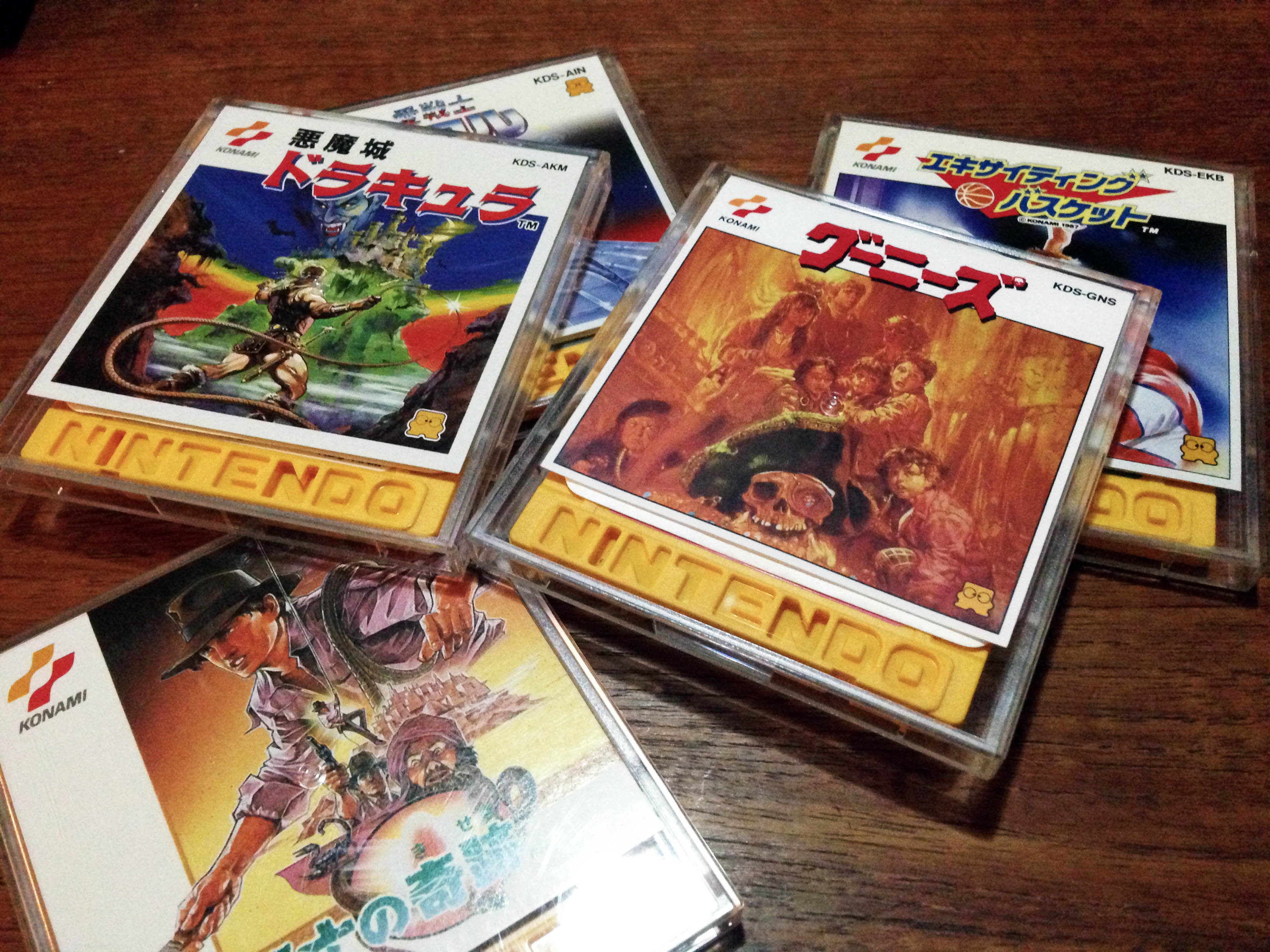
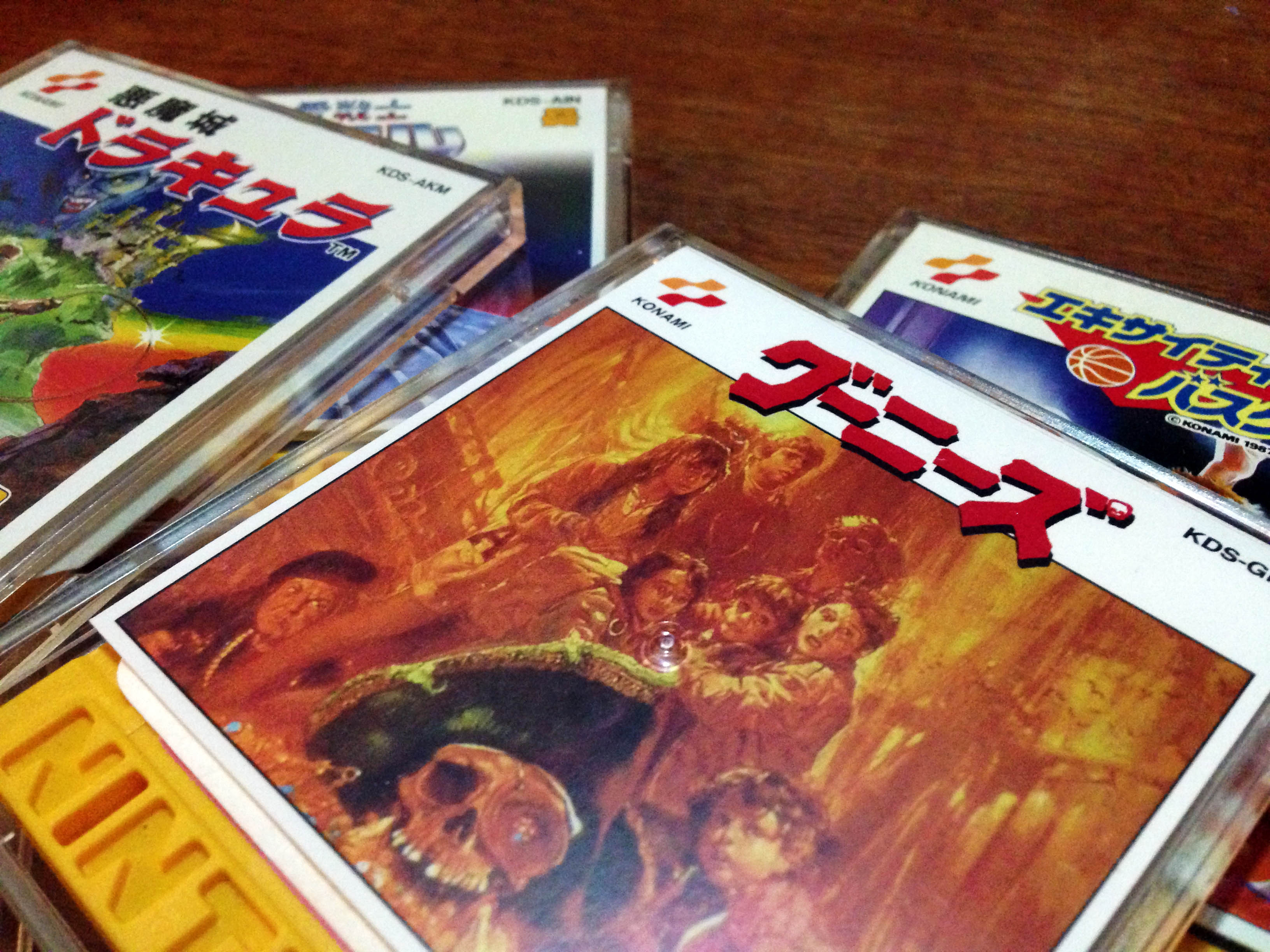
Looks great in disk-case format and full case format!
Now Goonies/Twinbee can take its place with the rest of the Konami FDS set!
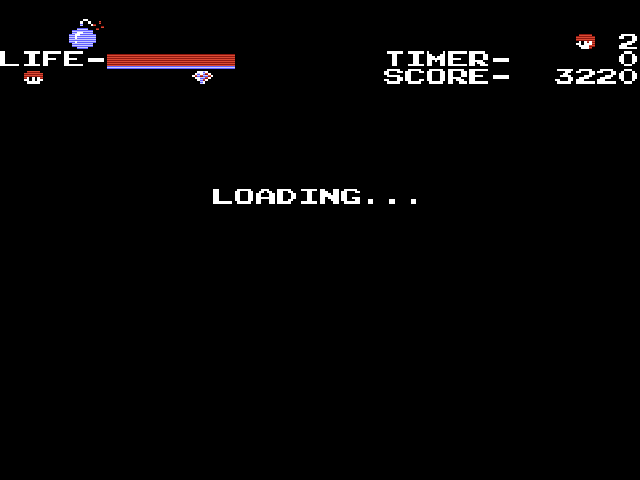
And I can finally play Goonies with additional load times!
The Segamaku had a pretty short life, but lots of wacky stuff was released in that time, including some pretty nice 3D glasses.
Unbelievably, the active glasses are pretty much the same tech as used by most 3D TVs today! They use the same left-right alternating shutter technology, and even use the same 1.5mm stereo plug as current corded glasses. You can actually plug them into a TV or laptop that supports active 3D and they work. Alternatively, you can use modern 3D glasses on your Mark III or Master System.
The Mark III needed an adapter to use them. This adapter was built into the later Master System, which was somewhat of a waste, since the glasses came packaged with the adapter anyway.
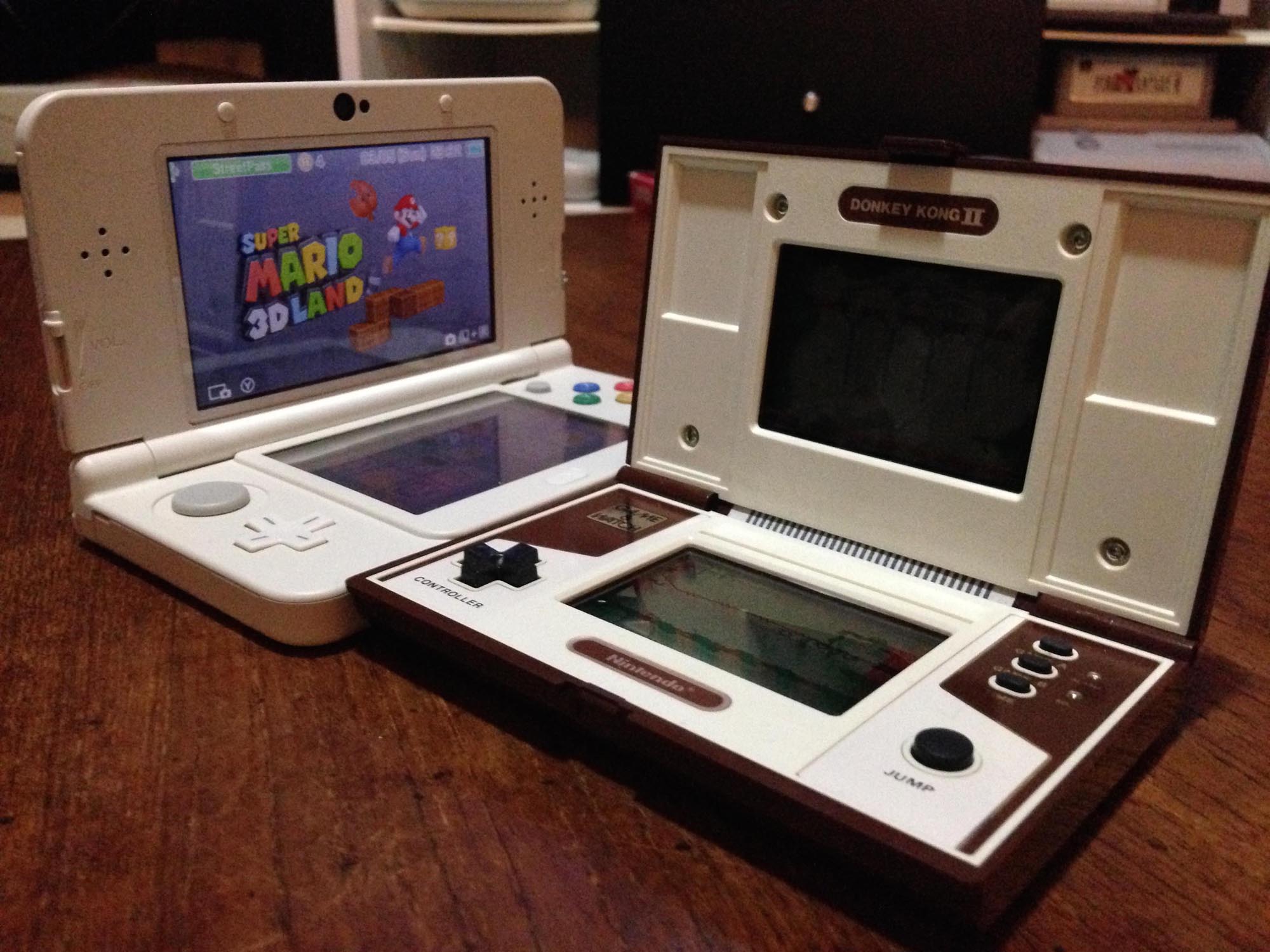
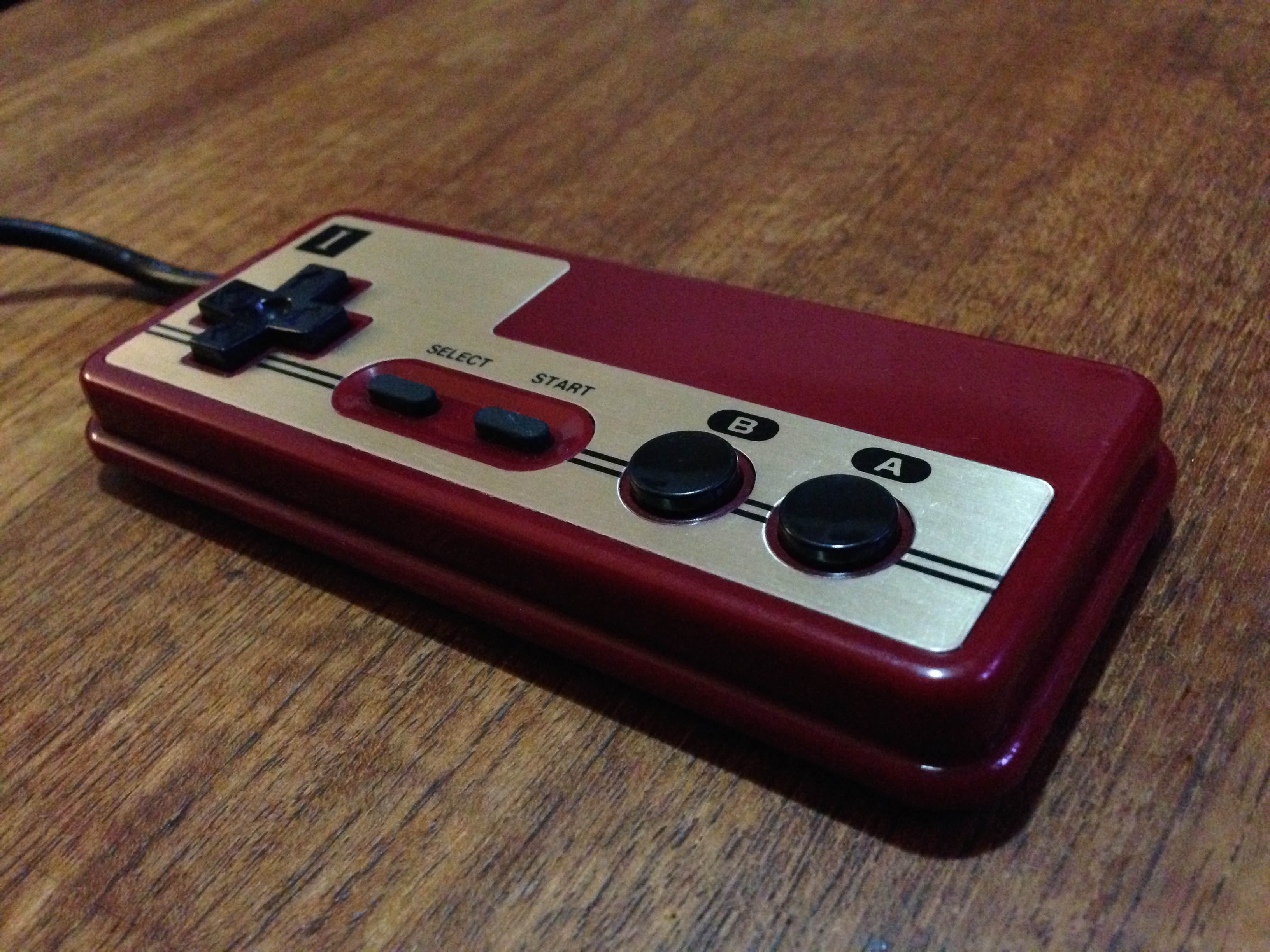
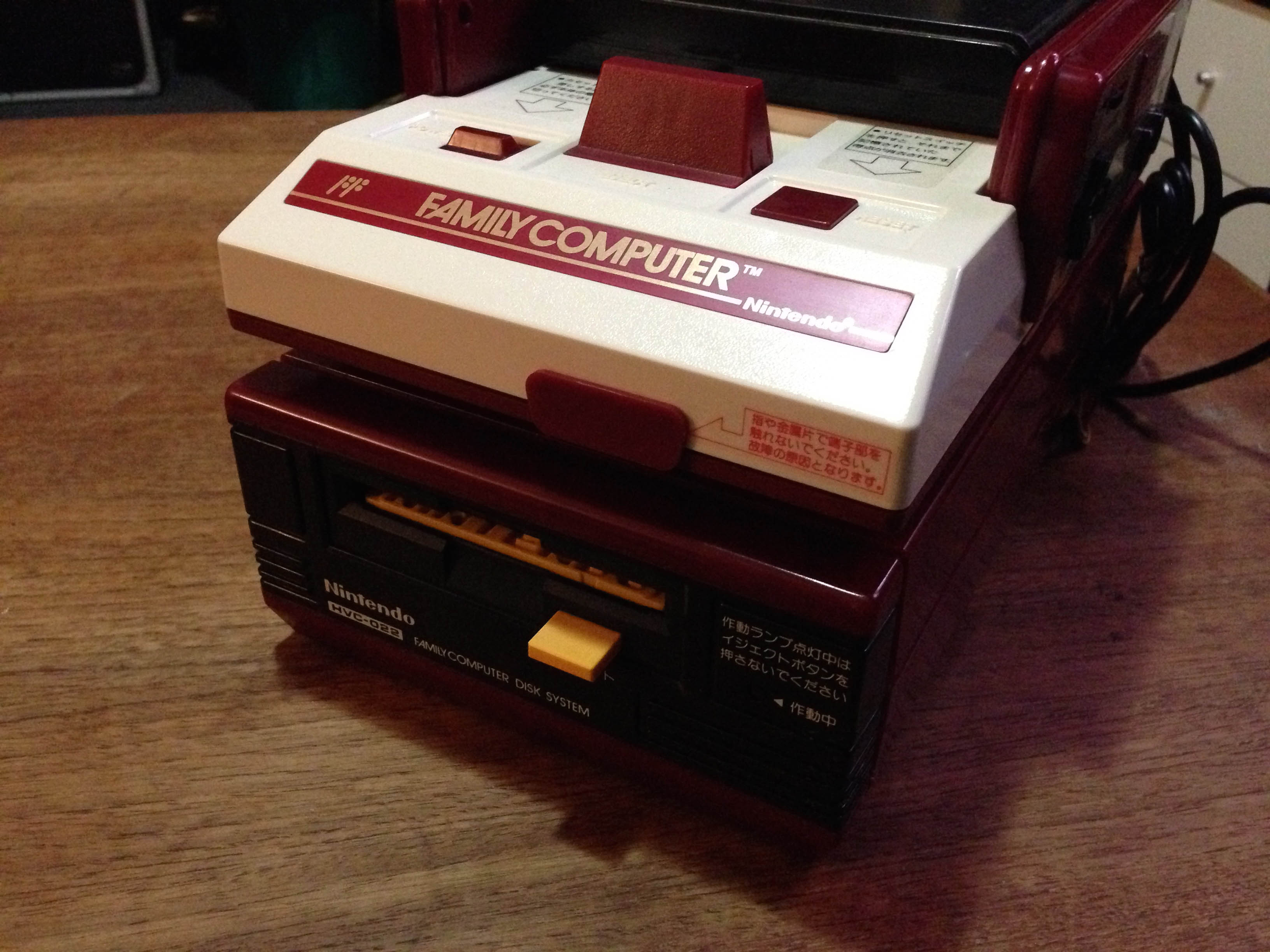
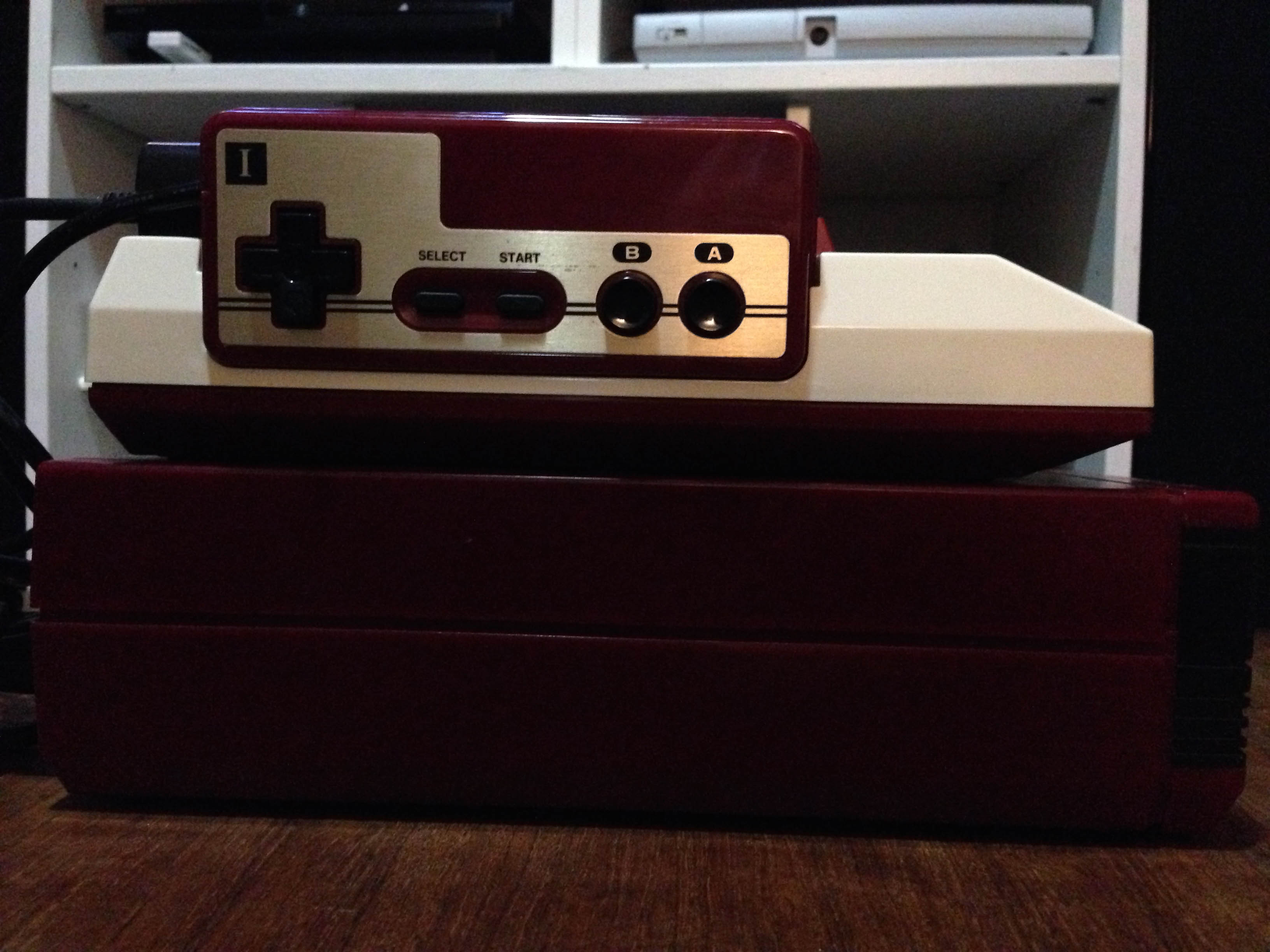
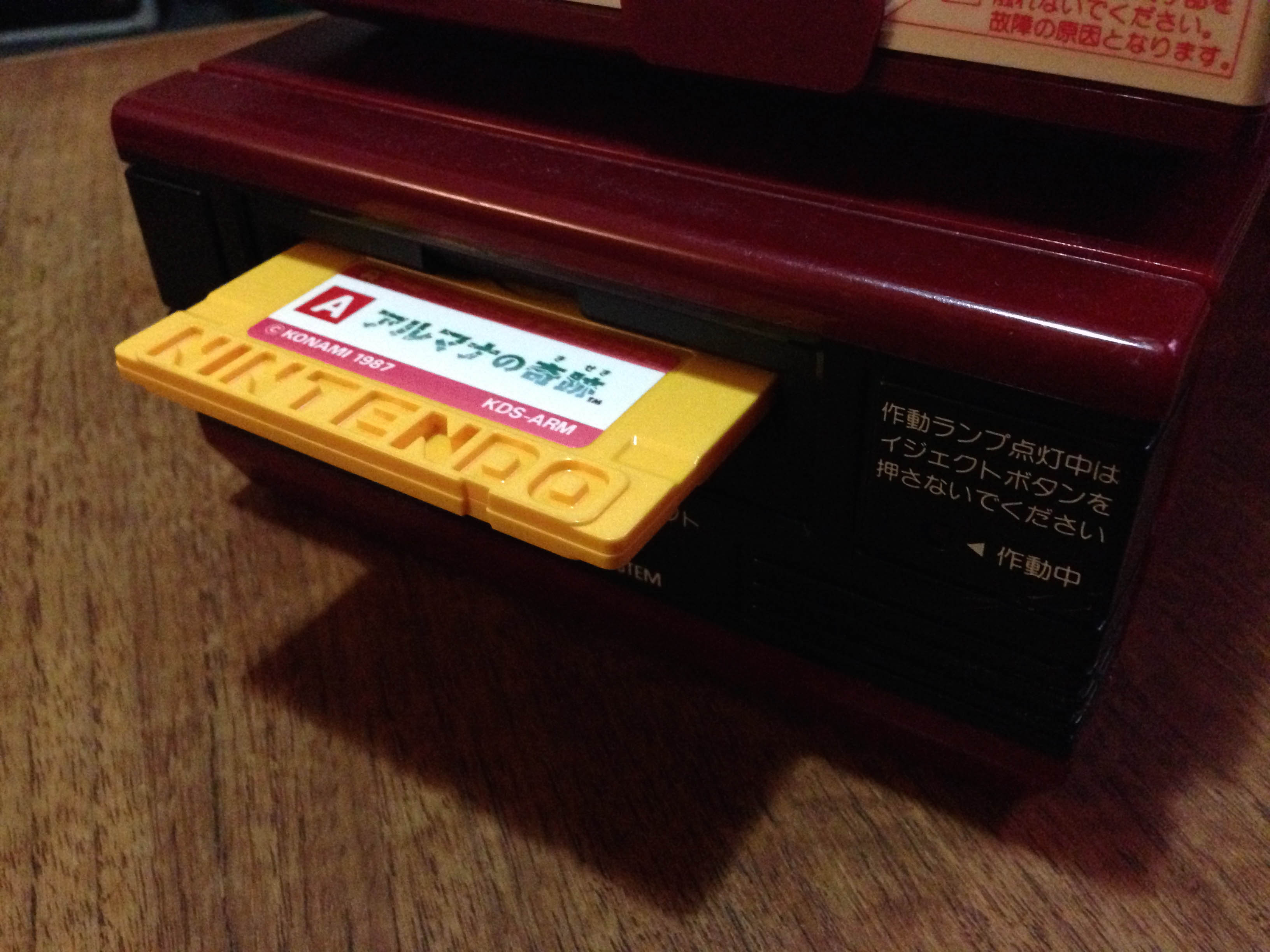
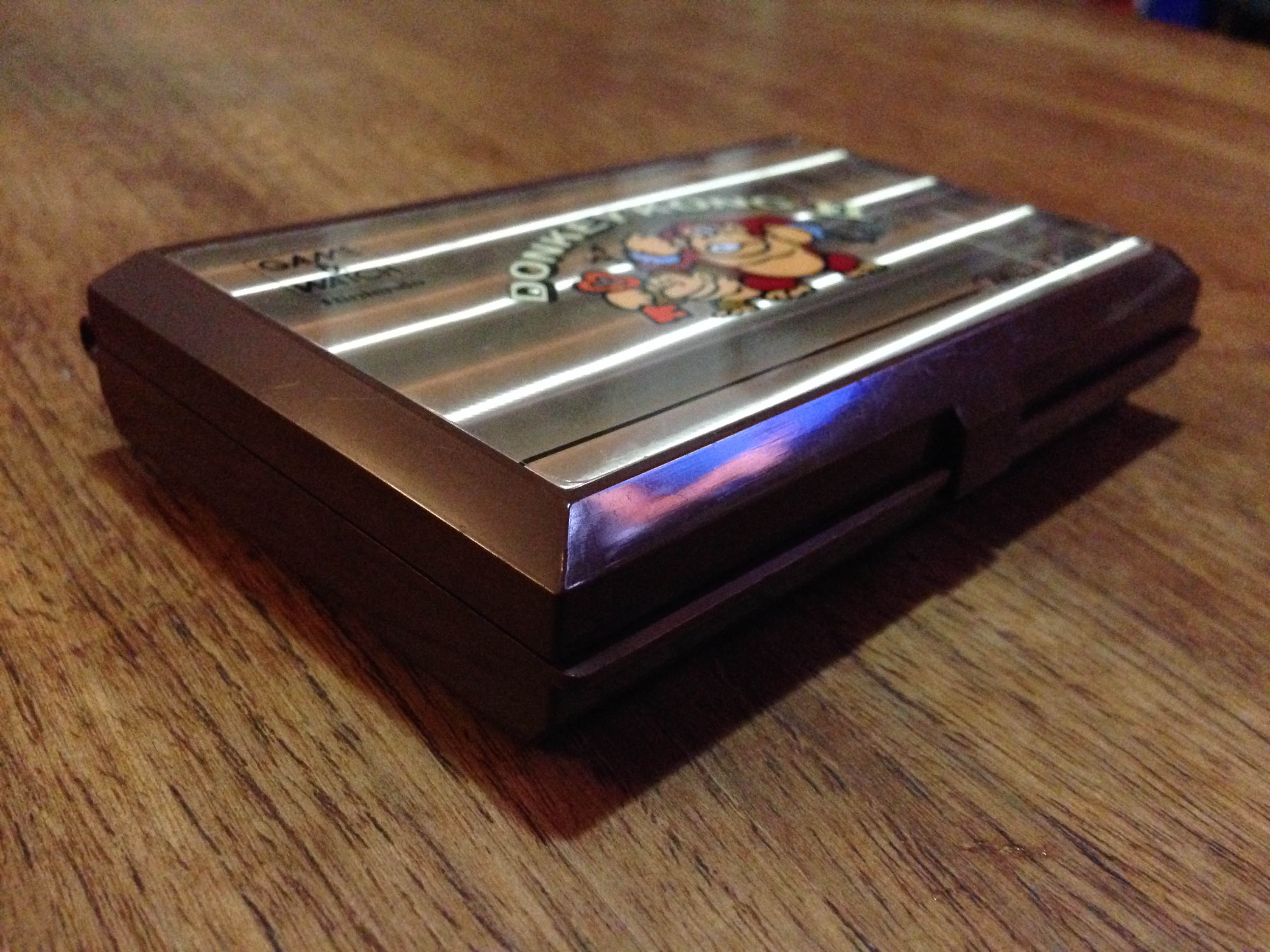
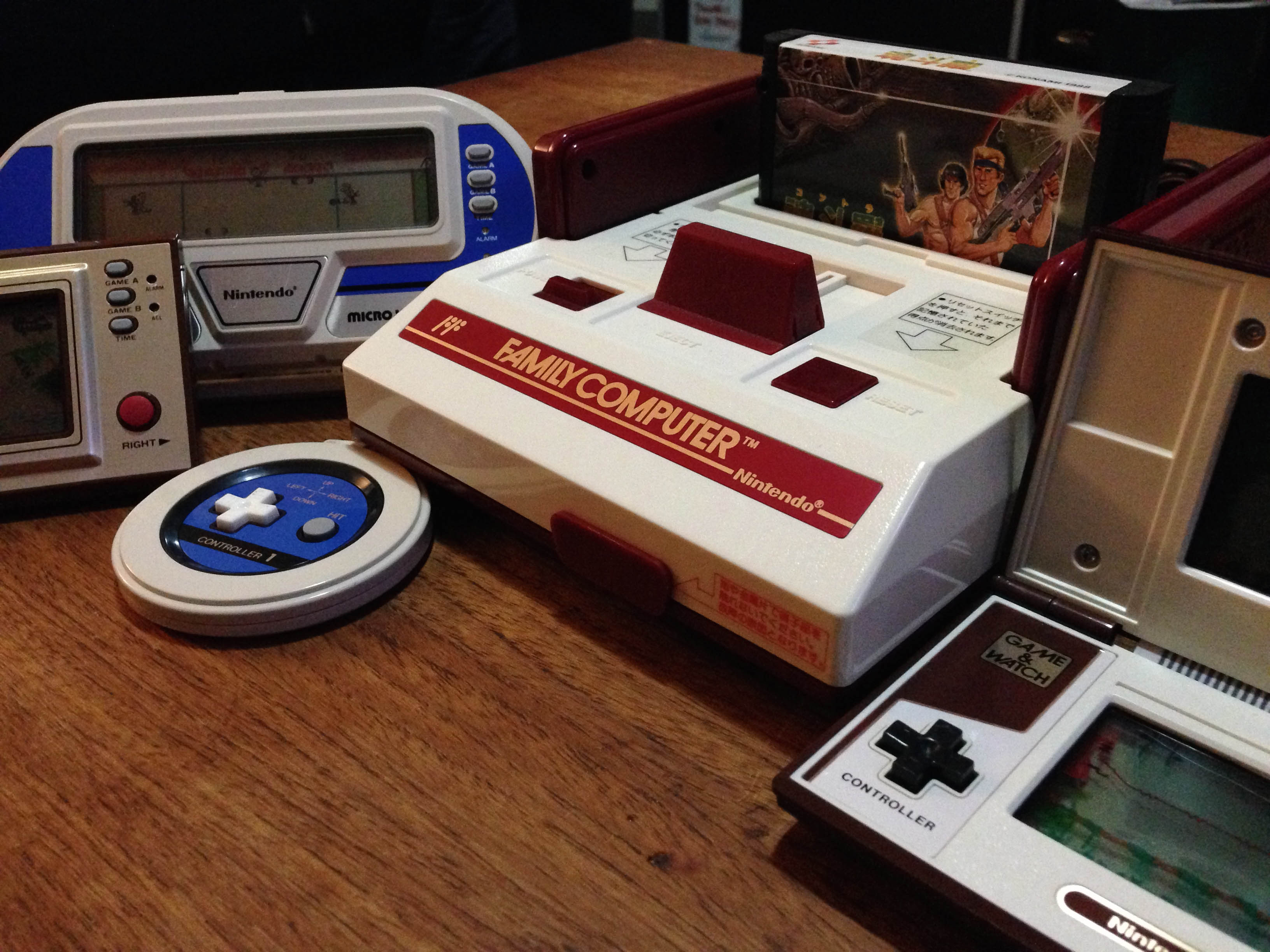
Nintendo had such a classy ‘brushed metal on high quality coloured plastic’ aesthetic in the early 80s, carried over from their original ‘Color TV game’ console series, through the Game & Watch series, and on to the Famicom.
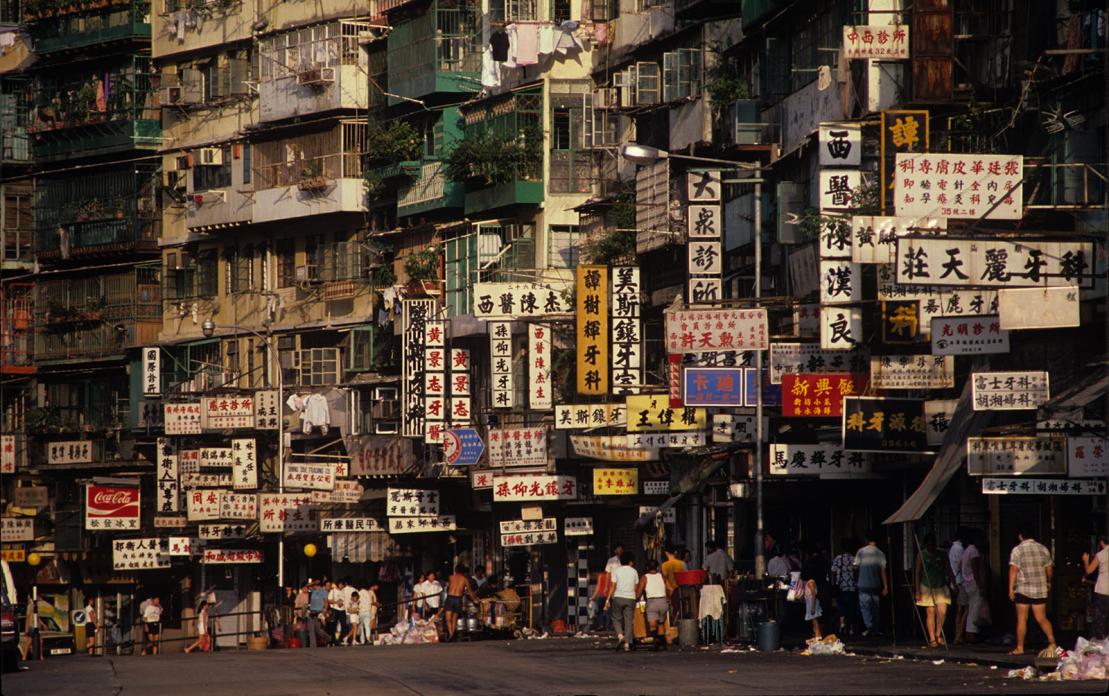
Kowloon Walled City was a lawless mini-city built just outside of Hong Kong.
Established on a legal ‘no-man’s land’ and unpoliced by either Britain or China, it thrived and became an amazing mass of humanity.
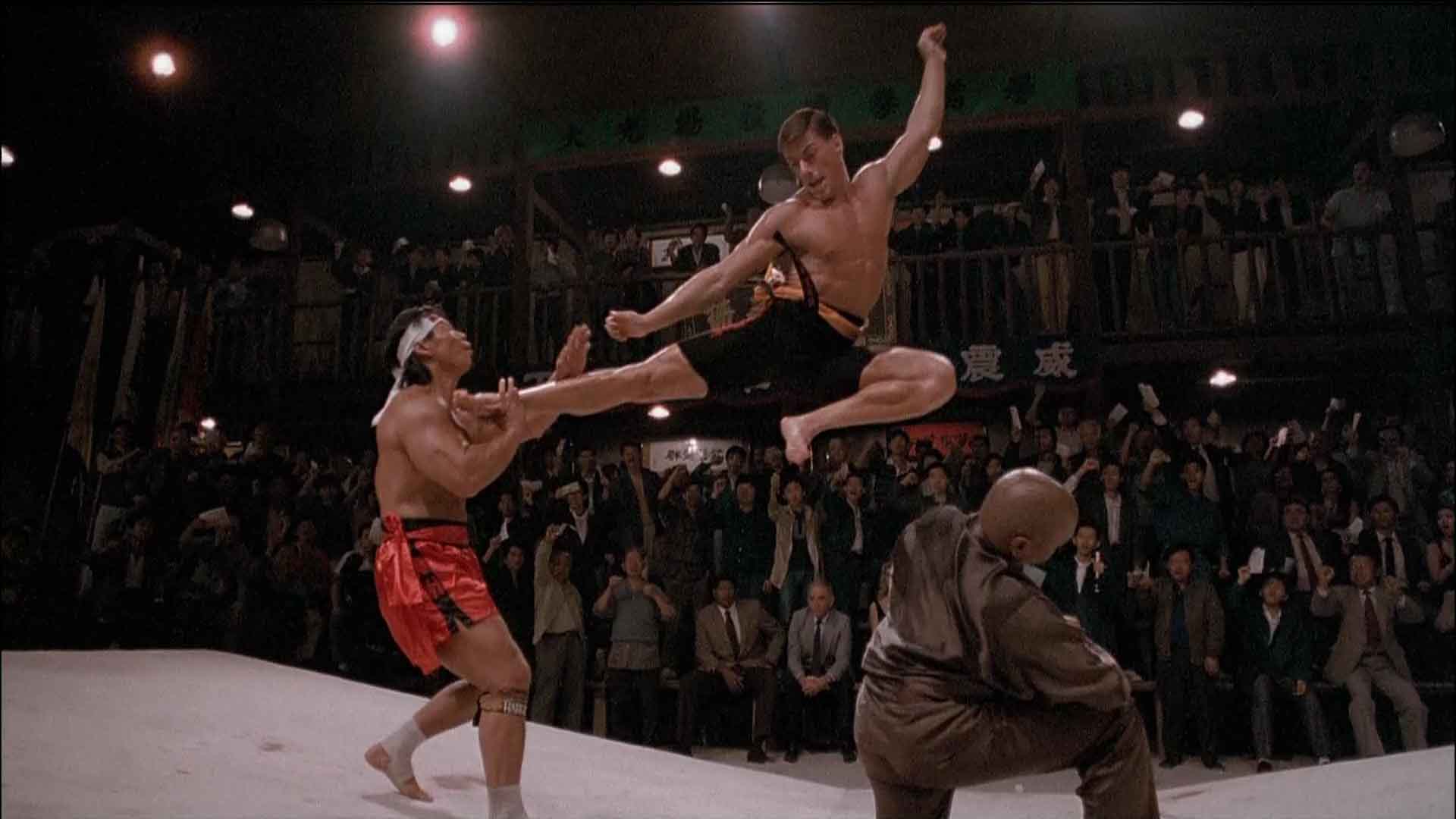
You might know it was the place the Kumite was held…
It was torn down in 1994, but I’ve always been fascinated by the place. I’ve been to where it once was, and all that is left is a boring park, with a few monuments like a piece of the original foundation, and a model of the old city.
What has this got to do with Japan?
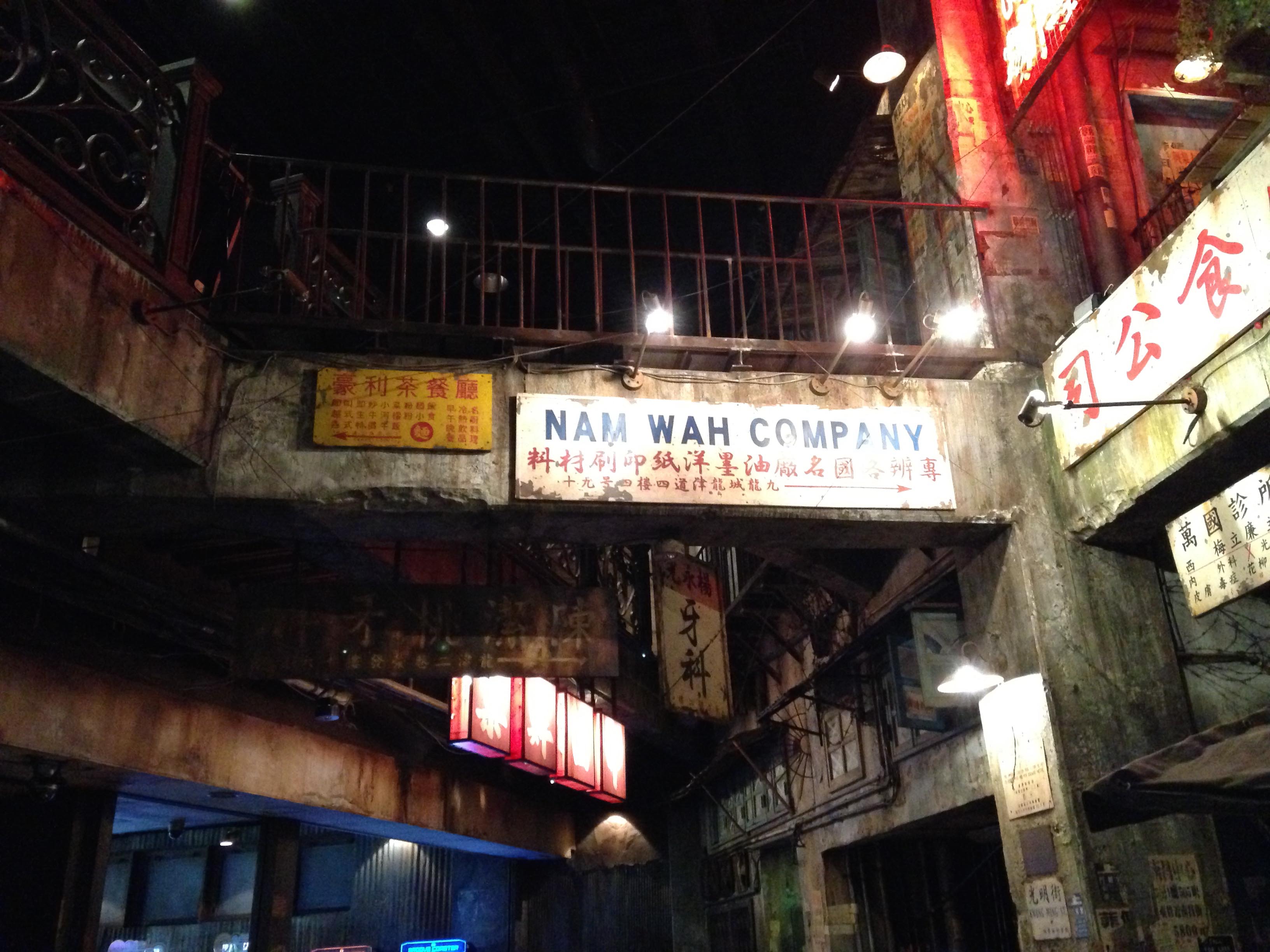
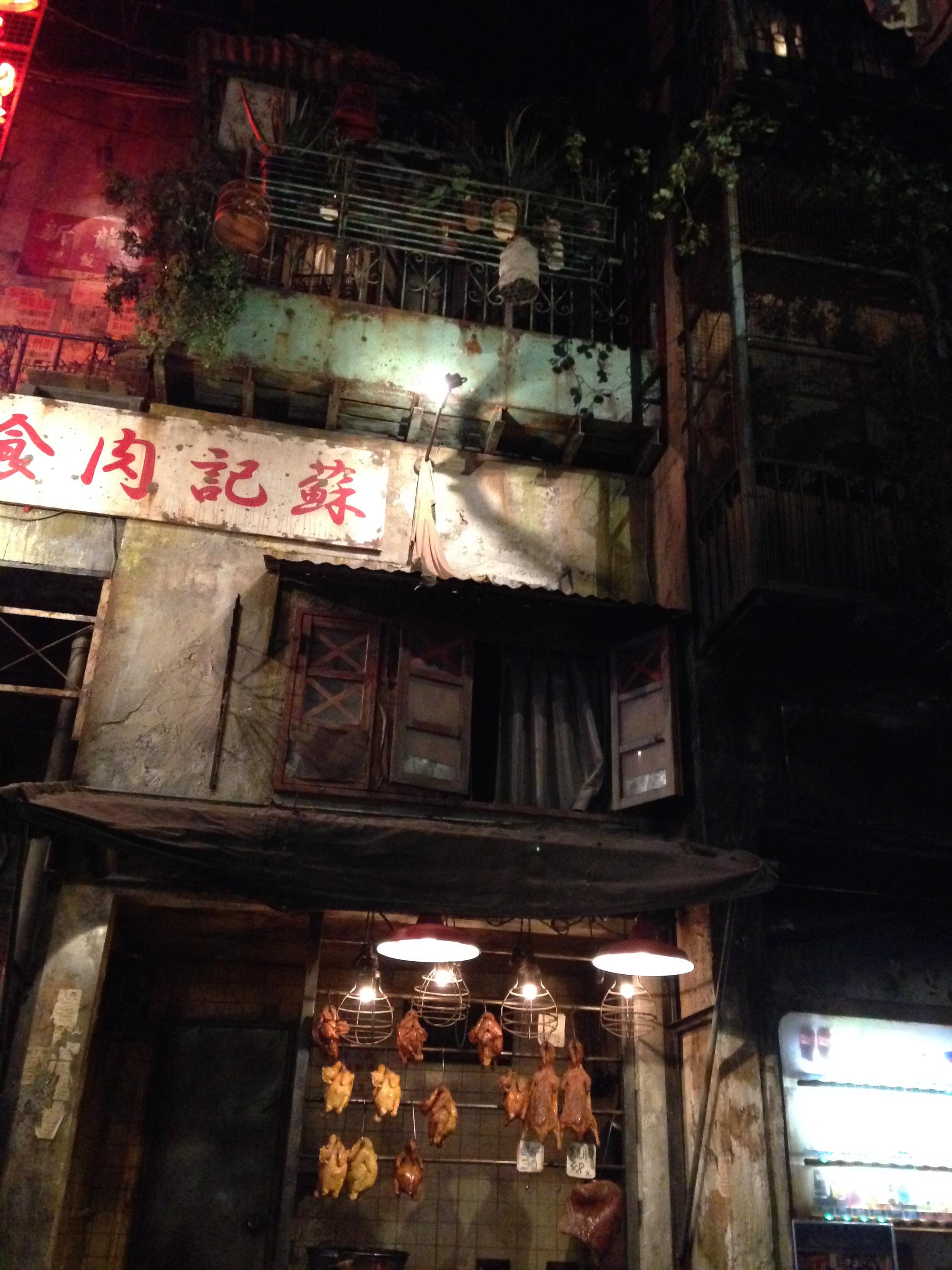
It seems I wasn’t the only one who was fascinated by the walled city, as some of the interior has been re-created in Japan. It’s called the Kawasaki Warehouse, and it’s one of many amazing pet projects by Japanese designer Taishiro Hoshino.
So we got on the train out of Tokyo and headed for Kawasaki. It’s a bit of a walk, but easy to find once in the right area.
The entrance looks right out of Tim Burton’s 1989 Batman:
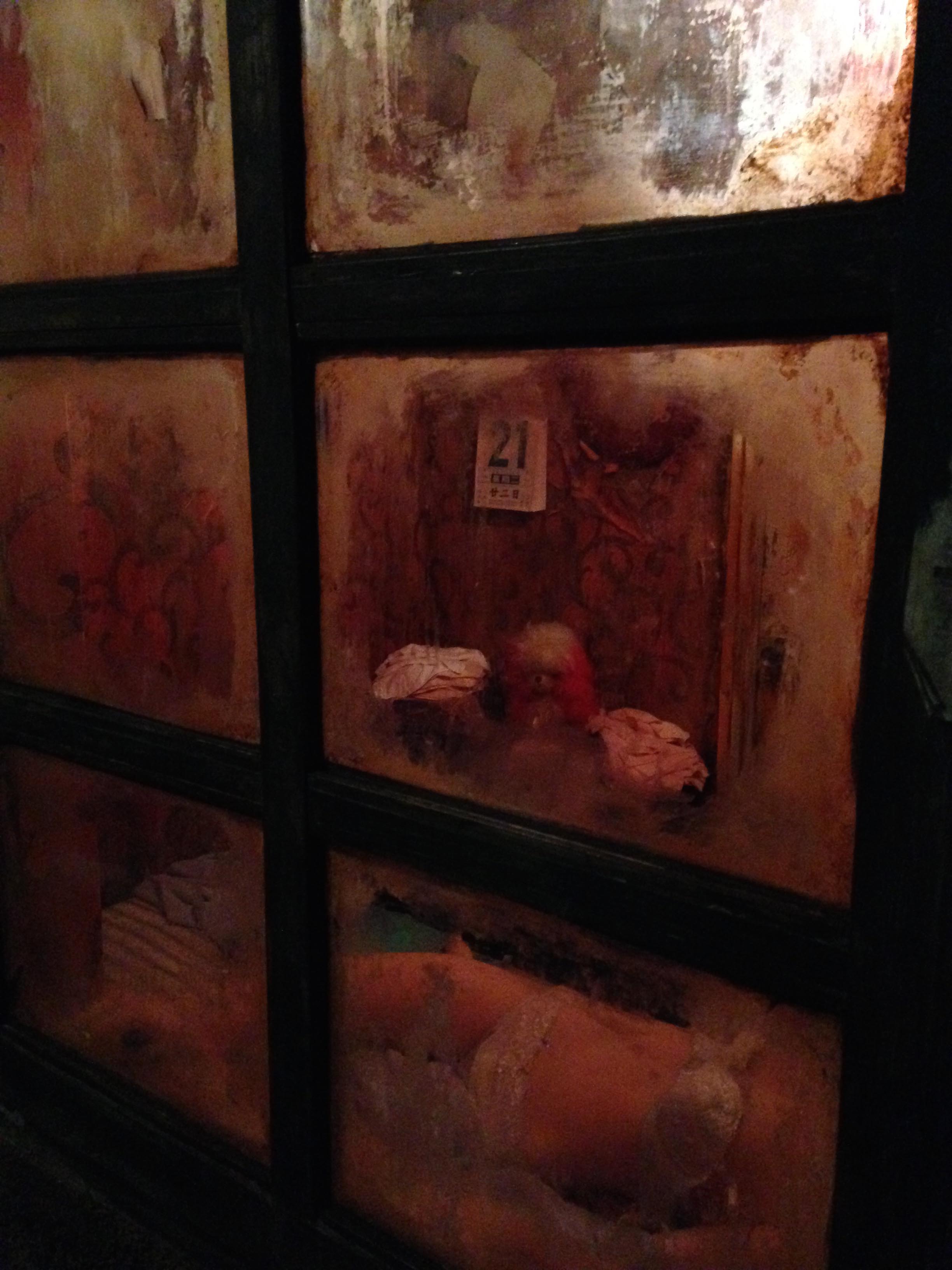
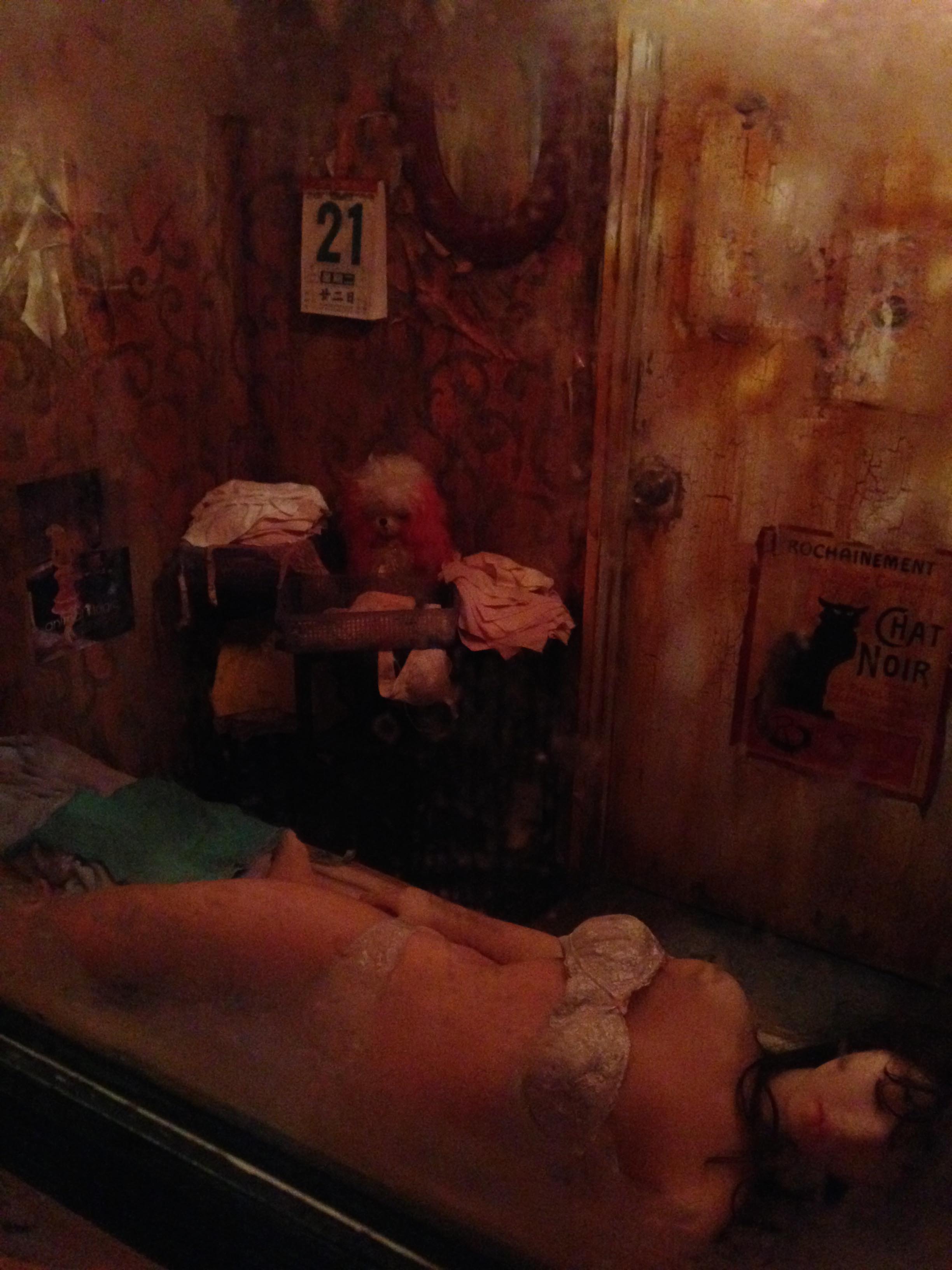
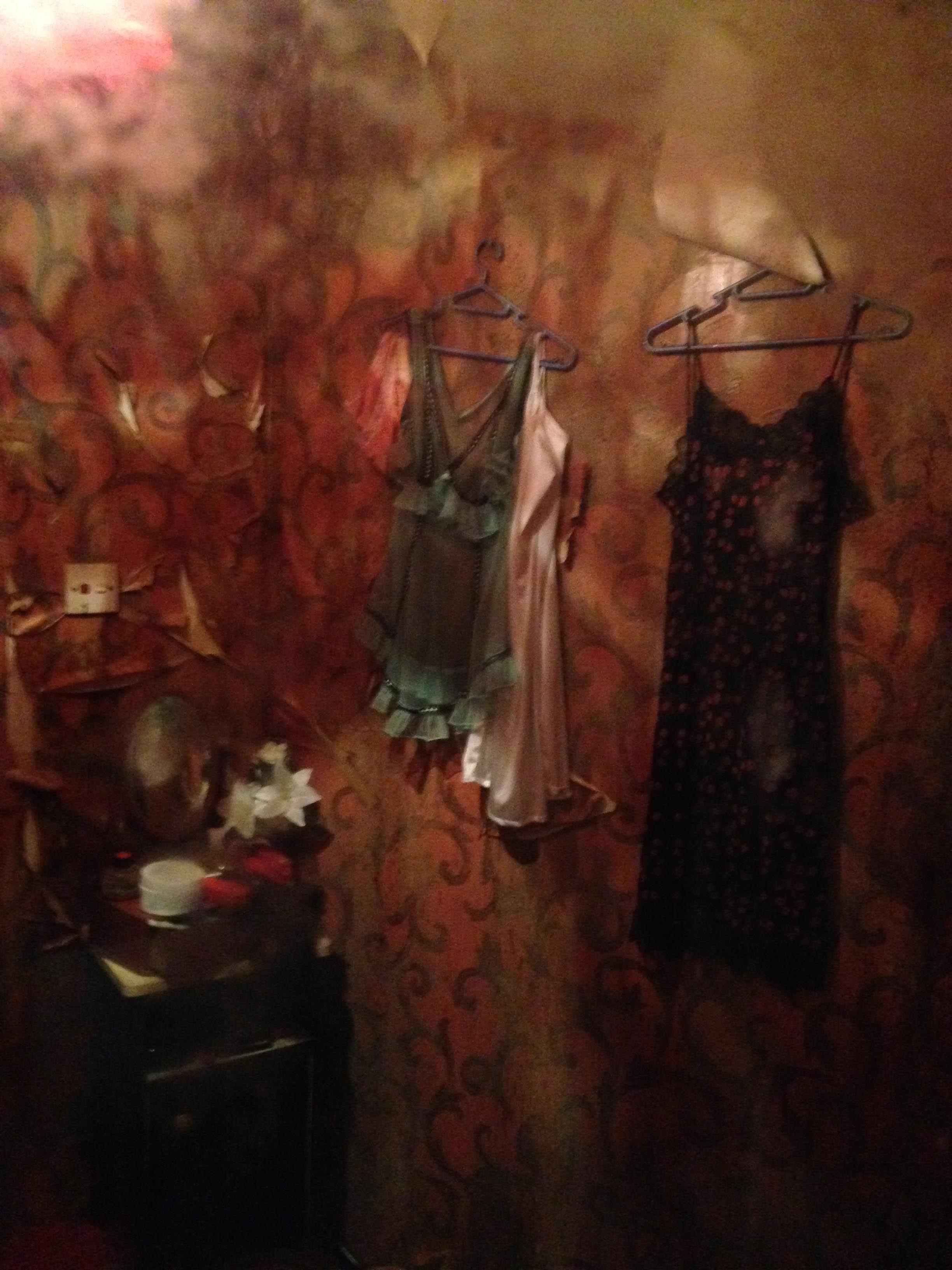
Inside you have to walk past pretend drug dens and prostitutes
Until it opens up into a re-creation of the bustling city courtyards
That just happens to have an old-school video arcade inside!
Everything from Taito’s original three screen DariusTo a sit-down Outrun cabinetTo more recent offerings like Nintendo and Namco’s Mario Kart Arcade
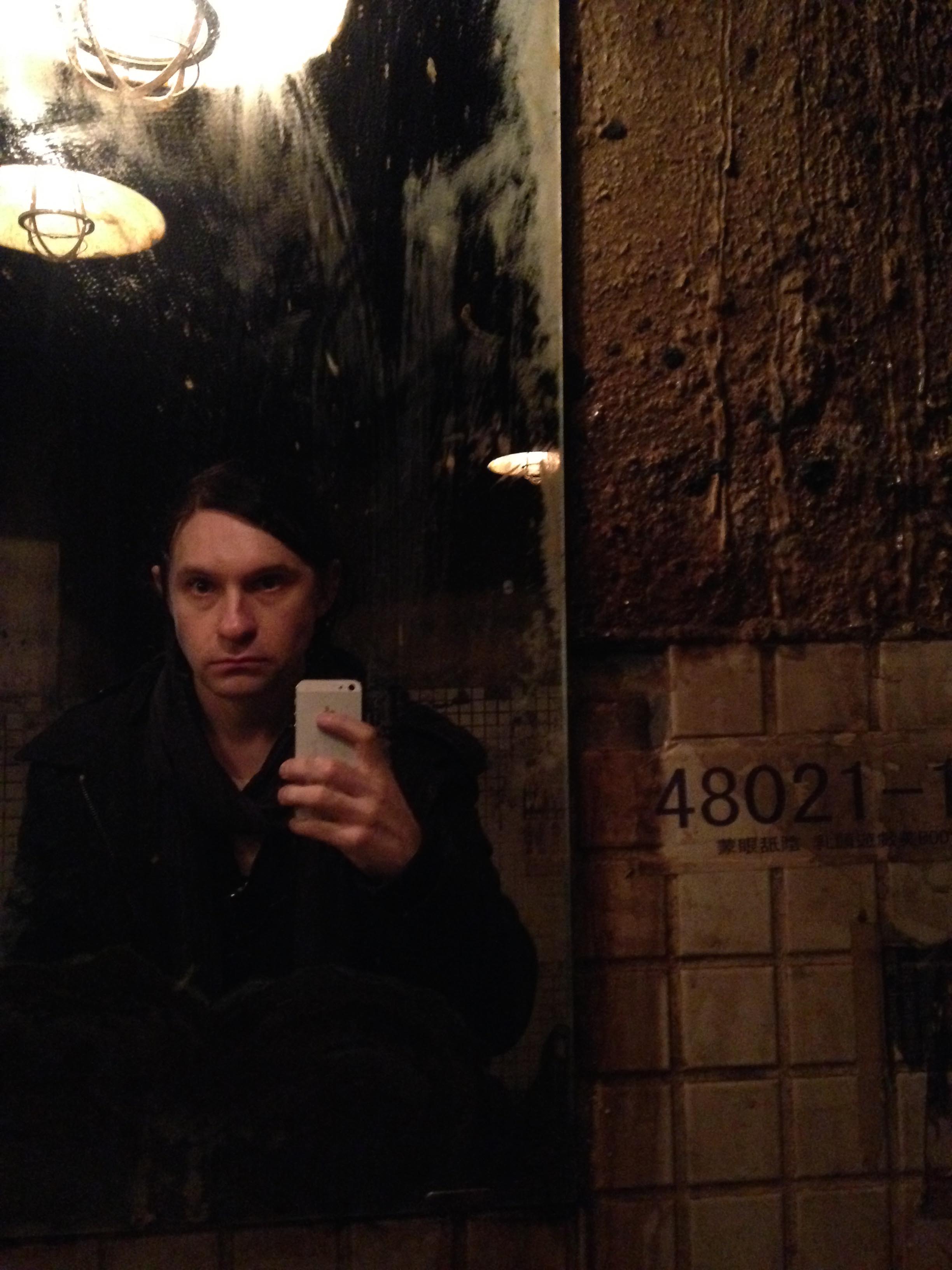
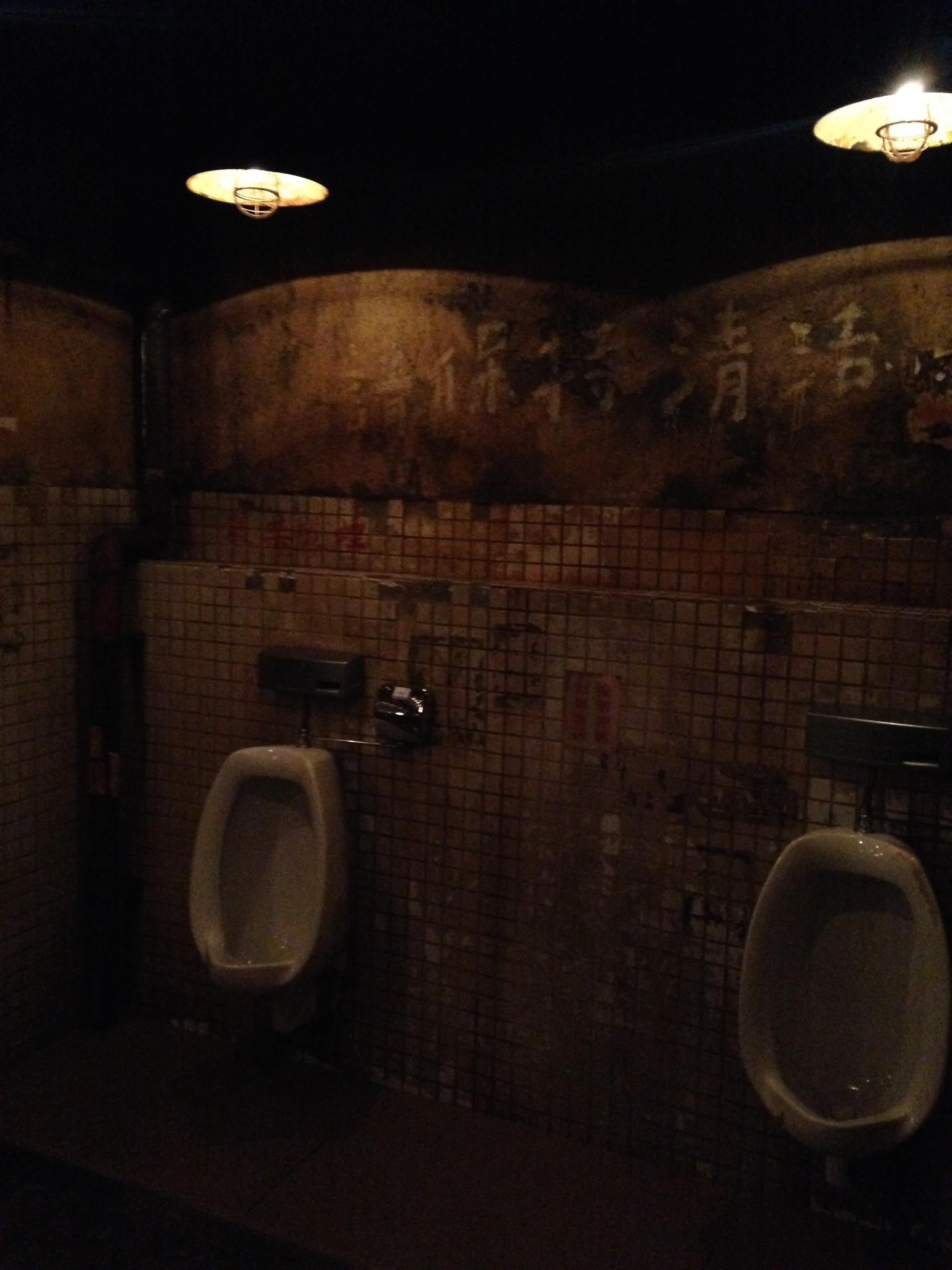
Even the bathrooms match the theme
I’m assured the ladies was much nicer!
Upstairs there’s a weird renaissance theme, and classy layout for various parlour games
China is a strange place when it comes to gaming. Despite the proximity, Japanese consoles have rarely had much presence, as most of China wasn’t developed enough during the age of their rise. You do find the odd arcade, and like everywhere else, terrible ‘free to play’ mobile games have taken over in the last couple of years.
Nintendo and their characters are as present as any pop-culture icons. They exist in the copyright wild west of China’s major cities primarily as pirated merchandise (with a few examples of legit merch). But there was no sign in any stores I saw of the actual main Nintendo products – the games themselves.
Here’s a photo journal of some of the gaming stuff I came across on a trip through mainland China.
Beijing
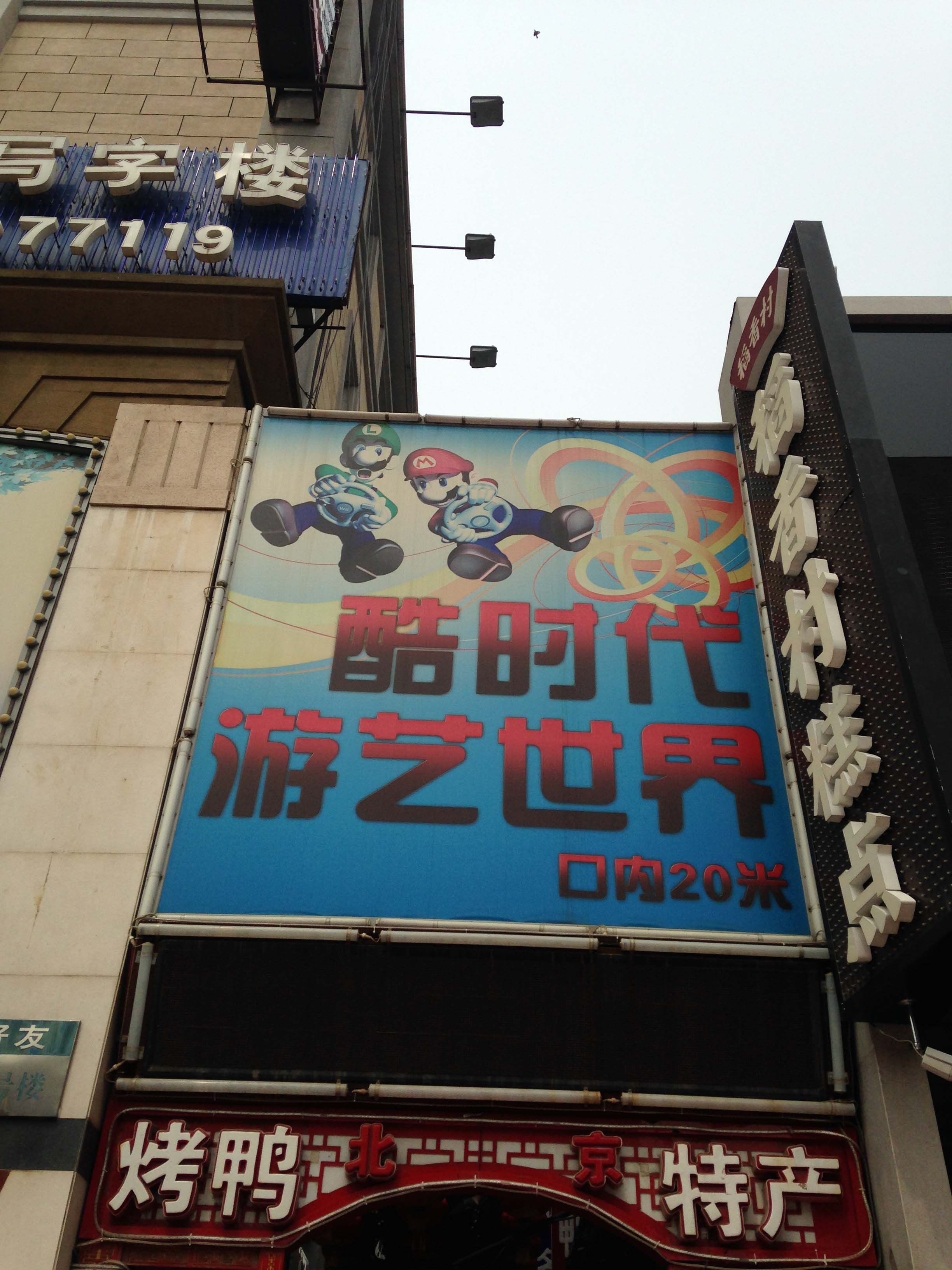
Mario Kart Wii used as a sign for…90s (and early 2000s) arcade games by Sega, Namco, Capcom and SNK!
Xian
So weird how you can get Mario Happy Meals, how would they even know what a Boomerang Bros suit is?At a Xian ‘indoor market’As far as I can tell, the Wii U isn’t even available in China. Yet here’s a Mario 3D World toy.
Xiamen
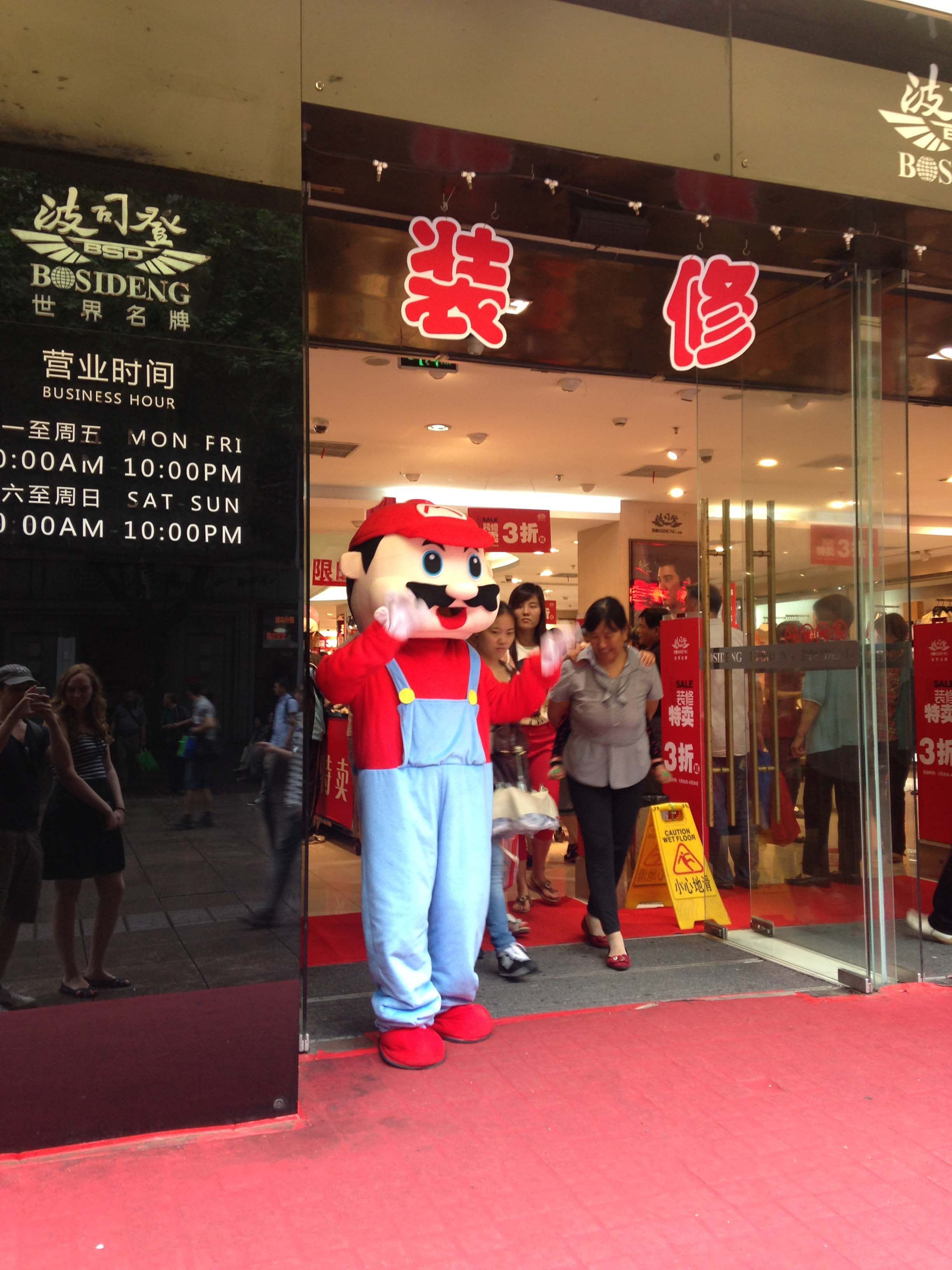
Mario sells men’s clothing in Xiamen. A very strange city, it’s like a dying tourist town.
Shanghai
‘Shanghai Fake Market’ – a huge indoor market with branded stores that haven’t paid for the branding…
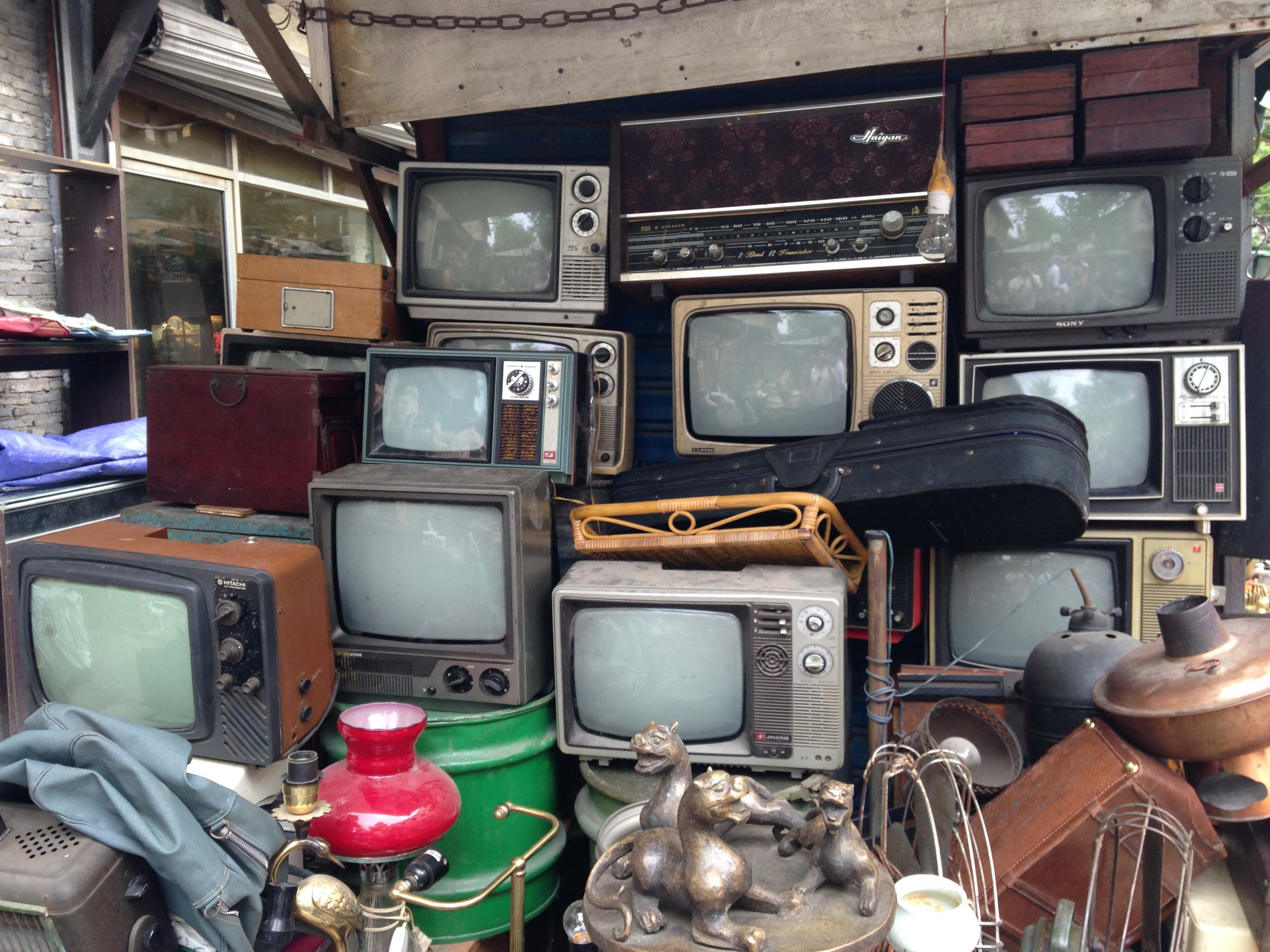
Ironically retro gaming would be easy in Shanghai – great supply of working CRTs available cheap at antique markets.
I’ve been a Nintendo fan for 30 years, and I was in Kyoto for the first time. Well I had to go to Nintendo, didn’t I?
First stop was very hard to find, and Google (at least in English) was very little help. I wanted to see the oldest surviving Nintendo building, buried in the backstreets of a now largely residential area of Kyoto.
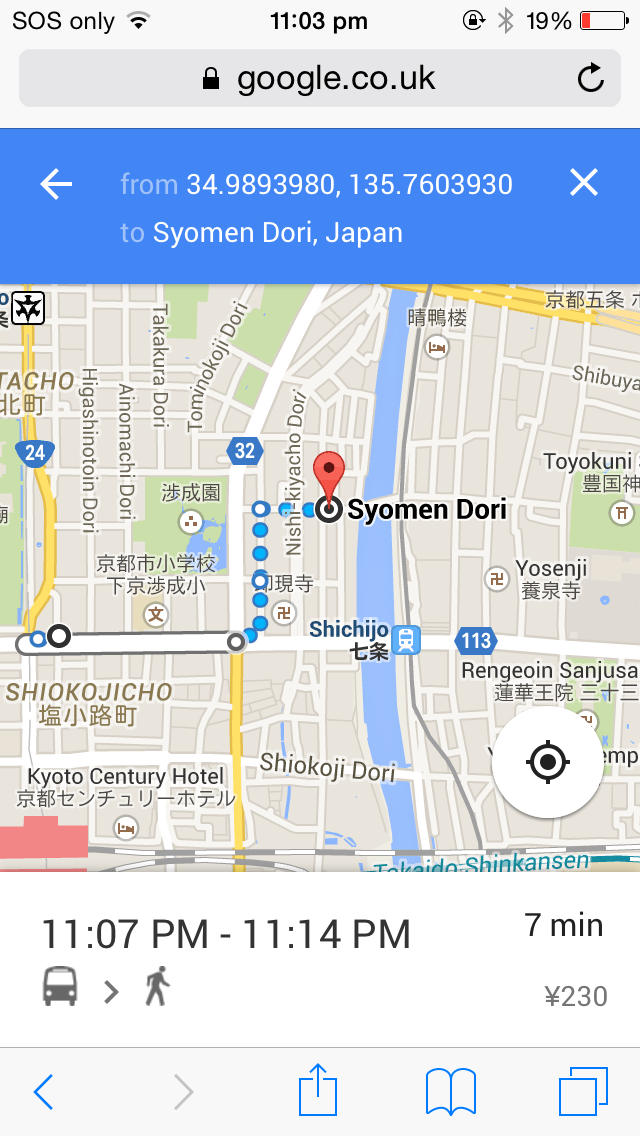
After some research (largely machine translating Japanese walking tour maps), I worked out it was somewhere near here, which was around 15 minutes walk from the apartment we were staying in.
So we set off the next morning. After a lot of wandering in the freezing cold winter air, we found it!
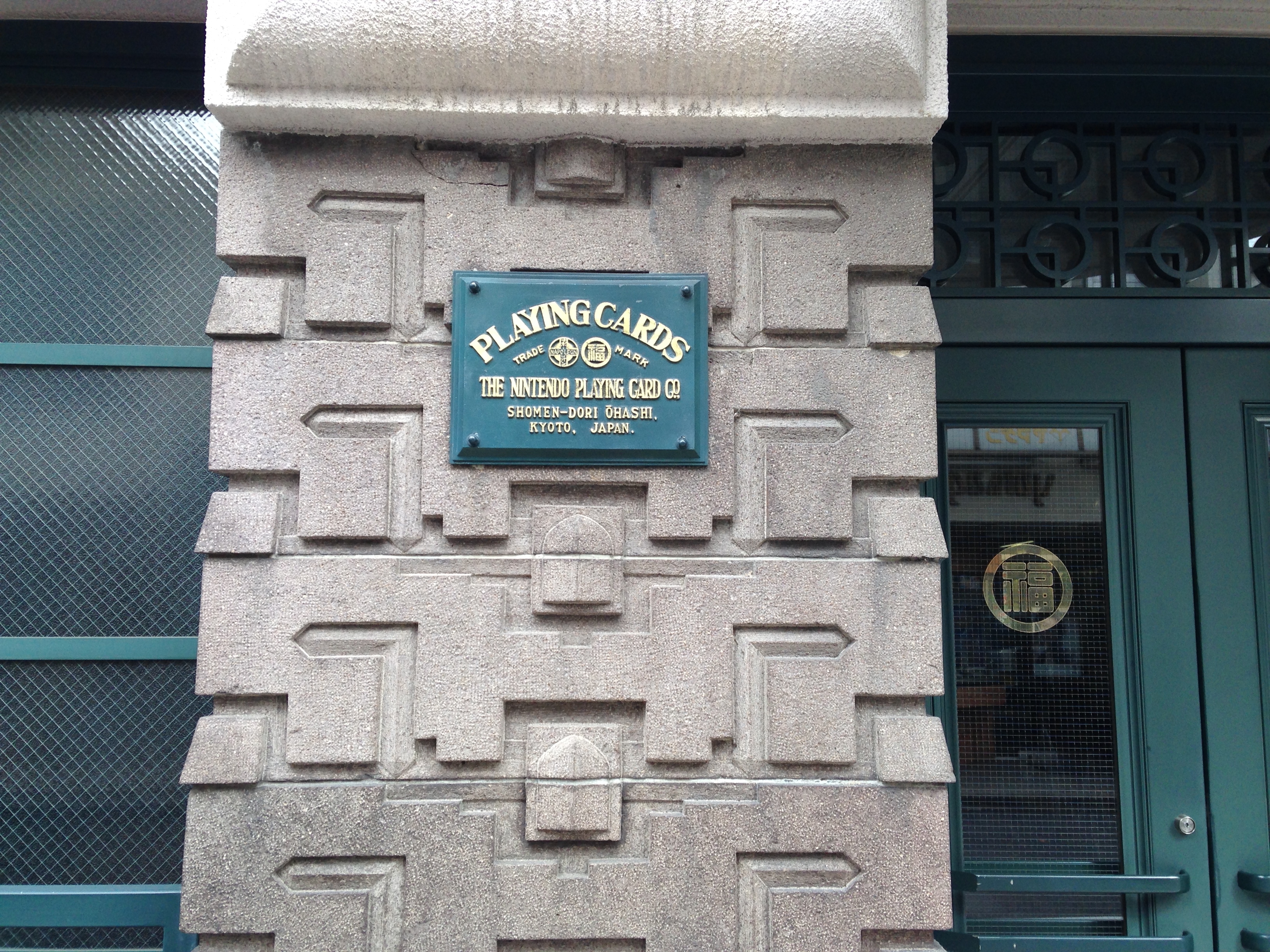
Built in 1933, it sits on the same land as the original headquarters from 1889. While nicely designed with lots of detailed flourishes, it’s an otherwise relatively nondescript building. Except for two plaques:
The sign references Japanese playing cards ‘Karuta’ (かるた) and western playing cards ‘Trump’ (トランプ – Toranpu)
This was their playing card factory and distribution centre before they became a larger toy company, and it has stayed in company hands.
I took a peek inside as well, it is clearly well maintained and clean, and in some form of use.
It appears to have been maintained perfectly from the 1933 until today.
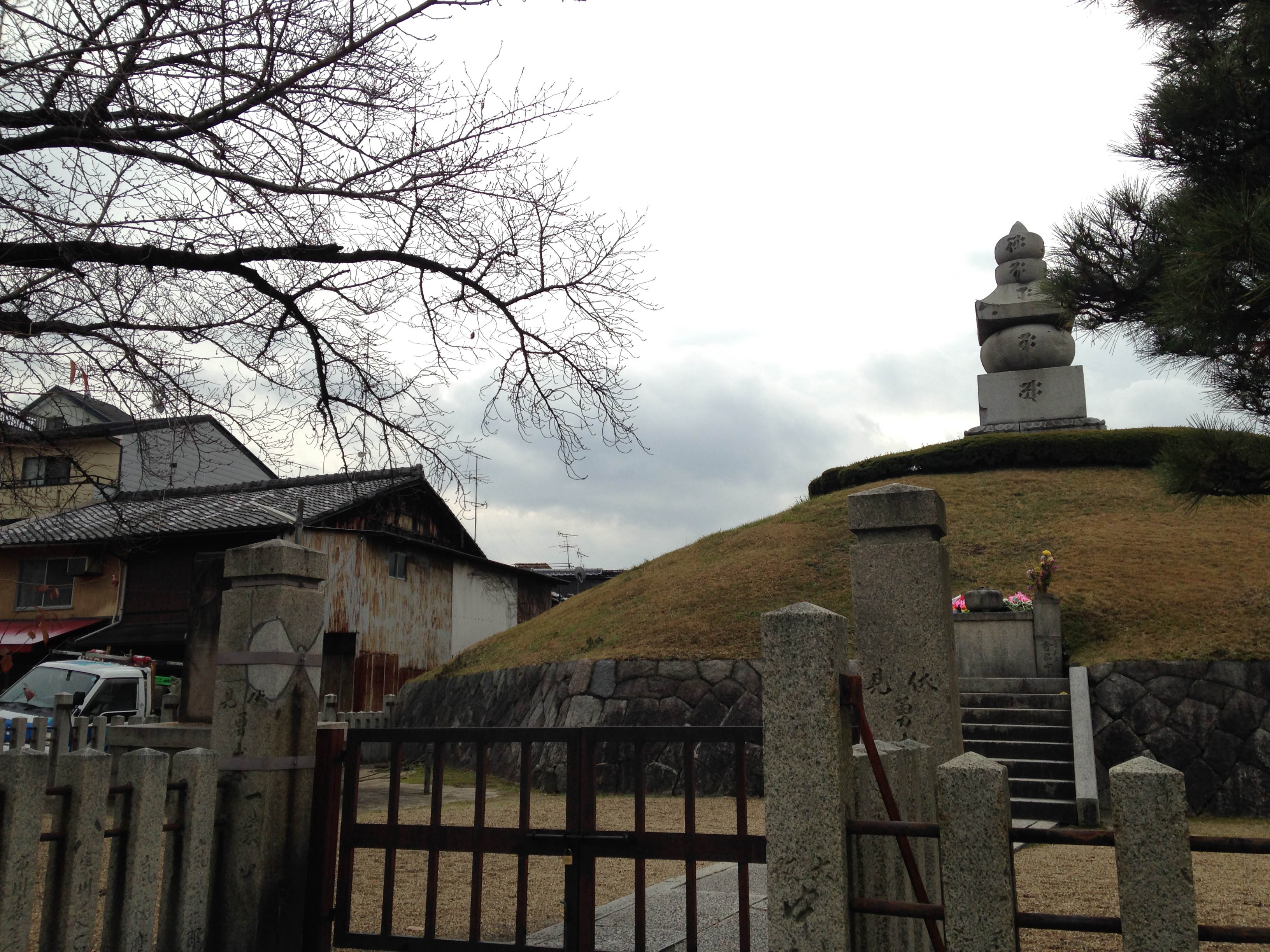
The next stop would be much easier to find. It was about 40 minutes walk away through residential and industrial areas, though we stopped in at a couple of Kyoto’s famous temples along the way.
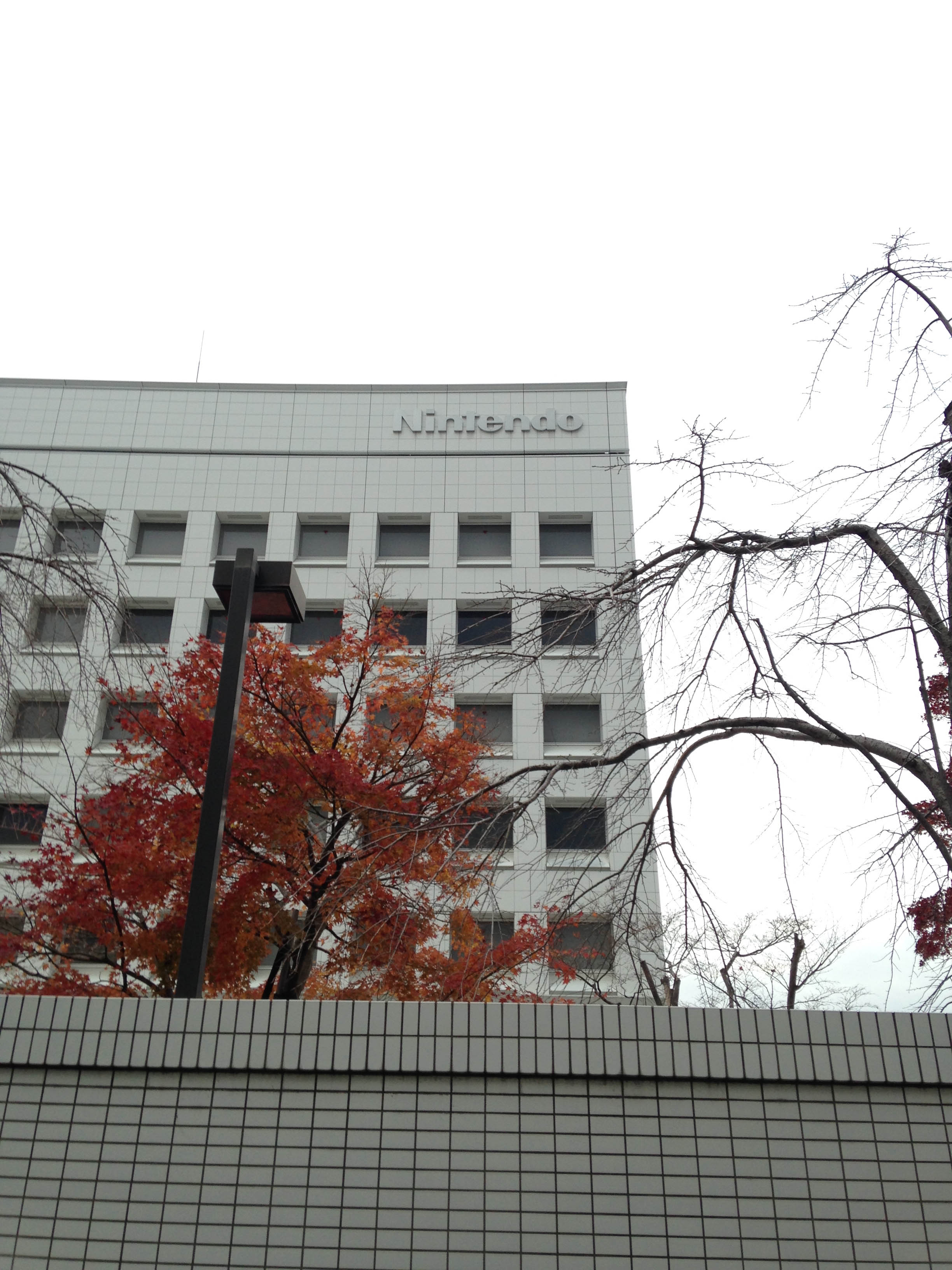
Until it appeared…
Mecca.
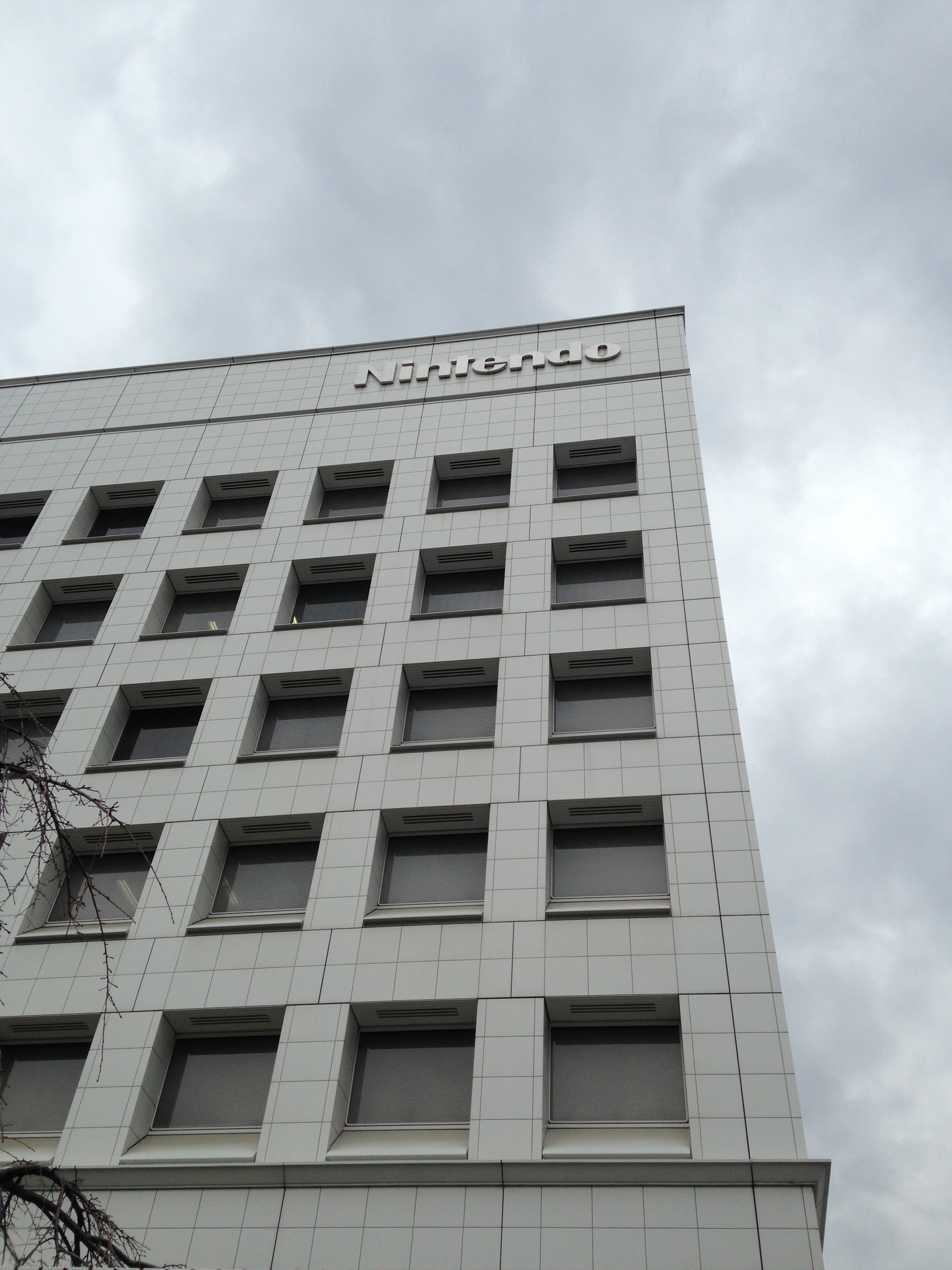
Two blocks away there is the other monolith, the new development building.
Not too much to see, you’re not allowed in either building. But they do have a nice big sign at the development centre.
 Road Fighter, Antarctic Adventue, Hyper Sports, Twinbee, Hyper Olympic, Yie Air Kung Fu, and Goonies.
 Goonies was somewhat of a transition game – it skips the uniform ‘FAMILY COMPUTER’ branded sides of the preceding six releases and started the short-lived ‘puppy face’ icon period. The next Konami release was Gradius, which is I believe the final Konami release to feature the old 70s style logo.
 The next evolution is shown here in King Kong 2 – which maintained the size of Gradius and introduced the new Konami logo.
 Contra is an early example of the final evolution, with the artwork framed by a bright colour which covered the rest of the box, and the Konami logo on a white background in the top left corner. Almost every Konami game for the rest of the Famicom generation followed this final template.