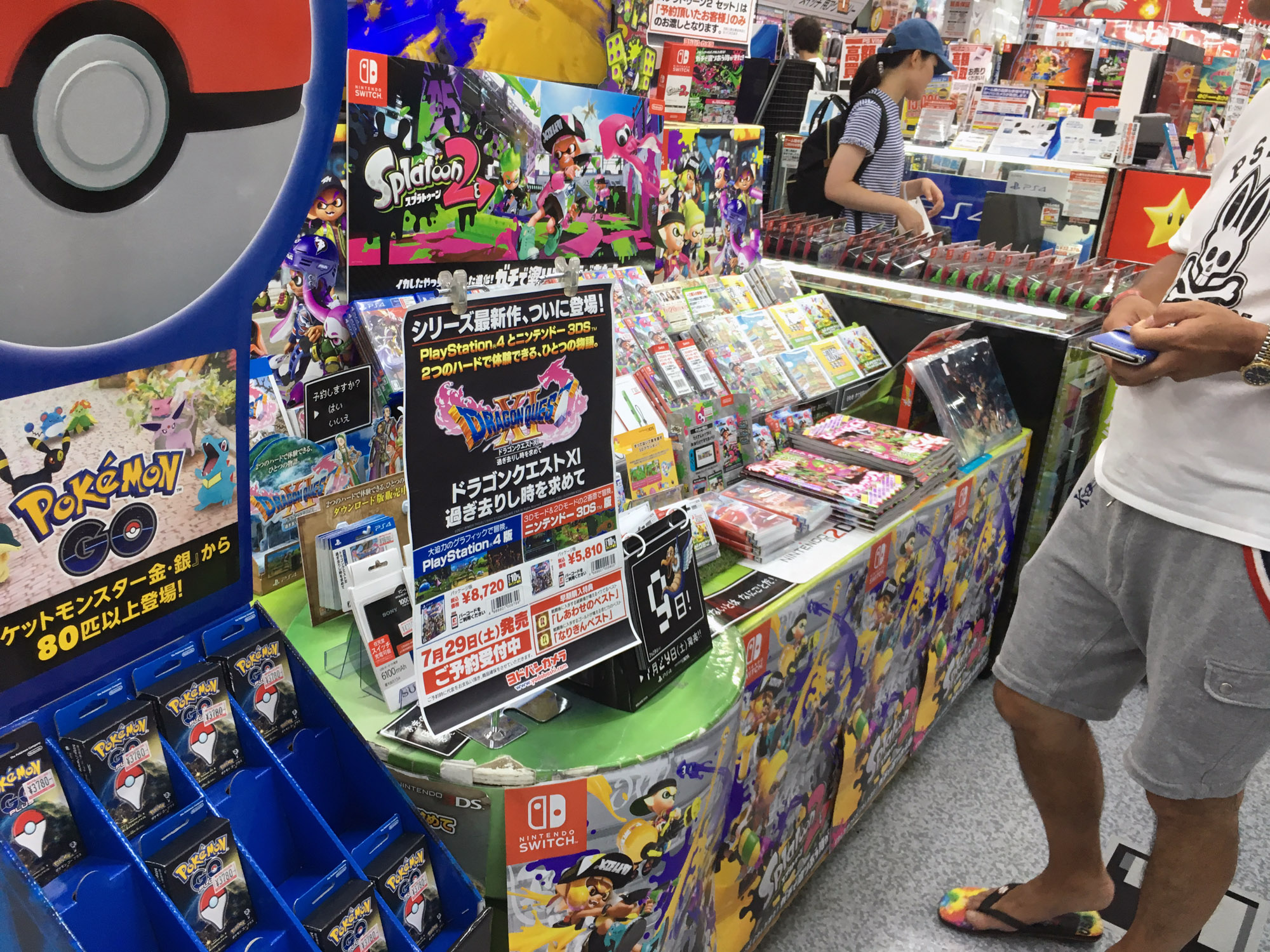
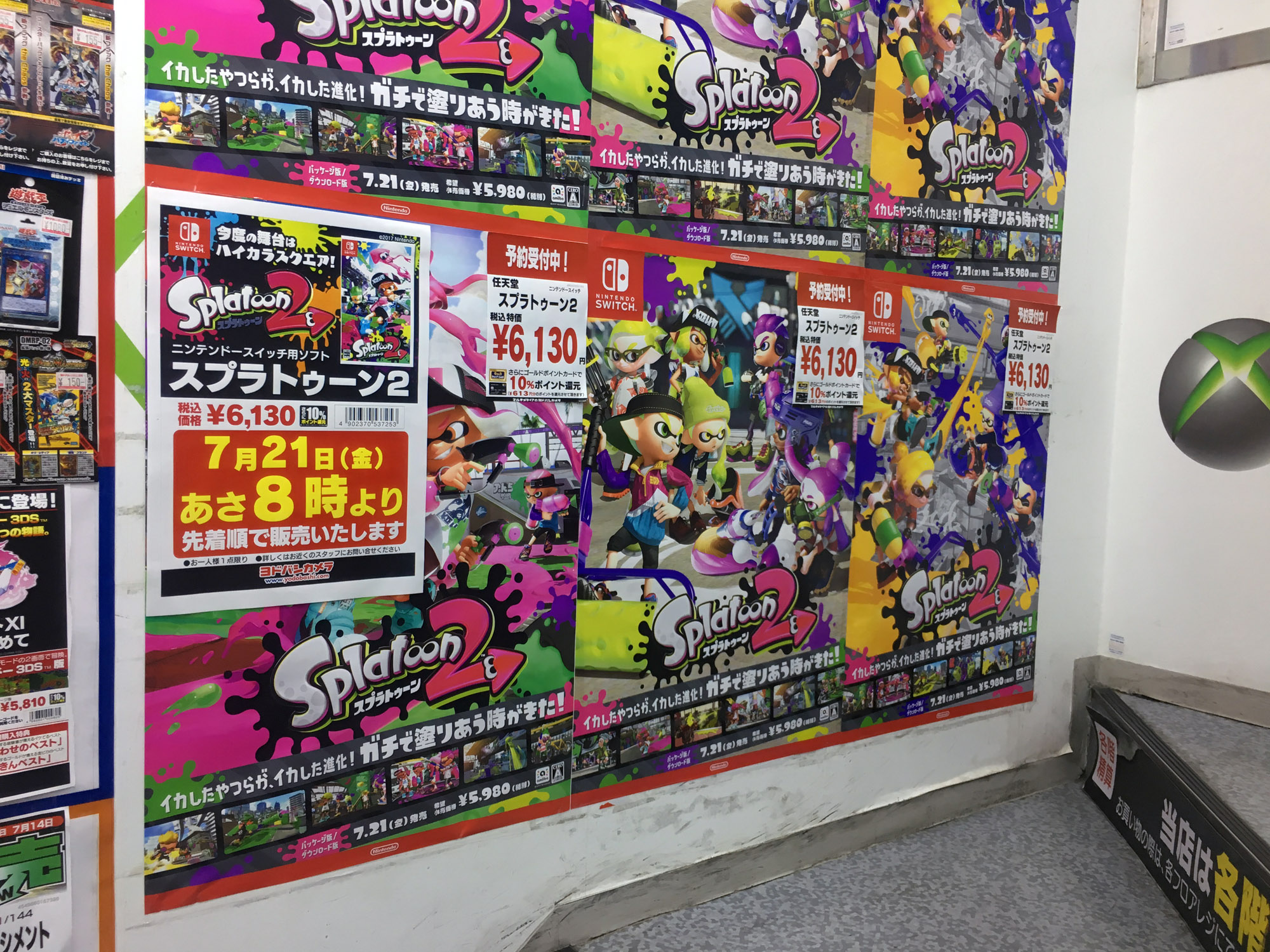
Splatoon 2 launched on a Friday, so most people were at work. Shops in Akihabara open at 10am, and many were ready for early buyers.
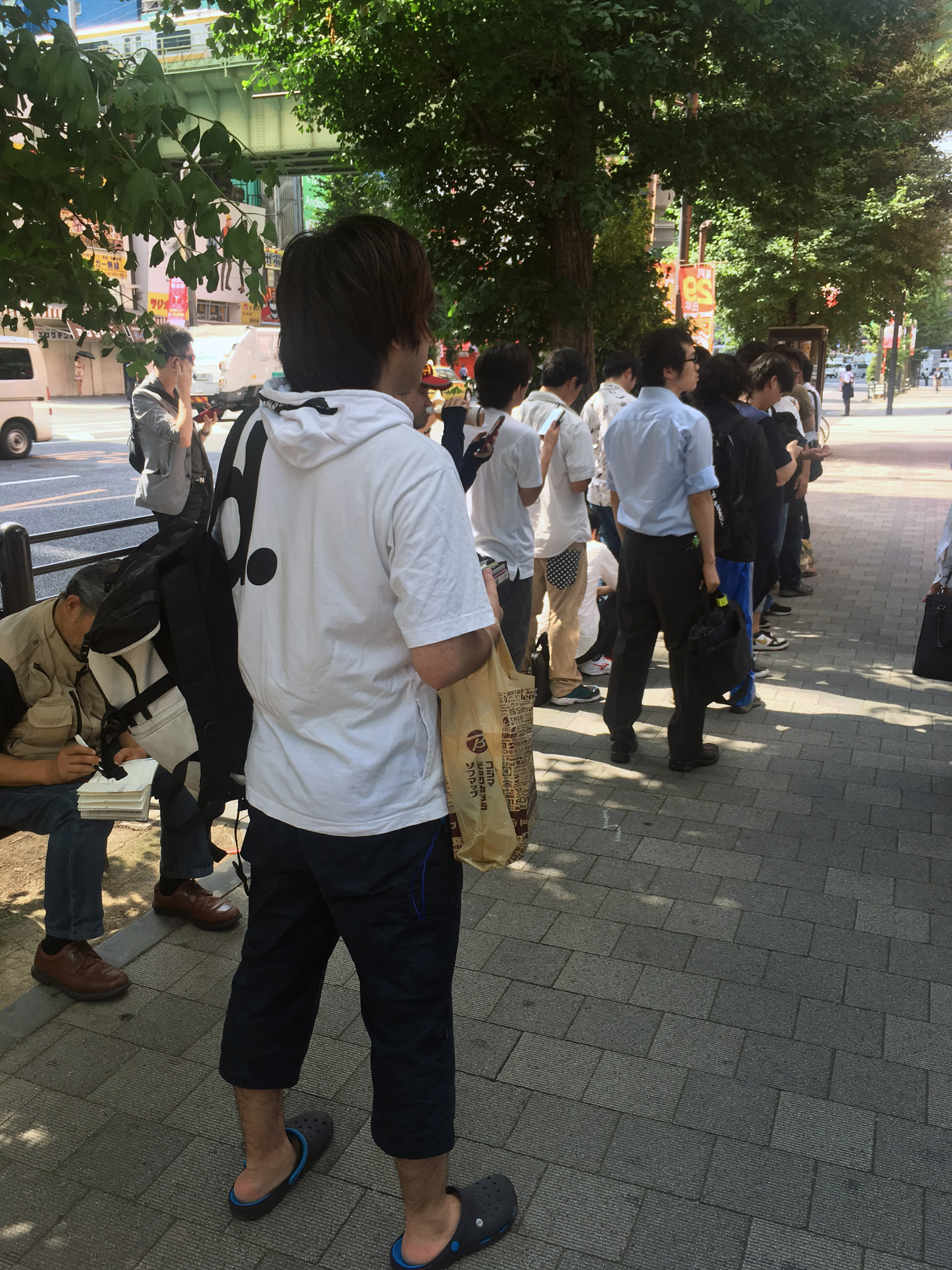
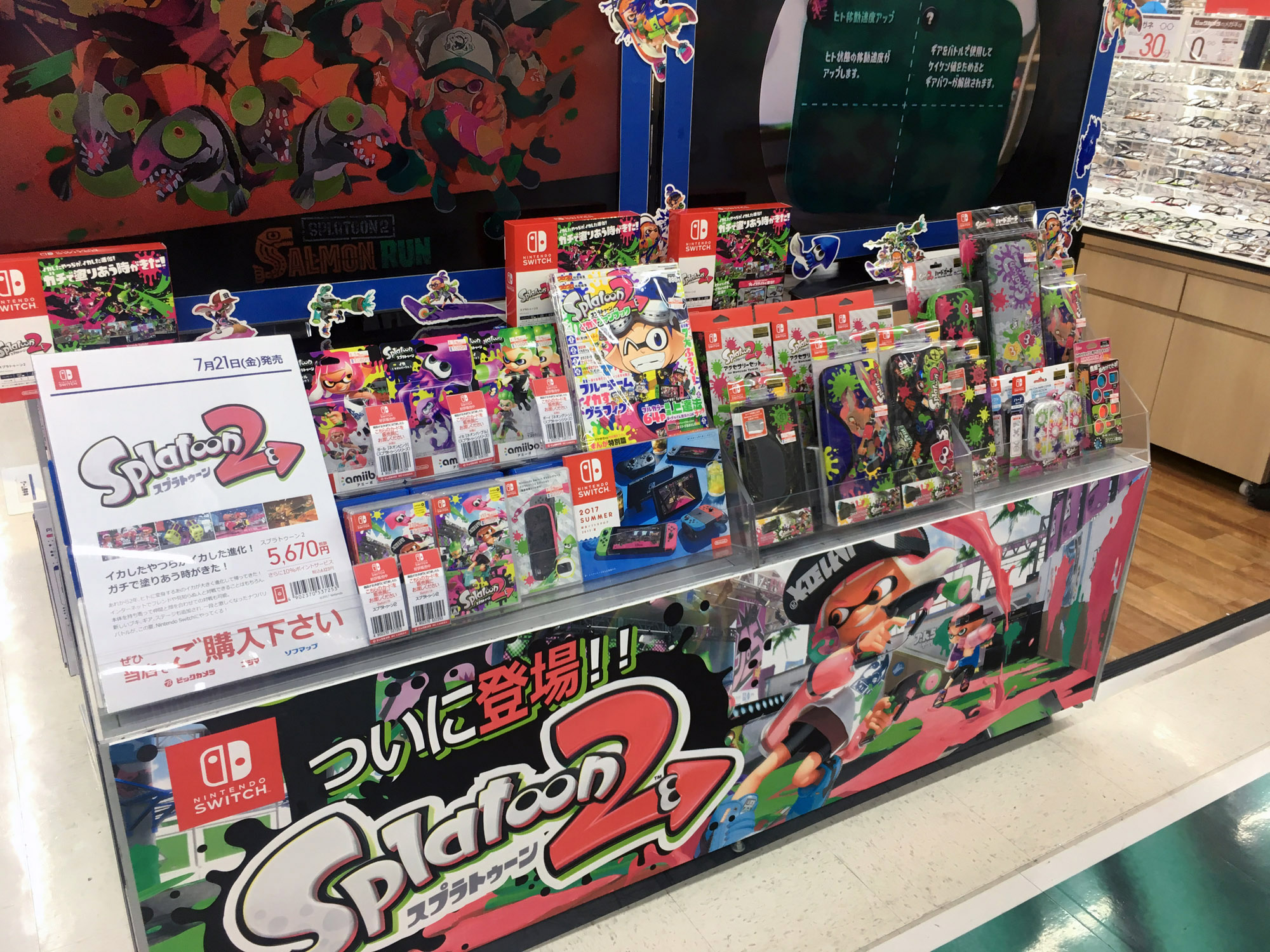
Some larger stores like Sofmap, Bic Camera and Yodobashi Camera set up shopfront stalls, selling the game and related products.
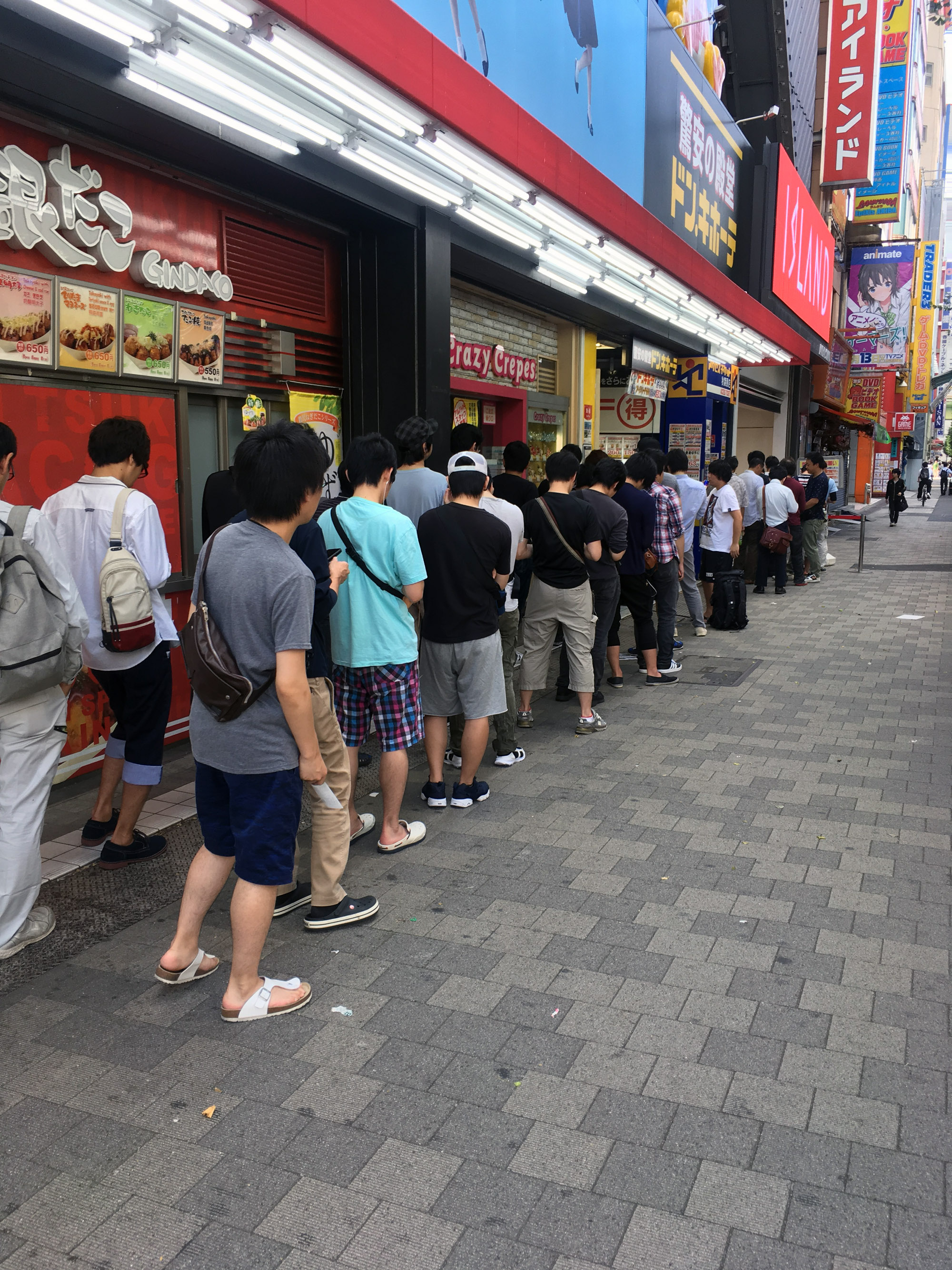
There were some small lines
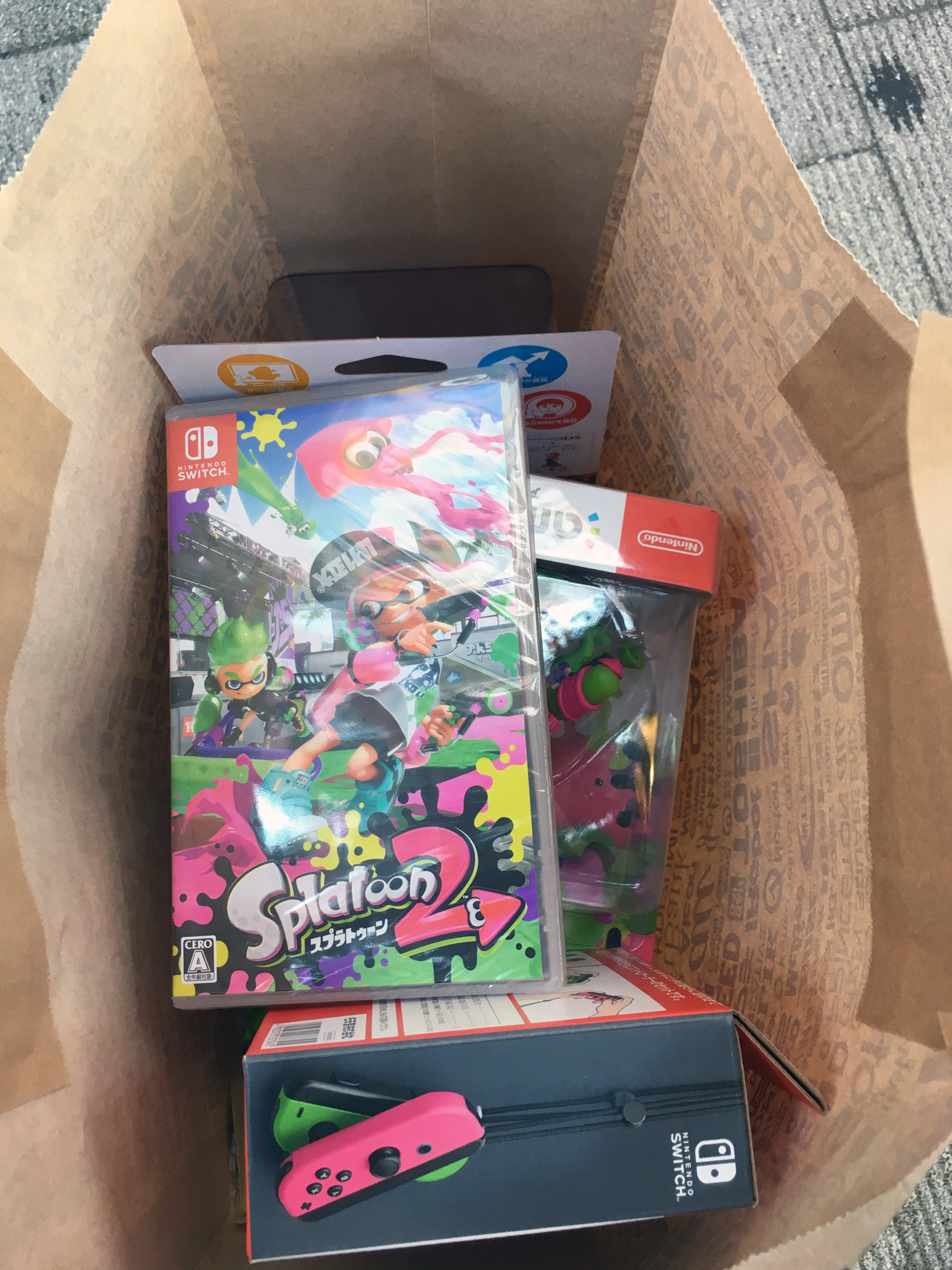
But there was plenty of stock to go around, so it was easy enough to get the game and related items, like Amiibo and neon green/pink joycons. If you were lucky, there were also a few of the licensed (in-game brand) Forge headsets available.
My personal haul
The bigger stores were very busy however – there was a 20+ minute wait at the counter at Yodobashi for example.
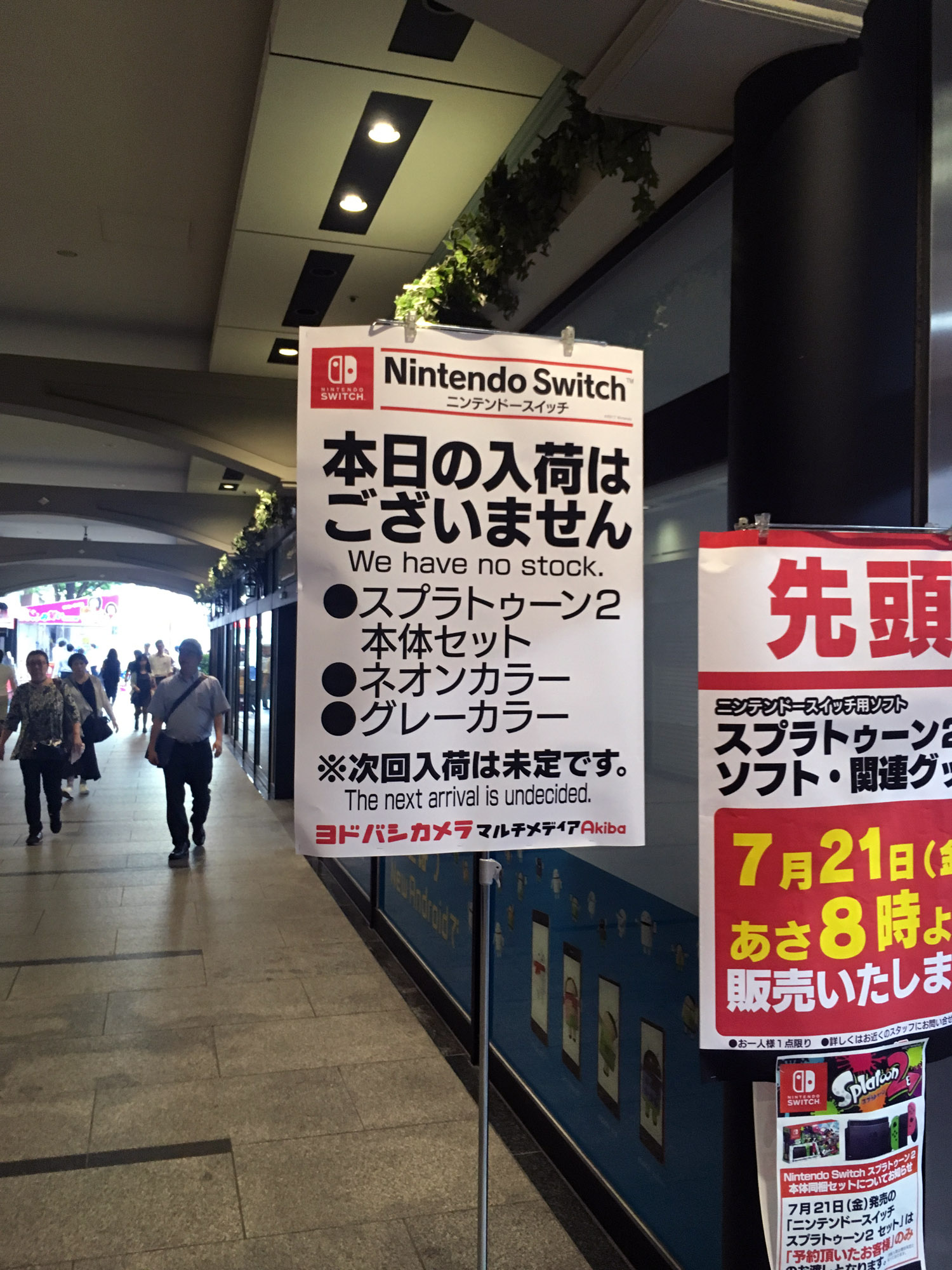
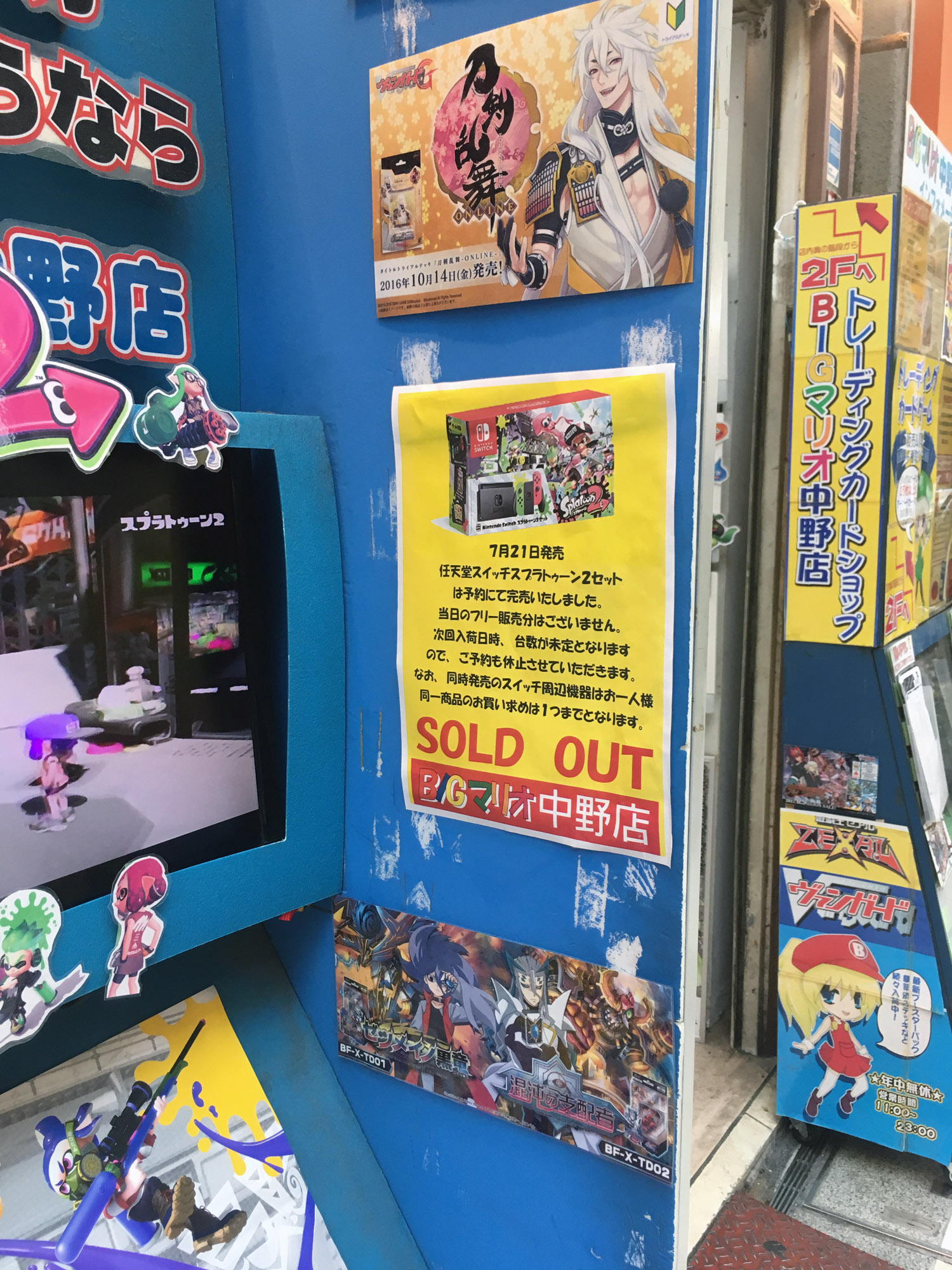
While the game was easy enough to obtain, it’s not so easy to get a Switch console in Japan. This is what you see in most places at the moment:
Demand is off the charts and all Switch consoles sell out instantly. Stores only get a certain allotment of consoles, and to determine which customers get a chance to buy one, they run lotteries.
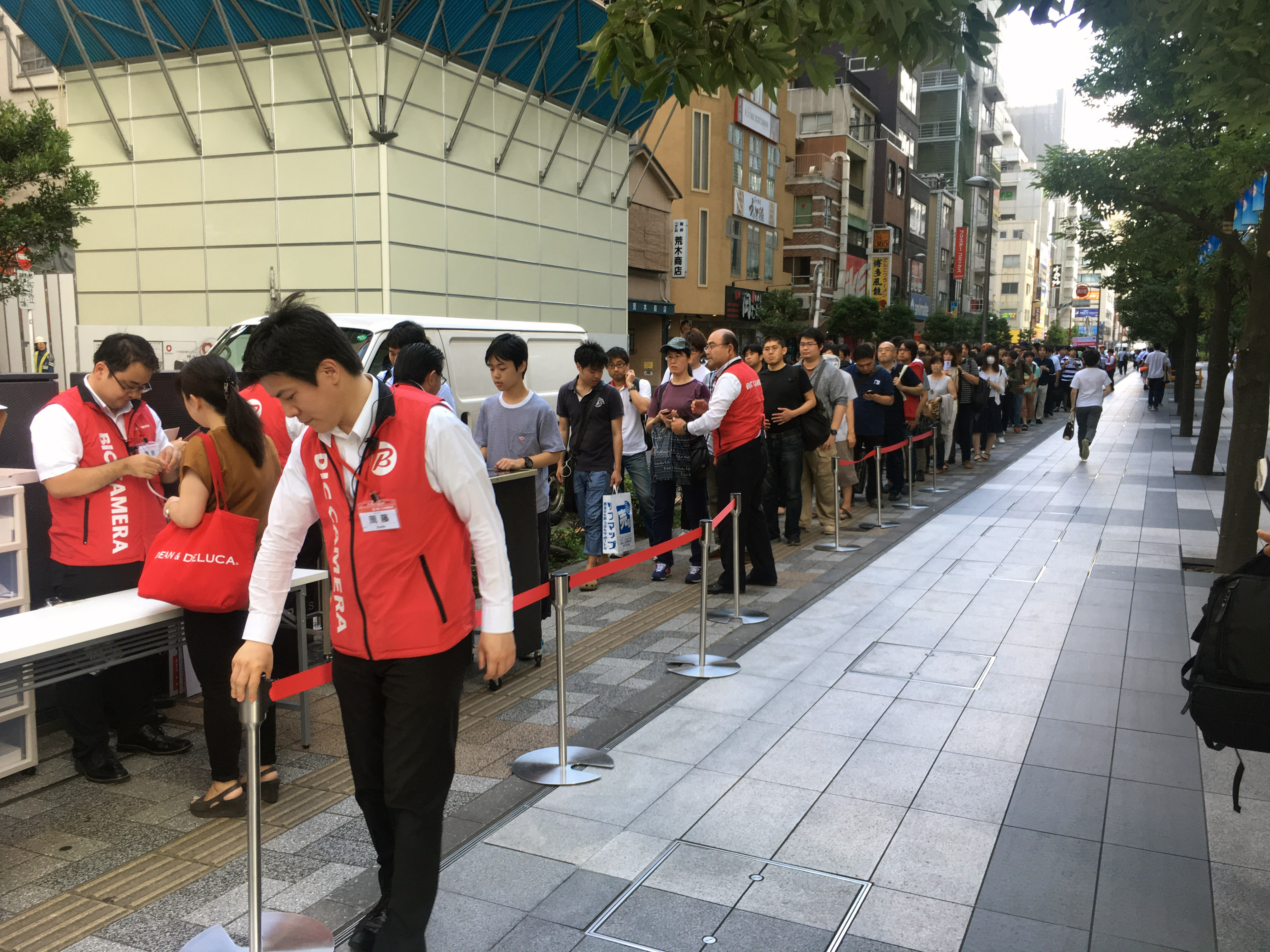
Literal lotteries. Customers are asked to line up at a certain location from 8am and take a number. Later in the day, they draw numbers, and the winners now have an opportunity to buy the console.
There was another lottery the next day for the regular edition of the console
This was the line to take a number at the Akihabara Bic Camera store.
After getting your number, you can go about you day shopping, and return for the results announcement.
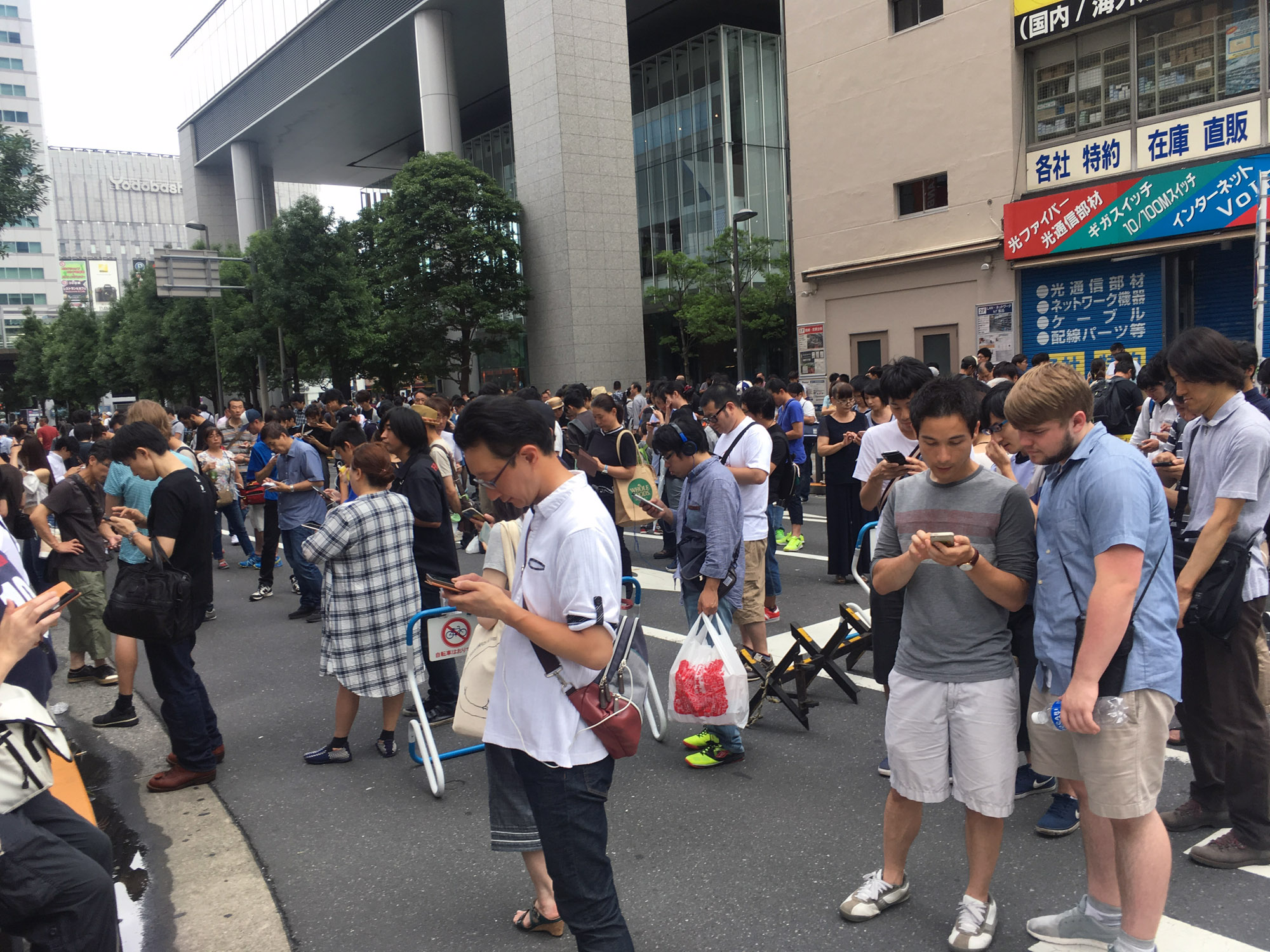
Entrants in the lottery awaiting the results
The results are posted at the front of the store.
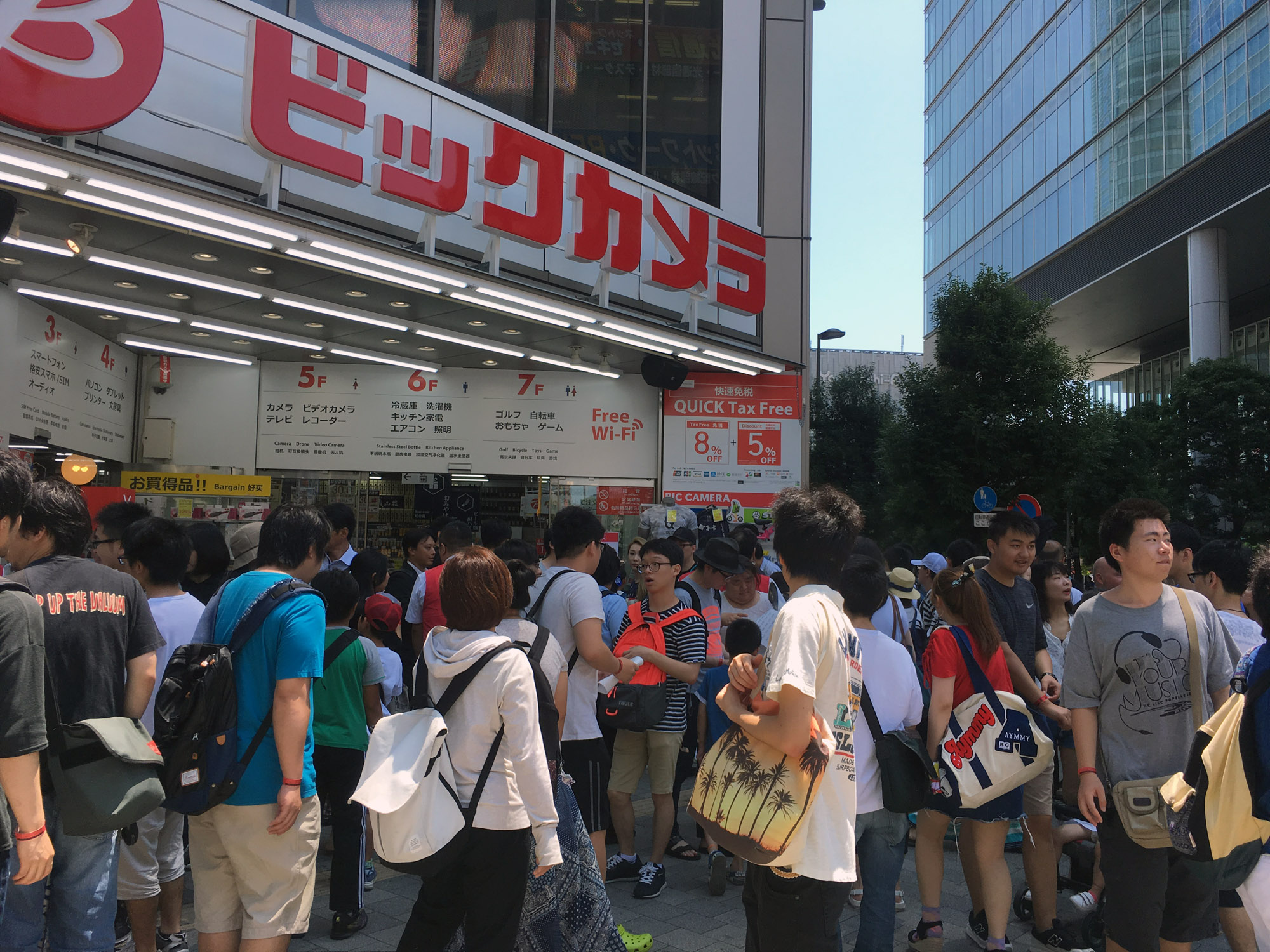
The Splatoon 2 booth was quite busy with buyers at this point, and combined with the rush to see the Switch lottery results, a crush took place.
Bad luck if you didn’t win, try again tomorrow.
Or you could buy from scalper stores for double the price!
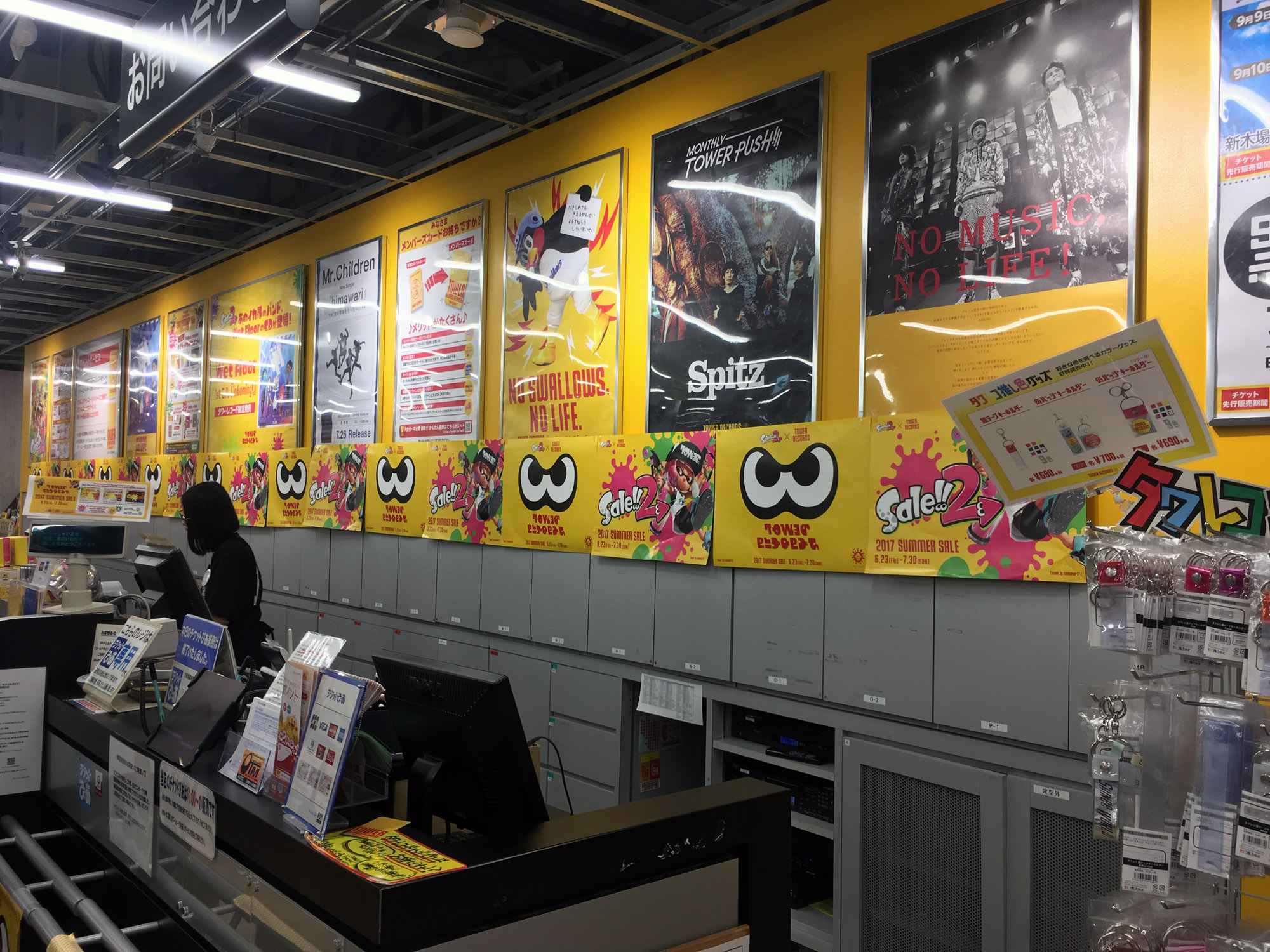
More Splatoon store displays
After a long day of observing the craziness, I finally got home to get playing myself.
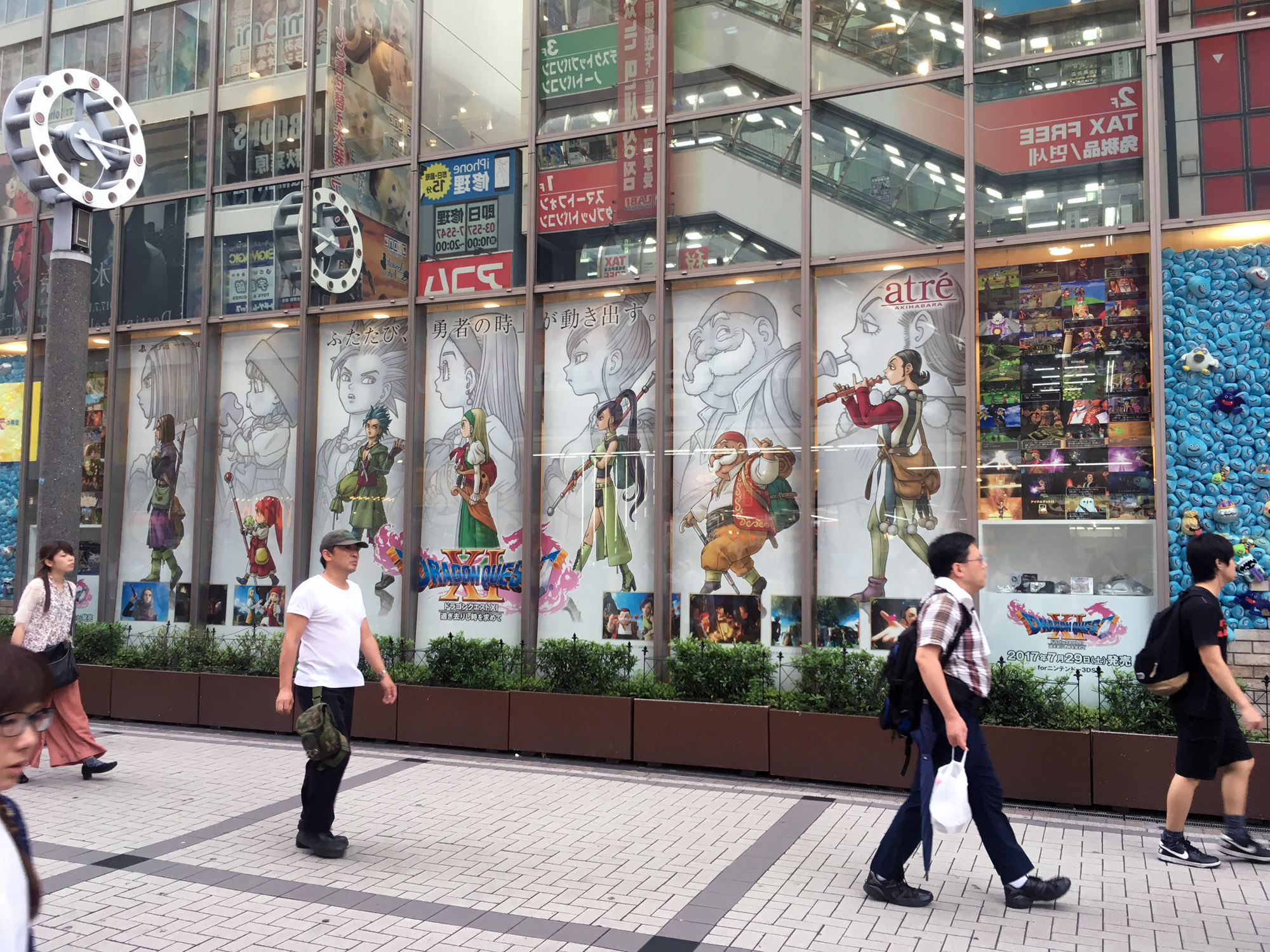
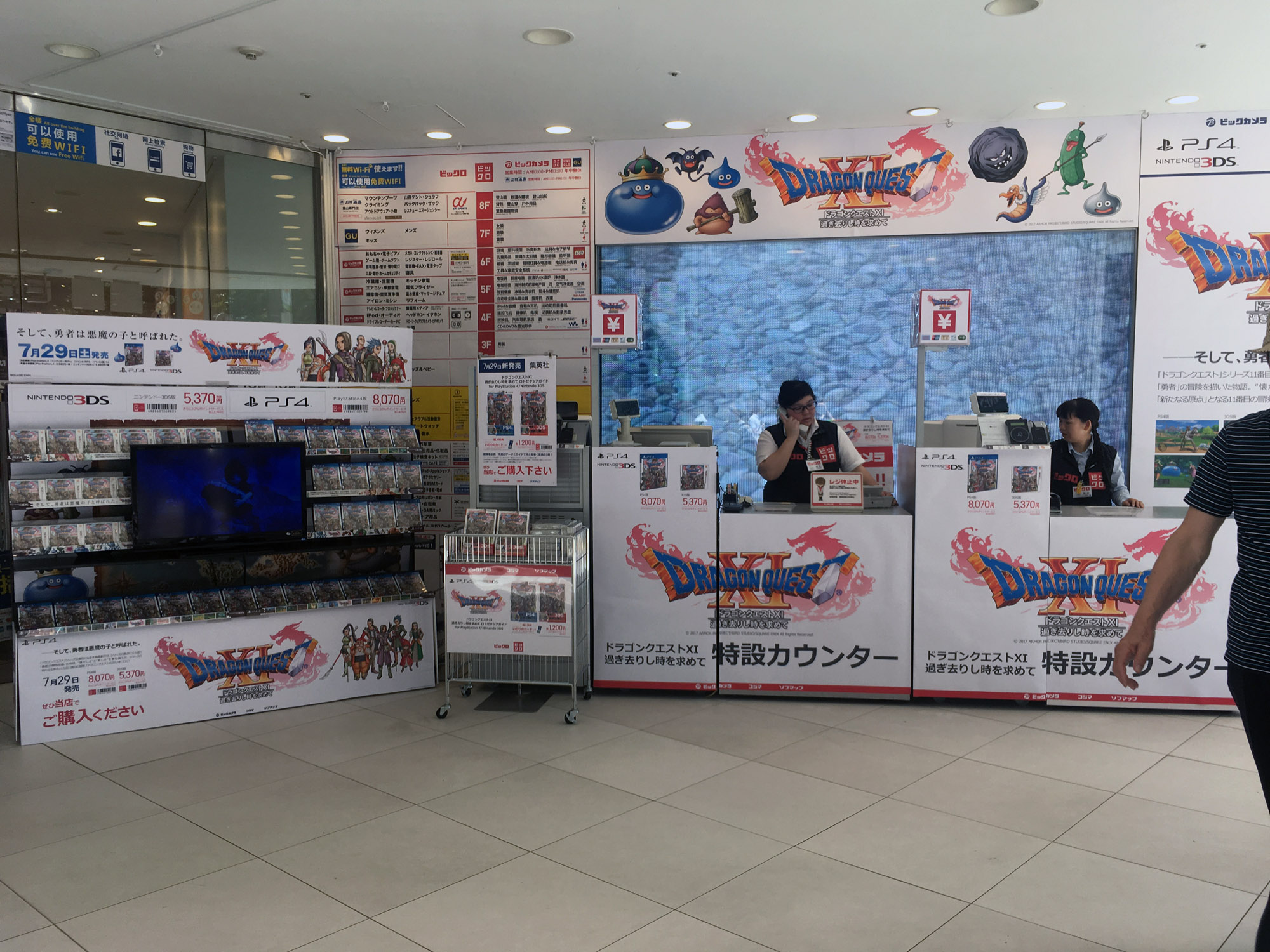
While Japan got ready to do it all again a week later for Dragon Quest XI!
While I mostly focus on retro stuff on this site, I’ve recently gotten back into modern Nintendo games. And there is nothing more modern, more Nintendo, and more Japanese than Splatoon, a game about punk-rock fashion-conscious highly evolved transforming squid children playing ink-shooting games in a post-apocalyptic future world. Oh, and it features singing idol girls and is set in a suspiciously Shinjuku/Harajuku looking city. The first Splatoon was huge in Japan, despite the fact the console it was released on, the Wii U, was not. It was a crossover cultural hit with huge merchandising success, and is easily the highest selling home console game in the current generation in Japan, selling more than even huge names on PS4 like Final Fantasy and more recently Dragon Quest.
On top of this, Nintendo’s new system, the Switch, is also a huge hit, having been constantly sold out since launch. Recently these two things combined with the release of Splatoon 2 on Switch. And as expected, Japan has gone crazy for it.
Advertisements
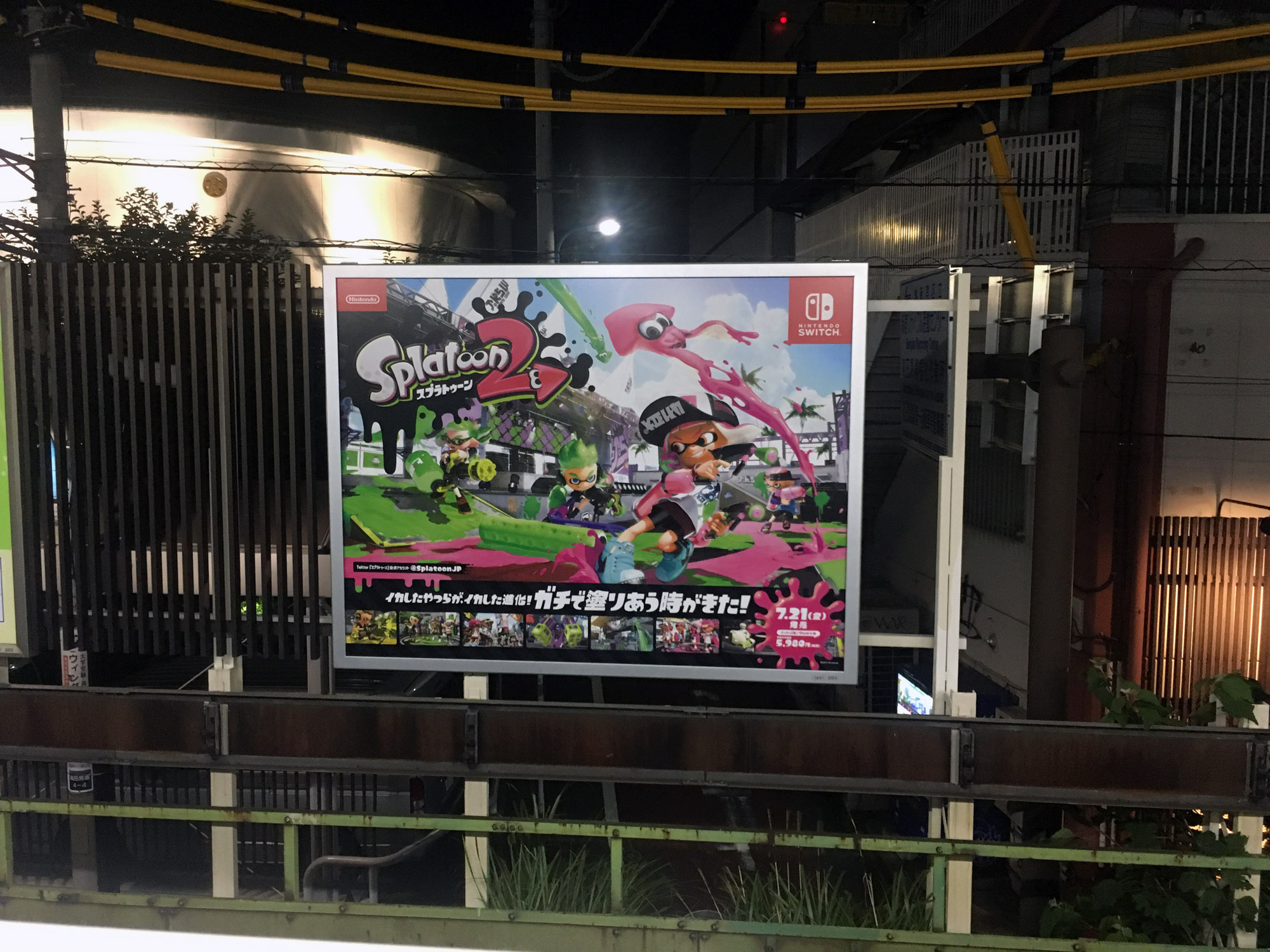
Nintendo has gone all out with ads for the game, with many TV spots, ads running in trains…
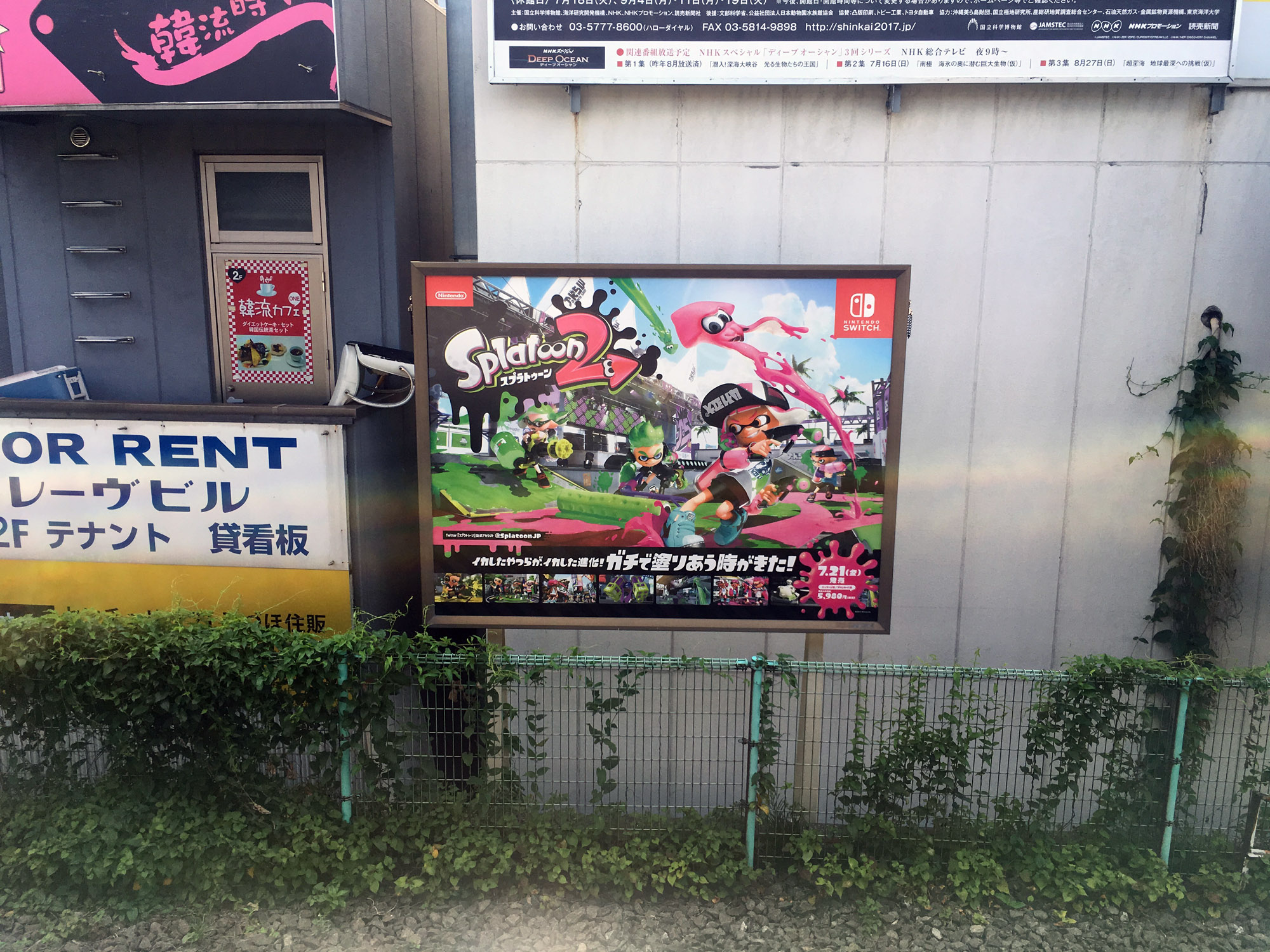
…and standard posters around the city.
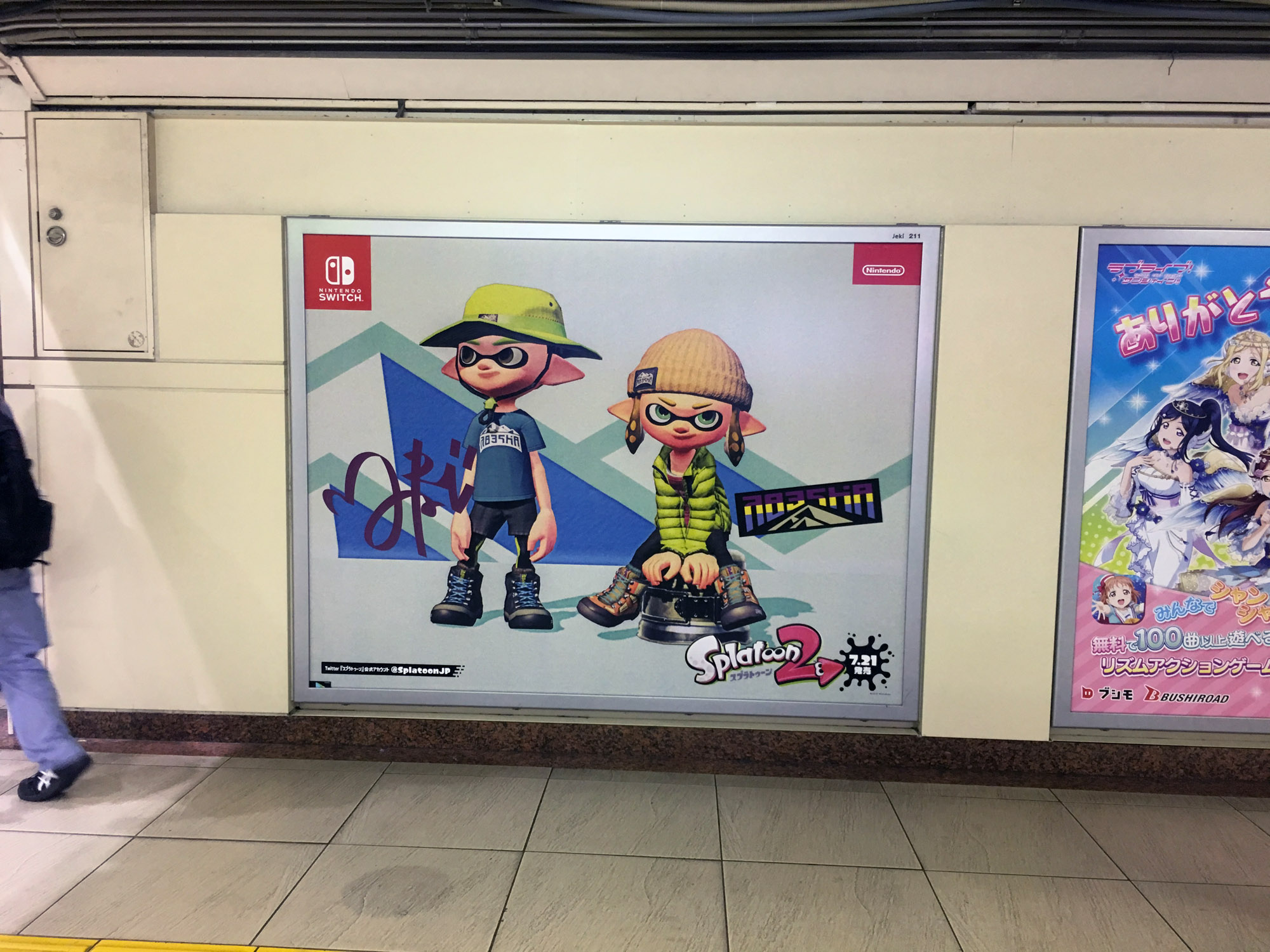
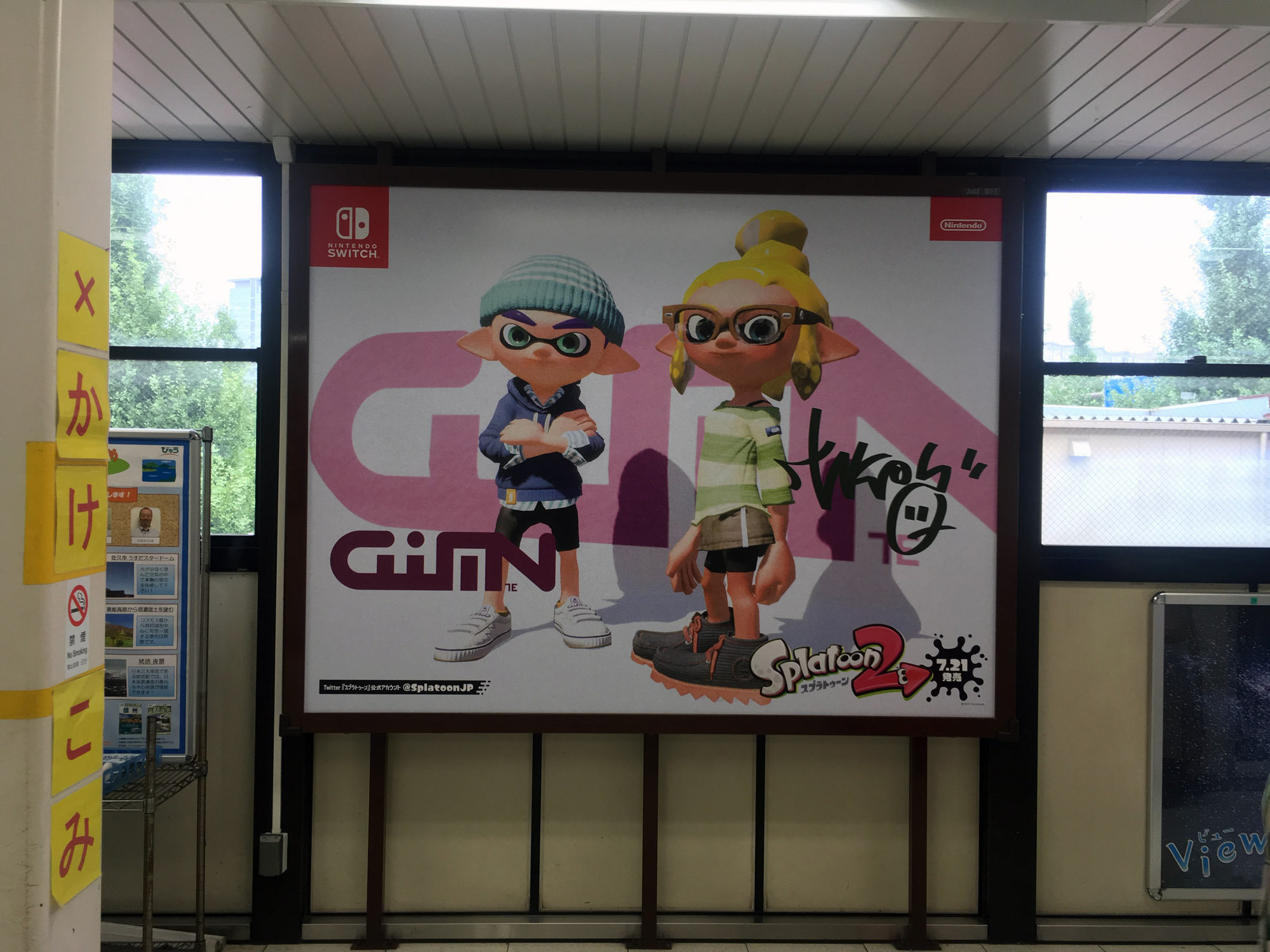
But what sets the Splatoon 2 campaign apart are these: Fashion ads for the in-game brands.
Merchandise
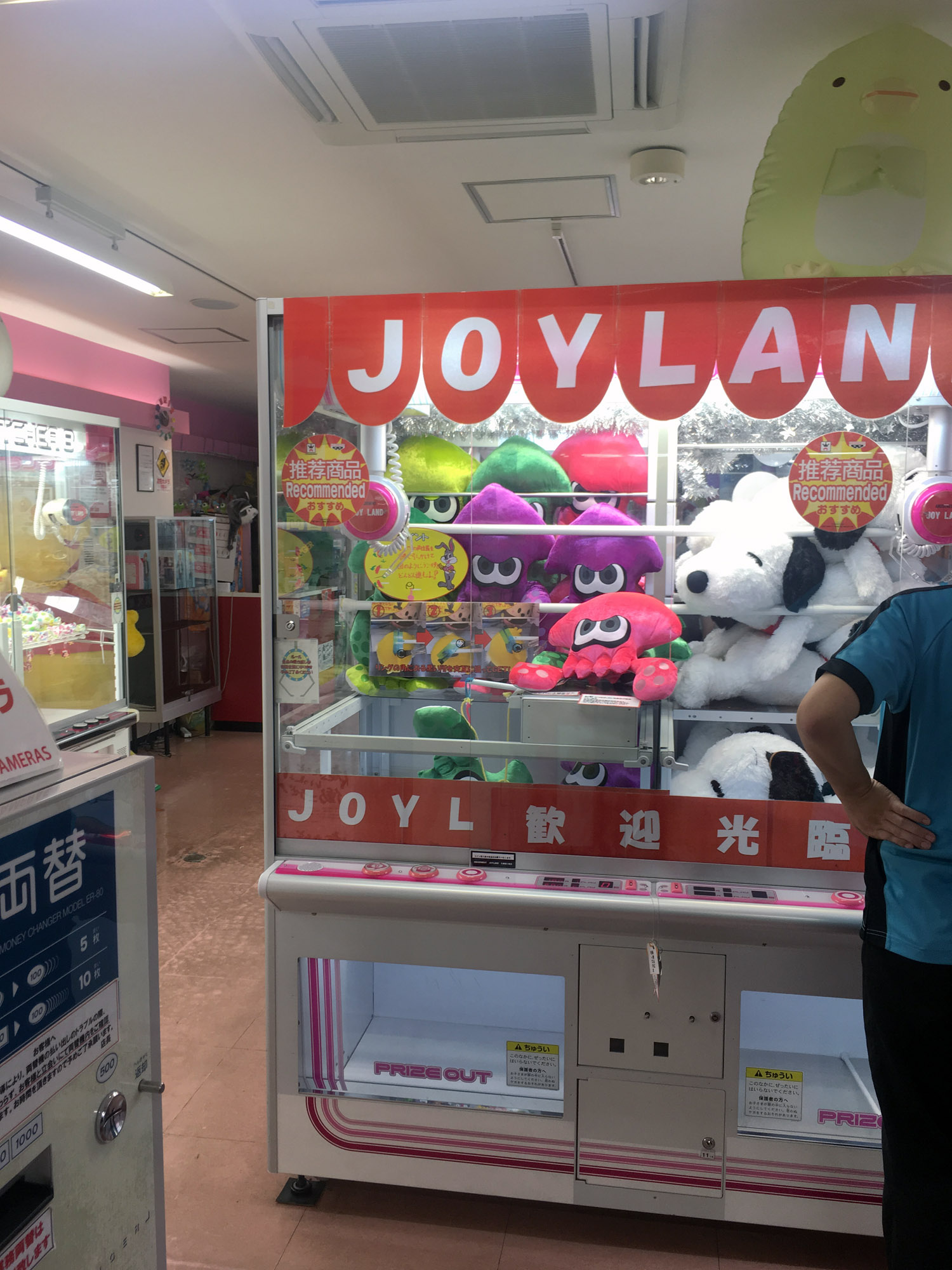
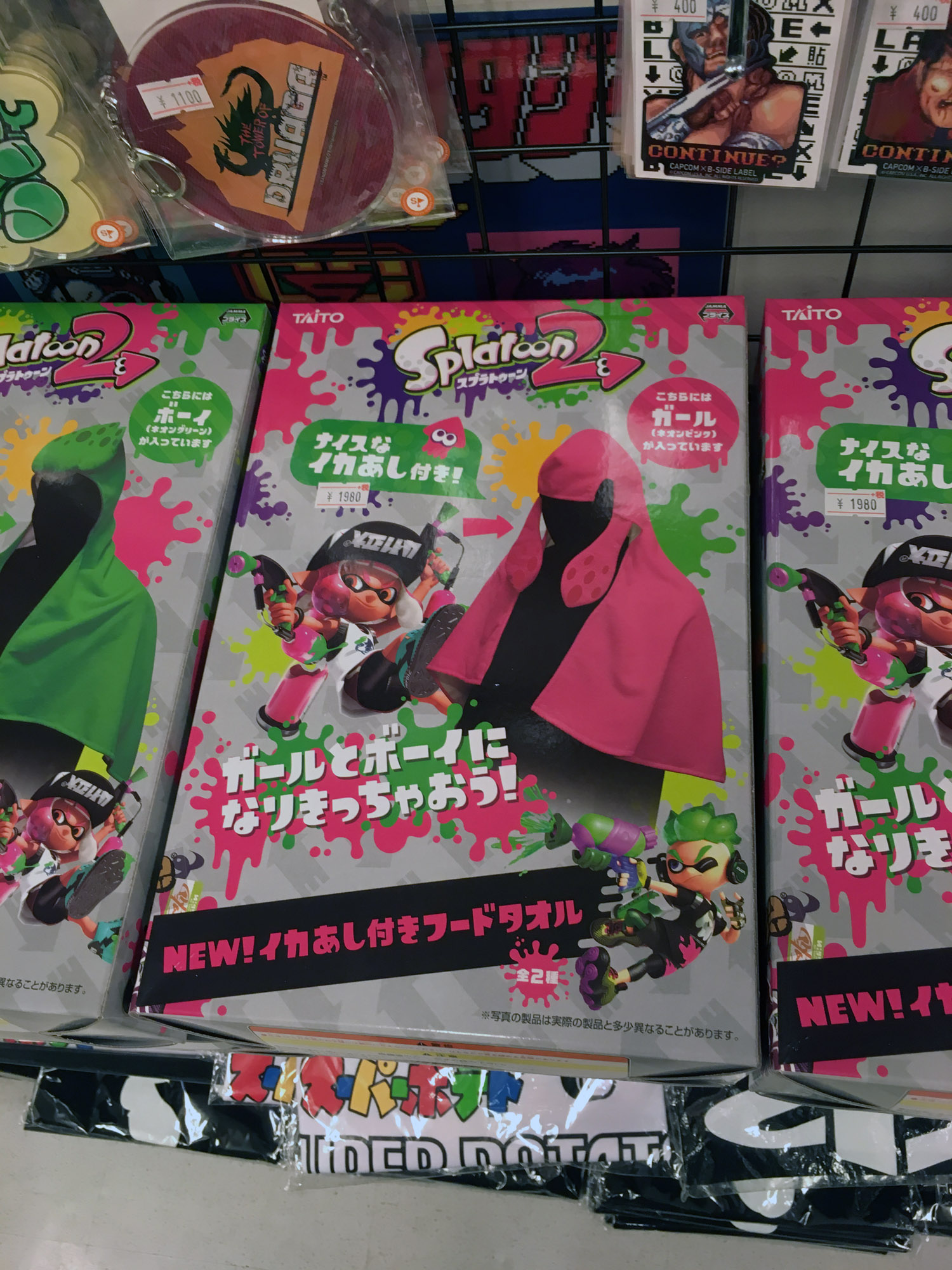
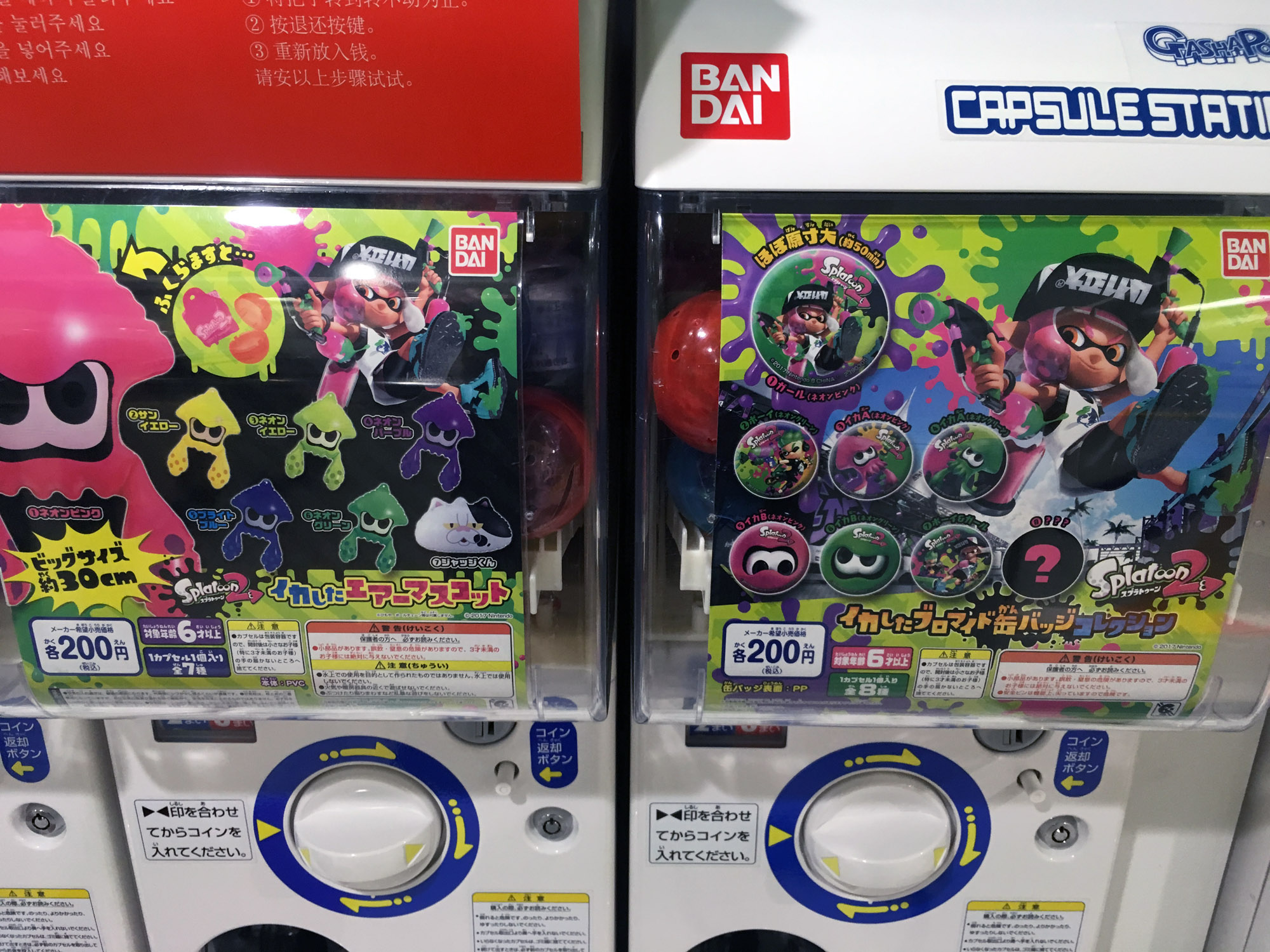
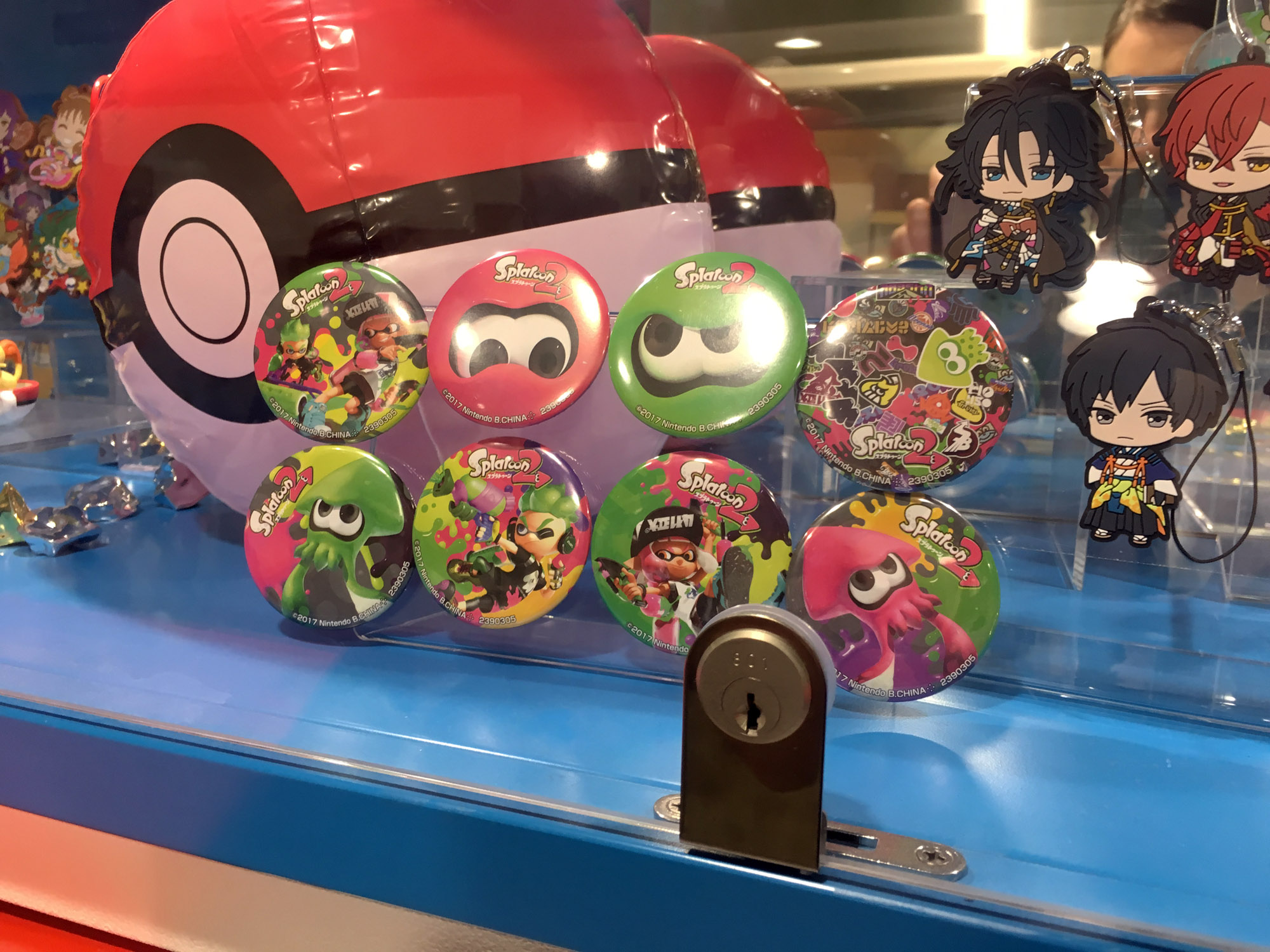
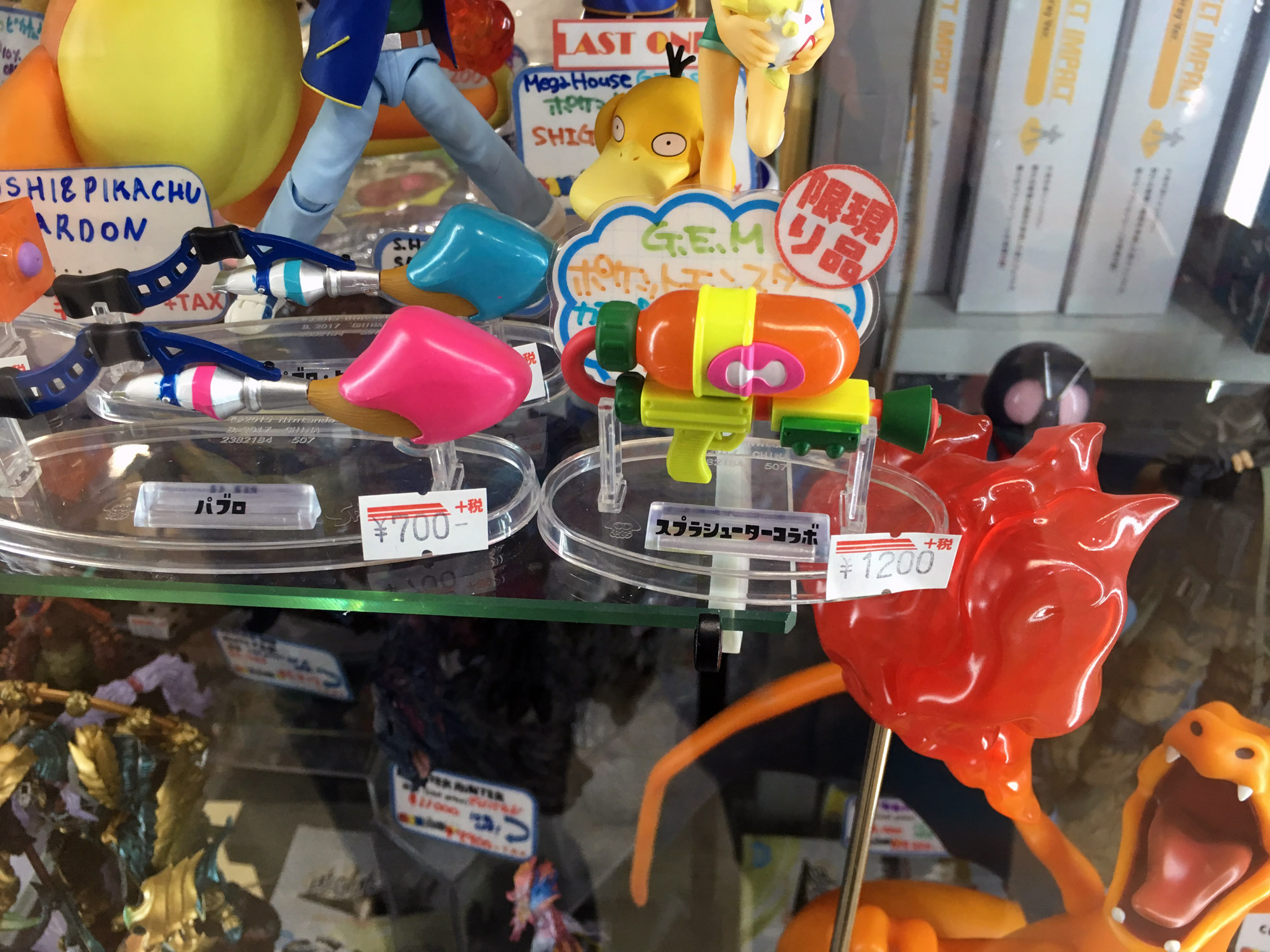
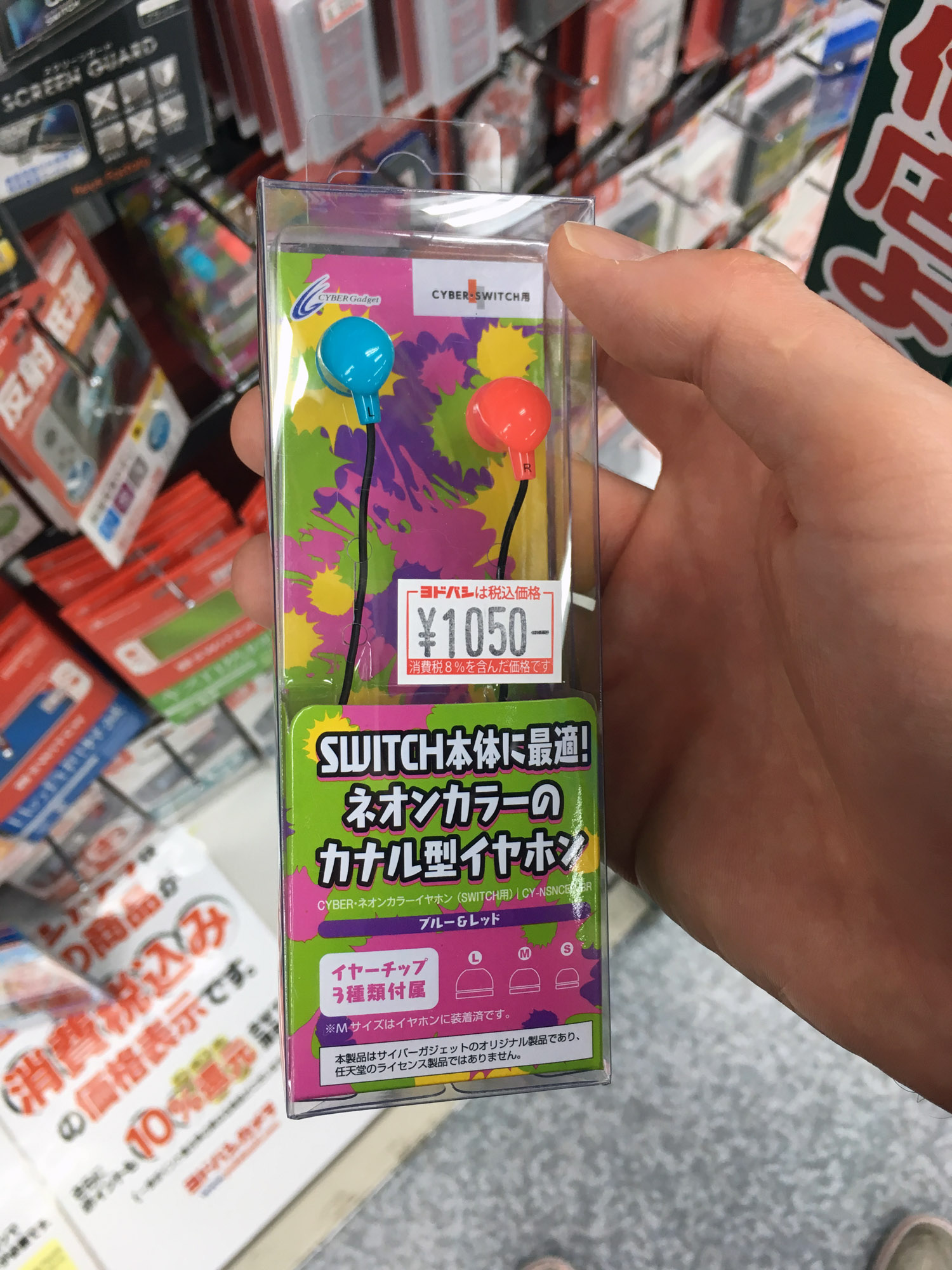
You can’t really go anywhere that sells toys or games or trinkets of any sort without coming across Splatoon merchandise. It is everywhere in all cities countrywide.
Many companies without a licence are using the ‘rainbow paint’ motif to sell their gaming wares too.
In store displays and ads
Tie-ins
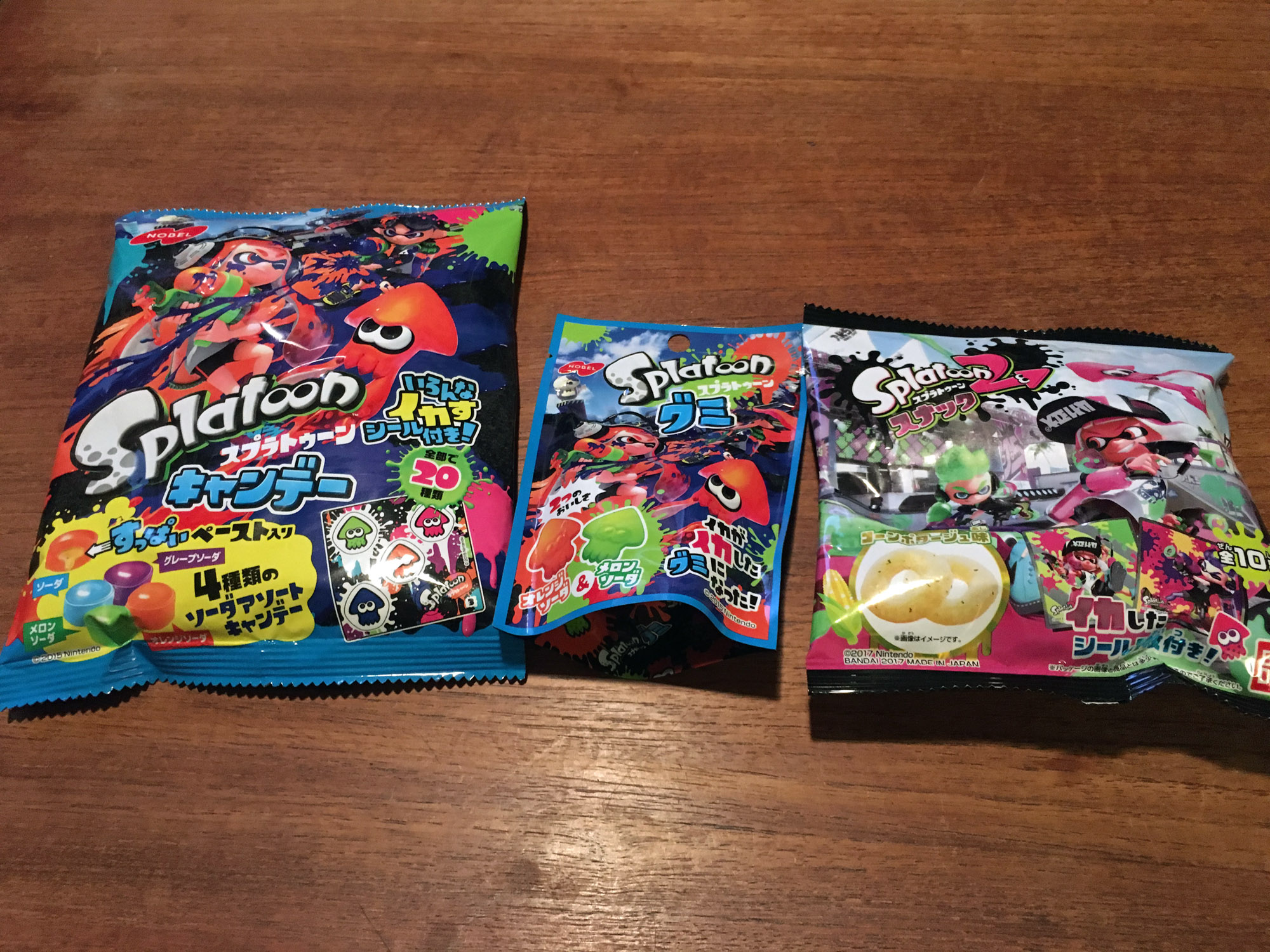
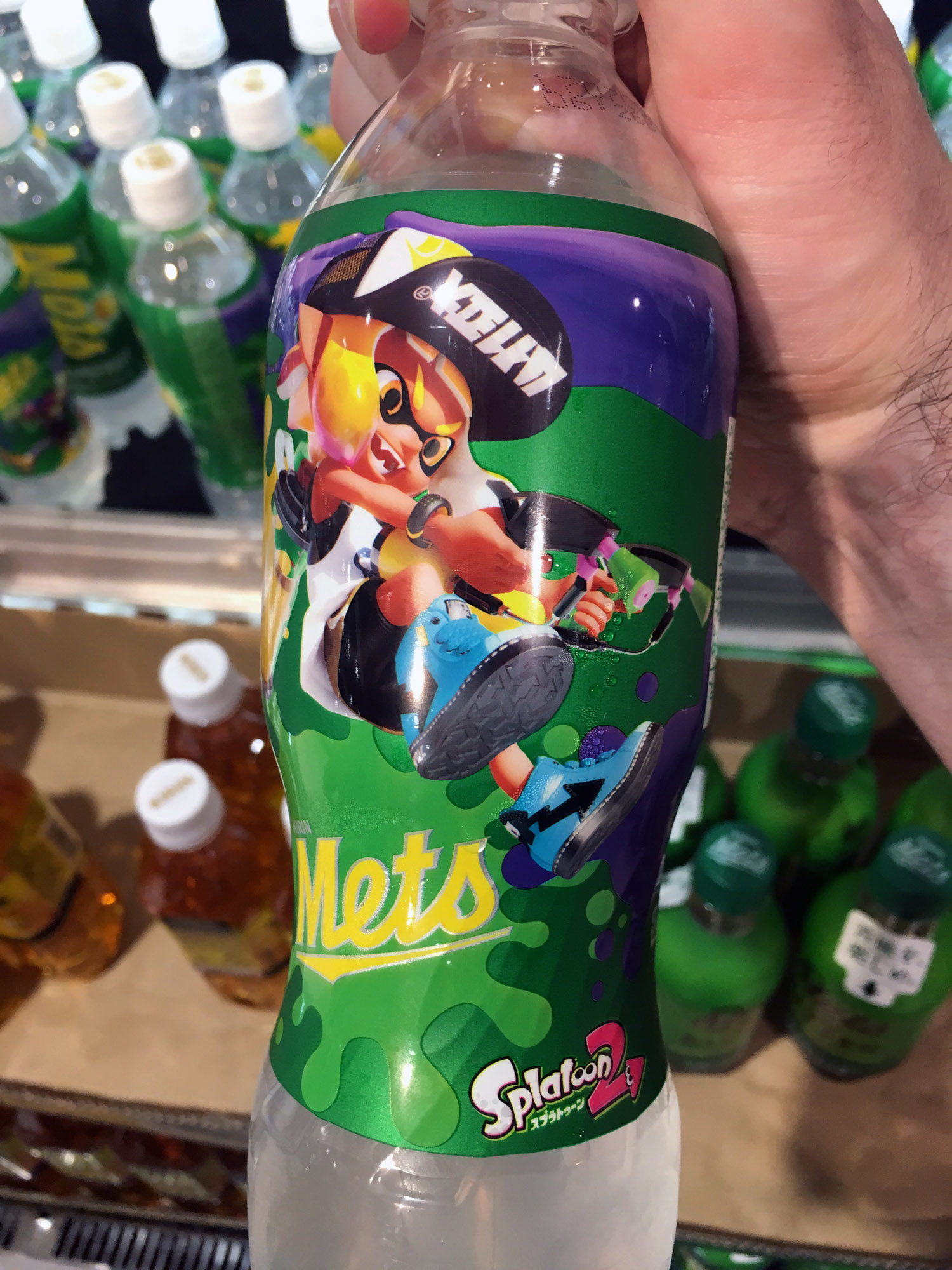
You can buy all sorts of licenced snacks and drinks
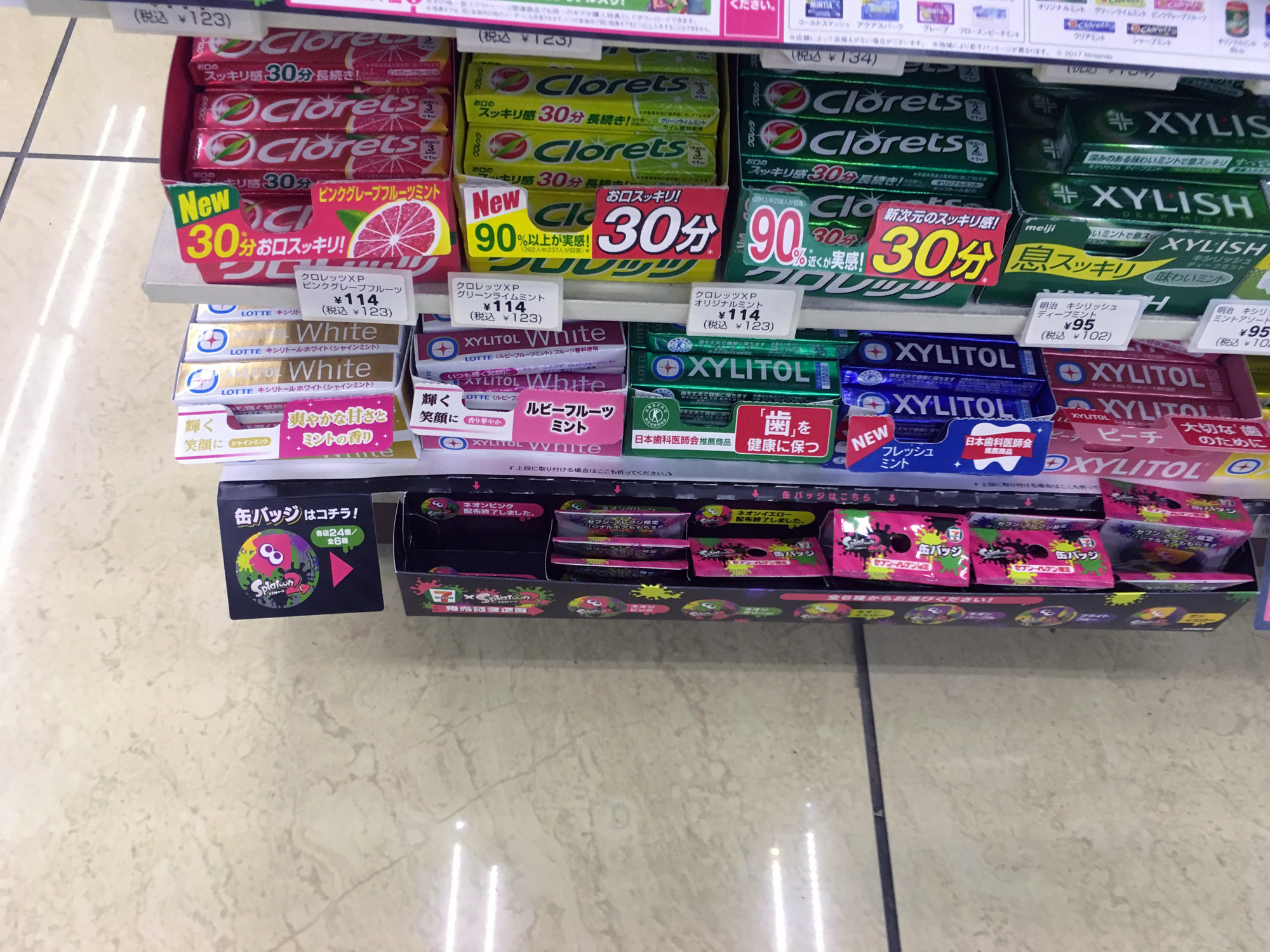
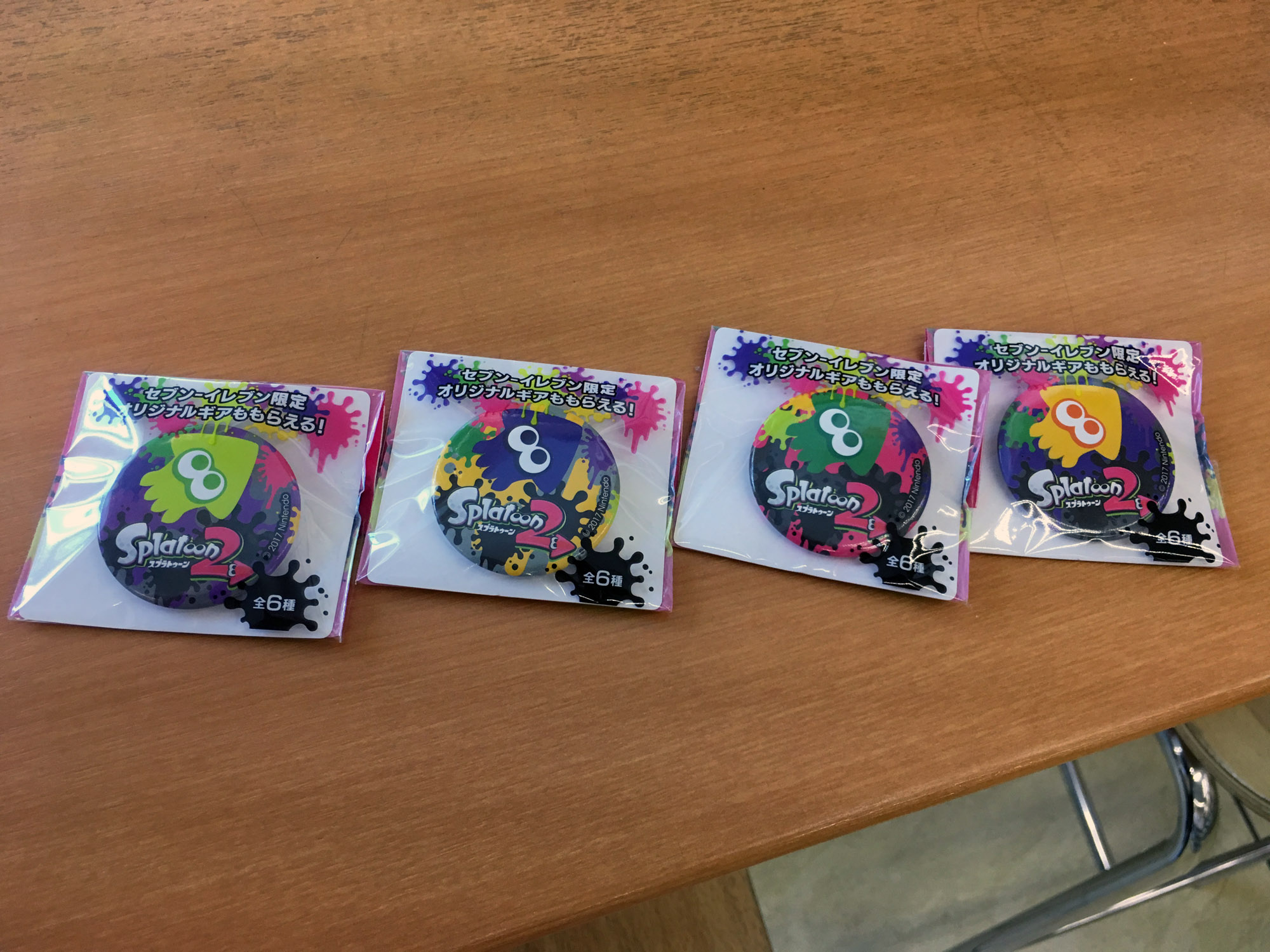
7-Eleven has a promotion to get exclusive in-game gear if you buy the game from them (they sell download code cards) or with certain product purchases.
You get a Splatoon badge and a code which can be redeemed on the Switch eShop, and the gear gets dropped off as a package in Inkopolis Square in the game.
Tower Records
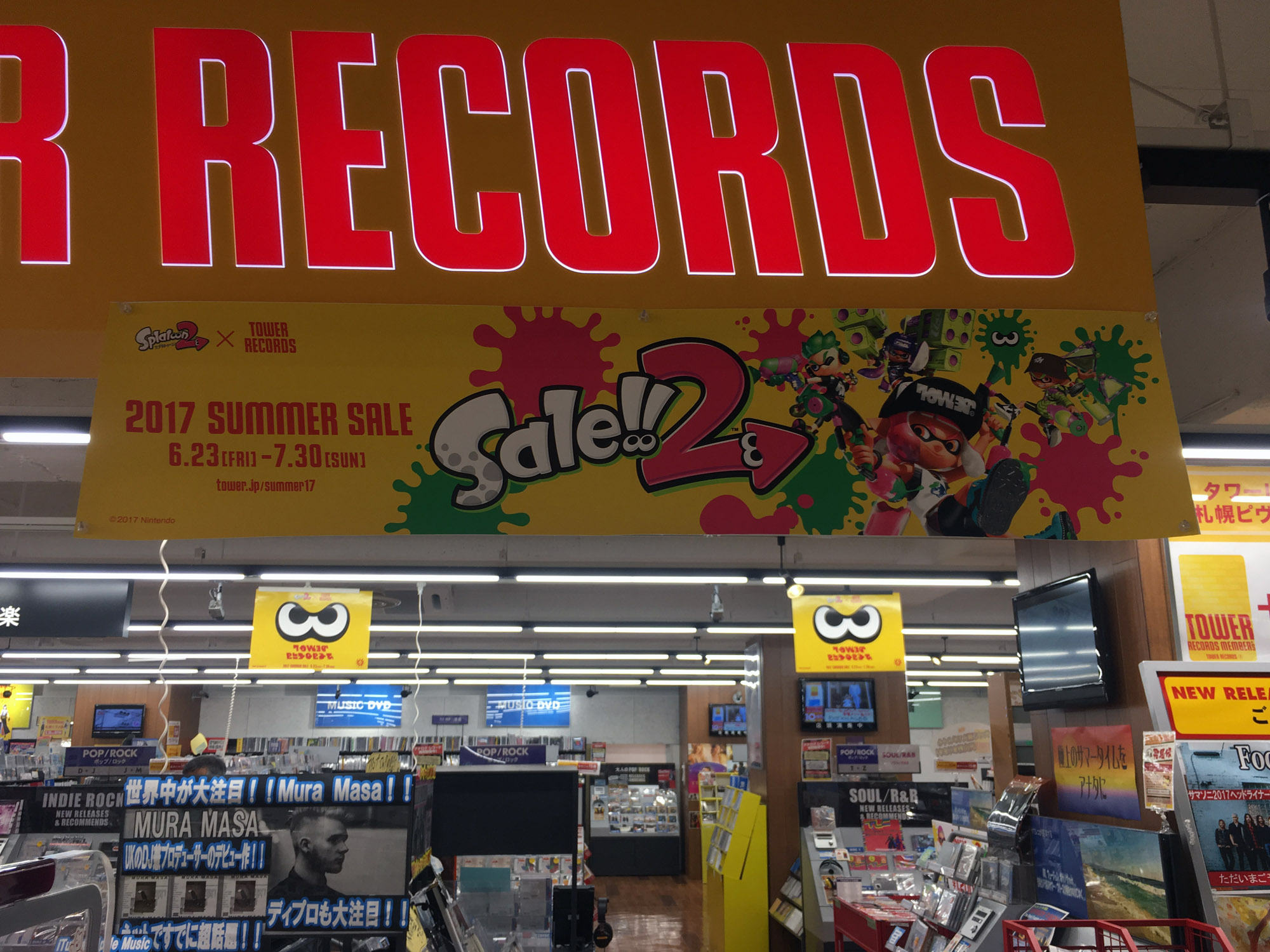
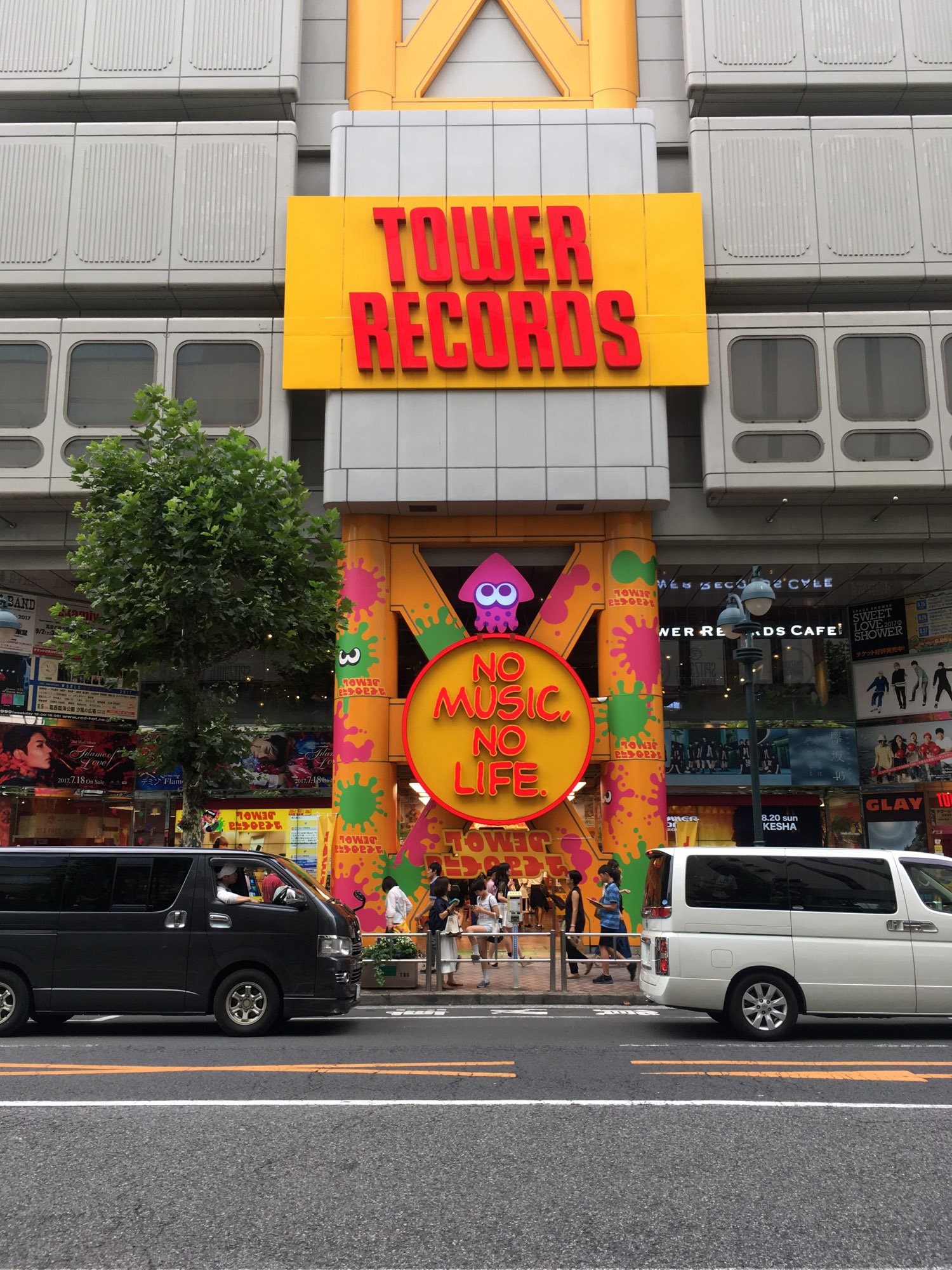
The biggest tie-in with a store is probably Tower Records.
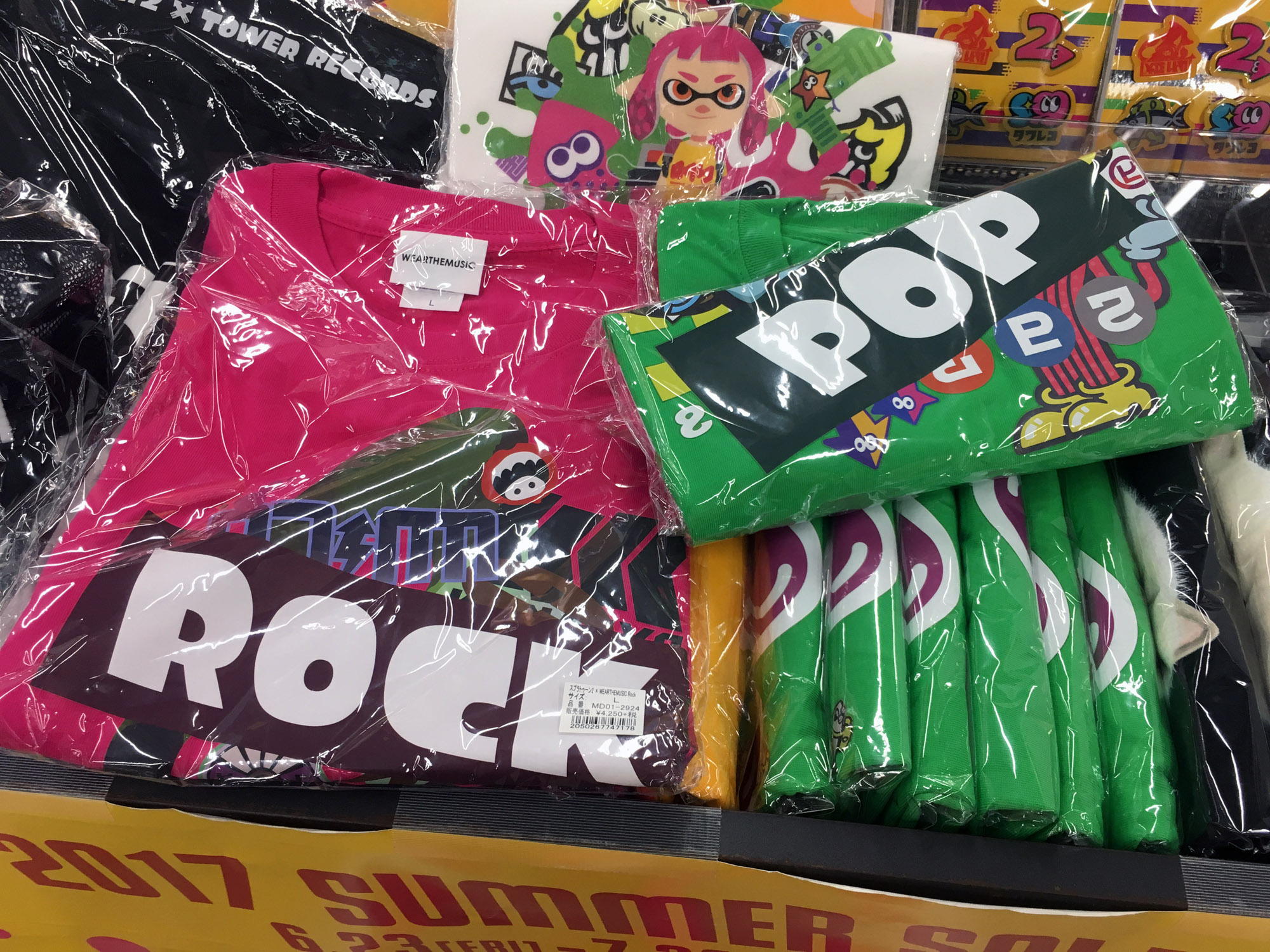
The initial Japanese pre-release Splatoon demo was itself a tie-in, as Tower Records sold the in-game t-shirts for the Rock vs Pop theme.
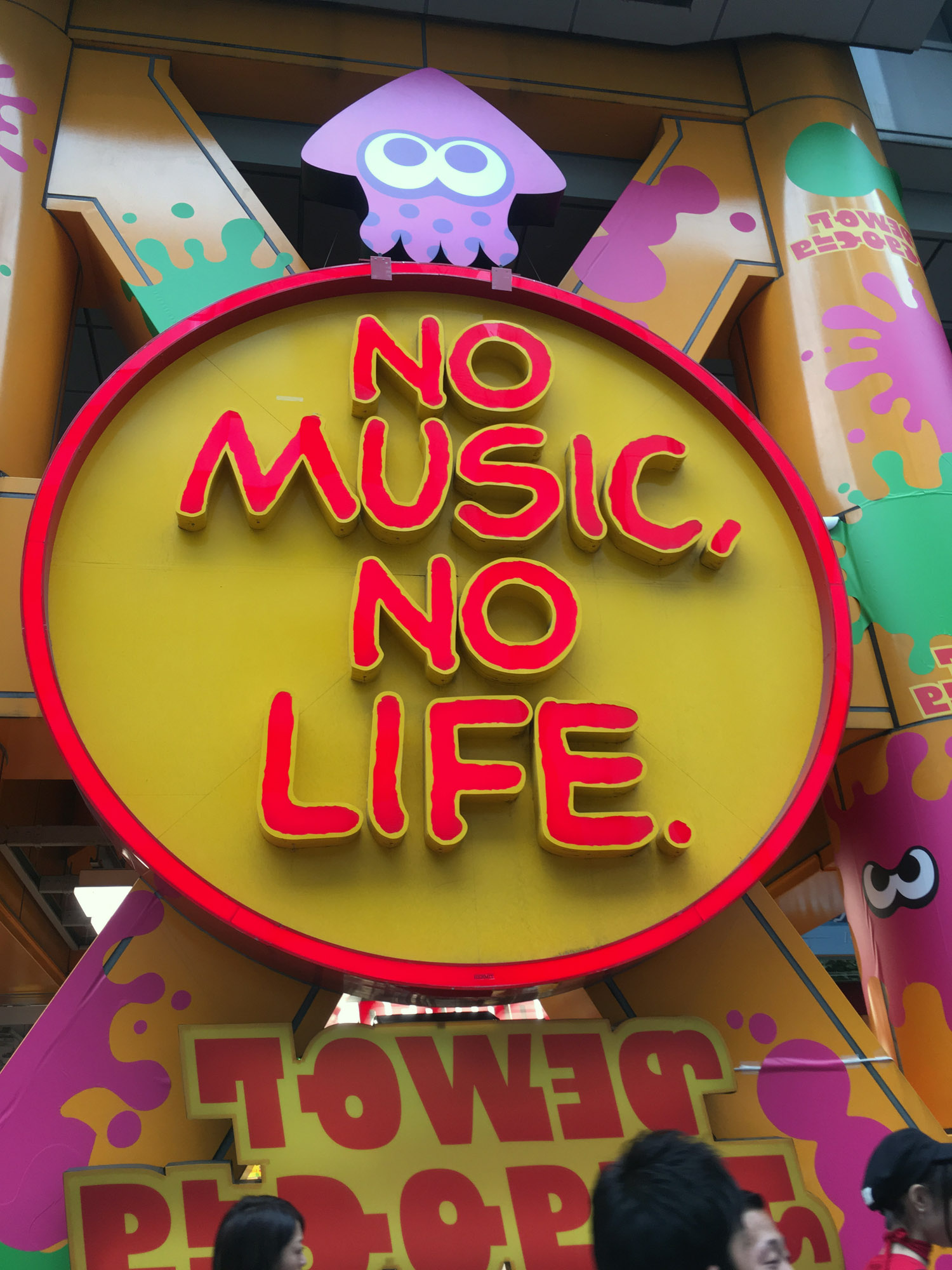
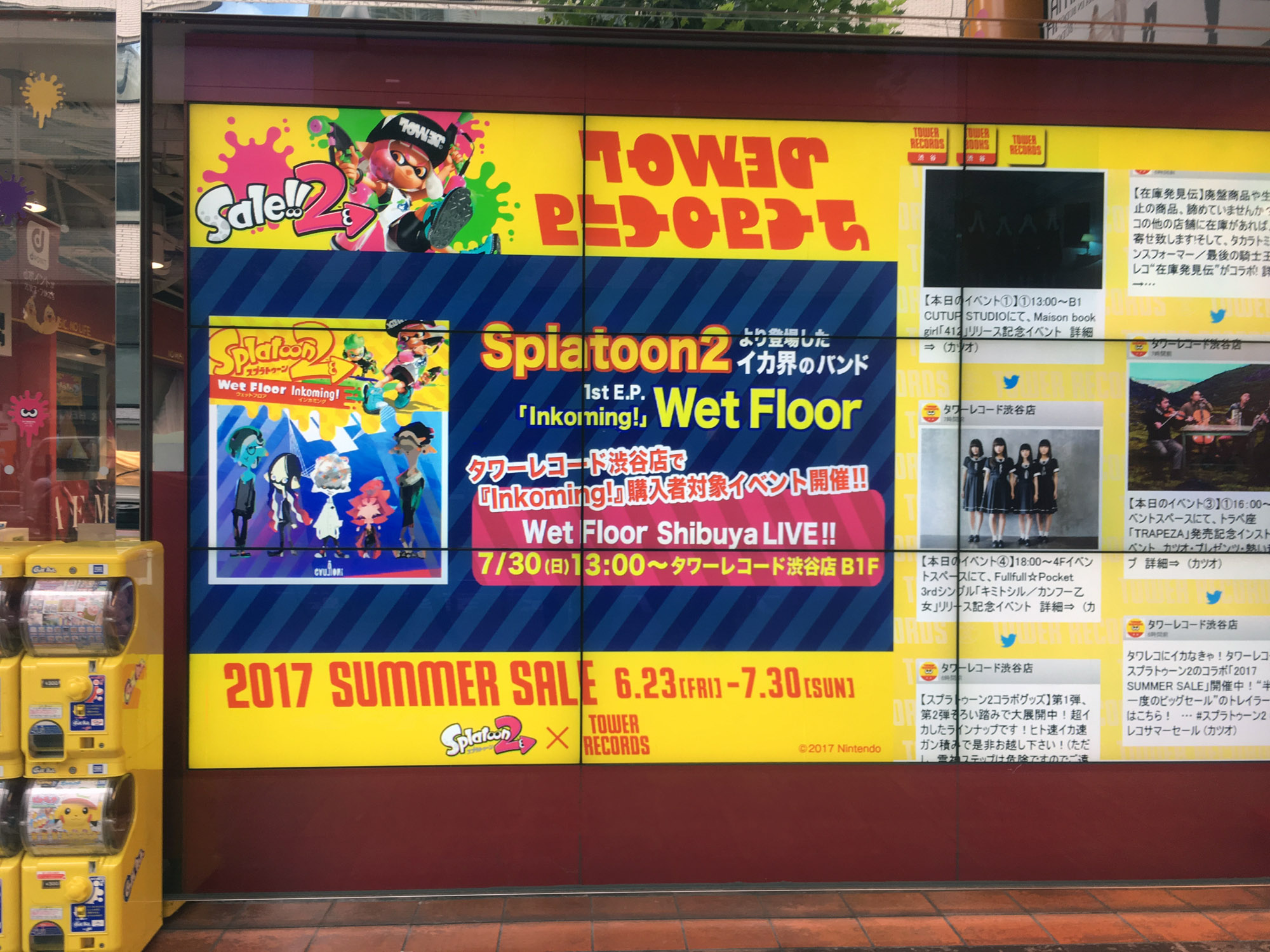
The Shibuya store in particular looks like this:
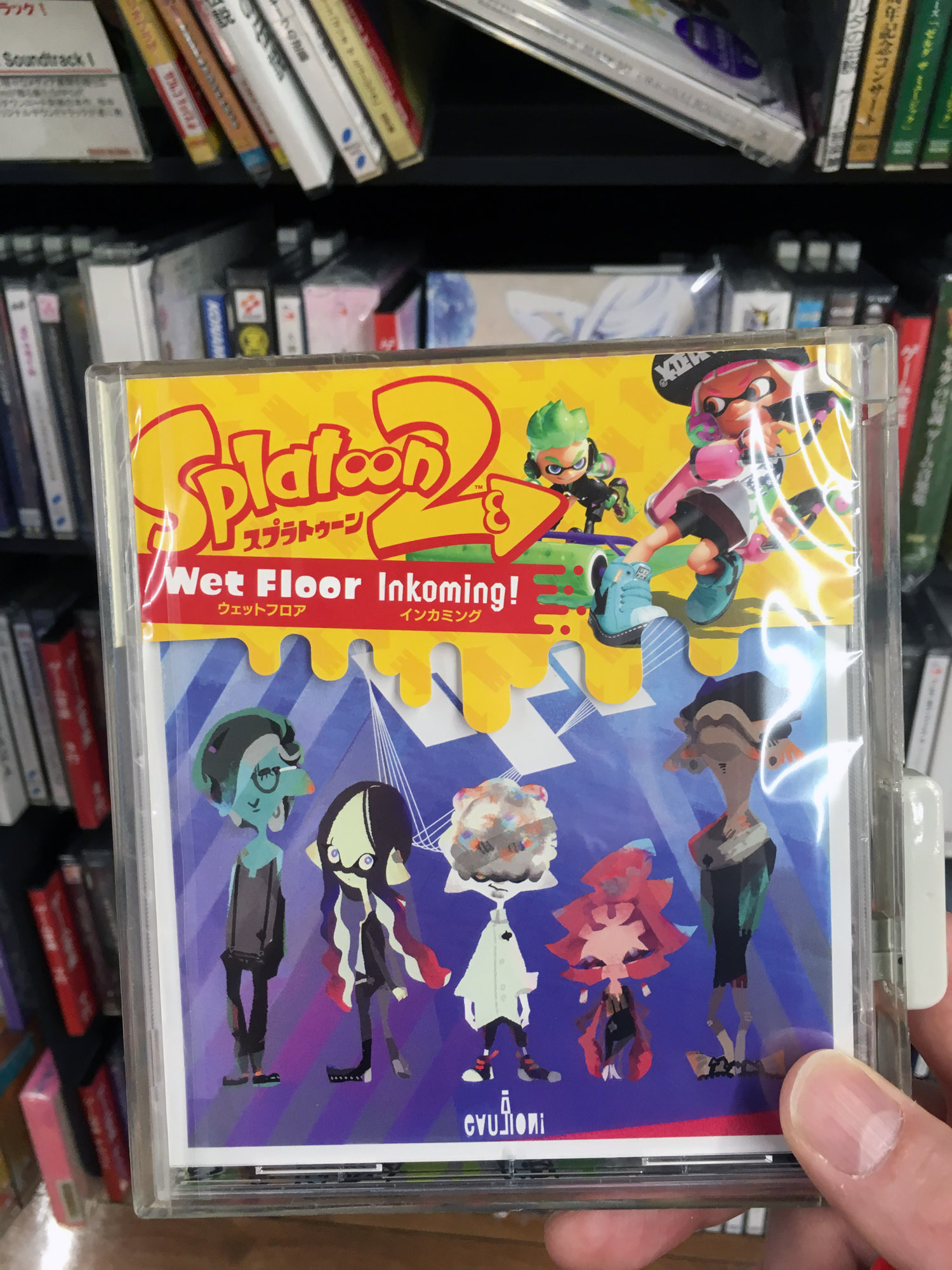
And had a performance tie in with Wet Floor, an in-game band.
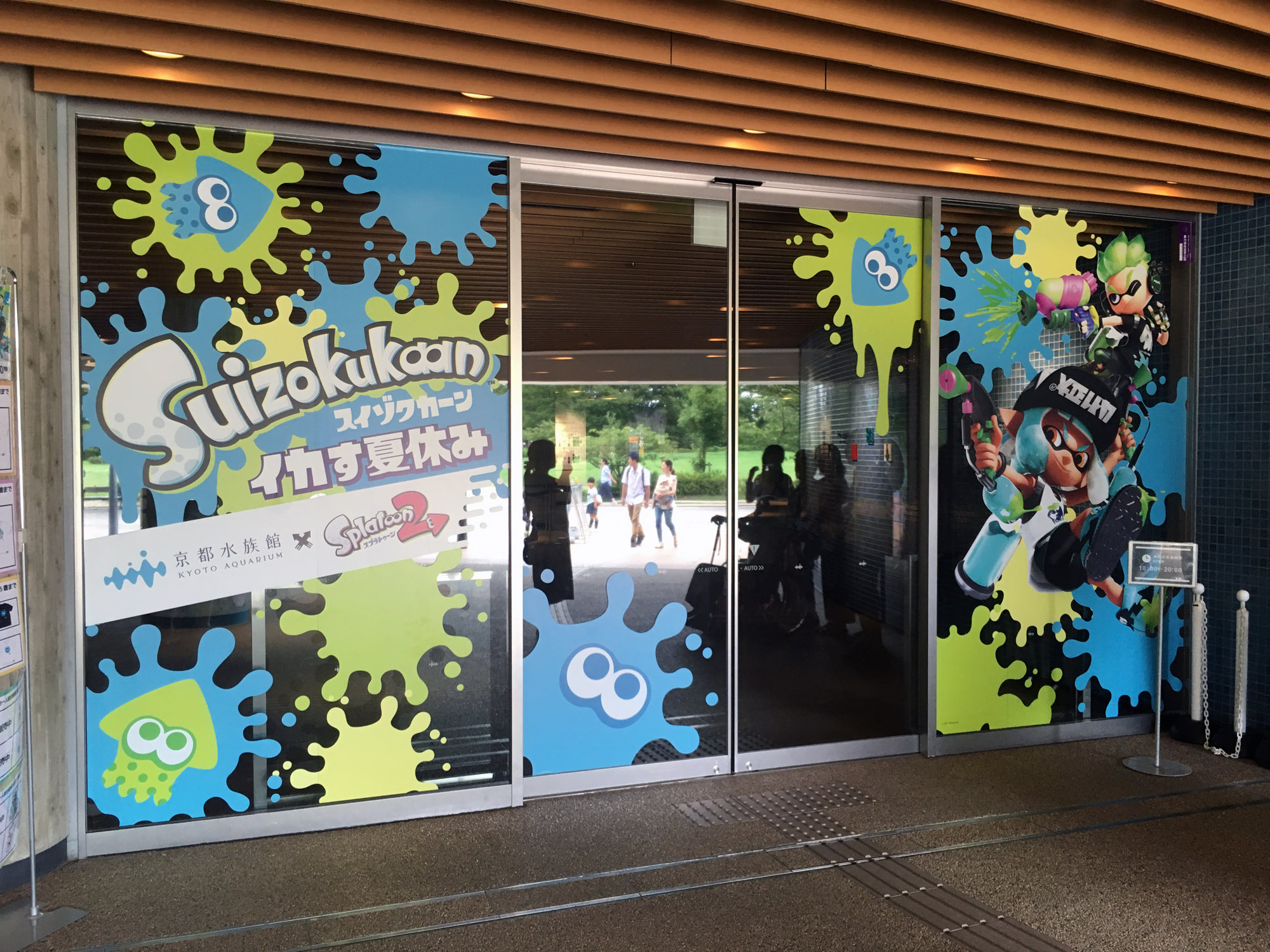
While not nation wide, there is a possibly even larger Splatoon tie-in event with Kyoto Aquarium, which I’ll cover in a future article.
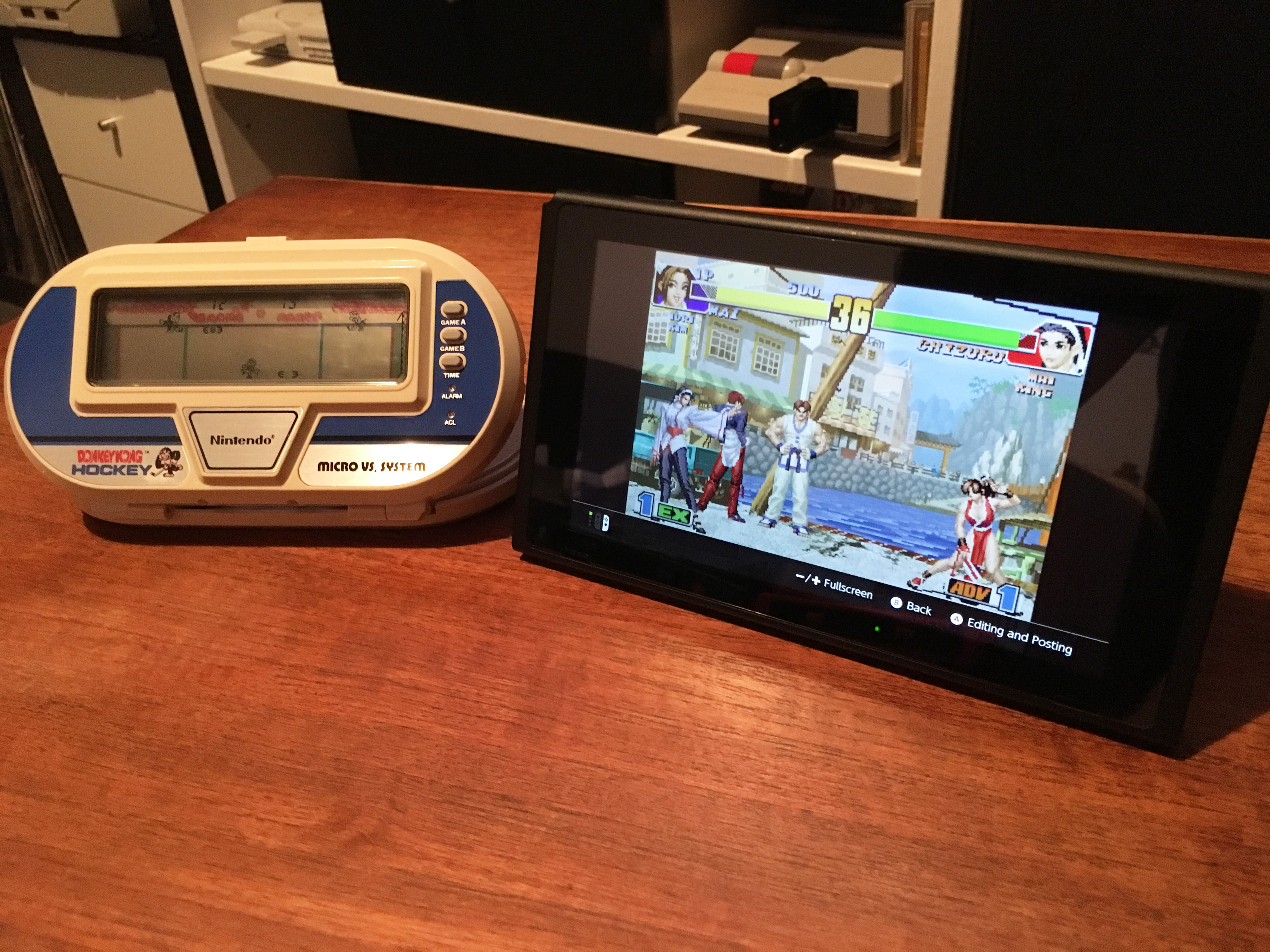
Nintendo’s Micro Vs. System series was the cutting edge way to enjoy multiplayer gaming on the go in 1984, combining the multiplayer fun of the Famicom with the portability of the Game & Watch line.
With (semi) detachable controllers for player 1 and 2, each unit only played one game, but quality engineering made the whole thing very cool.
Thirty three years later, the more things change, the more things stay the same. The idea has been reborn as one of the key features of the new Nintendo Switch.
If there’s anything Nintendo loves, it’s revisiting old ideas. Dual screens, stereoscopic 3D, and now on-the-go multiplayer have all made multiple appearances in the company’s history. The hybrid Switch has finally fulfilled the promise of the Micro Vs. idea.
Similarly, in the 80s, handheld Zelda was a massive compromise. Now there is no compromise.
In a sense, all of Nintendo’s gaming history has been pointing here. Exciting times.
No? How about a high quality production made by Nintendo themselves?
Okay so the concept of a ‘mini Famicom’ isn’t exactly unique. There have been quite a few ‘mini Famicom’ systems released over the years by Nintendo and others, including two Famicom versions of the Game Boy Advance SP, the fancier one on the left being a super-exclusive run of only 200.
But here’s the latest mini Famicom – the Nintendo Classic Mini Family Computer.
It’s a tribute console, built as a small Linux computer running an emulator with thirty pre-installed classic games. It powers via USB and outputs a 1280×720 pixel picture, upscaling the original 256×240 resolution of the games. It’s the Japanese counterpart of the Nintendo Classic Mini NES, and much like the western equivalent appears to have been a huge hit.
The box is identical in size to that of the Nintendo Classic Mini NES
The thirty built-in games cover the entire run of the original Famicom, but there is definitely a focus on earlier titles.
Right from the start this one is a classy affair, with the packaging and presentation matching up to the original as perfectly as possible.
Even the manual is a tribute.
Without context, a photograph of the device itself could be confused for an 80s Famicom even by a fan.
Nintendo has done some vintage style television commercials for the new console
It’s not quite as small as the NES Mini, at around a 2/3 scale of the original.
The obvious reason for this is that unlike the NES Mini’s full size replicas of original controllers, the Mini Family Computer controllers are also scale models.
It’s a take on the mid-period Family Computer, as it has round controller buttons, but lacks the Famicom Family ‘FF’ branding on the left of the front faceplate that Nintendo introduced to the console in 1988.
Round buttons, but a minor incorrect detail – they are convex compared to the original buttons which were concave.
While the controllers are tiny they remain perfectly usable – the directional pad and buttons are identical in size to those of a Game Boy Micro.
From the front the system is almost identical, but it is missing the instruction stickers for power and eject buttons and expansion port cover. Which begs the question: did Nintendo mean for owners to remove these stickers on the original models?
Of course the major change is the back of the system, with new micro USB power and HDMI video output replacing the ancient original selections.
Just like the original, it is designed for the players to sit near the console to play since the controller cords are very short. The reset button is used to switch games on the mini, so it makes sense here to use long HDMI and power cables and sit near the console.
Like the western NES Mini, games are selected from a menu, and boot pretty much instantly. There is a save state feature, allowing saving at any time into four slots per game with various cute animations. A brand new mid-80s style 8-bit tune plays in the menu, it’s the same one as the NES Mini and will get stuck in your head.
There are three scaling options for the games, all of which have issues. 4:3 is the default and displays the games in the correct aspect ratio, but you end up with minor scaling artefacts when scrolling. A pixel-perfect mode allows for no scaling artefacts, but the graphics are stretched vertically.
And there’s a ‘vintage’ mode which applies a scan line effect as well as approximations of various composite/radio frequency noise that you would experience on original hardware. The vintage mode is actually very well done, but more of a novelty since half of the point of a new device is to get a cleaner picture.
There are some minor emulation issues such as sound lag (and a couple of frames of overall lag), but the presentation is pretty solid overall. It’s not going to replace an RGB modded Famicom and Framemeister combo for dedicated retro enthusiasts, but is still very well done for the price.
Here’s the original Nintendo trailer, which covers most of the basic features in depth.
It’s a very cool toy, and a great collectors item. However in my opinion the classiest ‘mini Famicom’ ever remains the Famicom Game Boy Micro, as that thing is a work of art.
The biggest, and perhaps coolest of the Color-TV game range, 1978’s Nintendo Color-TV Game Racing 112 (カラーテレビゲームレーシング112)
It’s a huge game, due to the realistic wheel and gear stick. The wheel is removable for transport so it can fit in a smaller box, but the box is still huge, here it is next to a Famicom for scale.
The centrepiece of the system is obviously the wheel.
On the right side of the system is the game modes panel. You can select between one or two player modes, track width, speed level, enemy car behaviour (zig zagging or straight lines), if hitting the barriers counts as a crash, road hazards, and if there are one or two opposing cars at once. Down is the easier position for each of the option switches. The red button is reset/start.
And on the left is the two position gear shift.
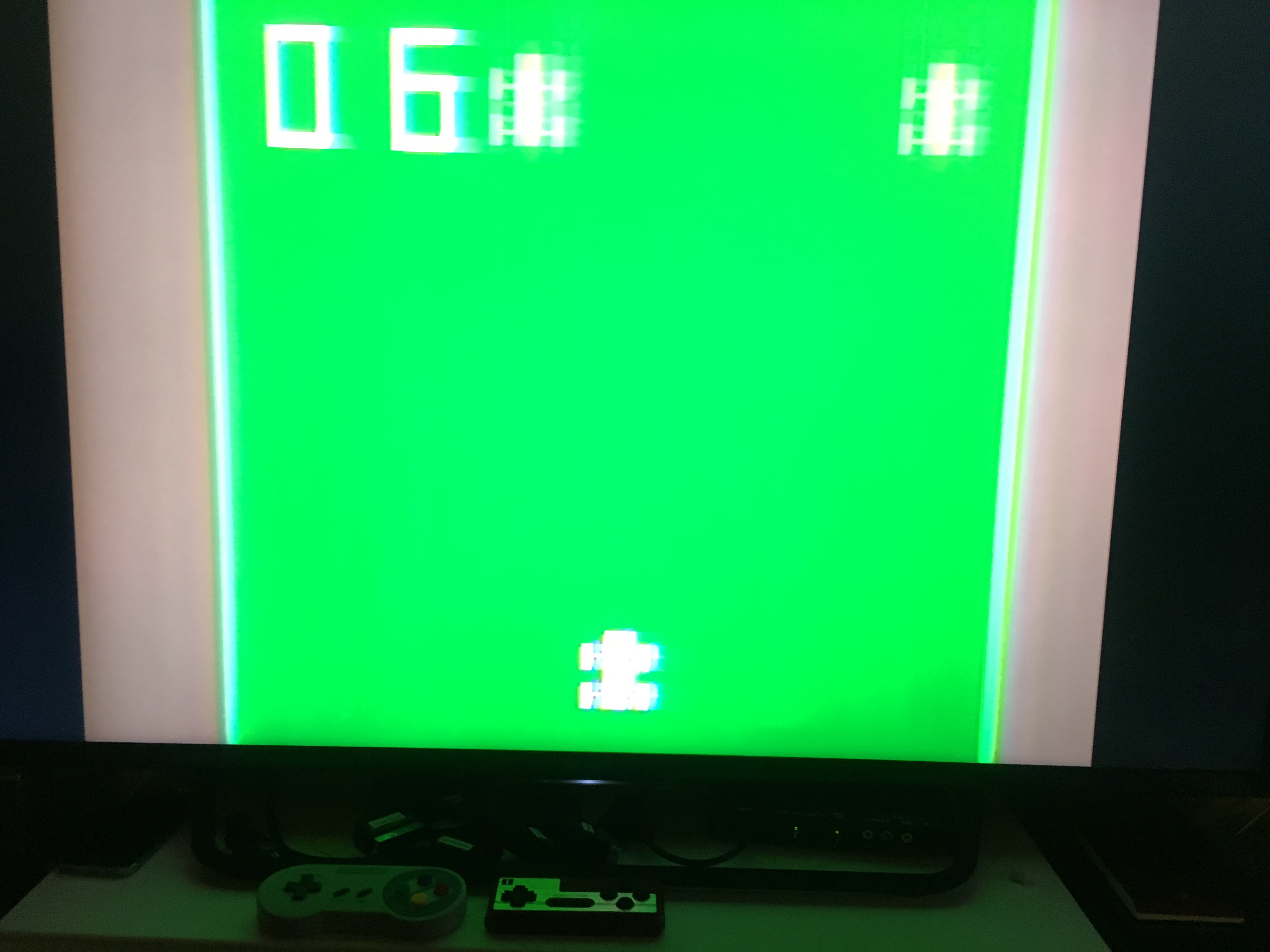
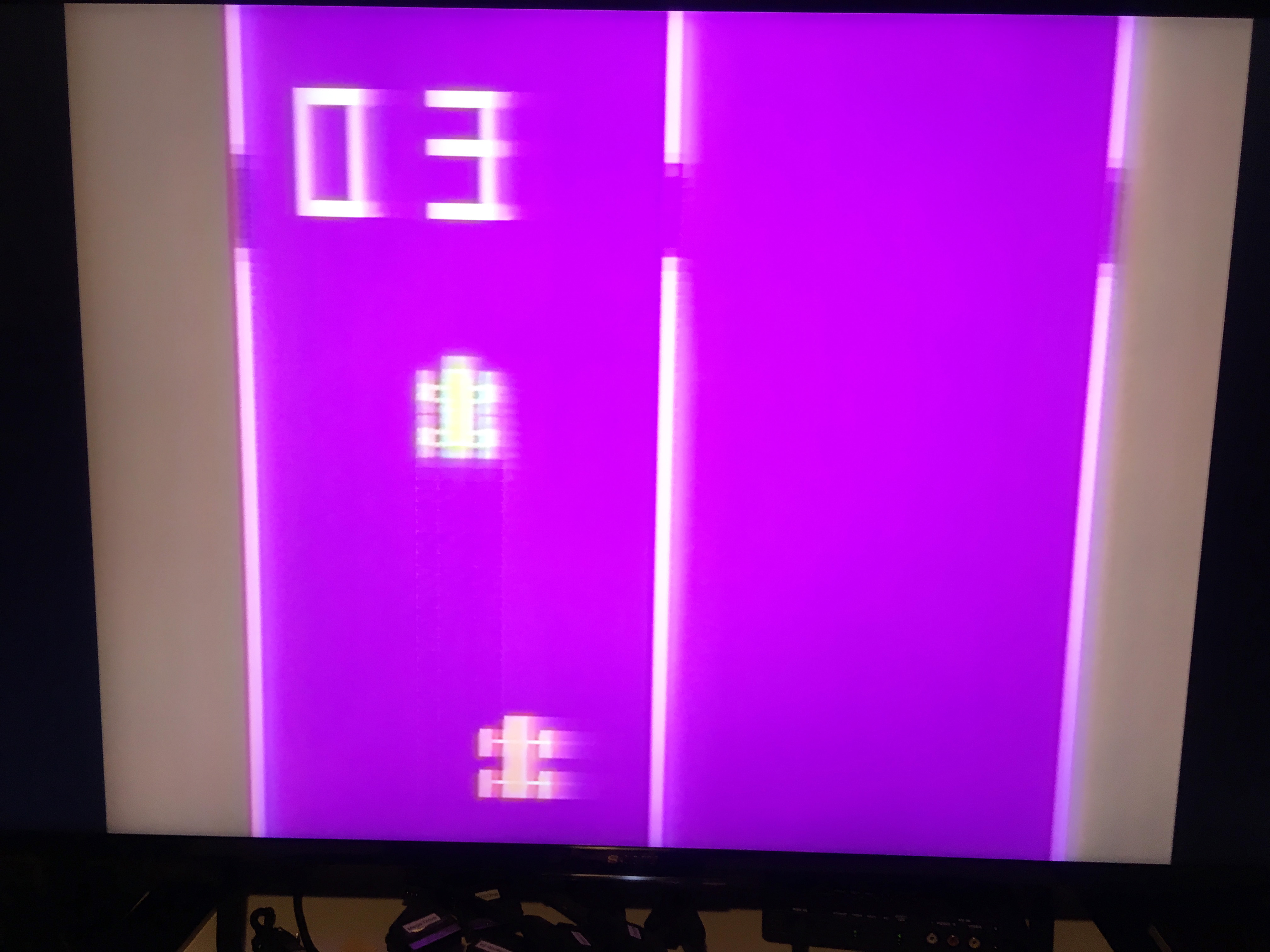
In terms of design, it’s pretty much a straight clone of Taito’s 1974 arcade game Speed Race, which was the first ever game with a scrolling background effect. You view the track from above, and steer left and right to avoid the other cars on the road. It scrolls quite smoothly, the moving effect being provided by trackside ‘stripe’ markers.
Personal side note: I remember playing Speed Race in a local (ish) arcade in the late 80s/early 90s. The arcade, know as ‘Funland’ opened in 1970 as a pinball parlour (even before there were video games) and collected and maintained games from every era over the years. I didn’t appreciate at the time, but that arcade’s maintenance of old machines gave me some early gaming history lessons!
Back to Racing 112. There are two major variations of the one player game, with wide and narrow roads. You must pass the other cars without hitting them, and last as long as you can. The feature switches allow you to adjust speed, number of cars on the road (one or two per screen/wave) and the way the cars move (straight or in patterns).
Just like the paddles in the previous Color TV games, the Steering wheel is an analogue controller, so the steering speed changes based on how far you turn the wheel. The gear shift is digital, and simply allows you to move between two speeds
It’s pretty basic, but compelling, and the basic gameplay formula remained popular well into the mid 80s with the likes of Midway’s Spy Hunter, Konami’s Road Fighter, and Sega’s Action Fighter.
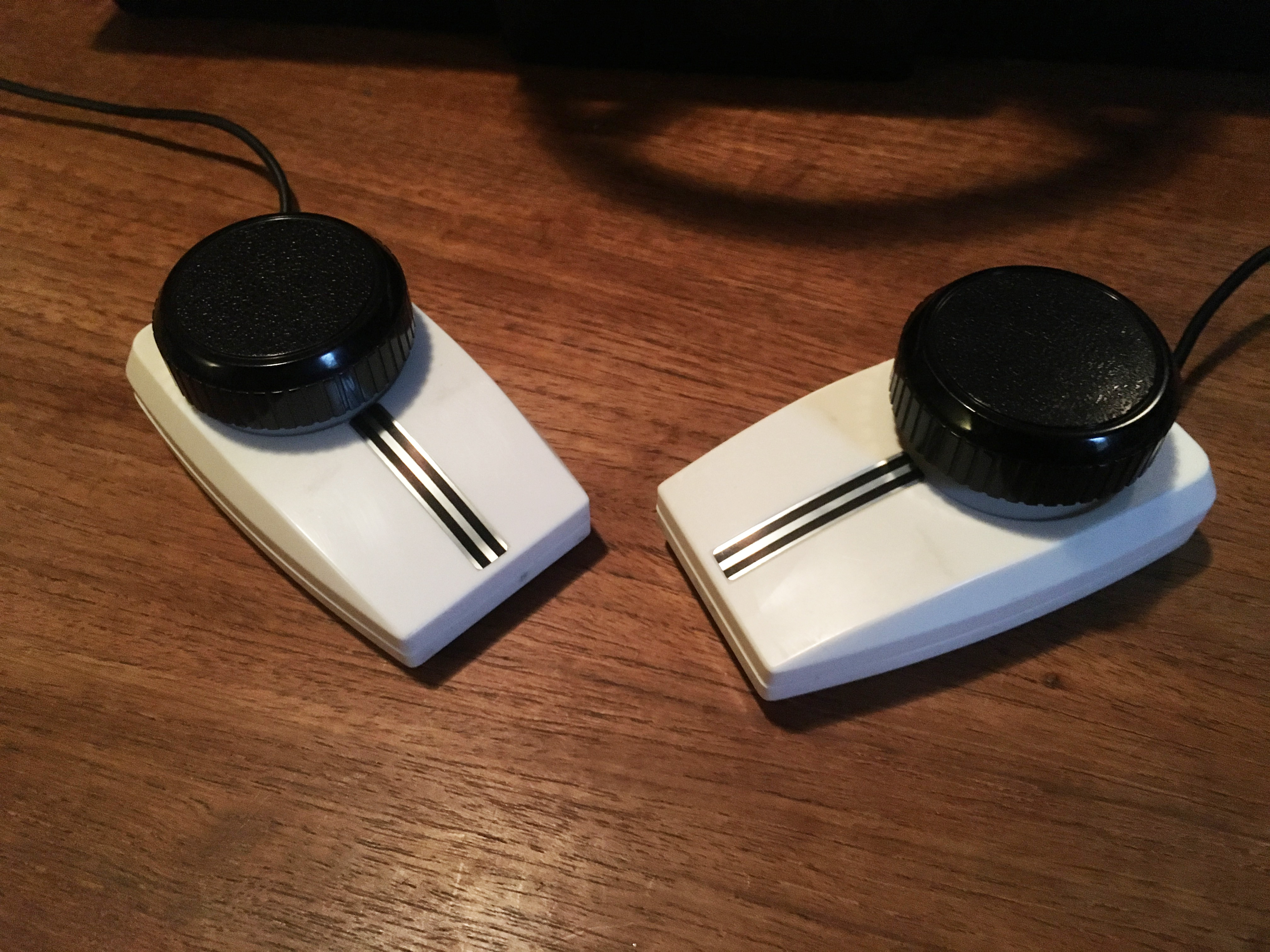
The two player mode doesn’t use the steering wheel, but instead two paddle controllers, which you can pull out from storage slots on the back. You stay at only one speed in two player, but while all game modes remain intact, it’s basically just a head to head for score, as the two players stay on their own track and do not interact with each other.
Paddle storage slots
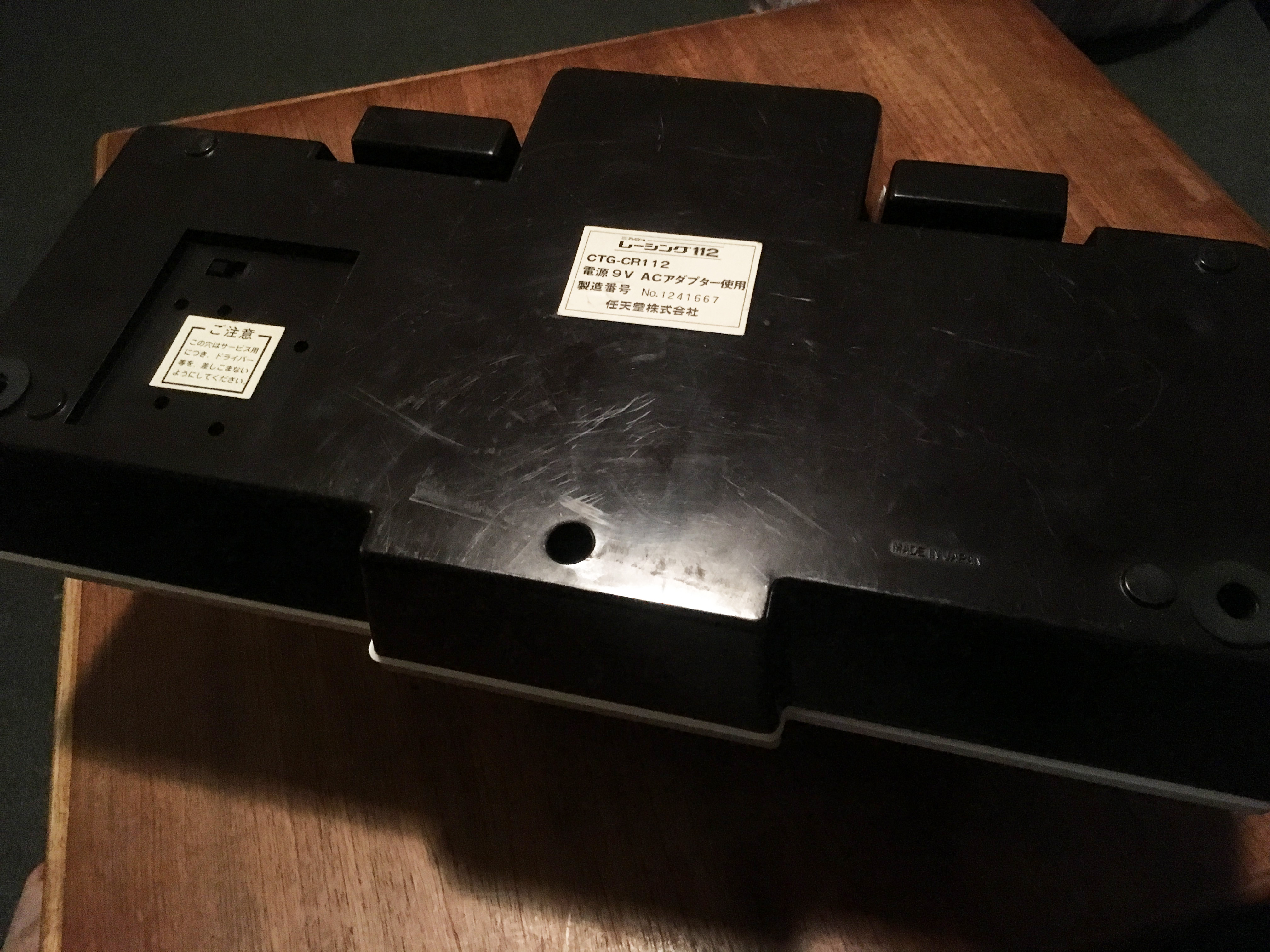
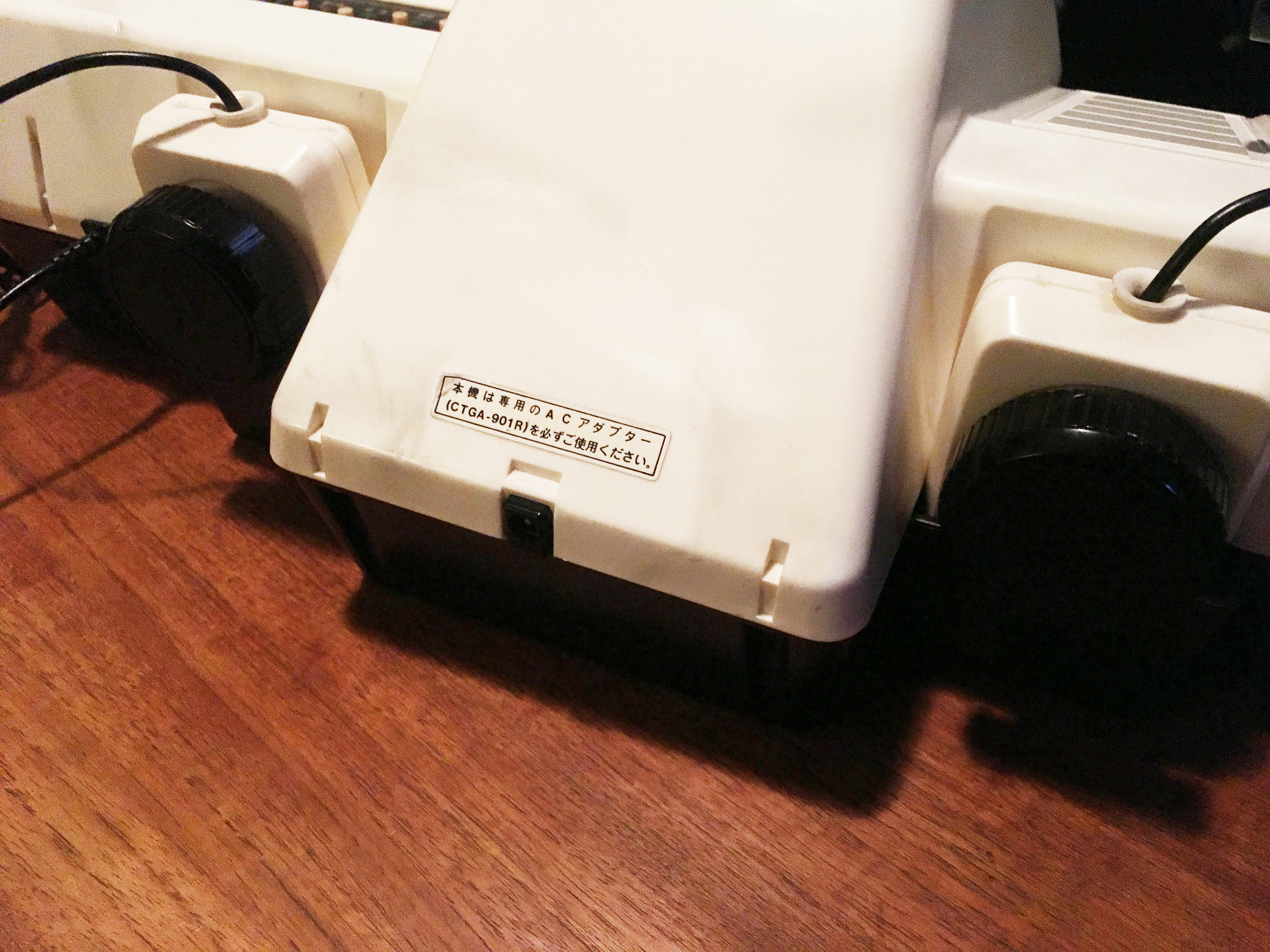
Just like all the other consoles in the CTV series, it connects via a hardwired RF cable and tunes to the same Japanese channels (1/2) as a Famicom, and uses an external 9V power supply which was sold separately and compatible with all models. A Famicom compatible power supply works perfectly too.
The Color-TV Game 6 had six Pong variations, and and the Color-TV Game 15 had either seven or about 20 Pong variations depending how minor a variation counts. Does Racing 112 have one hundred and twelve racing game variations? Technically yes, something like that. In an era where adding a feature like zig zagging cars might mean a whole new release (Super Zig Zag racing Turbo III!) saying there were over 100 game variations isn’t actually false advertising.
The Color-TV line ended the following year with the awesomeBlock Breaker, which was also the first game to feature the Nintendo brand on the casing. But for going all-out, it’s hard to beat the Racing 112.
With my recent acquisition of a Color TV-Game Racing 112, My collection now includes almost every major revision of every Nintendo home console ever released, complete in box.
Wii U
Wii
Gamecube
Nintendo 64
Virtual Boy (I’m counting it as a console, since it is really not portable)
A small confession: My Wii U is not a Japanese model.
There were a few more minor revisions of the consoles along the way – FF logo/non FF logo Famicom, output changes, different coloured consoles of various sorts (even shapes like the Pikachu N64), but these are all the major Japanese revisions. The Wii Mini revision was not released in Japan.
There’s one major item missing – the Computer TV-Game.I’ll almost certainly never get one of these. This ‘console’ is incredibly rare, insanely expensive, and its questionable if it was even a consumer product since it was literally an arcade game with TV out. It sold for ¥48,000 in 1980. For comparison the Color TV Game Racing 112 was selling for ¥5000 in 1980, and the Famicom launched in 1983 for ¥14,800.
The Sega set is on its way, but will take a few more years I think. So many revisions…
Released one week after the Color TV-Game 6, the Color TV-Game 15 was the ‘deluxe’ model. Or perhaps the 70s equivalent of the NES ‘Action Set’.
It was apparently designed to be the more profitable of the two consoles, offering more features for ¥15,000, vs ¥9,800 for the Color TV-Game 6. It dropped to half the price eventually, and outlived the CTVG6, as can be seen from the updated price listing in the later Color TV-Game Block Kuzushi manual.
It’s not too much larger, but has a more stylised design and detachable controllers for a more comfortable playing session. The first model was made of orange plastic that matched the orange CTVG6. This is the second model, which is a reddish orange colour.
The controller cords are the standard Japanese controller cord length (short) so you still needed to sit near the console to play. The controllers are pretty decent paddle controllers, definitely higher quality dials than the original white version of the CTV6.
You can still power the console by batteries or a standard 9V power supply.
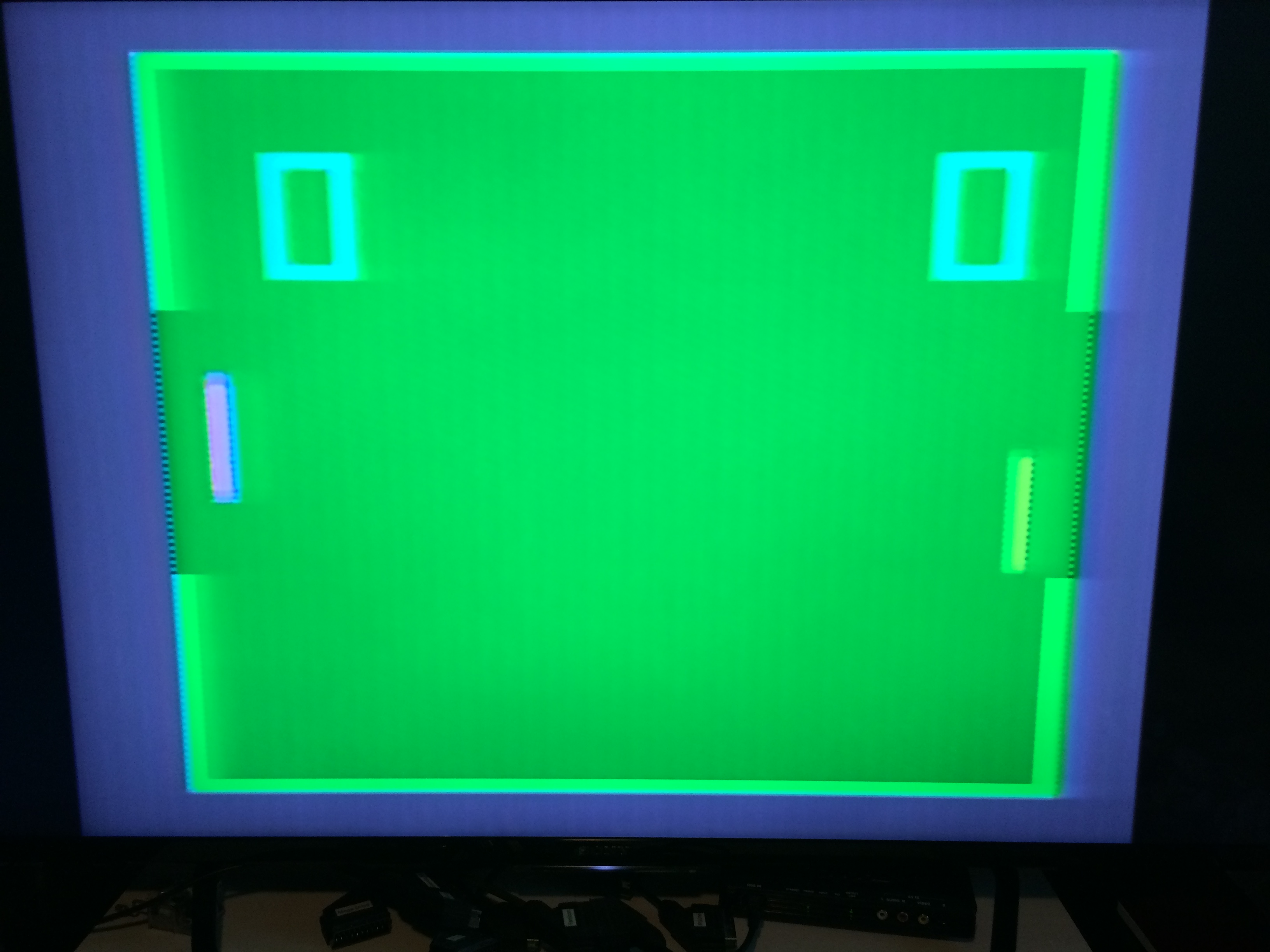
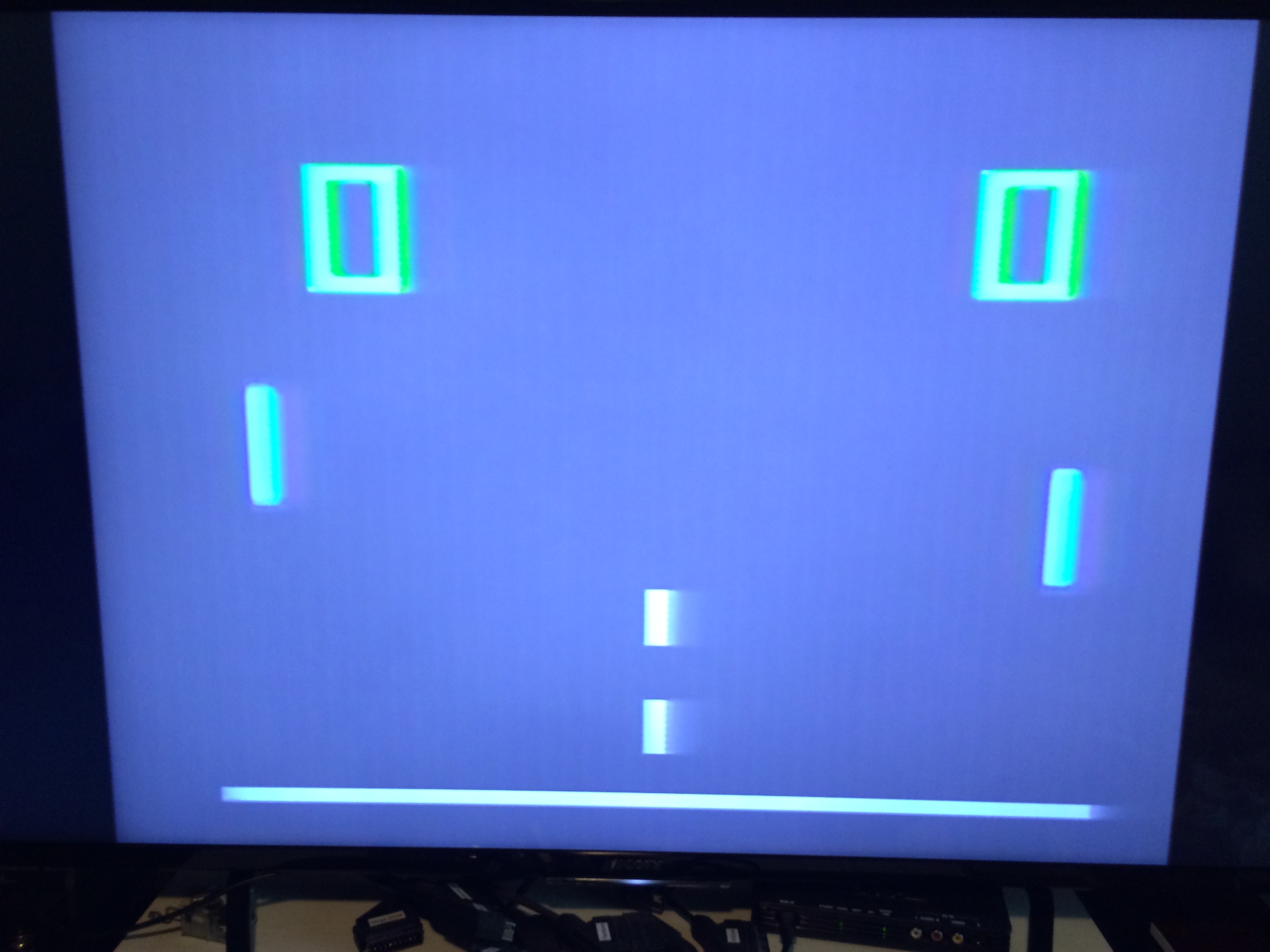
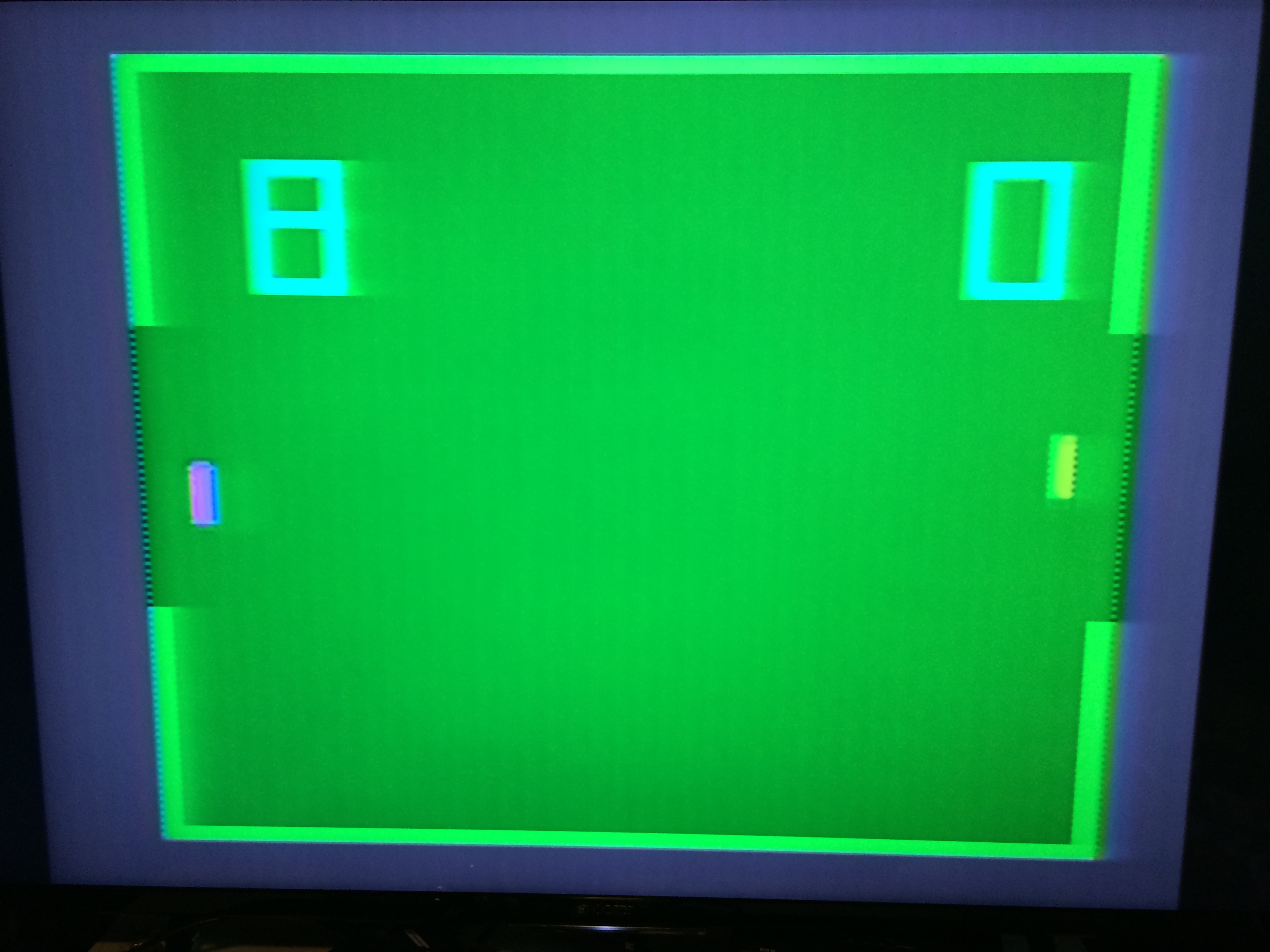
The 15 in the name is something of a misnomer. There are really about seven Pong variations, adding various board options, along with additional paddle number, size and speed changes. There are far more that 15 game types if you count every possible variation, so I’m not sure why they drew the line at 15.
Here’s a look at the basic board variations:
It doesn’t quite have the cachet of the ‘first Nintendo’ CTVG6, and isn’t anywhere near as cool as the beautiful Block Kuzushi. But it’s still a nicely engineered Pong game which is more comfortable to play and has more game options, so can be a fun retro afternoon sometime.
The first Famiclones were straight pirated Famicom hardware clones, but by the 90s this had been consolidated down to single chip designs, usually referred to as NOAC – NES on a chip. While NOACs lose accuracy, they can be produced very cheaply and thus proliferated as the gaming machine of choice throughout copyright-infrinegment playgrounds like Eastern Europe, South America and greater Asia throughout the 90s. If you take pirate consoles into account, the Famicom is surely by far the highest selling system of all time. There’s a decent number of Famiclone models documented here.
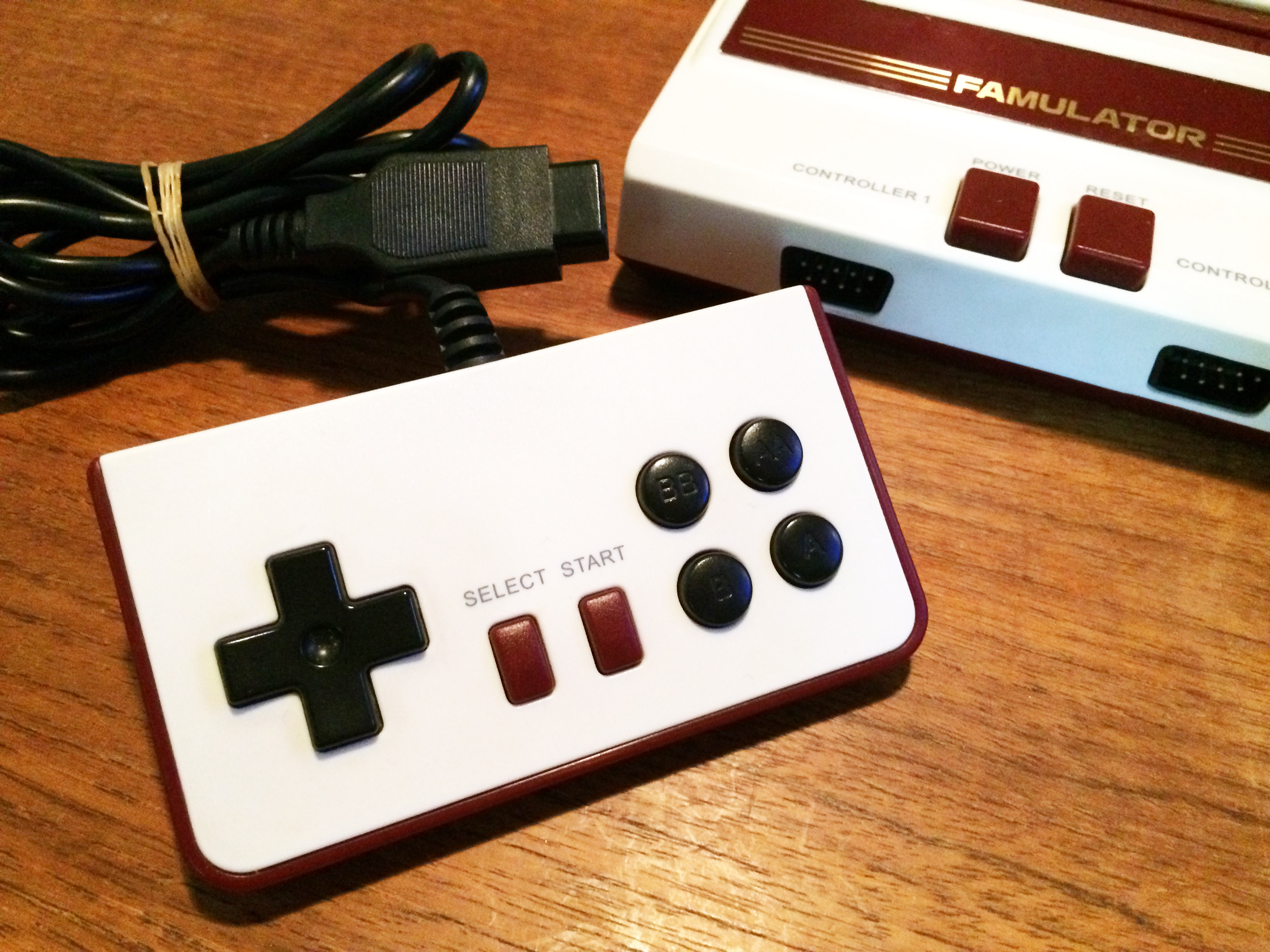
Famiclones had a second life in Japan after Nintendo’s patent on the hardware expired in 2003. Due to the vast majority of Famicoms in Japan being RF-only, there was a market for a cheap AV Famicom as the retro boom began. One I’ve always wanted to get my hands is was the Famulator, released in early 2008, and I finally grabbed one recently.
One reason is simply the name Famulator, which is too cute, but the tasteful design, of course evoking the original Famicom, sets it apart from your average junk looking Famiclone.
And it’s tiny, barely bigger than a Famicom cart, and less than half the size of the original. Kawaii as hell. The controller, which connects via standard Famiclone DB9 connector, is also quote excellent, there’s very low travel on the buttons, giving it a Game Boy Advance SP feel.
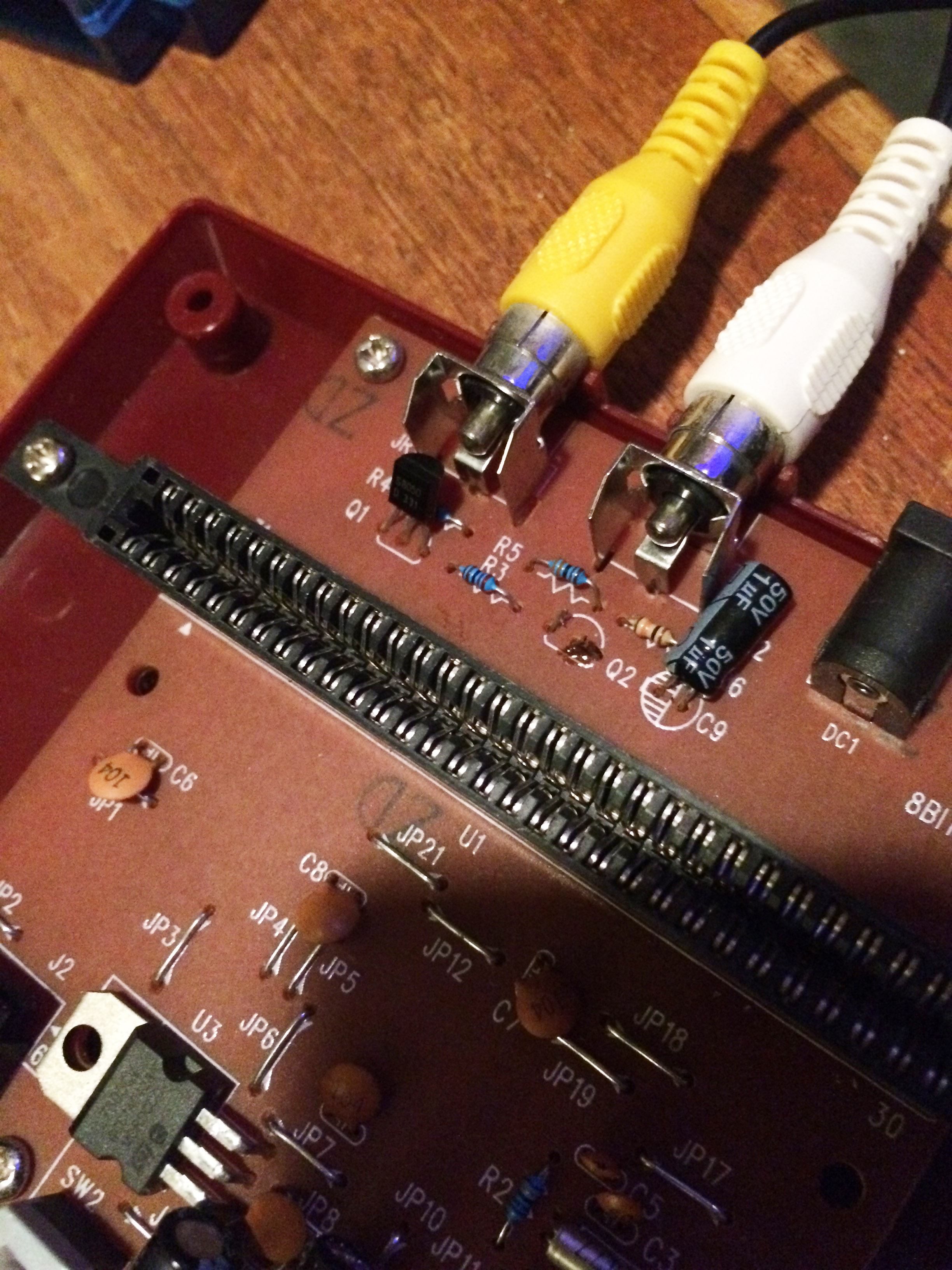
It’s great looking and plays well, and is a pretty decent NOAC Famicom. There is one catch. The earliest release of the Famulator overamplifies the the sound, leading to peaking levels and distortion. And the expansion audio is not connected, so Famicom Disk and other expansion audio games are missing the extra sound channels. Luckily I found quite an easy fix for both on this Japanese website.
The audio can be fixed simply by chopping off the transistor at the position marked Q2, and soldering the right two leftover legs together. It worked perfectly and the regular audio was fixed.
To add support for expansion audio, you can simply insert connections for pins 45 and 46 to the circuit at positive leg of the capacitor at C9.
Of course with plenty of real Famicom hardware around it’s not like this will get a lot of play time, but it’s a cool little toy to have, and yet another part of the rich tapestry of Famicom history.
Following my complete Konami Famicom Disk System set, I have finally completed the other half of the full set, every Konami cartridge exclusive Famicom game.
This set has taken over 20 years to complete. It was finally done when I managed to find a rare boxed copy of Exciting Boxing for a good price.
The first Famicom game I ever got was The Goonies, since it wasn’t released in the west and I loved The Goonies II. I originally played it on my NES via a converter, but it started my Famicom obsession.
Another early pickup was Parodius Da.
The rarest item is possibly Geki Kame Ninja Den (Legend of the Radical Ninja Turtles) – the Japanese version of the first Ninja Turtles game. Or maybe the third party published Konami arcade game Circus Charlie. Most valuable could be Geki Kame Ninja Den, Bucky O’Hare or Exciting Boxing.
I don’t have the DoReMikko–style big box for Exciting Boxing, or the late-era cartridge re-releases of the FDS games Akumajou Dracula, Bio Miracle Bokette Upa, or Moreo Twinbee, so there’s a small amount of room to grow the set. Unfortunately all four of those items are hilariously expensive.
Here’s the full set with the Famicom Disk Games added to the photo, including the large DoReMikko box up the back.
As for favourites, it’s pretty hard to go past the Contra games, Arumana no Kiseki, and Akumajou Densetsu.
Also Akumajou Dracula, Ai Senshai Nicol, King Kong 2, Gradius II, Salamander, Crisis Force, Maze of Gallious, Wai Wai World 1 and 2, Tiny Toon Adventures 1 and 2, Bucky O’Hare, Metal Gear, Bio Miracle Bokutte Upa, Exciting Soccer, Exciting Basket, Ganbare Goemon 1 and 2, Meikyuu Jiin Dababa, Falsion, Dragon Scroll… so many classics.
Konami were at their peak in this era, and I believe the single greatest developer in the world at that point. How the mighty have fallen.
The Color TV-Game 6 was Nintendo’s first console. But there were four other single game Nintendo consoles before the Famicom. This is the second last one, the Nintendo Color TV-Game Block Kuzushi (Block Breaker). It plays several variations of Breakout.
Unbelievably, despite not being advertised as such, the one I bought was actually brand new.
It’s pretty much the most 70s looking device ever made.
It’s a really great looking device, and that may have to do with the fact it was designed by a new Nintendo recruit – a freshly graduated industrial designer named Shigeru Miyamoto! Block Kuzushi and Color TV-Game Racing were Miyamoto’s first two jobs at Nintendo.
Was the Color TV-Game Block Breaker designed here? (Most likely not as this was their 60s headquarters).
Nintendo Color TV-Game Block Kuzushi is also the first 100% Nintendo console, since Color TV-Game 6, 15 and Racing were co-developed with Mitsubishi. On a related point, it’s also the first Nintendo video game with the Nintendo name displayed prominently on the console.
The top of the device allows selection of the game, with a handy picture of each Breakout arrangement.
In order from 1-6 they are: Standard Block Kuzushi, Easy Block Kuzushi (with a line missing), Safe Block Kuzushi (with a safety net on the bottom of the screen), Block Through (a time based score game where the ball goes right through the blocks), Block Flash (where you have to get the middle blocks hitting as few of the others as possible), and Block Kill (a combination of Block Through and Block Flash, with a new block arrangement).
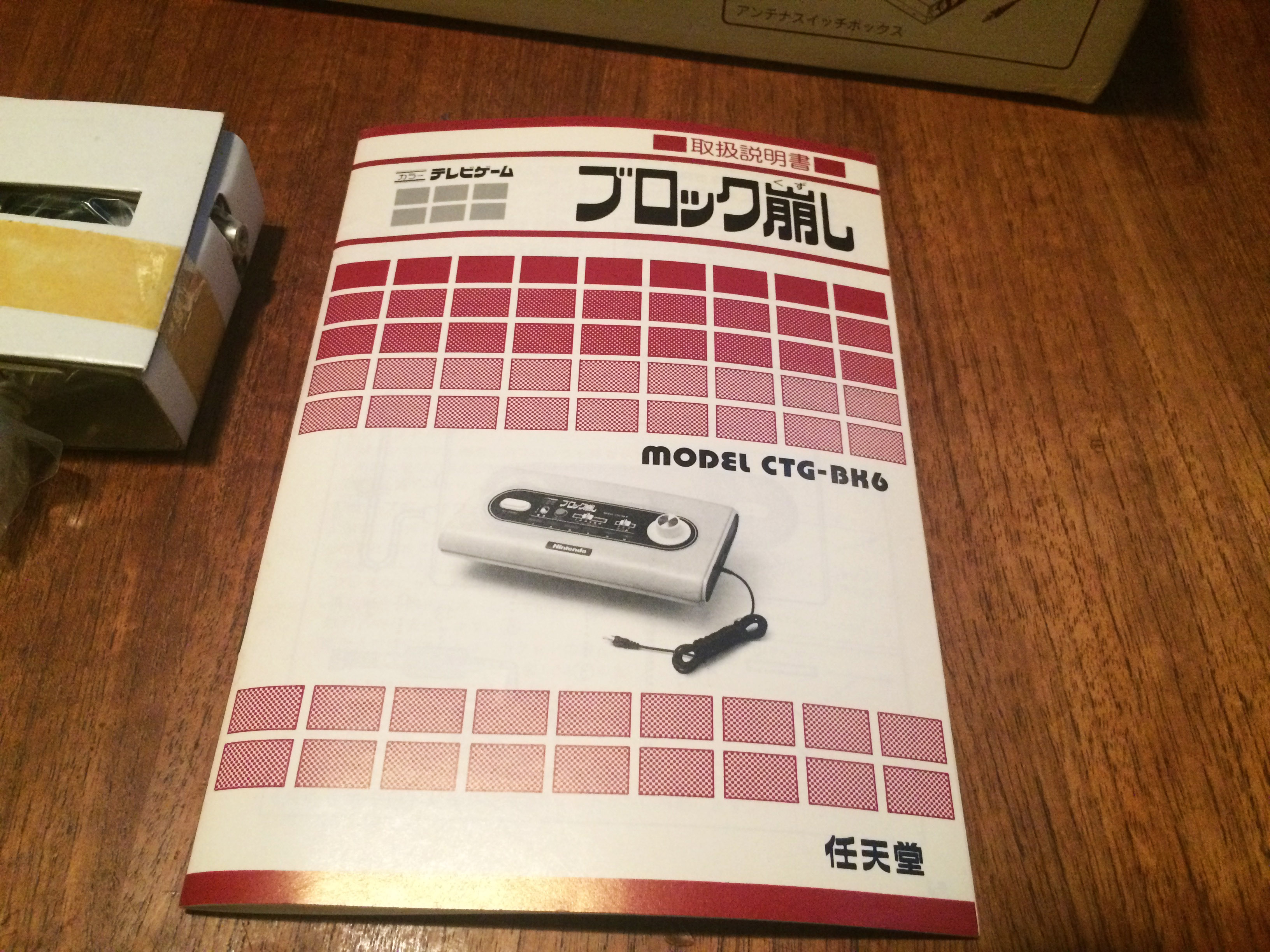
Game explanations in the manual.
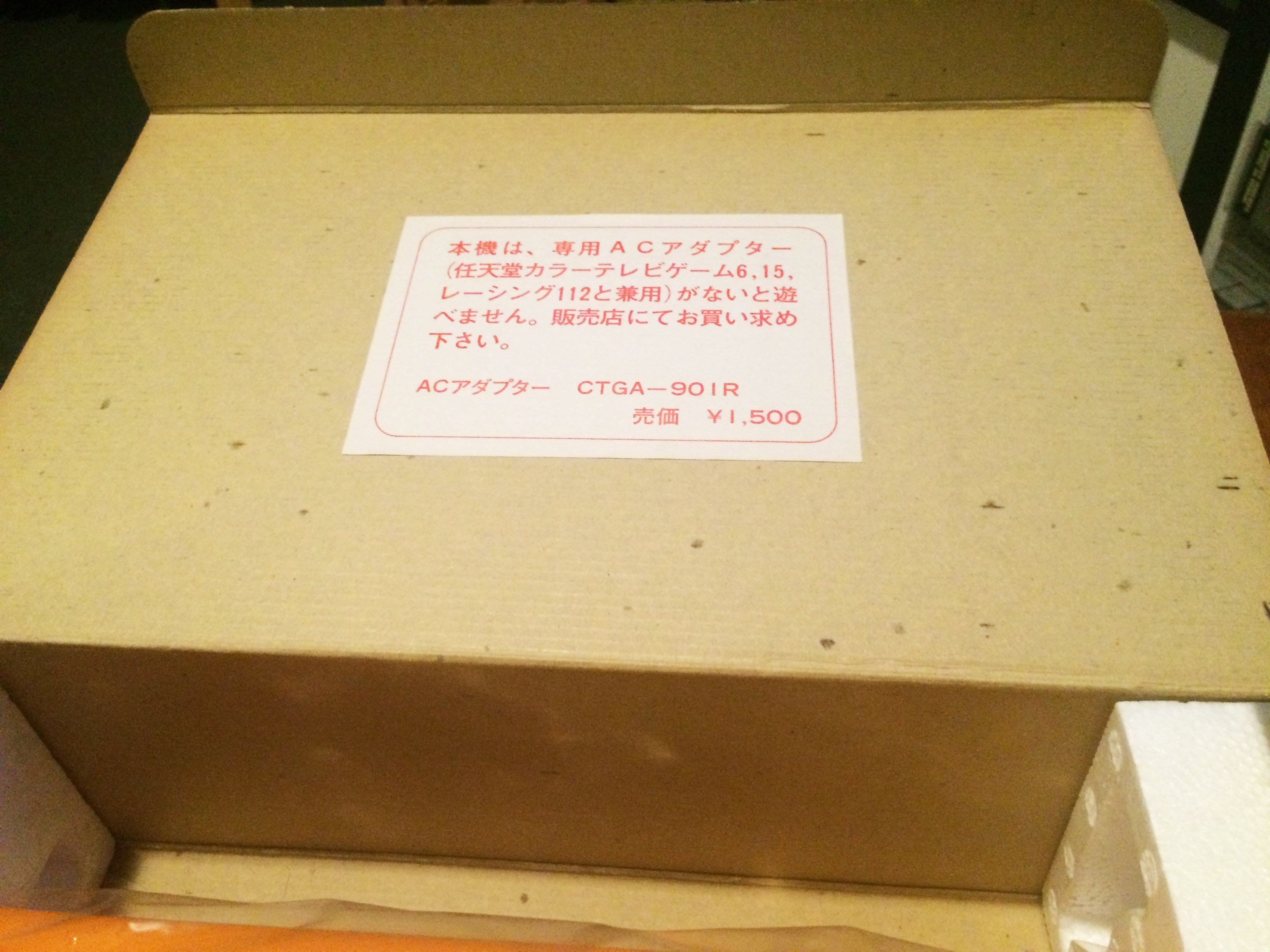
It’s powered by an external adapter, available separately for 1500 Yen. The same adapter powered all of the Color TV Game series consoles, so you only needed to buy one if you didn’t already have one (sounds familiar, New Nintendo 3DS owners?). It has the same specs as the Famicom power adapter, so can be powered anywhere with a local Mega Drive adaptor.
The adapter plugs into the right side of the console, which is also where the RF output cable is attached.
Pricing for the previous models in the manual, with price update stickers! Looks like the CTV Game 6 was discontinued between this manual’s printing and release.
Overall it’s a really cool device, and the breakout games are very tightly designed and fun. CTV 6 and 15 are kind of basic pong clones, but this one is a really classy product.