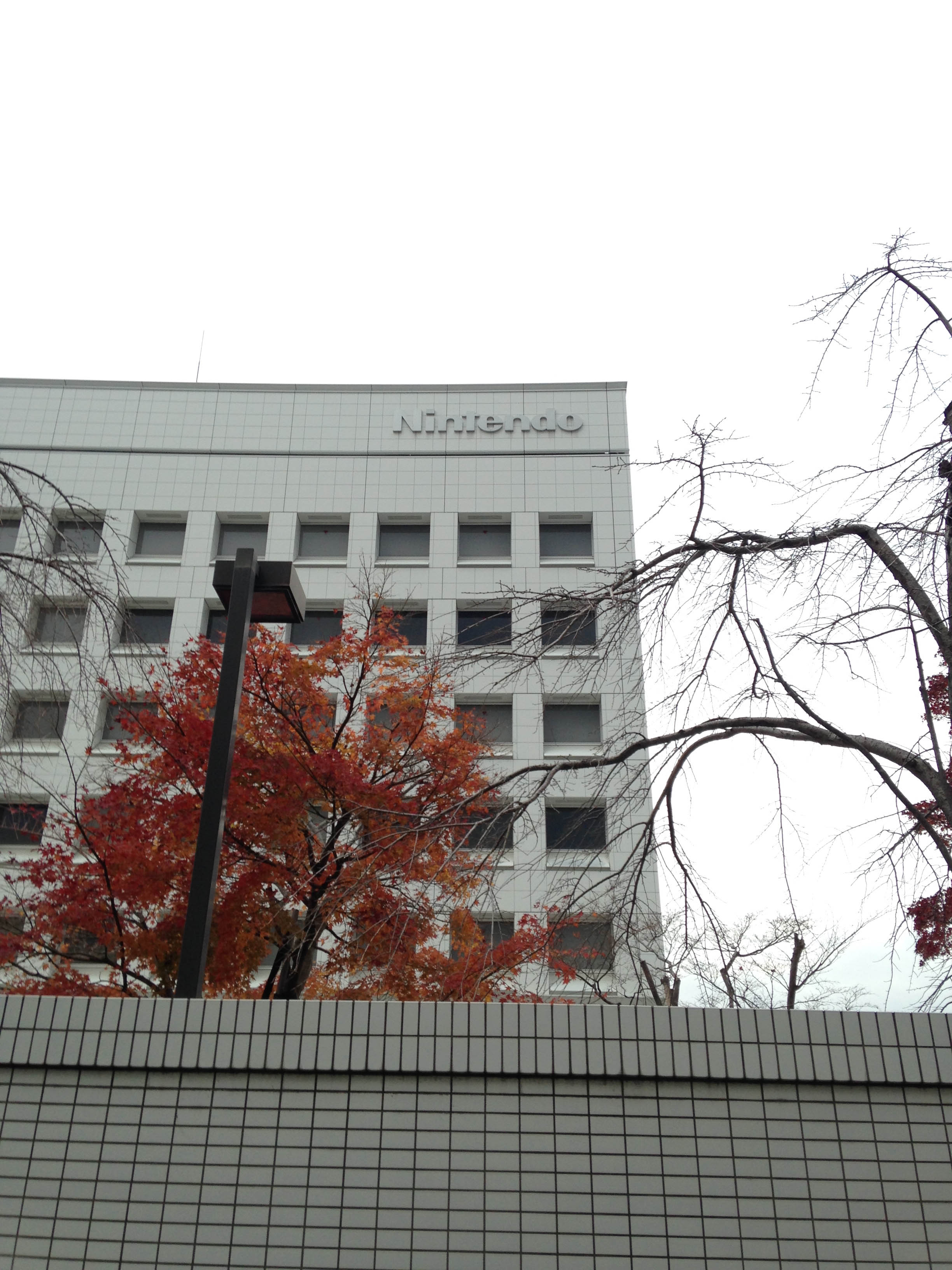
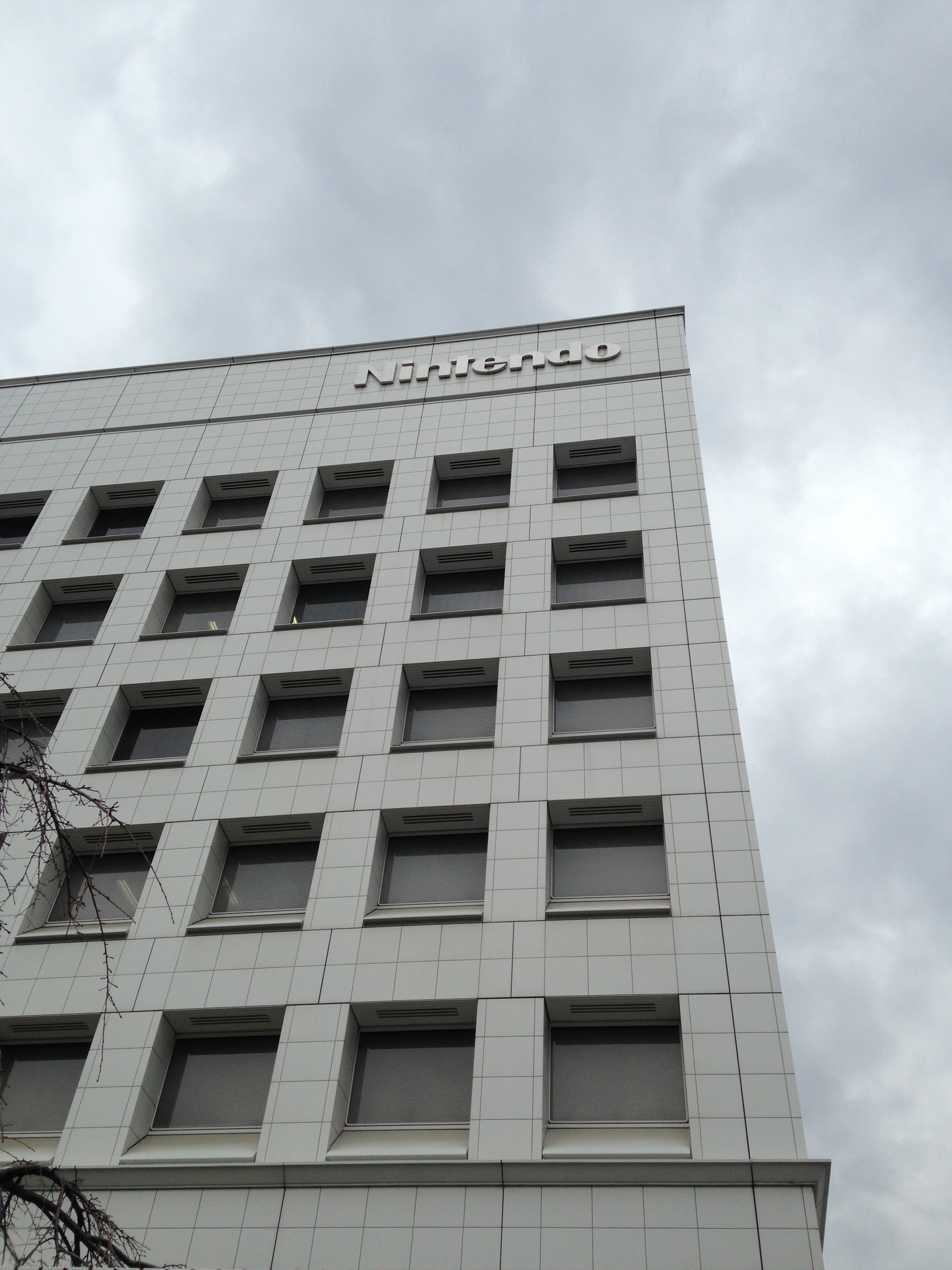
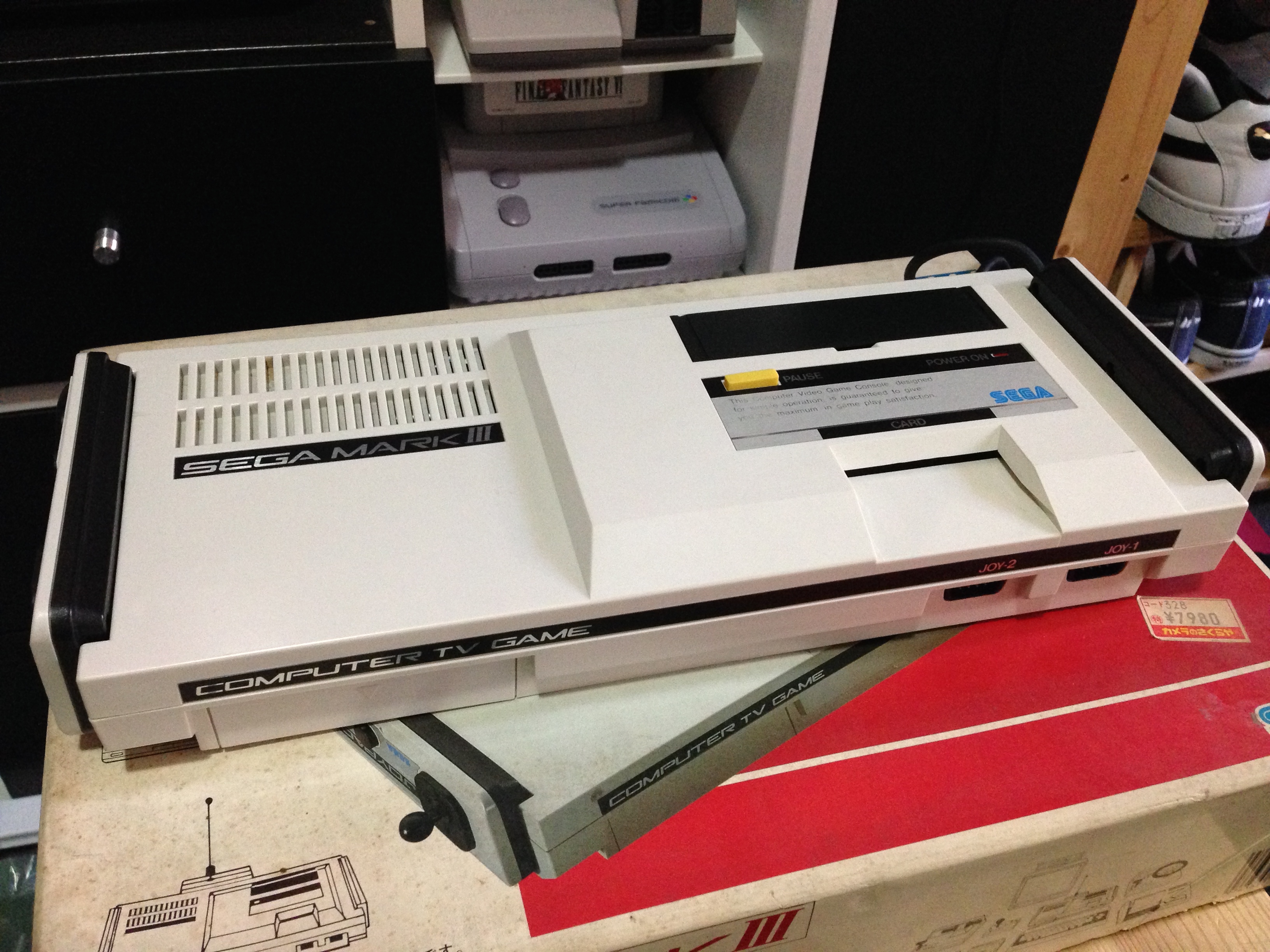
My pilgrimage to Nintendo’s headquarters in Kyoto

I’ve been a Nintendo fan for 30 years, and I was in Kyoto for the first time. Well I had to go to Nintendo, didn’t I?

First stop was very hard to find, and Google (at least in English) was very little help. I wanted to see the oldest surviving Nintendo building, buried in the backstreets of a now largely residential area of Kyoto.
KyotoNintendo2_0009

After some research (largely machine translating Japanese walking tour maps), I worked out it was somewhere near here, which was around 15 minutes walk from the apartment we were staying in.
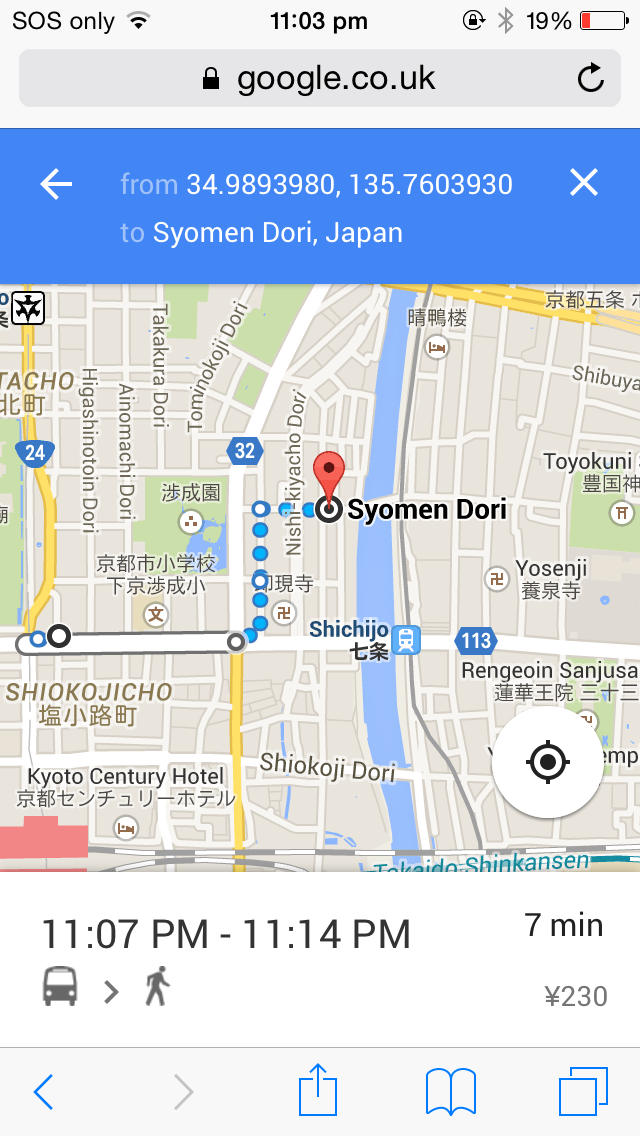
kyotonintendo

So we set off the next morning. After a lot of wandering in the freezing cold winter air, we found it!

KyotoNintendo_0002

Built in 1933, it sits on the same land as the original headquarters from 1889. While nicely designed with lots of detailed flourishes, it’s an otherwise relatively nondescript building. Except for two plaques:

KyotoNintendo_0004

The sign references Japanese playing cards ‘Karuta’ (かるた) and western playing cards ‘Trump’ (トランプ – Toranpu)
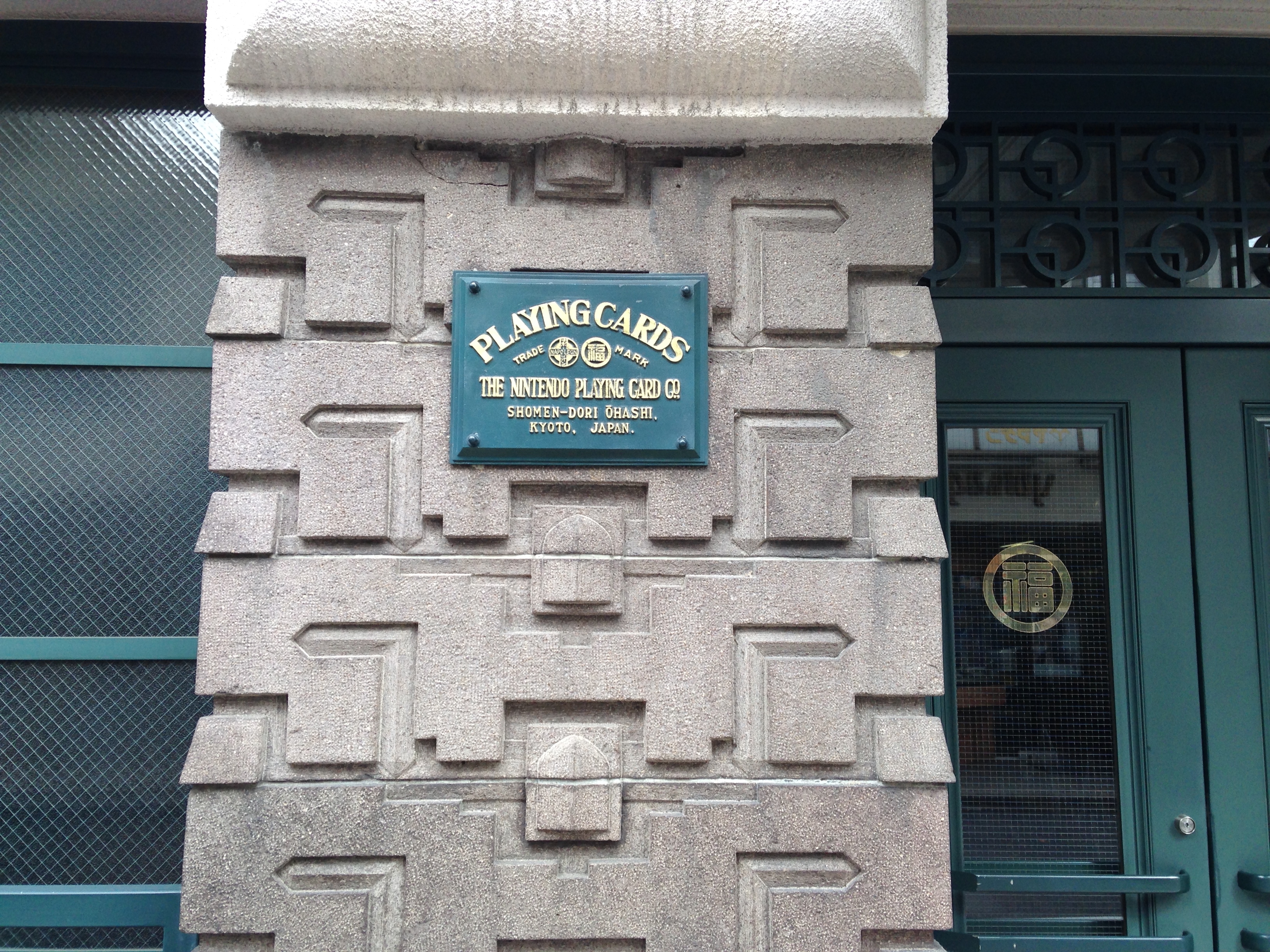
KyotoNintendo_0003

This was their playing card factory and distribution centre before they became a larger toy company, and it has stayed in company hands.

KyotoNintendo_0005

 I took a peek inside as well, it is clearly well maintained and clean, and in some form of use.

KyotoNintendo_0006

It appears to have been maintained perfectly from the 1933 until today.

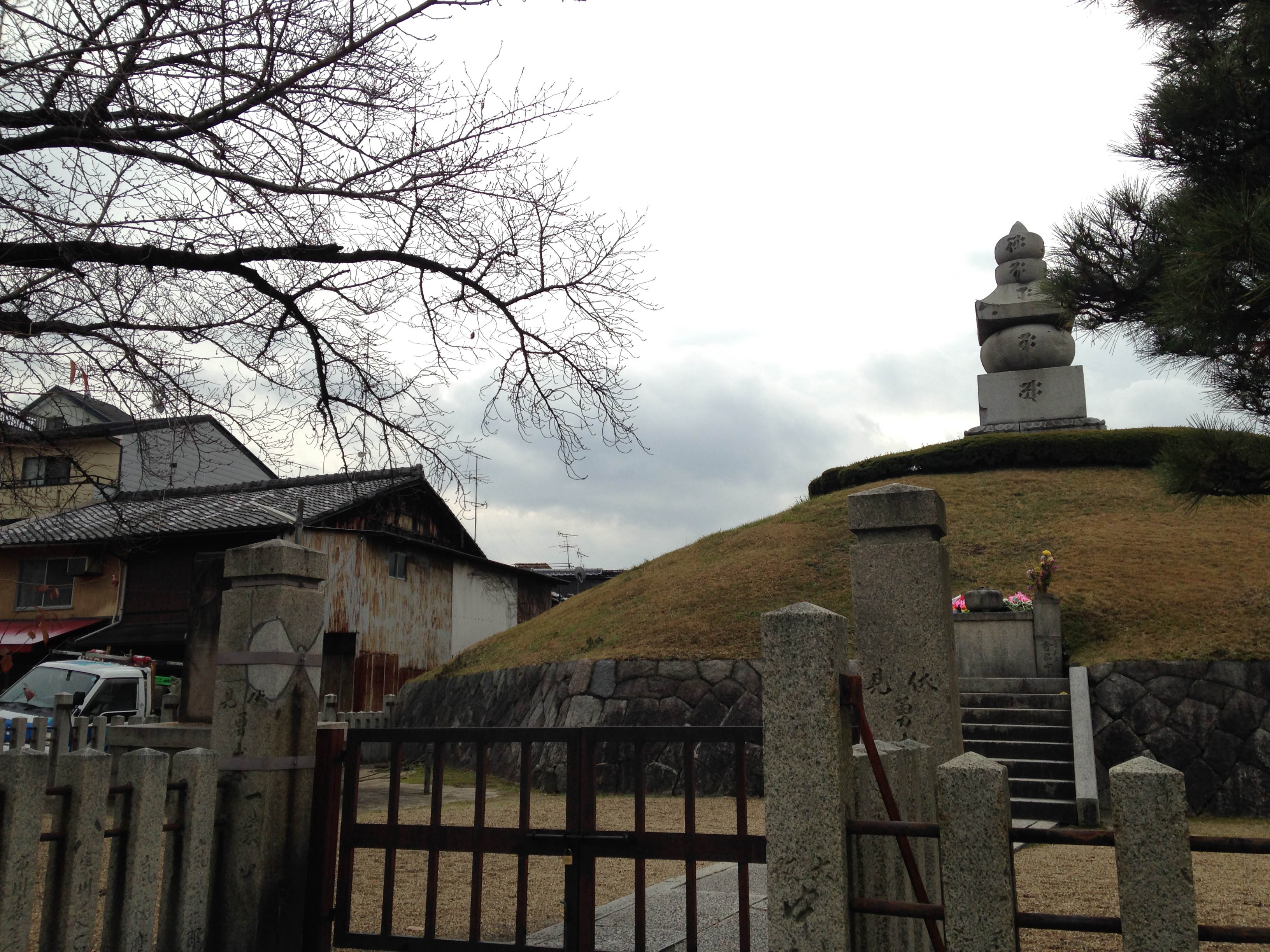
The next stop would be much easier to find. It was about 40 minutes walk away through residential and industrial areas, though we stopped in at a couple of Kyoto’s famous temples along the way.
KyotoNintendo2_0012 KyotoNintendo2_0015

KyotoNintendo2_0020KyotoNintendo_0028

Until it appeared…

KyotoNintendo2_0058

KyotoNintendo_0041

Mecca.

KyotoNintendo_0049

KyotoNintendo_0052

Two blocks away there is the other monolith, the new development building.

KyotoNintendo_0059

KyotoNintendo_0063

KyotoNintendo_0064

Not too much to see, you’re not allowed in either building. But they do have a nice big sign at the development centre.KyotoNintendo_0067

The Sega Mark III FM Sound Unit (FMサウンドユニット)

The Mark III was released two years later than the Famicom, and has slightly more powerful graphics hardware. But it still has worse sound capabilities. So Sega developed the FM unit for those customers who would be happy to pay more for superior audio. It adds in a Yamaha FM sound chip for Mega Drive-like sound effects and music.

Mark3FM2_1627

The FM unit sits snugly on the recessed top part of the console, and plugs into the front expansion port.

Mark3FM_1290

A cable extends out the back of the FM unit to capture the console’s video and regular audio.

Mark3FM2_1621

It plugs into the AV out, using five of the eight pins (so no RGB available)

Mark3FM2_1622

You then attach your AV cable to the FM unit’s AV out, which passes through video, regular audio and adds in the FM audio for supported software.

Mark3FM2_1623

Yes, supported software. Games had to be specifically coded to support the FM unit. This was displayed on the front of the box on the bottom left, see my copies of Kenseiden and After Burner below.

Mark3FM8000

Is it worth it? You bet! It makes your Segamaku sound like a Mega Drive! Definitely a worthwhile upgrade, even though working FM units regularly sell for up to 10,000 yen these days.

About the Sega Mark III (セガマークIII)

While Nintendo’s first console, the Color TV Game 6, was released in 1977, Sega only turned to consumer hardware development in the early 80s. The original Sega console, the SG 1000, was released, as fate may have it, on the same day as the original Famicom.

It was basically a Japanese edition of the current crop of American consoles, equivalent in power to the Colecovision. Unfortunately for Sega, the Famicom was a massive generational leap in power over these machines.

The SG-1000 got a quick redesign as the SG-1000 II, and when Sega got around to releasing an actual Famicom competitor, they decided on a new naming convention – and called it the ‘Sega Mark III’. I assume it’s a play on ‘Mach 3’.

The SG1000 II

The Mark III, like the SG1000-II before it. takes a lot of design cues from the Famicom. It has controller docks on the side of the console (though the controllers are not permanently attached), a similar cartridge bay flap, and shiny metallic highlights. It unfortunately maintains the SG-1000 II’s controller limitation of only two buttons.

IMG_1127

I love the ’80s futurism’ aesthetic of these things. It looks like it belongs on an 80s spaceship. The controller docks are great too.

Mark3controllerdock_1675 Mark3controllerdock_1674

They’re pretty good controllers too. So much better than Master System controllers, which have the same internals but a much less comfortable shape.

Mark3Controller1

They also come with this mini-joystick that can be screwed into the centre.Mark3controller2
Mark III consoles and accessories were made in Japan, but by the time of the Master System, Sega had began the practice of outsourcing console and accessory production to cheaper countries like Taiwan, Malaysia and China, and quality took a big dip.

There’s also the FM unit, which makes it look even more 80s.

Mark3FM2_1627

It’s a great console that is very hard to come by. While games are available, I didn’t see a single console for sale in any retro games store (or Hard Off) on a recent Japan trip.

Restoring a yellowed Sega Mark III console

In my opinion, the best looking version of the Sega Master System was the original, so I decided to get a Sega Mark III. On a recent trip to Japan I looked everywhere I could for one, but I only came back with a controller.

 I saw a beat up Japanese Master System in an outer-Tokyo Hard-off, and an FM unit in Osaka Super Potato, but decided not to risk the latter since I wouldn’t be able to test it.

Mark III consoles cost a fortune on eBay, so I got one on Yahoo Auctions. As google translates the katakana: here is the Segamaku3 (!).

Makutree_0001

It oozes 80s Japanese industrial design kitsch.

I got two, one in box and one without. The in-box one was listed as ‘untested’ so I grabbed another that was console only but listed as working. Turns out both worked fine. But both were very yellowed. It seems it is a common practice for Japanese sellers to modify their photos to make things look less yellowed.

Here’s one next to my non-yellowed Famicom:

Makutree_0002

Time for some hydrogen peroxide treatment, as outlined in this Neogaf thread.

I did them one at a time to demonstrate the result:

Makutree_1121

I love this little message on top, so polite!

Makutree_1122

And the result:

Makutree_1127

Beautiful, looks like a prop from an 80s Scifi.

So small compared to the Master System.

Makutree_1129

This was the first of many Segamaku projects I’ve completed recently. Coming soon: FM unit info, external RGB amplifier, and the world’s first Mark III flash cart!