Family Computer Robot (ファミリーコンピュータ ロボット) – The Japanese R.O.B.

You’ve likely heard the story of R.O.B. ‘The Robotic Operational Buddy’ for the NES. The story usually goes like this: when Nintendo wanted to bring their successful Family Computer console to America in 1985, the stores wouldn’t take it because they were afraid of losing money on video games, as there had just been a big video game market crash. So in order to get toy stores to stock the console, Nintendo initially bundled the NES with a toy robot and marketed it as an electronic toy instead.

Some of the story might be true, but R.O.B. was actually released in Japan first, as the Family Computer Robot.

famicomrobot_0578

Nintendo was a toy company before they were a games company, and there were many existing examples of the company combining electronics and toys before this. Among the most notable are the original electro-mechanical light gun games: at home (Electro Safari and Electro Bird) and in the arcade (the original versions of Wild Gunman and Duck Hunt).

So really, the robot and its accessories were just part of a long toy/game continuum that continued throughout the Famicom era with peripherals like the Power Pad and all the way through to today with Amiibo and Labo.

The games that were compatible each came with a veritable toybox of additional parts, and are essentially complex mechanical games that use the robot as a central item. Only two games were released, Robot Block and the more elaborate Robot Gyro.  famicomrobot_0581

The Family Computer Robot uses pretty much identical technology to the light guns of the day, but in reverse, so instead of the screen responding to the peripheral, the peripheral responds to the screen. Like light guns it relies on the screen scanning display technique of a cathode ray tube, and so will not work on modern fixed pixel screens, even via a scaler.

famicomrobot_0591
Sorry Framemeister, you’re not up to this task.

So for robot games, a CRT is required, luckily I keep one on hand for just such an occasion.

famicomrobot_0595

Essentially the robot needs to be positioned so he can see the screen clearly in order to respond to the commands he is sent.

famicomrobot_0600

The robot can receive commands from the screen and execute a simple movements based on them. He can move his arms up and down, left to right, and can open and close his grip. This movement set allows him to pick up and move objects.

The two games approach the concept of ‘robot which can pick up items’ differently. Robot Block primarily makes the physical element of the game the primary one, integrating the Famicom software into the mechanical game. Robot Gyro is essentially a regular video game which includes the robot (and gyro) functionality as a physical gimmick.

Robot Block (ロボット ブロック)

Robot Block is the simplest of the two games, in both set-up and software. It comes with a series of attachments which are slotted into the robot’s base, some discs which sit in these attachments and can be stacked on each other, and some hand attachments which can grip the discs.

famicomrobotblock_0602 famicomrobotblock_0616

The physical game involves manoeuvring the robot to pick up the discs and stack them in a particular order.

famicomrobotblock_0601

The game itself features a robot testing tool, and three game modes: Direct, Memory and Bingo.

All the games involve a little professor jumping around the interface. Direct is the simplest, you have to stack up the discs in a certain order as shown on the screen.

In Memory you must set up a series of moves for the robot to execute in order to achieve the required physical result. Bingo is a one or two player game where you have to fill in rows or columns in order to execute commands.

famicomrobotblock_0603

Essentially the software is useless without the accessories, since it’s really just a tool that is used to play with the robot and pieces. It’s also not very fun beyond the 80s robot novelty.

Robot Gyro (ロボット ジャイロ)

Robot Gyro is both the better game, and has the better toys. It also has a much more elaborate set-up. First of all there is a bracket on which the Famicom player II controller sits, with a levered mechanism which can hit the A and B buttons.

famicomrobotgyro_0617

There is a powered gyro spinner which gets two tops spinning at high speed.

famicomrobotgyro_0630

The robot can pick up the tops from the spinner…

famicomrobotgyro_0622

…manoeuvre them over the button levers…

famicomrobotgyro_0623

…and release, which presses down on the matching button on the controller.

famicomrobotgyro_0625

There’s also a slot over on the right to keep the second top when not in use.

famicomrobotgyro_0626

Here’s a closer look at the mechanism to hit the buttons. The mechanisms are coded in blue and red, which ties into the game.

famicomrobotgyro_0633

The set up is actually a pretty fun toy in and of itself, due to the spinning tops being pretty fun and the whole set-up being nicely done. But what about the game?

Well it’s a pretty standard 80s puzzle action platformer (think Lode Runner or Crazy Castle), where the same professor character from Robot Block has to collect all the dynamite in the stage while avoiding the critters.


The gimmick is that the stages are full of red and blue pipes which move up and down when the red and blue switches have been hit. In order to get the robot to do this, you essentially pause and issue instructions. It can often take several moves for the robot to slowly get the top to the right button.

Actually playing with the robot is tedious, but the game itself is a decent puzzler if played without it in two player (with the other player hitting A and B). So while the robot toys are fun to play with, and the game is decent, together they are less than the sum of the parts.


Overall, while not being the most fun games to play on the Famicom, the Family Computer Robot games are fun pieces connecting Nintendo’s toy and video game eras.

famicomrobot_0606

famicomrobotgyro_0627

Nintendo Paper Model Series (ペーパーモデル) aka Labo 1974 Edition

In preparation for Nintendo’s return to producing toys made out of cardboard, I thought I should try out a similar item in my vintage Nintendo collection. In 1974 Nintendo entered the paper craft market, with a series of simple cardboard DIY projects known as the Nintendo Paper Model series (ペーパーモデル).

There are dozens of designs available and I personally own around 15.

My favourite is probably the Johnny Walker licensed bus, but most of the houses look quite nice too.


Since I was going to open an item that had been in the packaging for 44 years, I wondered if my niece Emma was interested in helping…


…I took that as a yes.

We started after dinner. Emma chose the French Castle (フランスのお城 – Furansu o-jo) as our project.

In a nice coincidence 城 is one of the first Kanji I was able to recognise thanks to 悪魔城ドラキュラ(Demon Castle Dracula) – the Japanese name for Castlevania!

Here is the card laid out. It is not pop-out and requires some intricate cutting and gluing.

It was here that we realised this was actually much too fiddly for young kids. I had to do many of the cuts with a knife, and assembly was also going to be very fine work. Emma kept drawing while I did most of the grunt work (continuing after Emma’s bedtime), and we glued it together the next day.

The final result: not bad!

The design seems largely based on Château d’Azay-le-Rideau, which is situated on a river.

As such, Emma grabbed some extra paper from her craft supplies and prepared some grounds and a pond, complete with reeds and ducks.

Final result with grounds and pond:

All in all, we had a decent evening/afternoon of fun. But here’s hoping Labo will be easier for kids to be involved at each step!

20/20 Konami Famicom Collector Cards

Another update on this article on my now never-ending quest to collect a series of Konami Famicom character cards from the 80s.

Recap: at some point starting in 1987, Konami decided to include a collector card with all their Famicom titles. Each card had an illustration related to the game; some cards featured screenshots or pieces of screenshots, others had artwork of scenes in the game.

Last time I decided I was done, having collected a card for 19/20 of the games which came with a card. The missing game was Exciting Boxing (エキサイティングボクシング), which while I’d managed to get a hard-to-find boxed copy of it to complete my complete boxed Konami Famicom collection, I’d never seen one with a card outside of complete large box copies which come with a novelty inflatable controller and cost a fortune when they appear.

But one lucky day I found a regular small boxed game with the card. And now I have a card for all twenty of the games that came with one!

On top of this, I picked up a beautiful near mint copy of Dragon Scroll (ドラゴンスクロール) in Ikebukuro, which came with a different card to the one I had, so now I have entered the murky waters of collecting multiple cards per game.

Dragon Scroll also came with these great advertisements for various Konami games and sountracks. Pretty cool when you have almost every item on a vintage ad!
   

This Japanese site (which I found because it flatteringly used this site as a source) has nicely collated most of the available cards, so this journey may go for many more years. Another great site Video Game Den also has good info on the available cards.

So here is my updated card set:

The whole collection, with cards:

Sega games on Nintendo consoles – a history.

Nintendo and Sega first crossed paths as rivals in the arcade business, and this spilled over into the console business when they both released their first home console on the same day.

Unfortunately for Sega, Nintendo well and truly won round 1, and not having a great income stream from their consoles, Sega allowed their games to be released on competing systems like Nintendo’s Famicom and NEC’s PC Engine. The games were published by third parties, but nontheless there were several official Famicom/NES releases where the Sega logo could be seen on a title screen.

SegaNintendo_9092

By the late 80’s everything had changed however. Sega’s third console the Mega Drive was doing  very well, and was eventually a solid competitor to the Famicom/NES and later Super Famicom/SNES. As a result, the concept of Sega on Nintendo (or vice versa) faded from memory as a possibility.

Outside of dodgy Famicom pirates of course…

But by the late 90s, Sega was in a bad position again. All their Mega Drive add-ons had failed to gain decent marketshare, as had their Game Boy competitor the Game Gear. And their latest main console, the Saturn, had been a borderline disaster. While it managed to establish a decent niche in Japan (even outselling the Nintendo 64), their previously strong marketshare in the west had crashed. Their entire legacy rested on the hopes of the new Dreamcast console.

As a result, their publishing rules started to relax again, and they allowed other non-competing platforms to see their crown jewel property Sonic. In 1997 a terrible version of Sonic Jam was released on the Game.com, a terrible console by Tiger Electronics. More notably, Sonic the Hedgehog Pocket Adventure was released on SNK’s Neo Geo Pocket Color in late 1999.

SegaNintendo_9089

On March 31st, 2001, the battle was no more. Sega discontinued the Dreamcast, and started developing games for the remaining platform holders, including Nintendo. The first release was a port of Chu Chu Rocket to Game Boy Advance. The end of the very same year the previously unthinkable had already happened – An official Sonic game on Nintendo.

Two Sonic games were released on December 20 2001. Sonic Advance on Game Boy Advance

SegaNintendo_8972

And Sonic Adventure 2 on GameCube. In a strange twist of fate, Sonic actually beat Mario to a new Nintendo console, as it would be another six months until Super Mario Sunshine.

SegaNintendo_8973

It went on from there, and the next Sonic game, while multiplatform, was designed primarily for the Nintendo GameCube. SegaNintendo_8975

But for long term fans of both companies, it really really hit home when in 2003 Sega developed a Nintendo game.

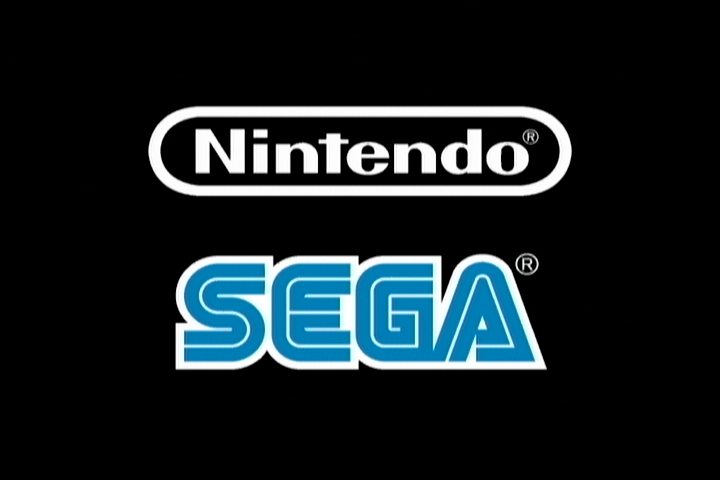
This splash screen blew my mind the first time I saw it.

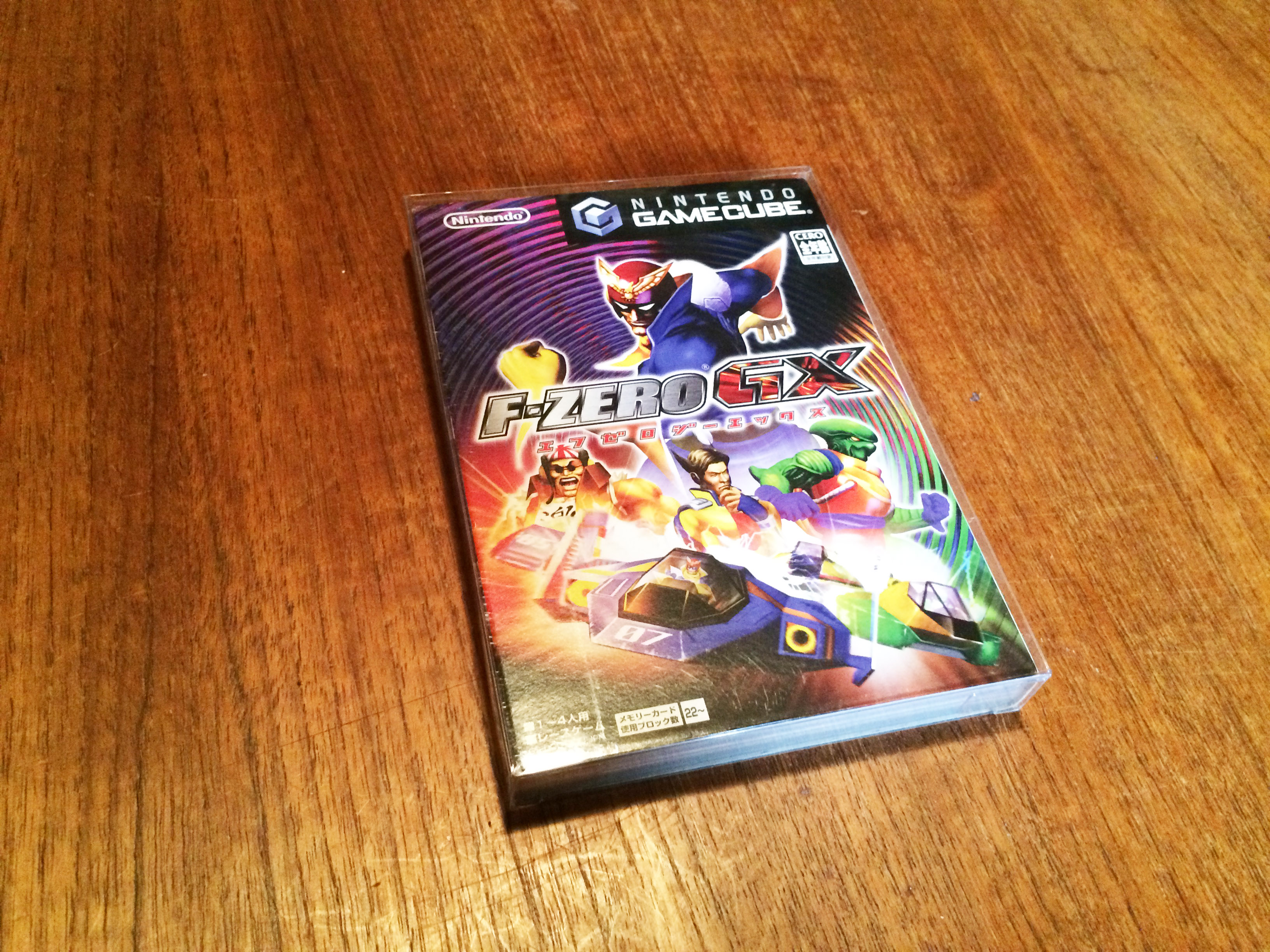
The game? F-Zero GX. And it was one of the greatest games of the generation, and still a killer looking and playing title today.SegaNintendo_8974

Technically that was about it for Sega. In 2003 they were taken over my Pachinko company Sammy and have continued as an upper-mid-tier third party developer. And over a decade later, despite varied game quality, Sonic is a strong seller on Nintendo.

Who would have thought?


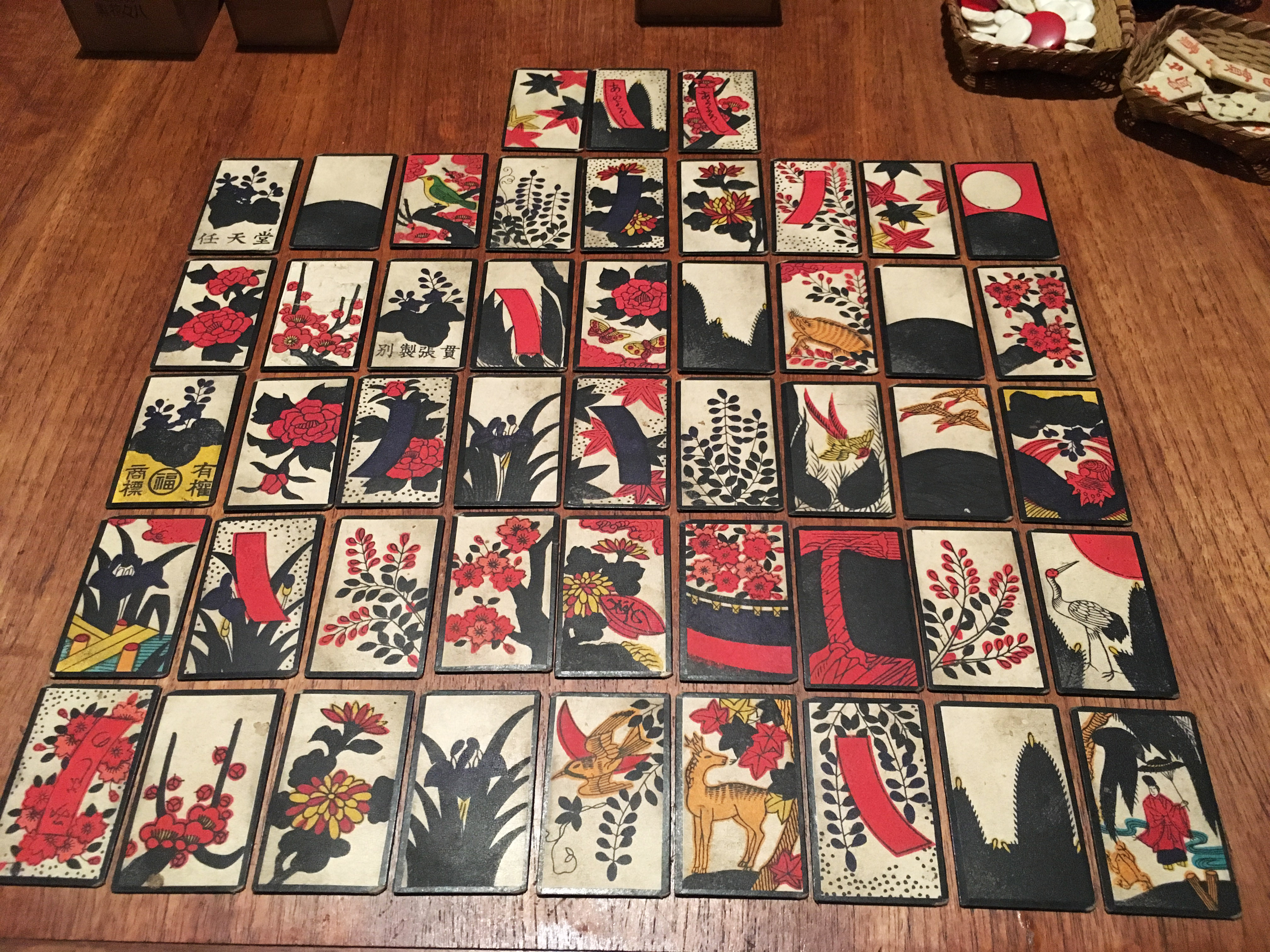
Pre-WW2 Nintendo Hanafuda (花札) – cards and gambling kit

This is my oldest Nintendo item, a set of original Nintendo Hanafuda. There is no way to tell the exact date of manufacture, but it is in the pre-war wooden packaging, in fact the seller said the kit was purchased ‘pre-war’. However given the superb condition and the direction of the kanji script, they are from quite late in that prescribed period.

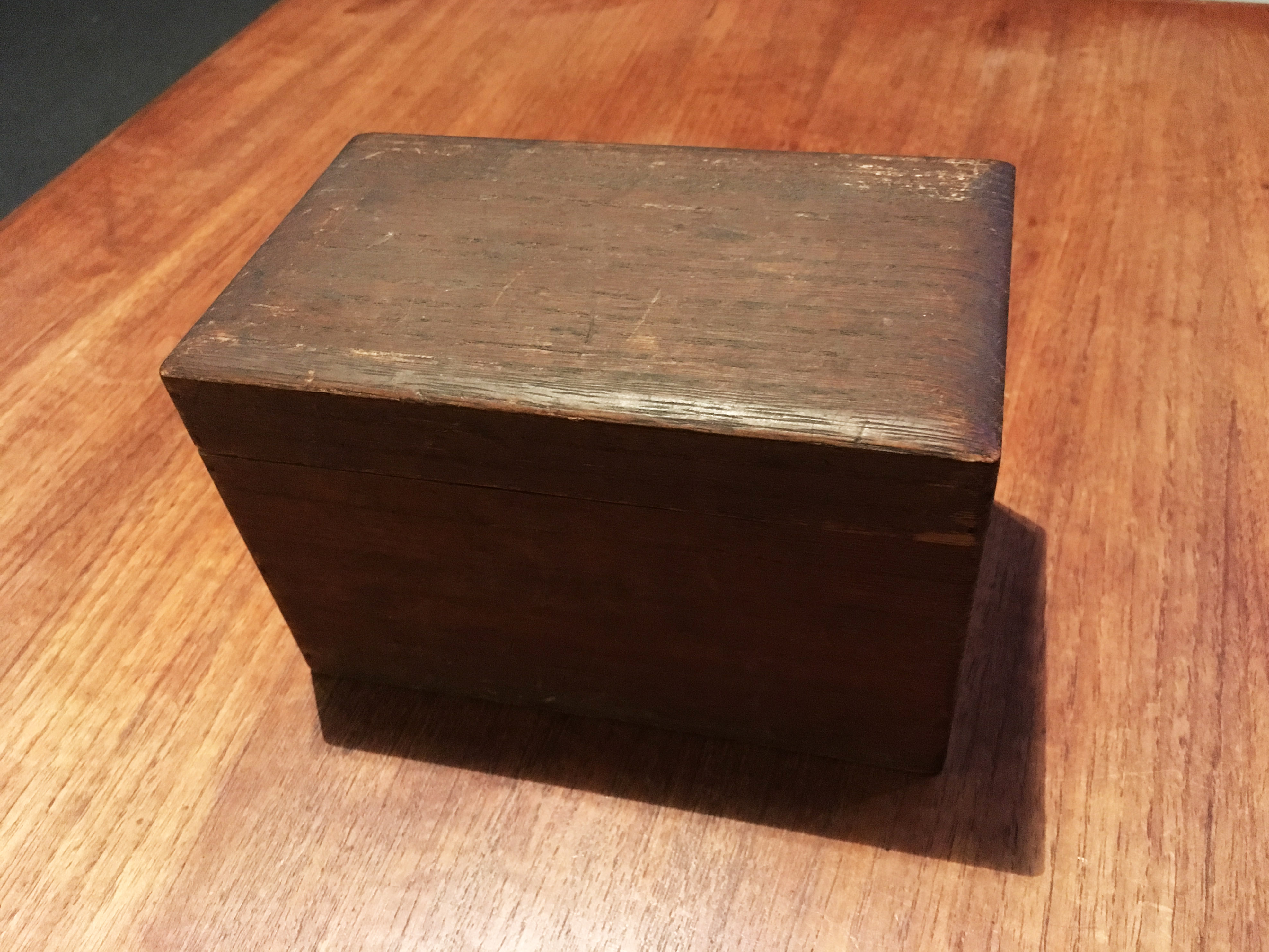
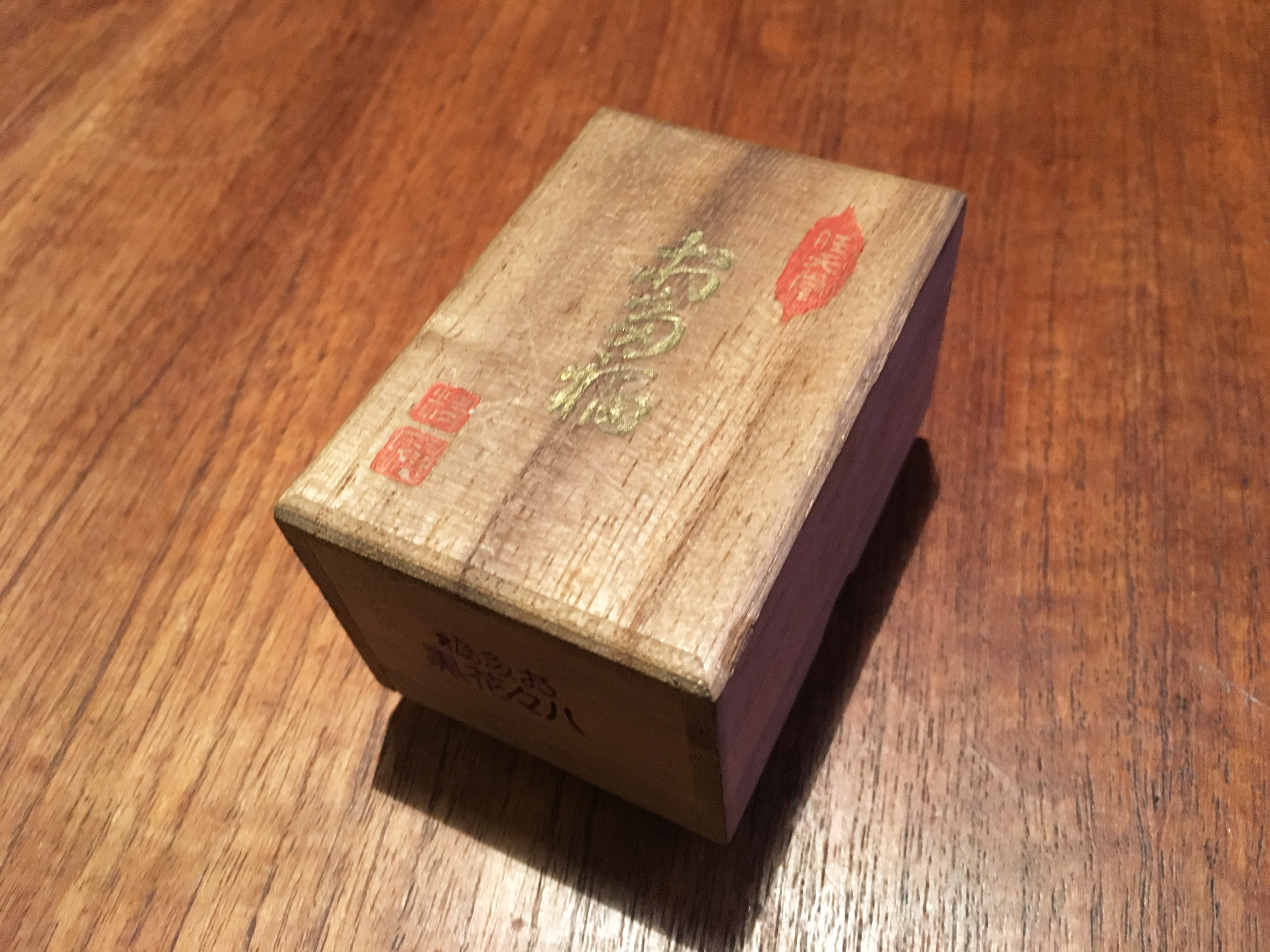
The set is contained in an unassuming wooden box.

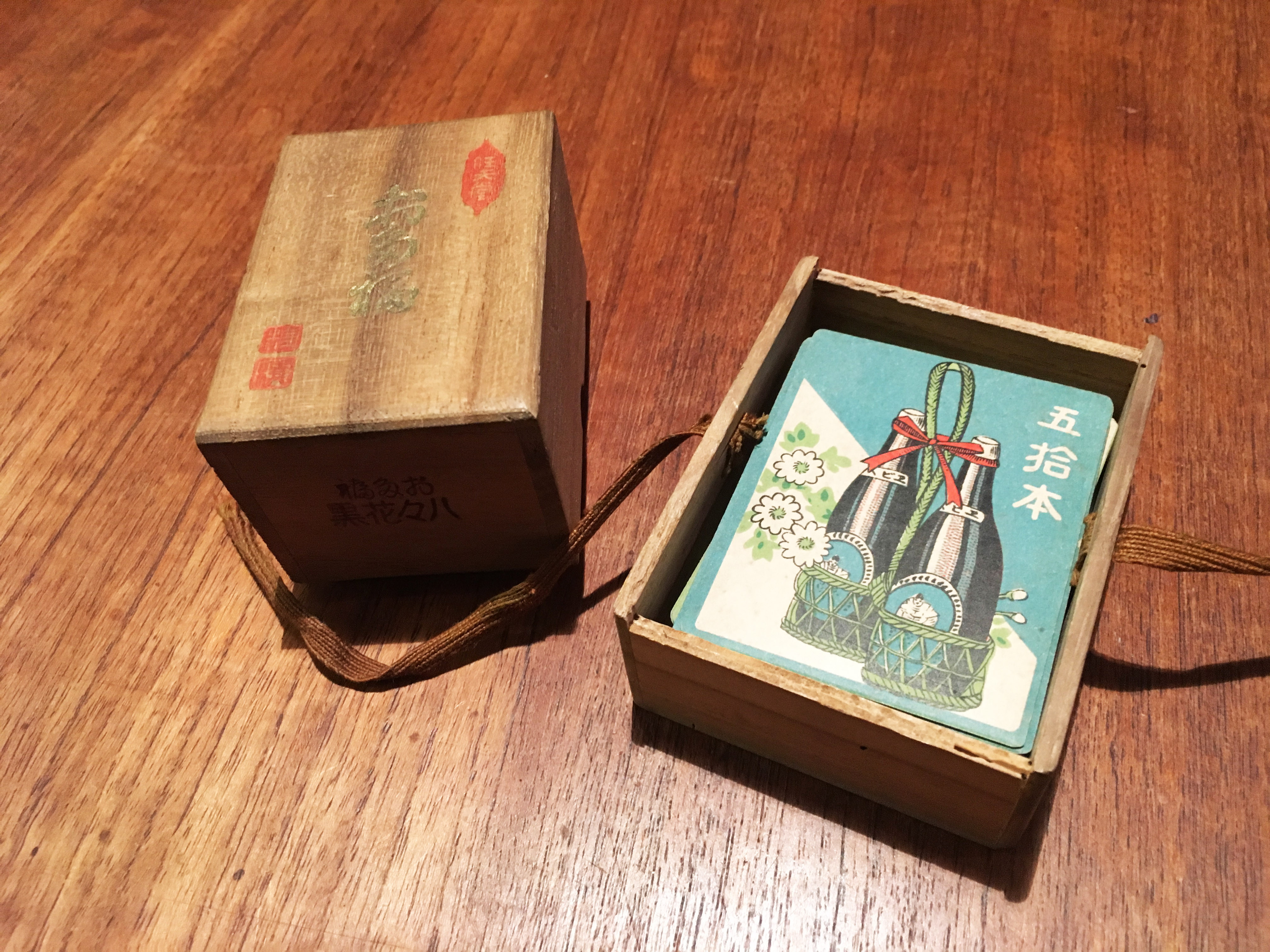
In which fit the gambling paraphernalia and cards.

I have no idea if the the non-card items are Nintendo made, but the kit is clearly built around the box of Nintendo cards and it all fits together very neatly.

Various chips for gambling.

Under the main card box is a tray of other gambling related items.

The card with the woman on it says 百本 or something like ‘a hundred points’.

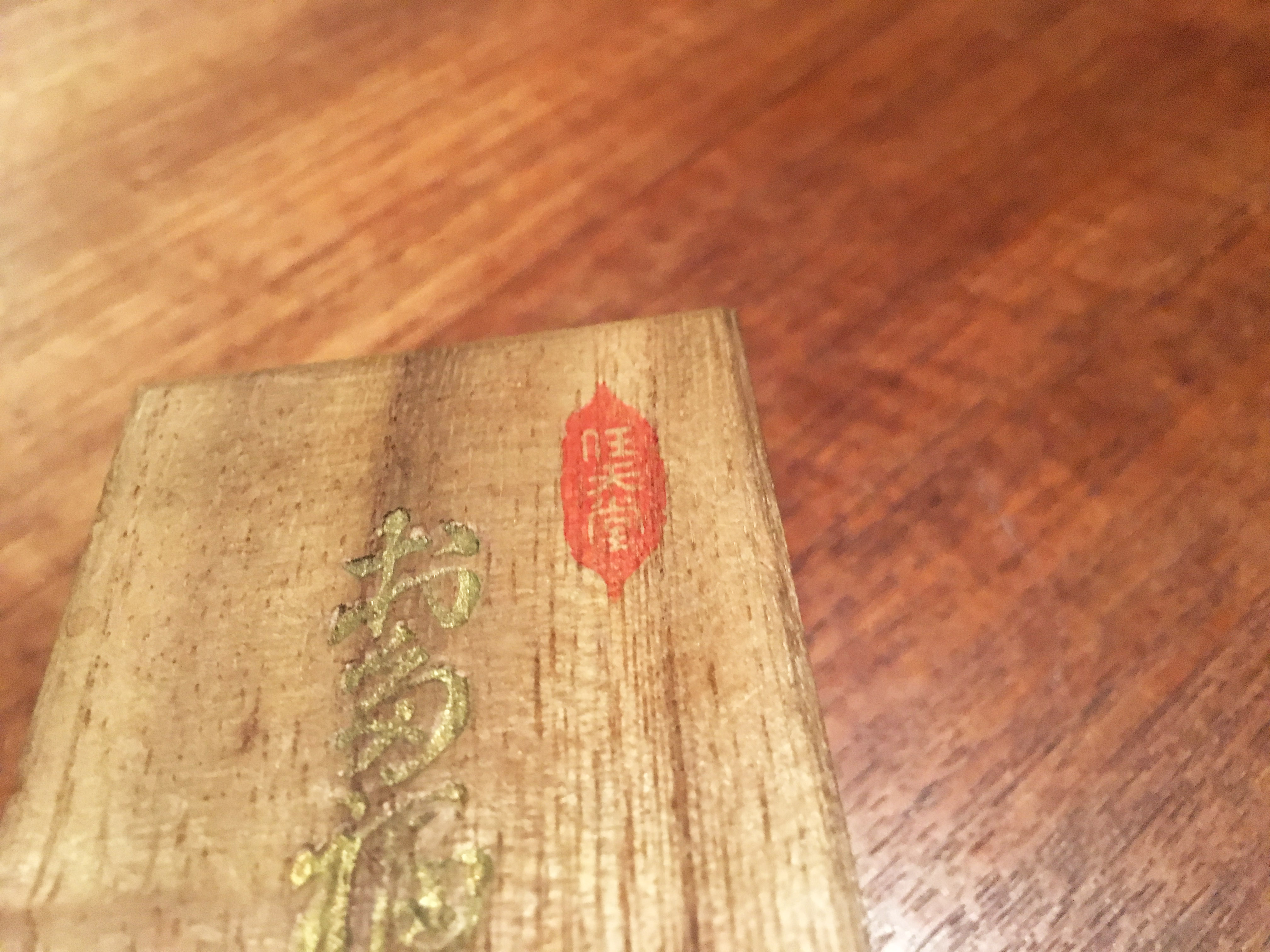
The small Hanafuda box itself is where we can see the original Nintendo branding.

任天堂 – Nin Ten Do – in the original kanji logo.

The lid lifts off to reveal the beautiful Hanafuda (花札) – literally ‘flower cards’.

The cards themselves are quite beautiful and well made.

These three cards are branded. The left card has the Nintendo Playing Card logo, and the middle is branded with 任天堂 Nin Ten Do, left to right (which as a clear sign it produced around the war period as this was when the orientation changed from right to left officially).

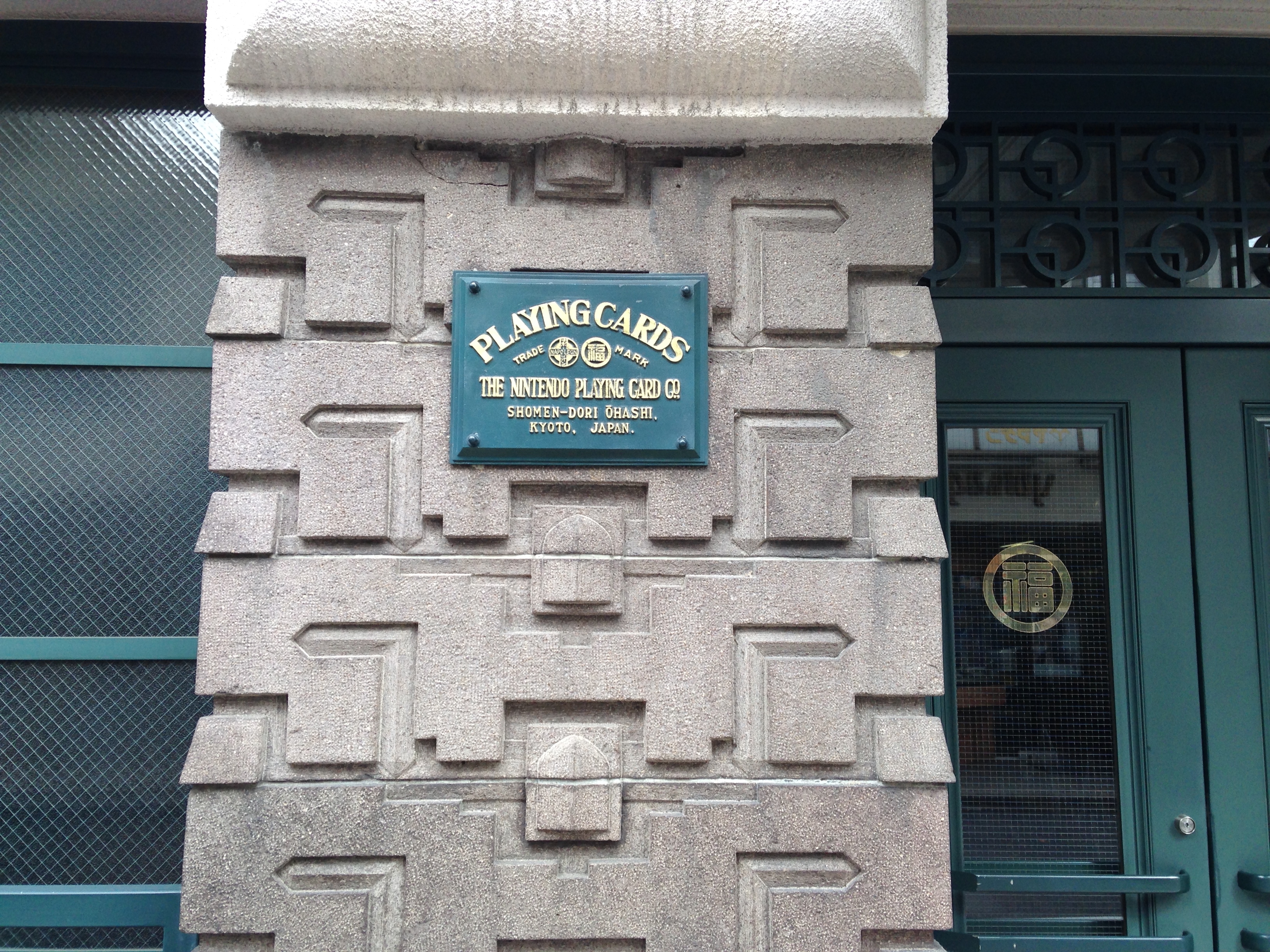
You can see the matching logo on the plaques at Nintendo’s old HQ in Kyoto.

The same logo is on the door on the right!

The whole kit.

Splatoon Madness in Japan Part 3 – Suizokukaan at the Kyoto Aquariam

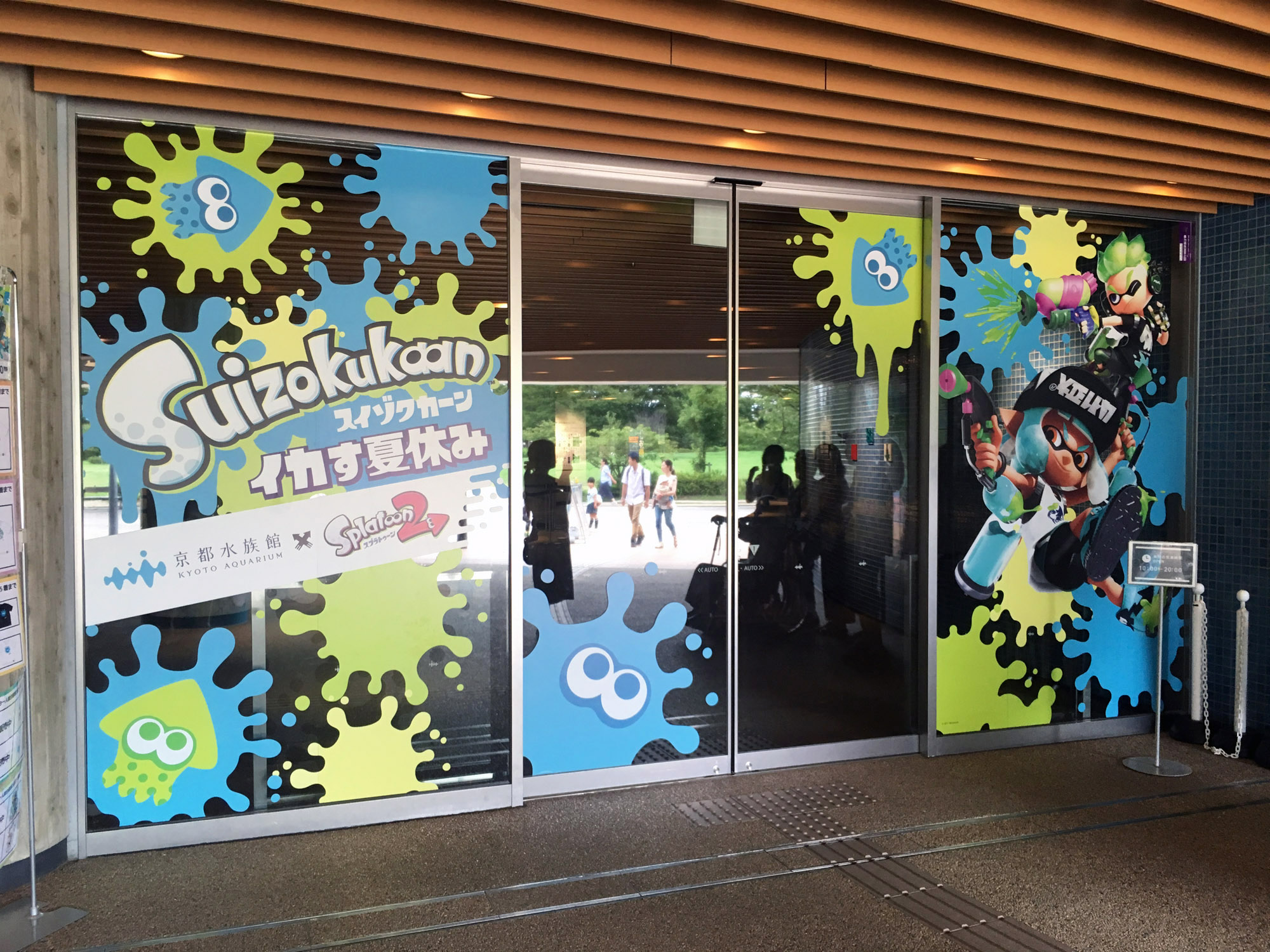
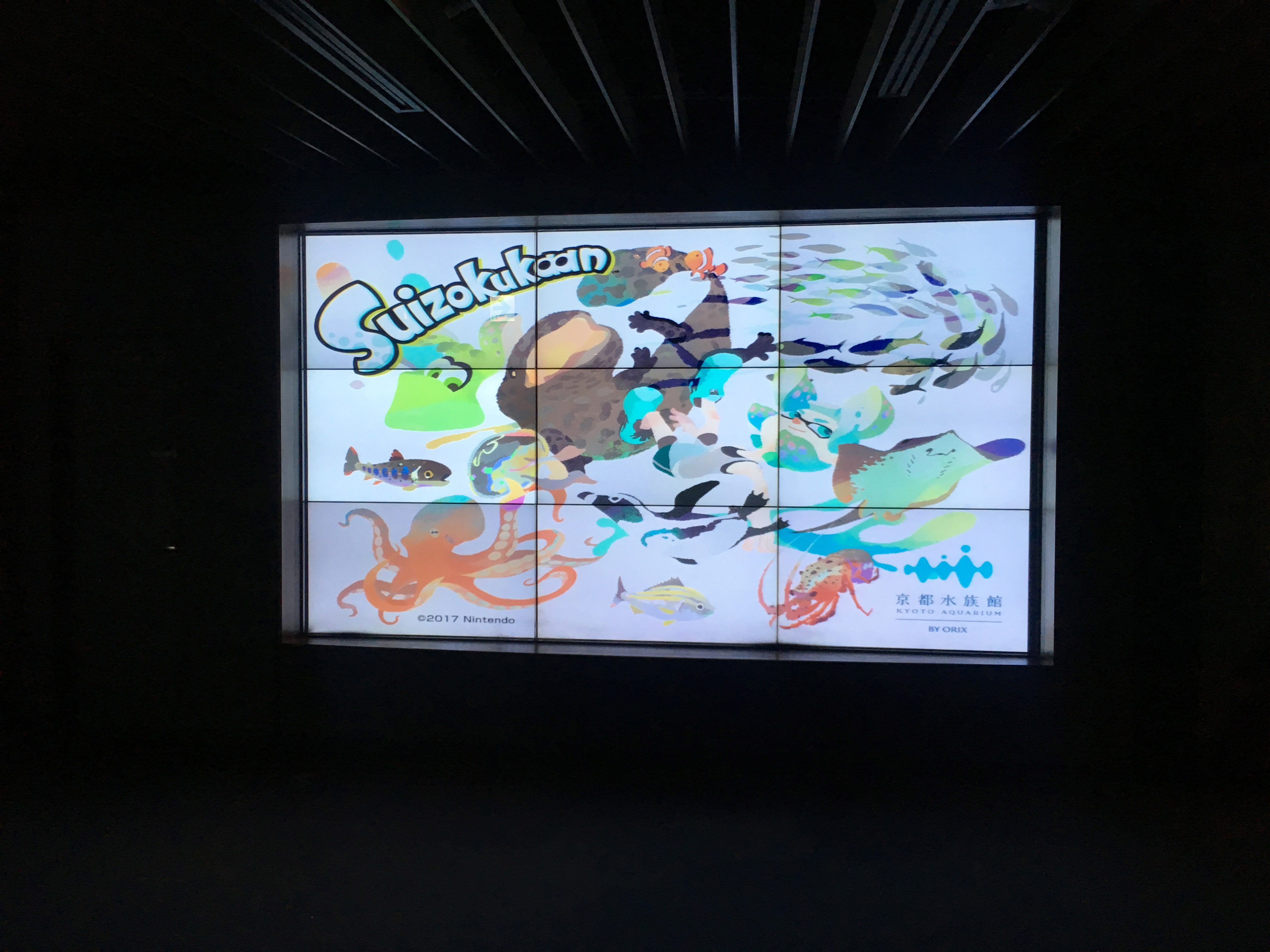
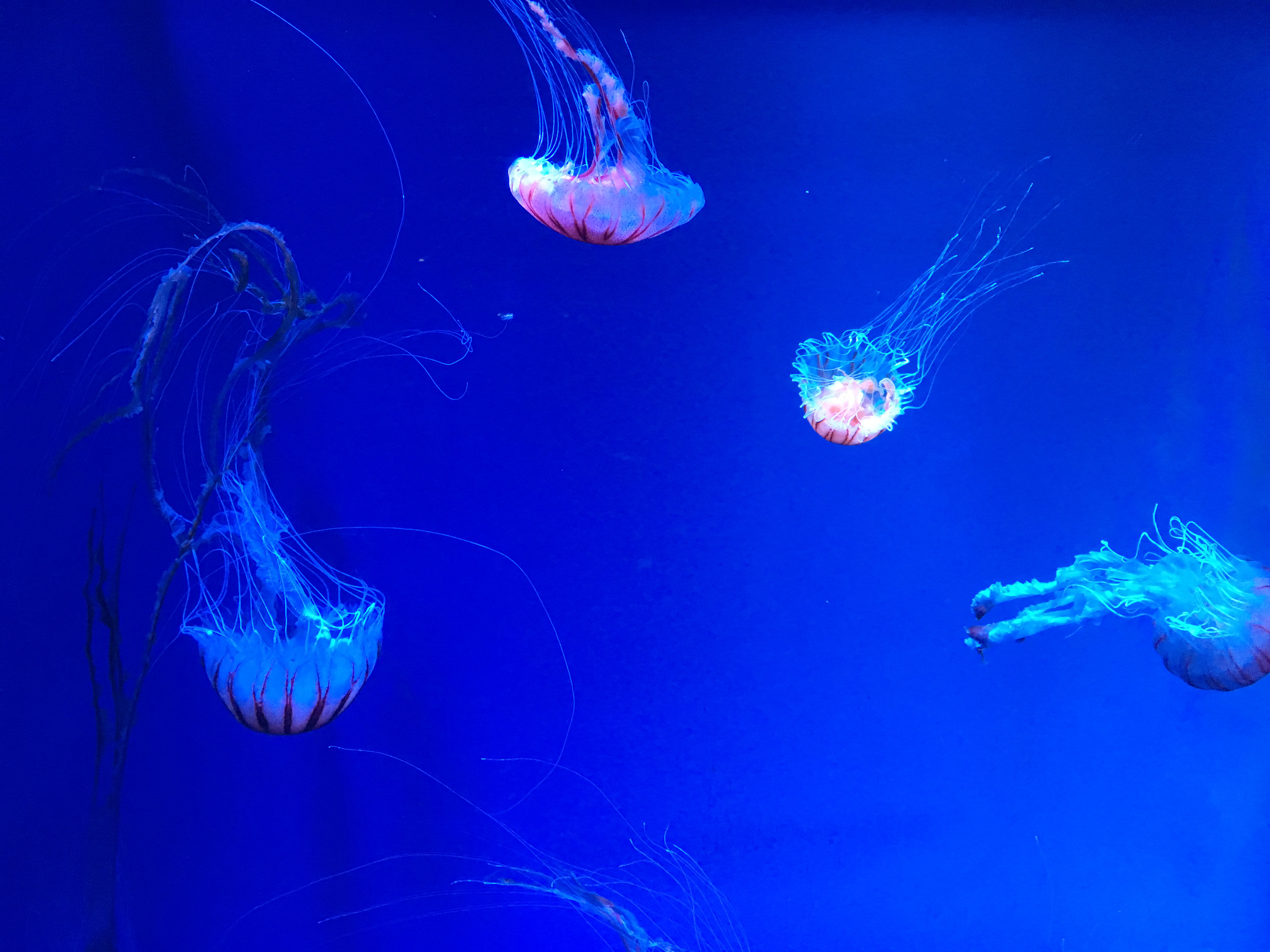
The final stop in the ‘Splatoon madness’ journey is in Nintendo’s home town, at Kyoto Aquarium. A semi-educational Splatoon-themed event called ‘Suizokukaan’ ran for summer, with a focus on squid and jellyfish exhibits.

The aquarium was outfitted with Splatoon branding throughout.

And featured special Splatoon art as temporary signs for each relevant section.

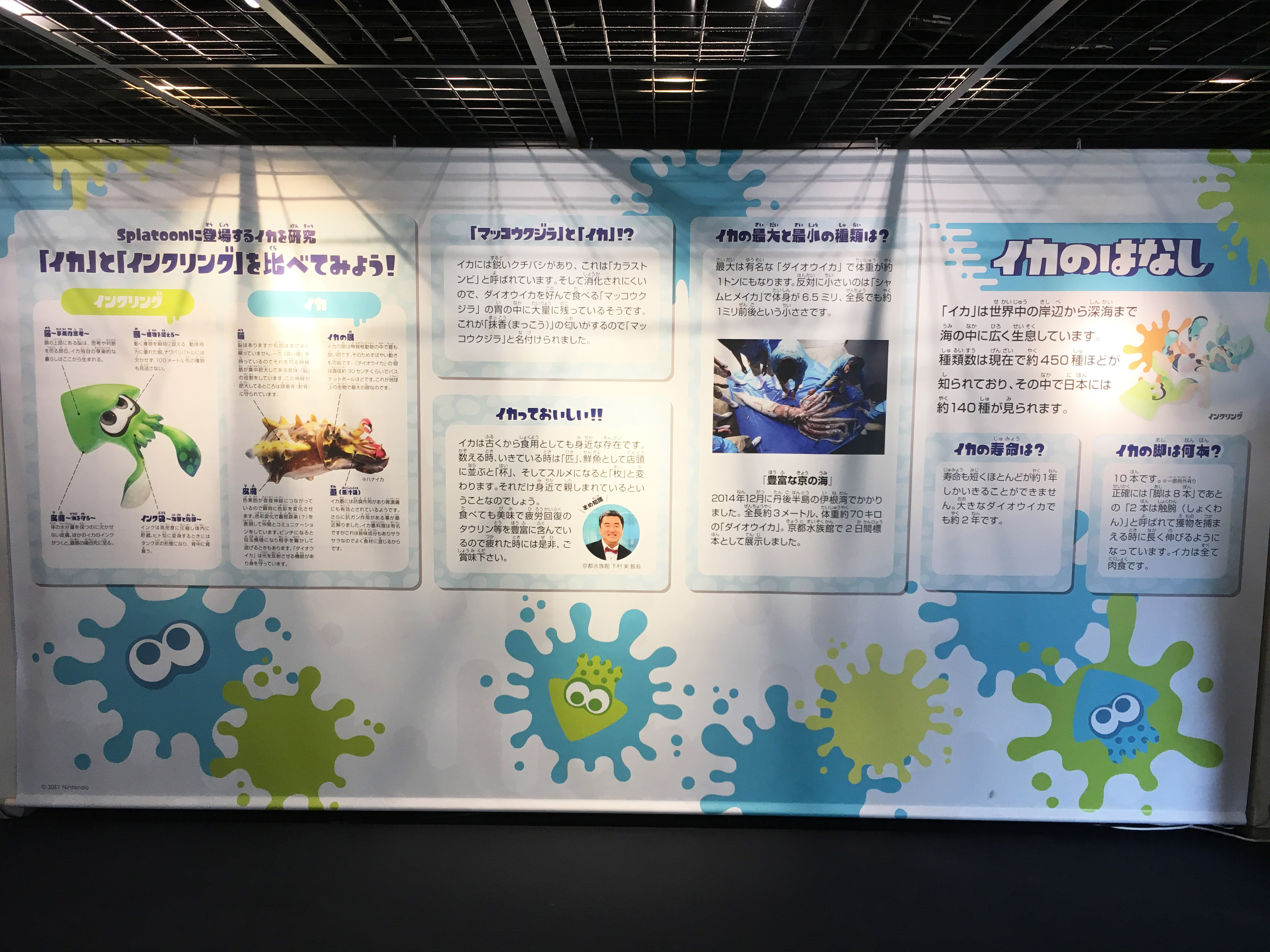
The educational info compared what’s seen in the game with the actual marine life.

I’m not seeing the resemblance…

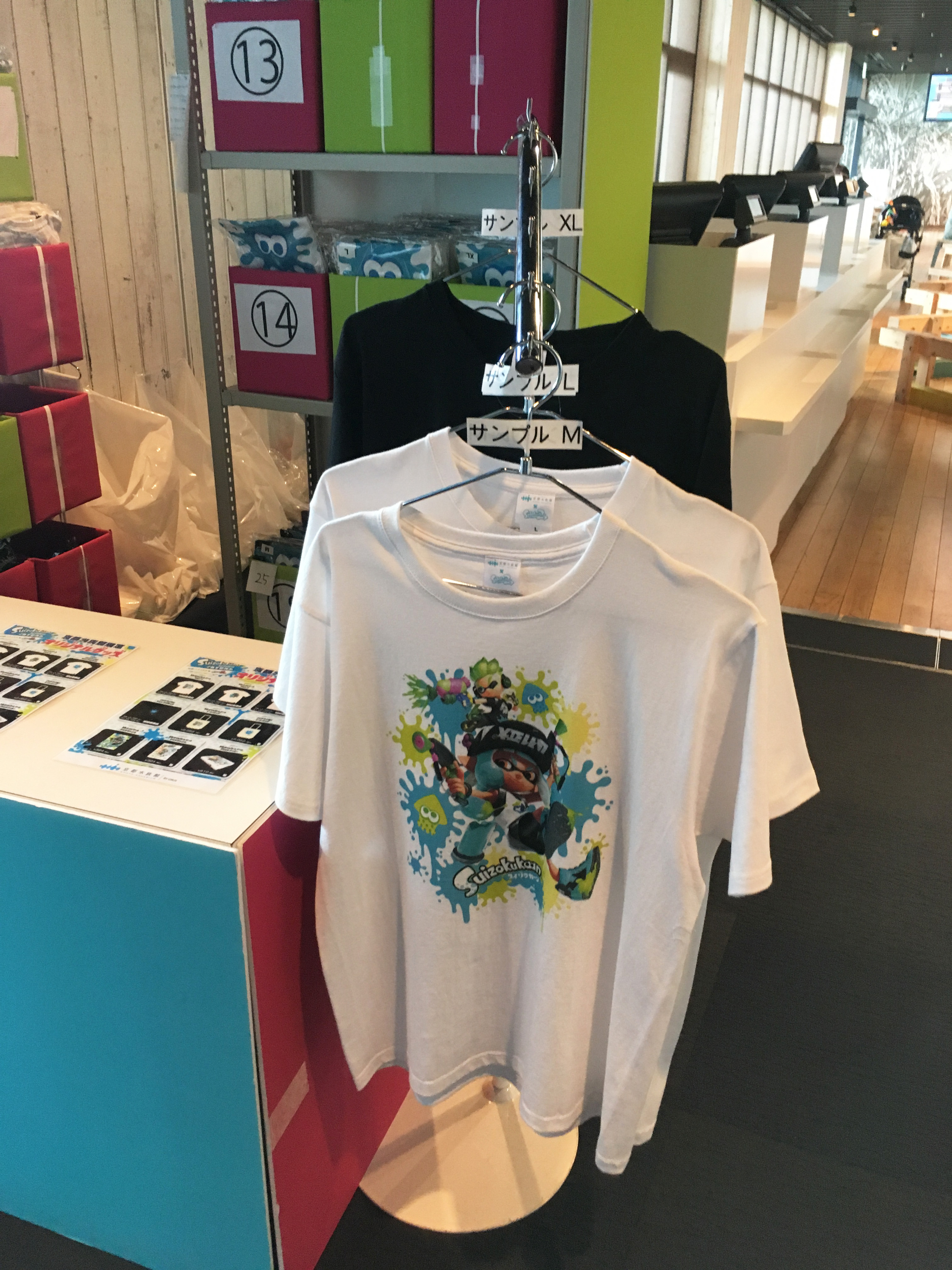
And what would a tourist trap be without copious volumes of exclusive merchandise! Murch would be proud.

The aquarium itself is pretty standard stuff, but quite modern with some nice exhibits.

The last metroid is in captivity

There are some cute Japanese touches too.

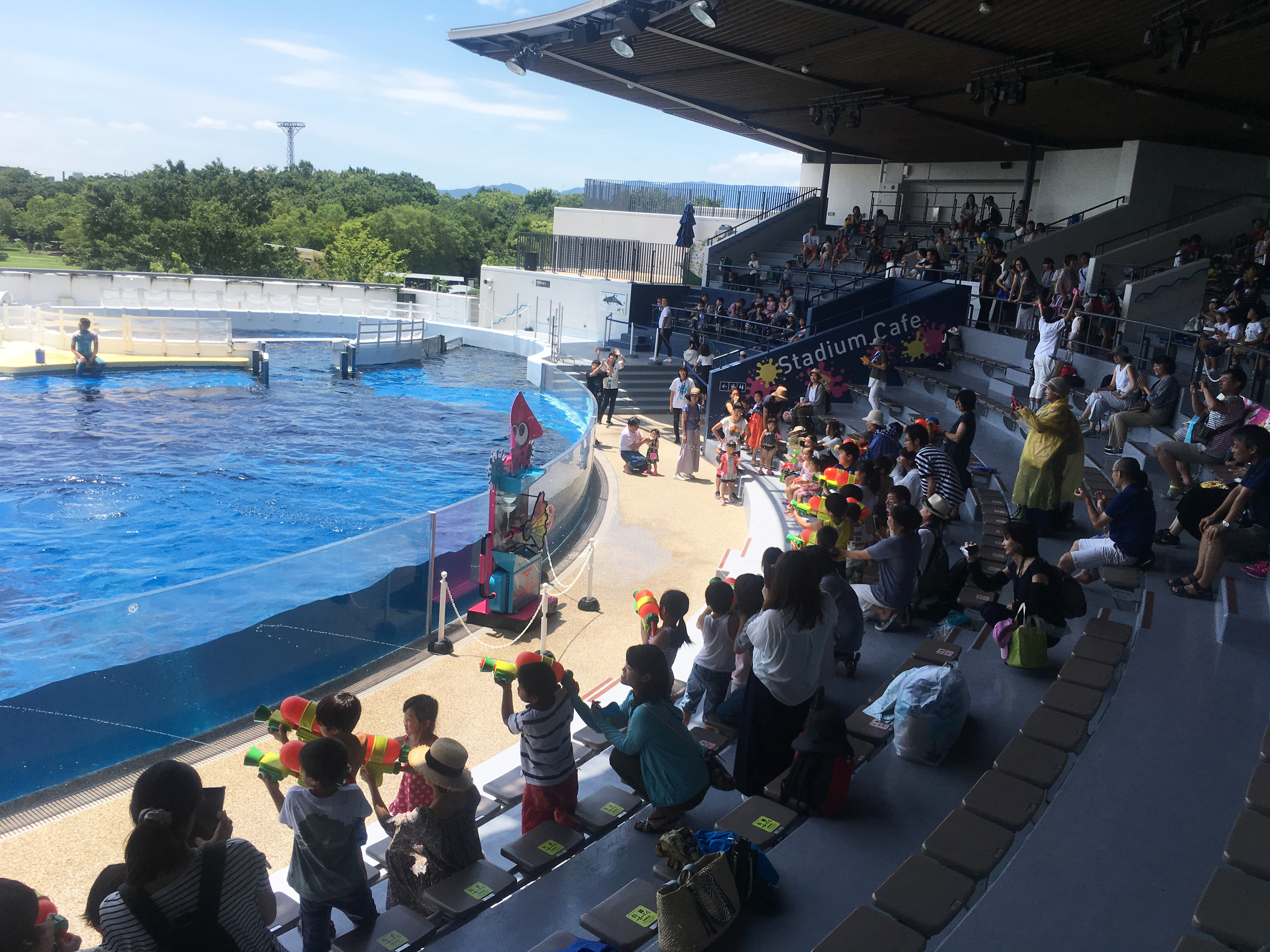
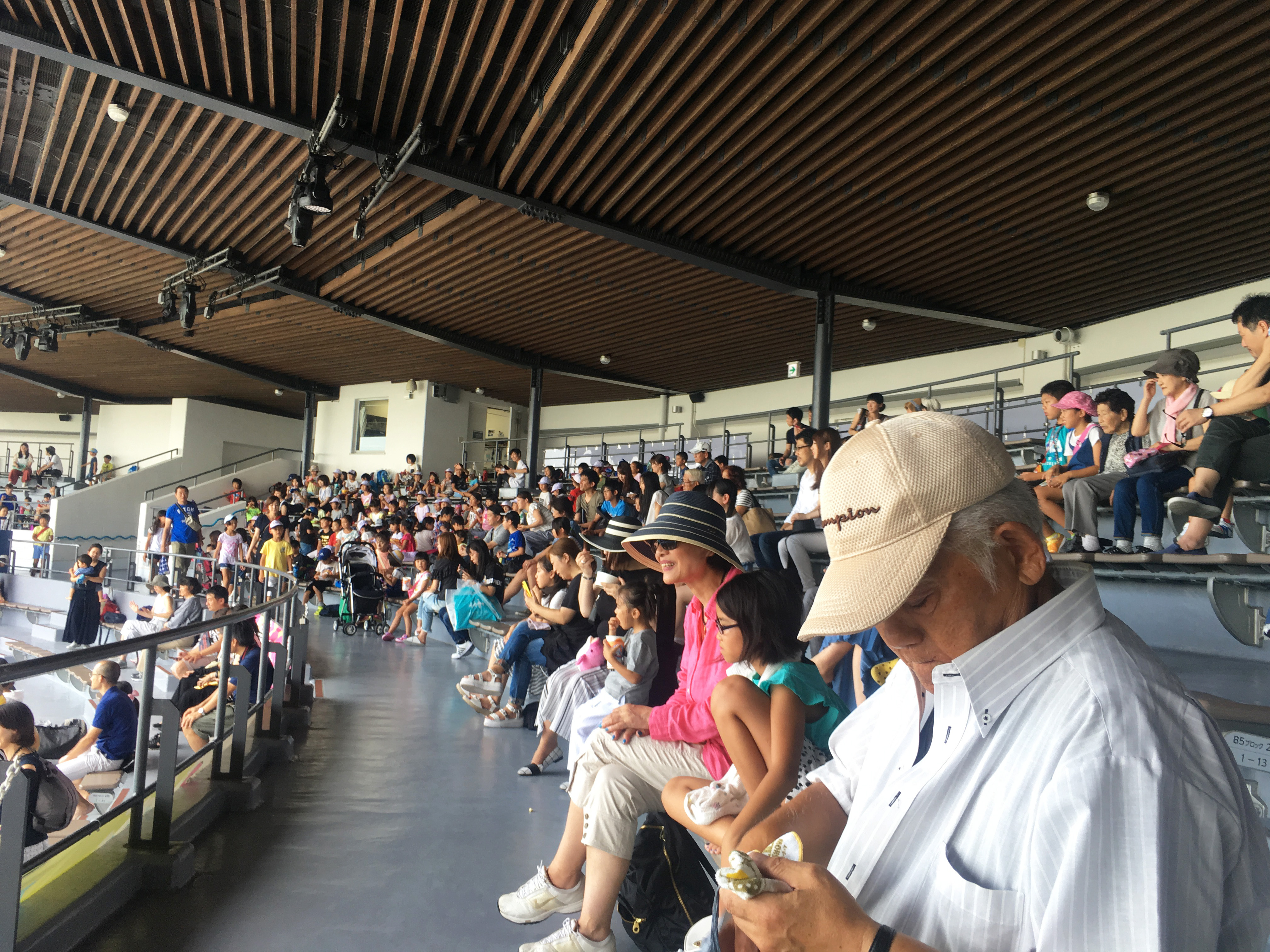
The main event is a Splatoon themed water fight for kids, in the seal pool between hourly shows. Kids get themselves a Splattershot…

And shoot water at a squid target.

It’s a competition for who can hit the highest level, green vs pink.

While parents/grandparents/people waiting for the seal show look on in various states of amusement/boredom.

The best part is the music. Tracks from the first game play while the race is on.

And right at the end they drop a waterfall on all the participants to the tune of ‘Now or Never’ – Squid Squad version.

All a very silly diversion but fun for the kids. And just shows the depth of the cultural relevance of the brand in Japan.

Portable Nintendo Multiplayer – then and now

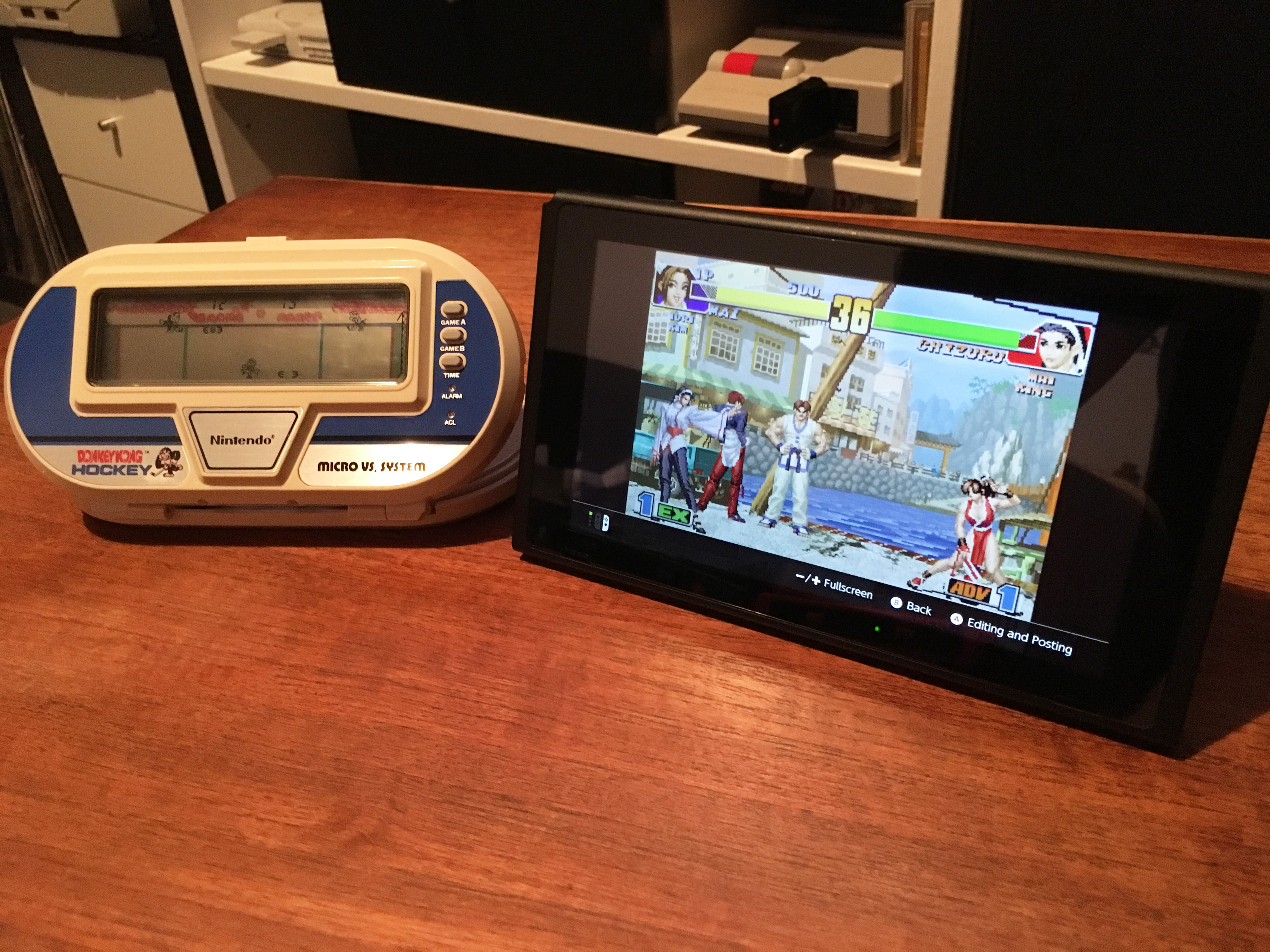
Nintendo’s Micro Vs. System series was the cutting edge way to enjoy multiplayer gaming on the go in 1984, combining the multiplayer fun of the Famicom with the portability of the Game & Watch line.

With (semi) detachable controllers for player 1 and 2, each unit only played one game, but quality engineering made the whole thing very cool.

Thirty three years later, the more things change, the more things stay the same. The idea has been reborn as one of the key features of the new Nintendo Switch.

If there’s anything Nintendo loves, it’s revisiting old ideas. Dual screens, stereoscopic 3D, and now on-the-go multiplayer have all made multiple appearances in the company’s history. The hybrid Switch has finally fulfilled the promise of the Micro Vs. idea.
     

Similarly, in the 80s, handheld Zelda was a massive compromise. Now there is no compromise.


In a sense, all of Nintendo’s gaming history has been pointing here. Exciting times.

Nintendo Color-TV Game Racing 112 (カラーテレビゲームレーシング112)

First there was the Color TV-Game 6, then the Color-TV Game 15. And the final Nintendo single-game console release was the Color TV-Game Block Breaker. I was missing one – until now.

The biggest, and perhaps coolest of the Color-TV game range, 1978’s Nintendo Color-TV Game Racing 112 (カラーテレビゲームレーシング112)

ctvr112_0121

It’s a huge game, due to the realistic wheel and gear stick. The wheel is removable for transport so it can fit in a smaller box, but the box is still huge, here it is next to a Famicom for scale.

ctvr112_0118

The centrepiece of the system is obviously the wheel.

ctvr112_0123

On the right side of the system is the game modes panel. You can select between one or two player modes, track width, speed level, enemy car behaviour (zig zagging or straight lines), if hitting the barriers counts as a crash, road hazards, and if there are one or two opposing cars at once. Down is the easier position for each of the option switches. The red button is reset/start.

ctvr112_0126

And on the left is the two position gear shift.

ctvr112_0127

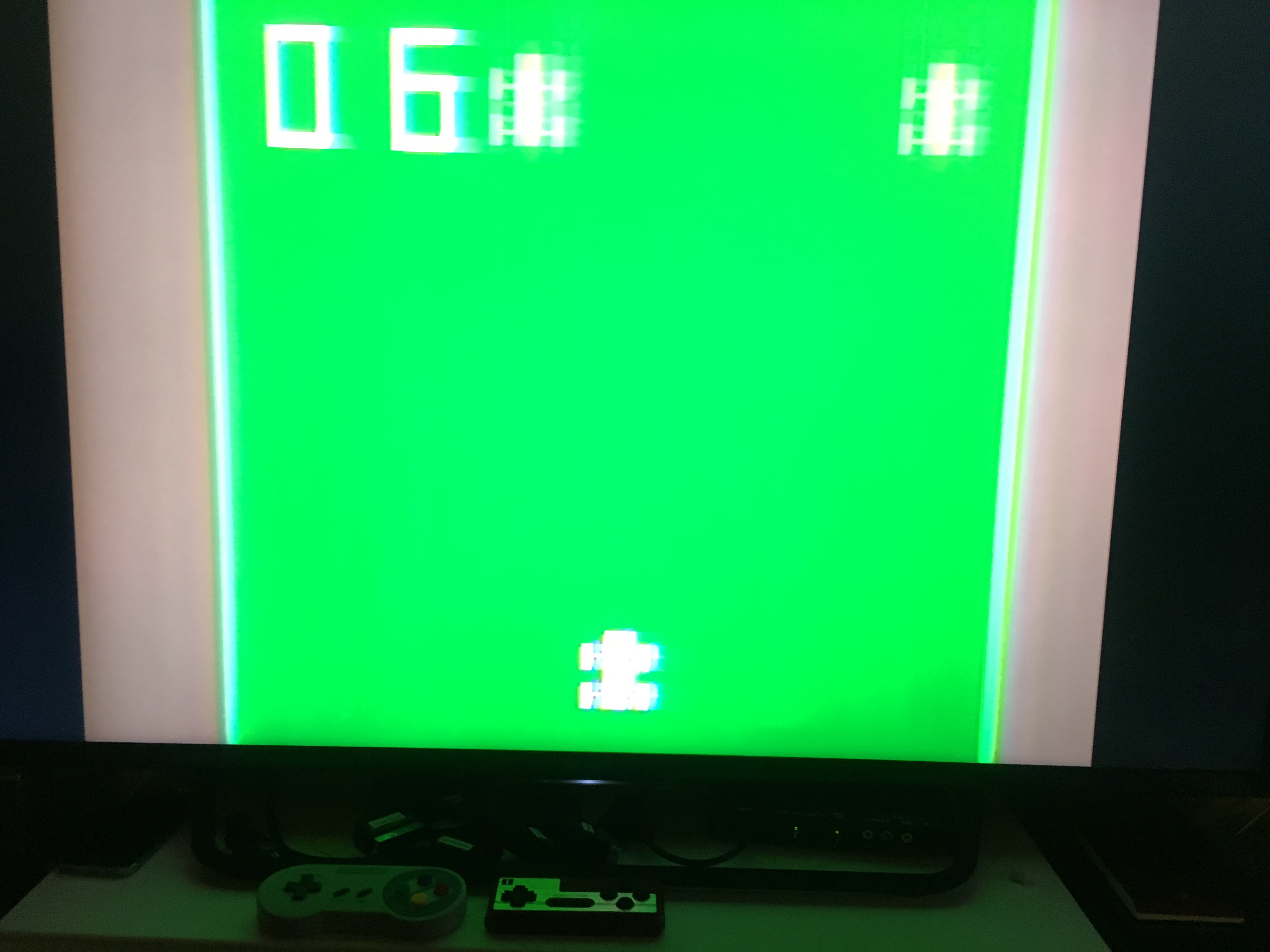
In terms of design, it’s pretty much a straight clone of Taito’s 1974 arcade game Speed Race, which was the first ever game with a scrolling background effect. You view the track from above, and steer left and right to avoid the other cars on the road. It scrolls quite smoothly, the moving effect being provided by trackside ‘stripe’ markers.

Personal side note: I remember playing Speed Race in a local (ish) arcade in the late 80s/early 90s. The arcade, know as ‘Funland’ opened in 1970 as a pinball parlour (even before there were video games) and collected and maintained games from every era over the years. I didn’t appreciate at the time, but that arcade’s maintenance of old machines gave me some early gaming history lessons!

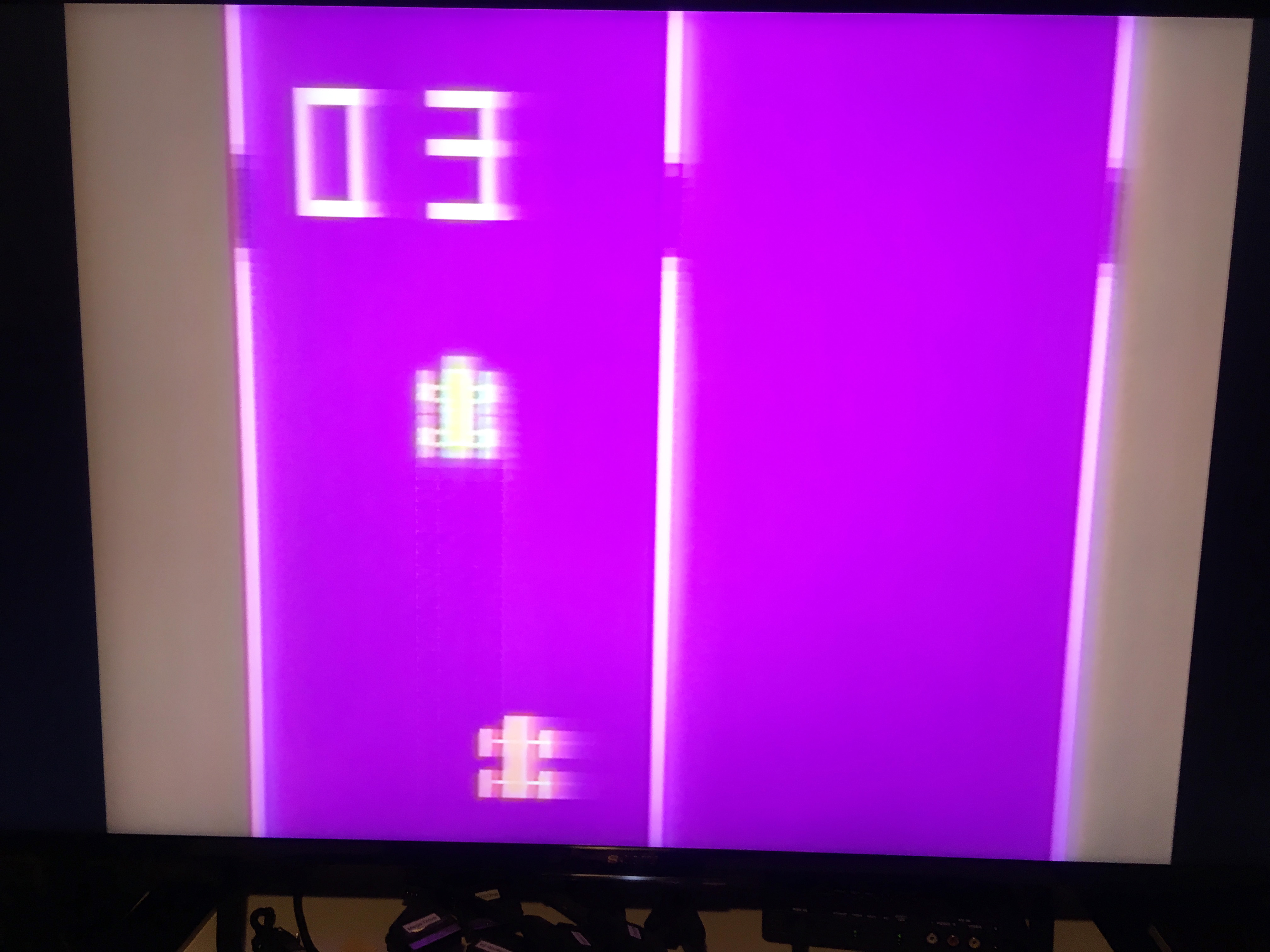
Back to Racing 112. There are two major variations of the one player game, with wide and narrow roads. You must pass the other cars without hitting them, and last as long as you can. The feature switches allow you to adjust speed, number of cars on the road (one or two per screen/wave) and the way the cars move (straight or in patterns).

Just like the paddles in the previous Color TV games, the Steering wheel is an analogue controller, so the steering speed changes based on how far you turn the wheel. The gear shift is digital, and simply allows you to move between two speeds

It’s pretty basic, but compelling, and the basic gameplay formula remained popular well into the mid 80s with the likes of  Midway’s Spy Hunter, Konami’s Road Fighter, and Sega’s Action Fighter.

ctvr112_4 ctvr112_2

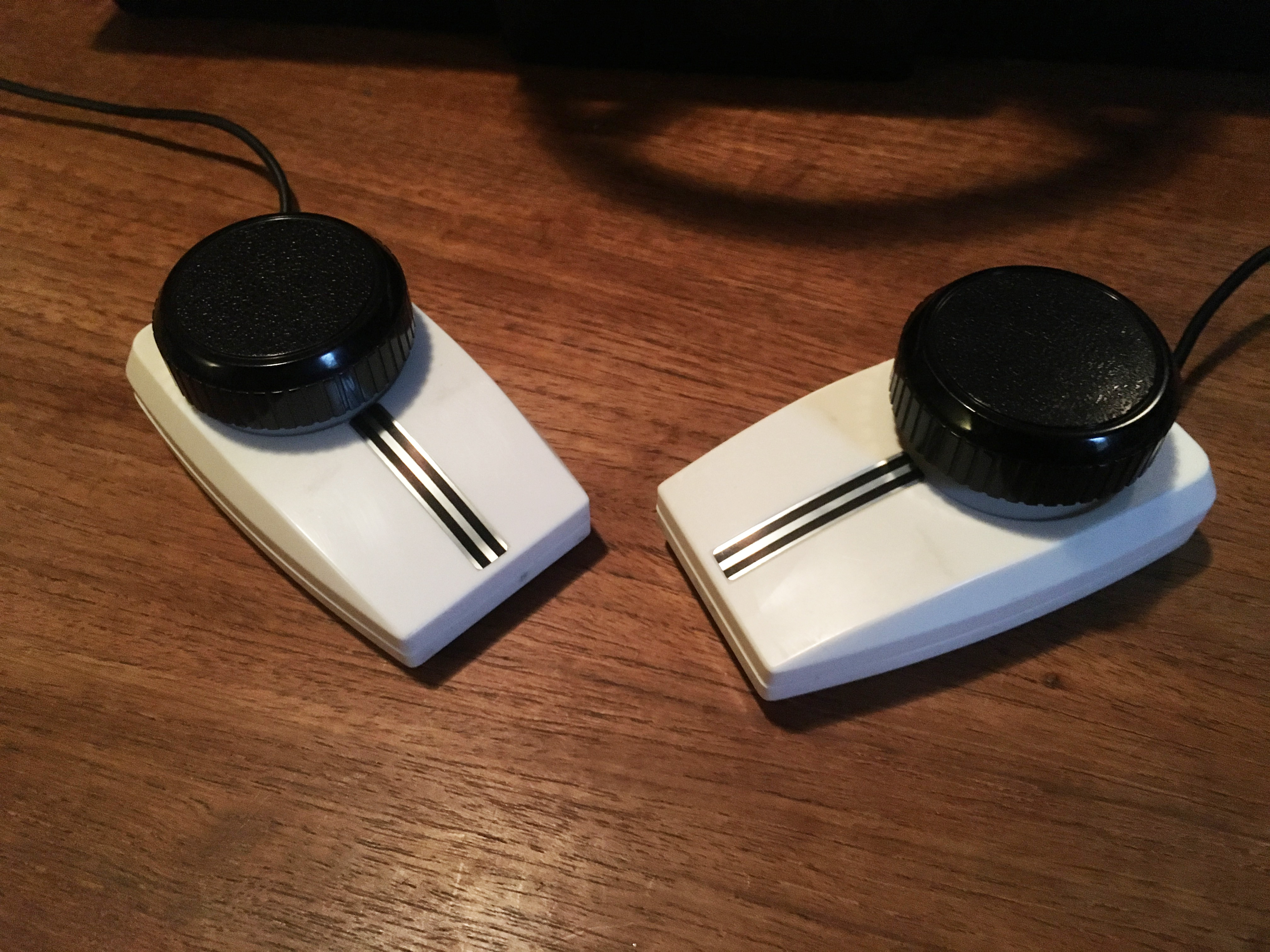
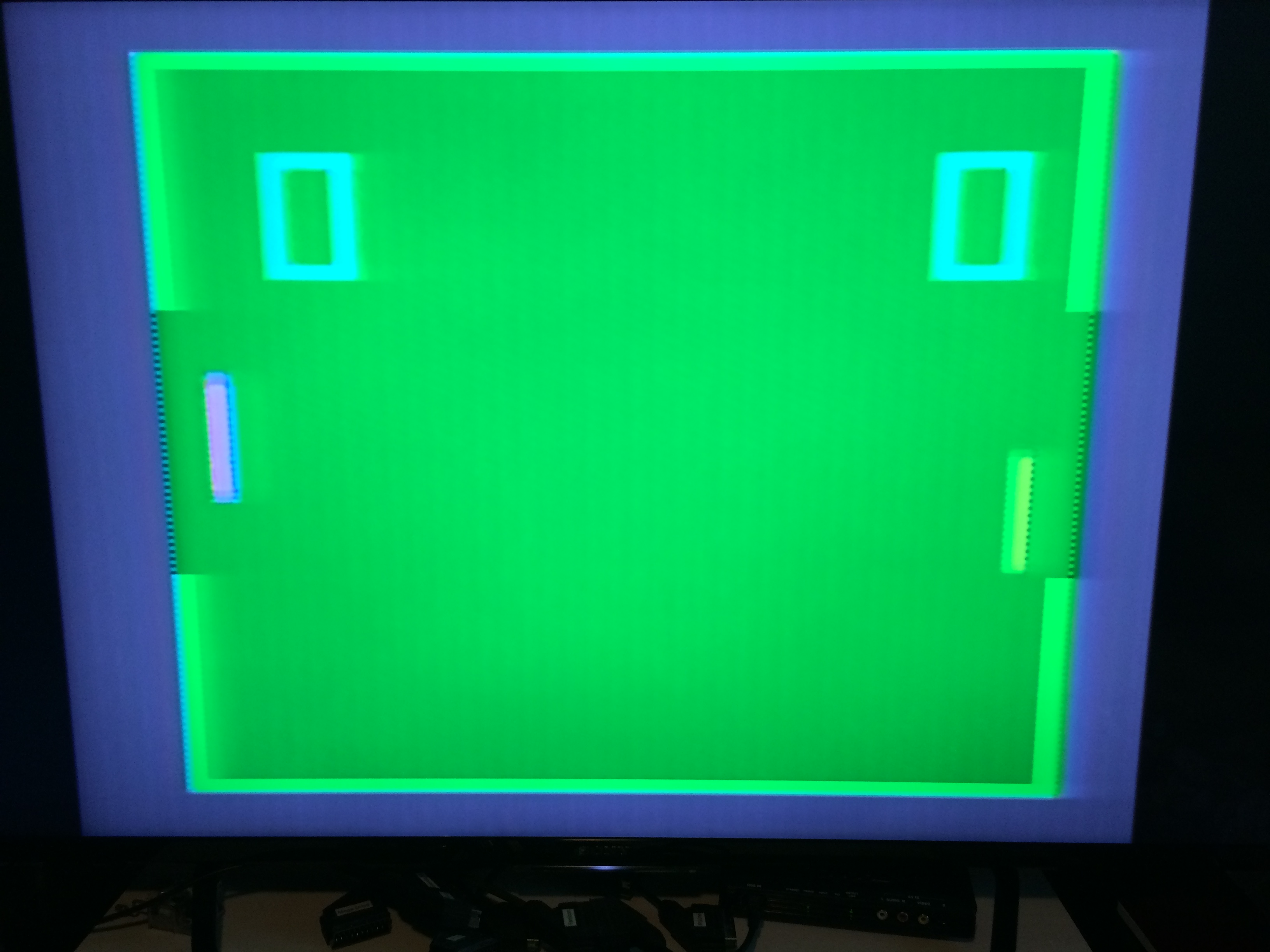
The two player mode doesn’t use the steering wheel, but instead two paddle controllers, which you can pull out from storage slots on the back. You stay at only one speed in two player, but while all game modes remain intact, it’s basically just a head to head for score, as the two players stay on their own track and do not interact with each other.

ctvr112_0128

ctvr112_3

ctvr112_0225
Paddle storage slots

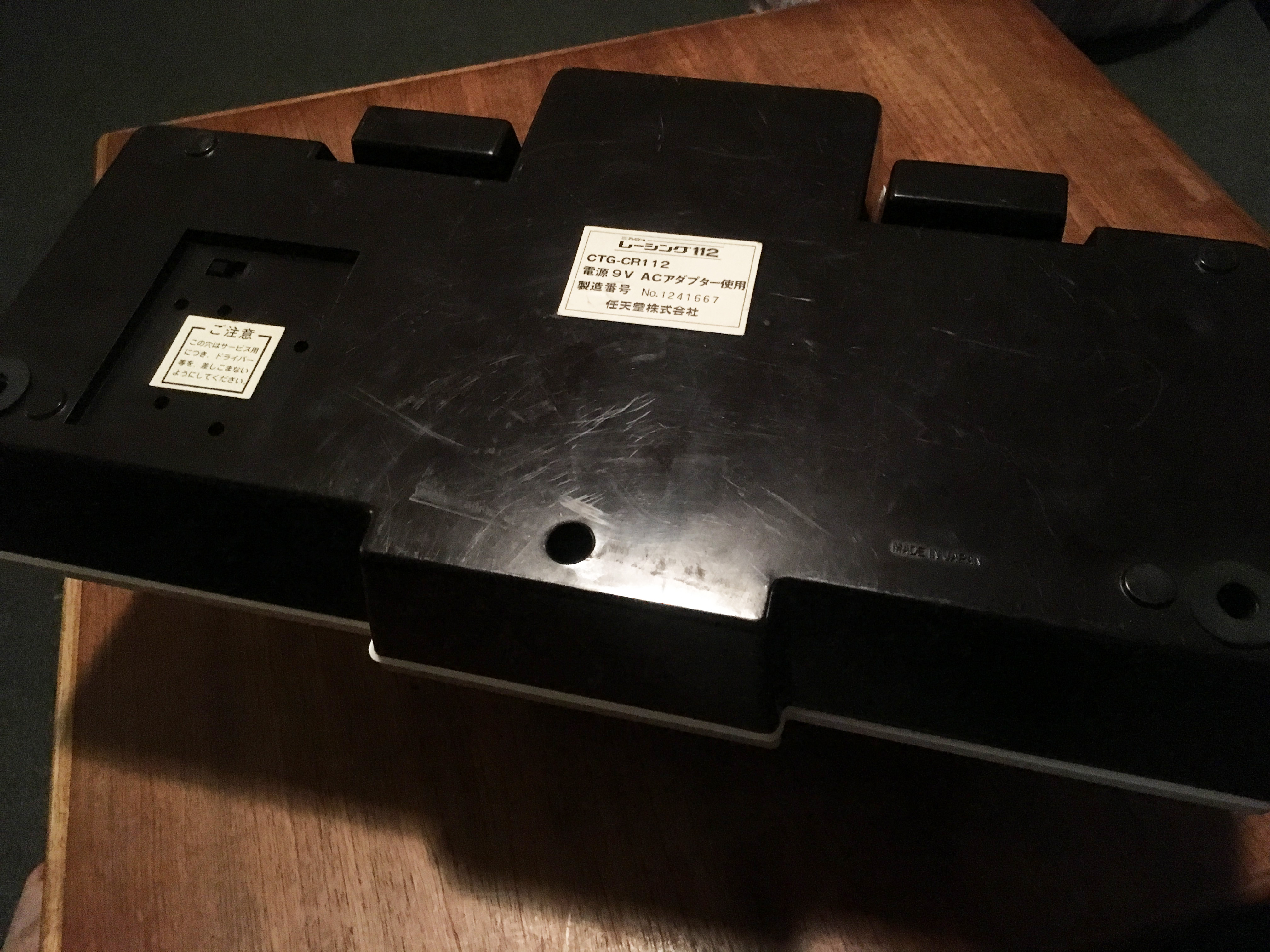
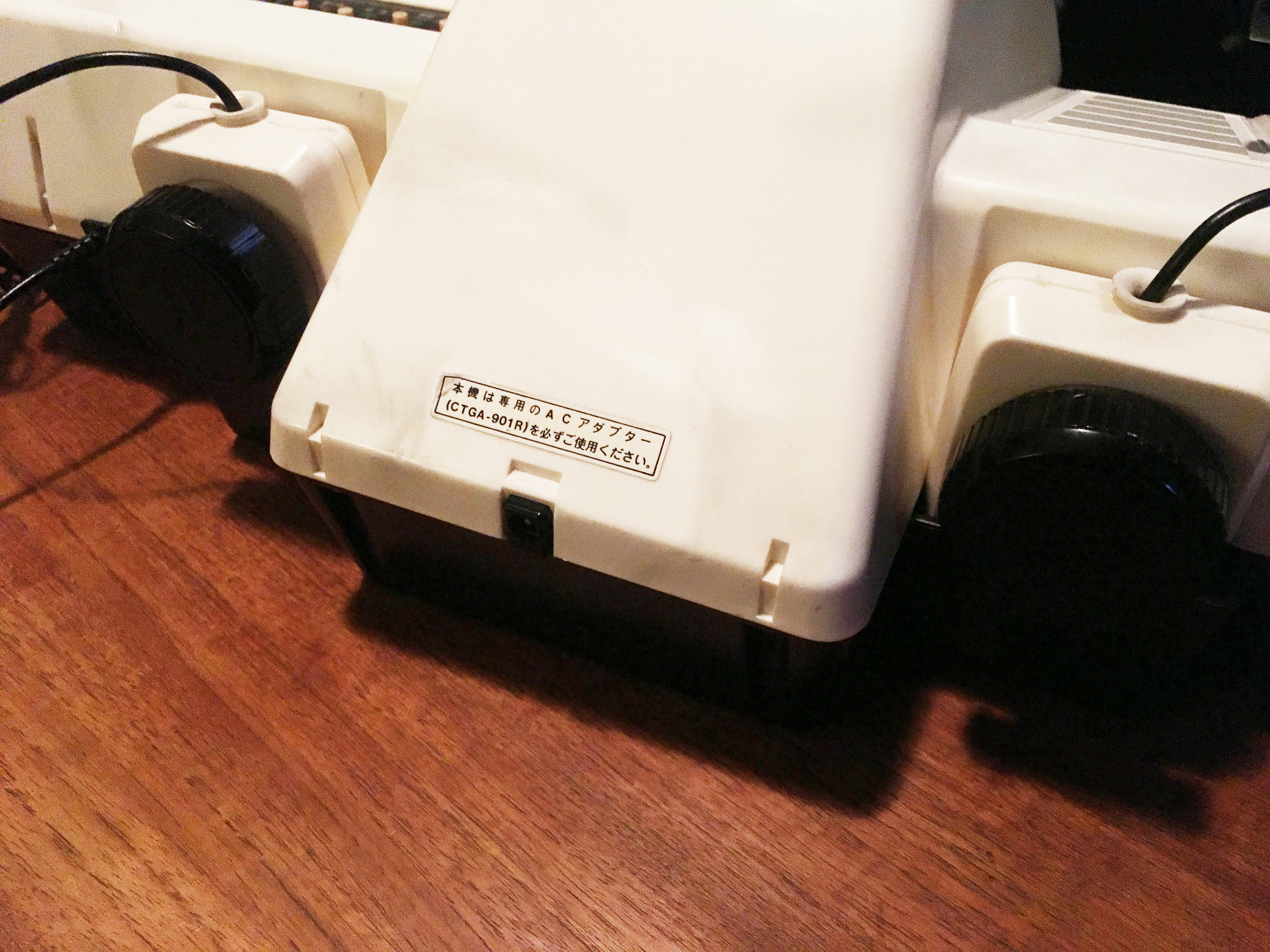
Just like all the other consoles in the CTV series, it connects via a hardwired RF cable and tunes to the same Japanese channels (1/2) as a Famicom, and uses an external 9V power supply which was sold separately and compatible with all models. A Famicom compatible power supply works perfectly too.

The Color-TV Game 6 had six Pong variations, and and the Color-TV Game 15 had either seven or about 20 Pong variations depending how minor a variation counts. Does Racing 112 have one hundred and twelve racing game variations? Technically yes, something like that. In an era where adding a feature like zig zagging cars might mean a whole new release (Super Zig Zag racing Turbo III!) saying there were over 100 game variations isn’t actually false advertising.

The Color-TV line ended the following year with the awesome Block Breaker, which was also the first game to feature the Nintendo brand on the casing. But for going all-out, it’s hard to beat the Racing 112.

ctvr112_0228

ctvr112_0227

ctvr112_0223

ctvr112_1  ctvr112_7

ctvr112_5ctvr112_6

(Almost) every Nintendo console ever released in Japan

With my recent acquisition of a Color TV-Game Racing 112, My collection now includes almost every major revision of every Nintendo home console ever released, complete in box.

nintendo_0302

  1. Wii U
  2. Wii
  3. Gamecube
  4. Nintendo 64
  5. Virtual Boy (I’m counting it as a console, since it is really not portable)
  6. Super Famicom Jr.
  7. Super Famicom
  8. Famicom AV
  9. Round Button Family Computer
  10. Square Button Family Computer
  11. Famicom Disk System (a separate platform, but not a console)
  12. Color TV-Game Block Breaker
  13. Color TV-Game Racing 112
  14. Color TV-Game 15
  15. Color TV-Game 6 CTV6G (orange)
  16. Color TV-Game 6 CTV6S (white)

A small confession: My Wii U is not a Japanese model.

There were a few more minor revisions of the consoles along the way – FF logo/non FF logo Famicom, output changes, different coloured consoles of various sorts (even shapes like the Pikachu N64), but these are all the major Japanese revisions. The Wii Mini revision was not released in Japan.

There’s one major item missing – the Computer TV-Game. I’ll almost certainly never get one of these. This ‘console’ is incredibly rare, insanely expensive, and its questionable if it was even a consumer product since it was literally an arcade game with TV out. It sold for ¥48,000 in 1980. For comparison the Color TV Game Racing 112 was selling for ¥5000 in 1980, and the Famicom launched in 1983 for ¥14,800.

The Sega set is on its way, but will take a few more years I think. So many revisions…

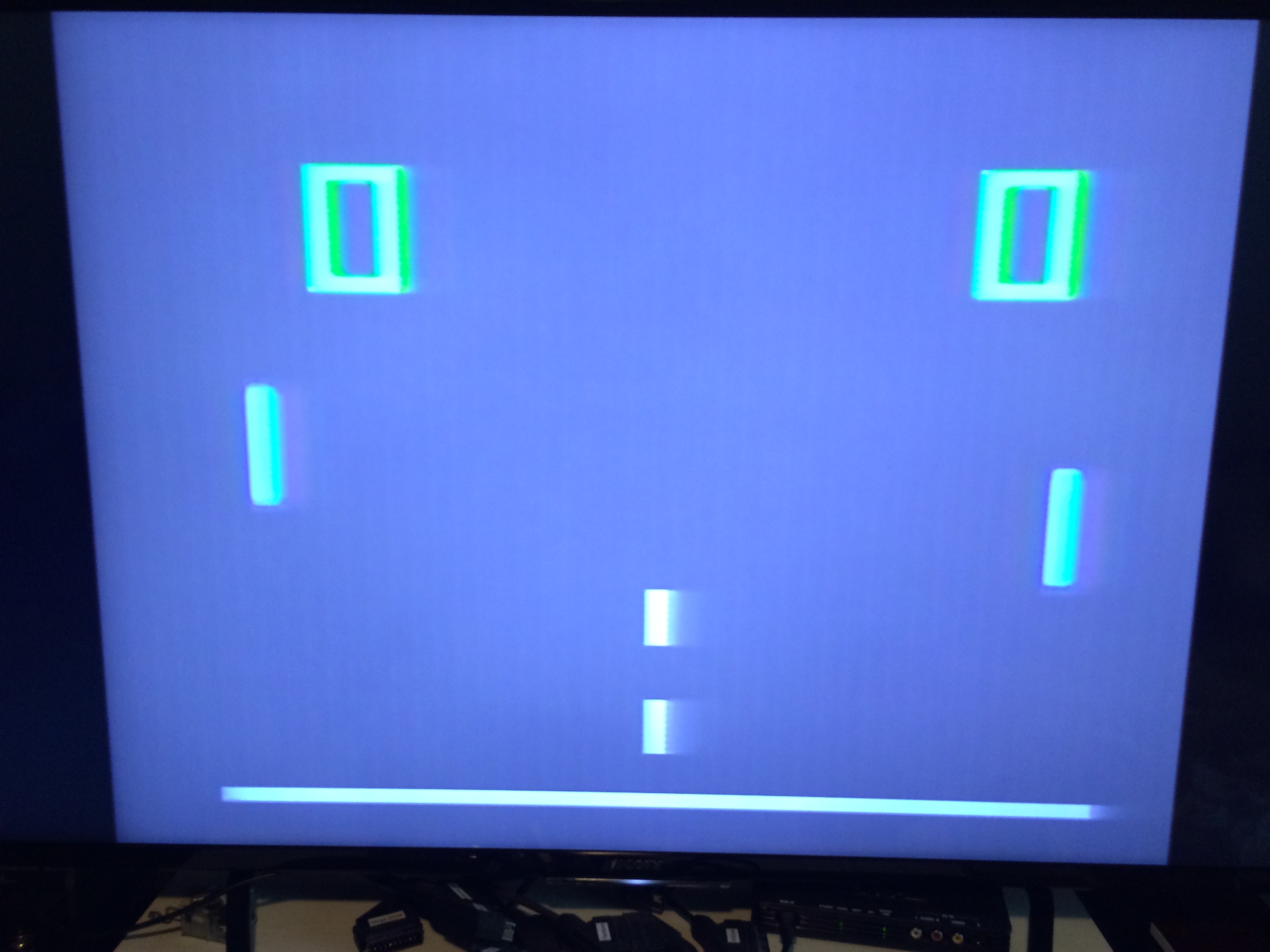
Nintendo Color-TV Game 15 (カラー テレビゲーム15)

Released one week after the Color TV-Game 6, the Color TV-Game 15 was the ‘deluxe’ model. Or perhaps the 70s equivalent of the NES ‘Action Set’.

CTV15_8792

It was apparently designed to be the more profitable of the two consoles, offering more features for ¥15,000, vs ¥9,800 for the Color TV-Game 6. It dropped to half the price eventually, and outlived the CTVG6, as can be seen from the updated price listing in the later Color TV-Game Block Kuzushi manual.

ColorTVGameBB_9

It’s not too much larger, but has a more stylised design and detachable controllers for a more comfortable playing session. The first model was made of orange plastic that matched the orange CTVG6. This is the second model, which is a reddish orange colour.

CTV15_8807

The controller cords are the standard Japanese controller cord length (short) so you still needed to sit near the console to play. The controllers are pretty decent paddle controllers, definitely higher quality dials than the original white version of the CTV6.

CTV15_8806

You can still power the console by batteries or a standard 9V power supply.

CTV15_8809   CTV15_8810

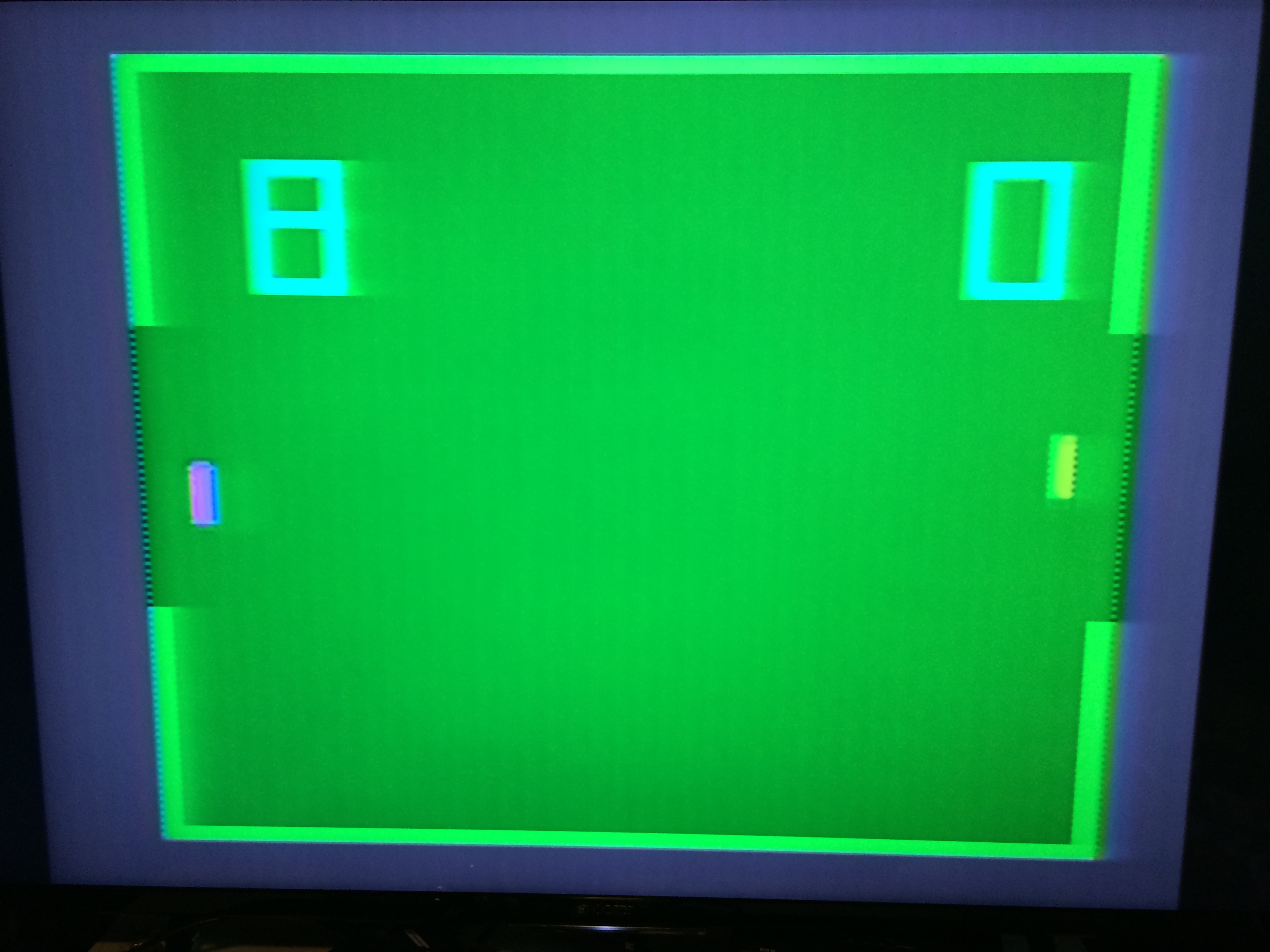
The 15 in the name is something of a misnomer. There are really about seven Pong variations, adding various board options, along with additional paddle number, size and speed changes. There are far more that 15 game types if you count every possible variation, so I’m not sure why they drew the line at 15.

CTV15_8808

Here’s a look at the basic board variations:

CTV15_8796 CTV15_8797 CTV15_8798 CTV15_8799 CTV15_8800 CTV15_8801 CTV15_8802 CTV15_8803

CTV15_8804 CTV15_8805

It doesn’t quite have the cachet of the ‘first Nintendo’ CTVG6, and isn’t anywhere near as cool as the beautiful Block Kuzushi. But it’s still a nicely engineered Pong game which is more comfortable to play and has more game options, so can be a fun retro afternoon sometime.

CTV15_8794