Just something funny I came across.
A yellowing SNES Mini

The circle is now complete.
Just something funny I came across.
A yellowing SNES Mini
The circle is now complete.
In the early 70s Nintendo ran a line of cheap portable toys called the ‘Mini Game’ series. I guess they were the pre-digital equivalent of the Game Boy, the scaled down portable brethren of the company’s home based products.
More can be read about them on the Before Mario blog.
I managed to pick up a selection a few years ago, they are all new and sealed in their hang tab boxes, though the packaging obviously has a lot of shelf wear, and the glue holding the plastic to the cardboard has given way in many cases so they’re not really ‘sealed’ anymore.
Here are some from my collection.
Hockey Game


Smart Ball 

Roulette

Air Gun

Baseball Pachinko


With the birth of my little boy and moving house twice I’ve had a busy couple of years! The upside is I finally have space for a permanent gaming (and VHS) set up tucked away in a corner.

There’s a TV just for VHS, plus several for gaming. The screens on the top left are 80s monochrome PC monitors, which are great for certain specific things but not everyday drivers. On bottom left is the main gaming monitor, a Sony PVM.

It’s the perfect combo for playing Double Dragon while watching Double Dragon.
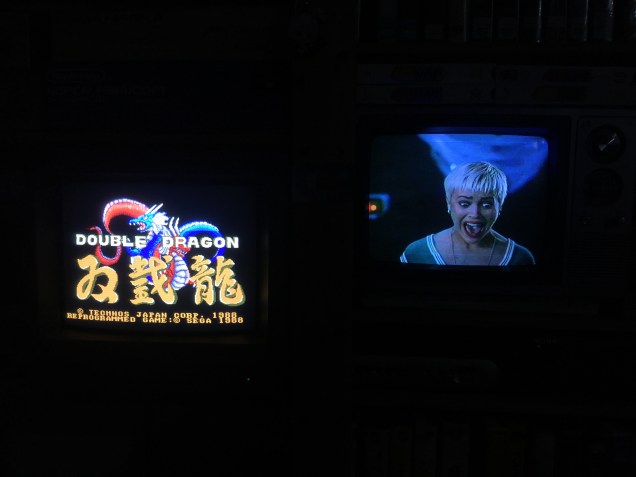
Yes we agree Marian. The hit detection is terrible on the Mark III port!
Box protectors for games started popping up around 20 years ago, and are a great way of keeping vintage games protected but still accessible and playable. However it has taken a very long time for certain box sizes to get protectors that fit properly, particularly Japanese box sizes.
In my previous post on the topic, I looked at some (at that time) newly available sizes for Japanese Game Boy and Game Boy Color games, as well as some custom protectors I had produced for Japanese Sega games, plus some suggestions I had used for certain other types.
Well, progress marches on, and there are even more sizes available today. Better yet, Chinese producers have gotten in on the game, meaning cheaper prices direct from China, versus resellers in various countries all over the globe with big markups and sometimes very expensive postage.
Previously I’d been using Japanese Game Boy Advance protectors for my ‘mid size’ Famicom boxes. They had a bit of room to move, but it was the best option at the time.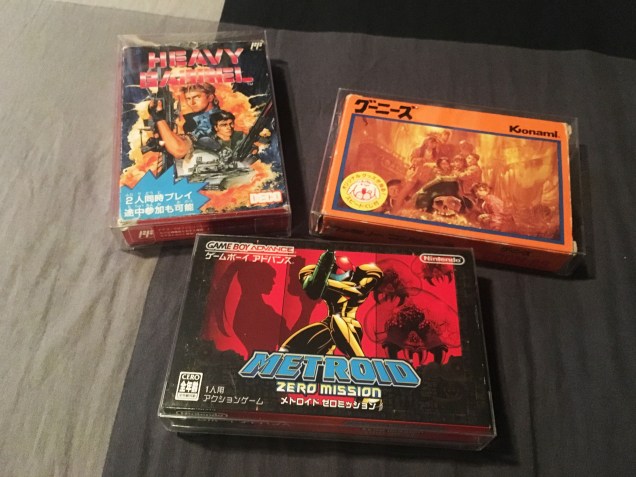
But now there is a custom snug fit option.

Similarly, previously I’d been using protectors designed for Nintendo 64 cartridges for small box Famicom games.
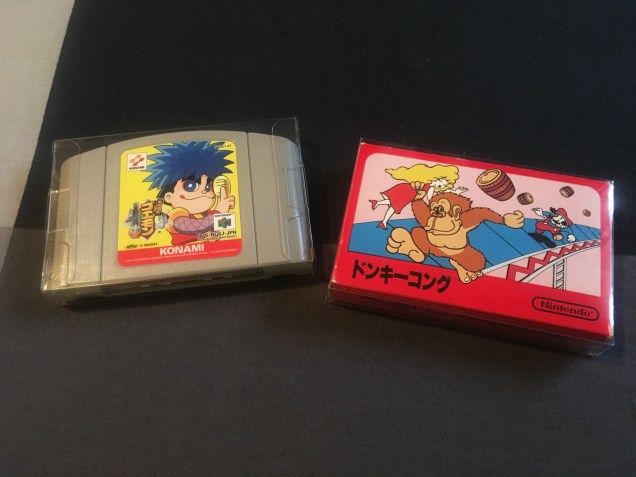
They were not the greatest as they were a bit tight width wise, but worked okay due to being taller. But now there’s a custom snug fit for these too.
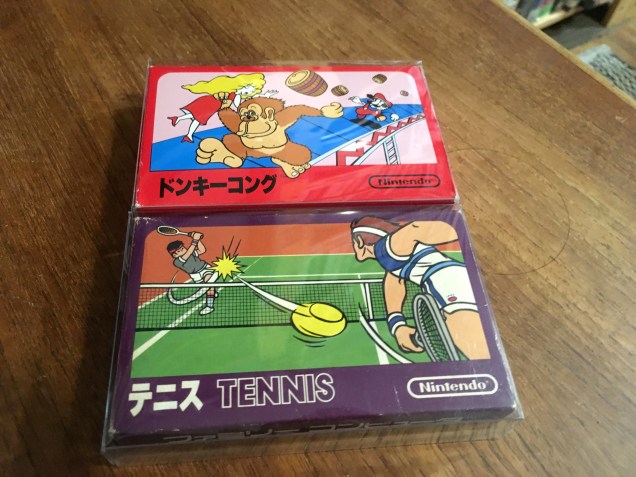
It’s hard to tell from the front, but you can see the better fit more clearly from the side.
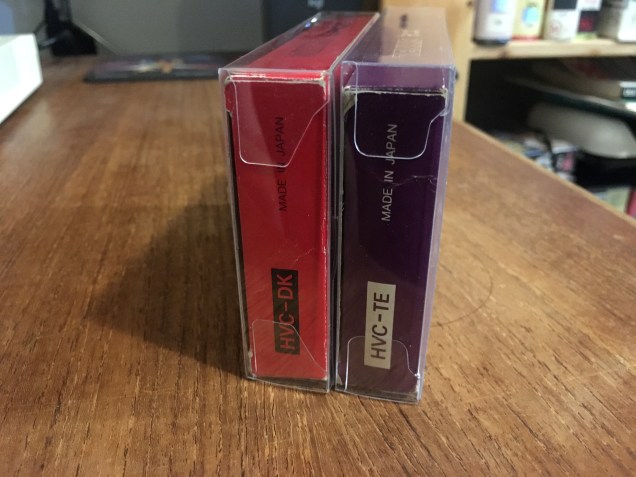
This one had me quite excited. I’d previously had some custom boxes made for my Sega Mark III and SG1000 games of various sizes, as no other sizes were close enough for an adaptation. These custom ones were quite expensive!
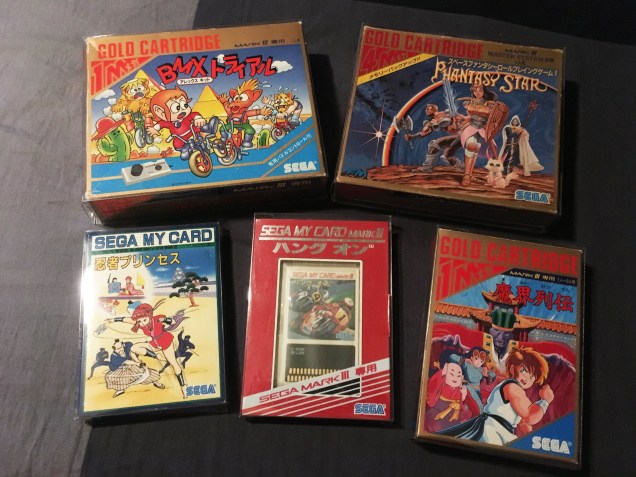
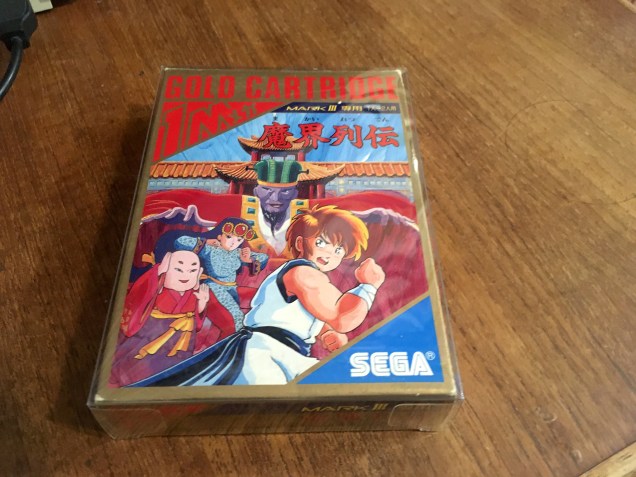
But now there’s a regular commercial option, at least for the most common Gold Cartridge size.
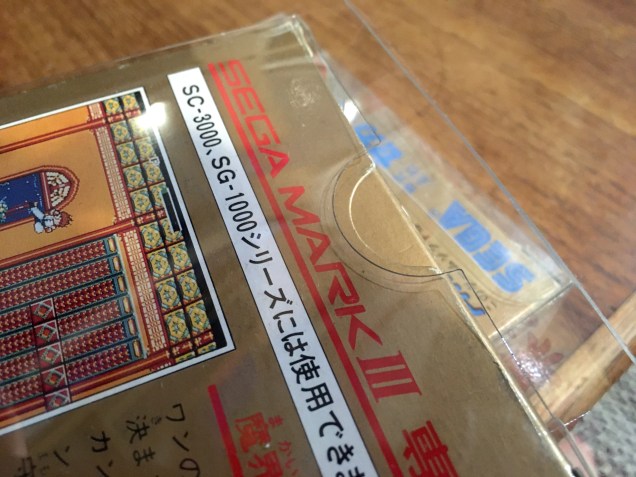
It also has a small upgrade, a circular cutout to help open the box flap with less risk of damage.
That’s about it for now. I’m still waiting on custom sizes for the SG1000 small box, Sega My Card SG1000, and Sega My Card Mark III. They may be too obscure to ever get any, but hopefully one day!
I keep an early 80s colour TV for that classic vintage video look.

‘Rank Arena’ was a local badge for NEC screens in the 70s/80s, presumably because ‘Nippon Electric Company’ may have put off some buyers due to xenophobia or outdated ideas about Japanese products being unreliable.
It could be questioned why would one use a low-end older screen when there are much better, higher quality, RGB equipped alternatives available. In my case only a few inches to the left.
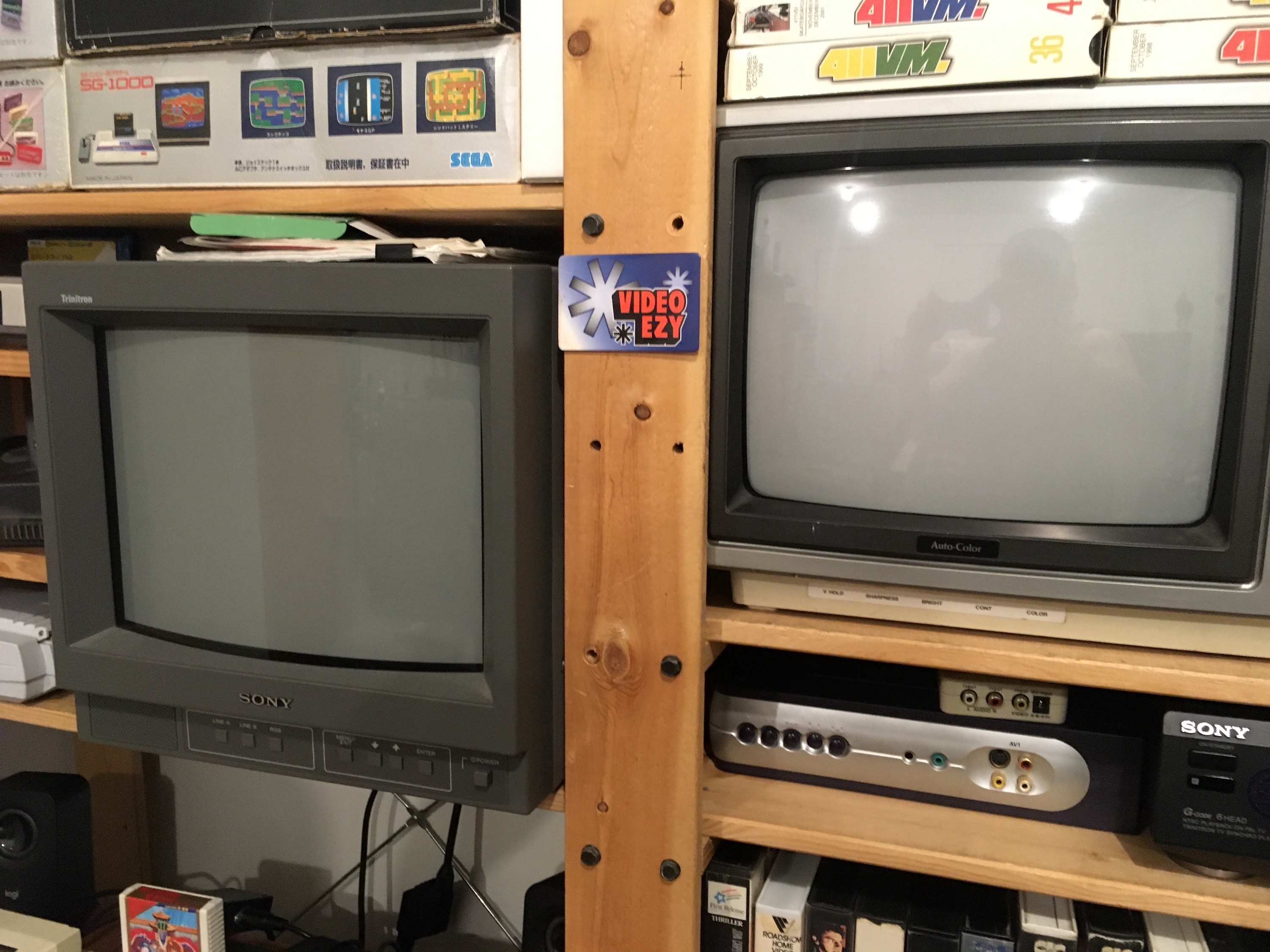
But this screen in particular is great for a period-perfect look when watching VHS tapes.


It’s also a great screen to play old games with the proper vintage look. But most of my consoles are NTSC, which means a rolling black and white picture.
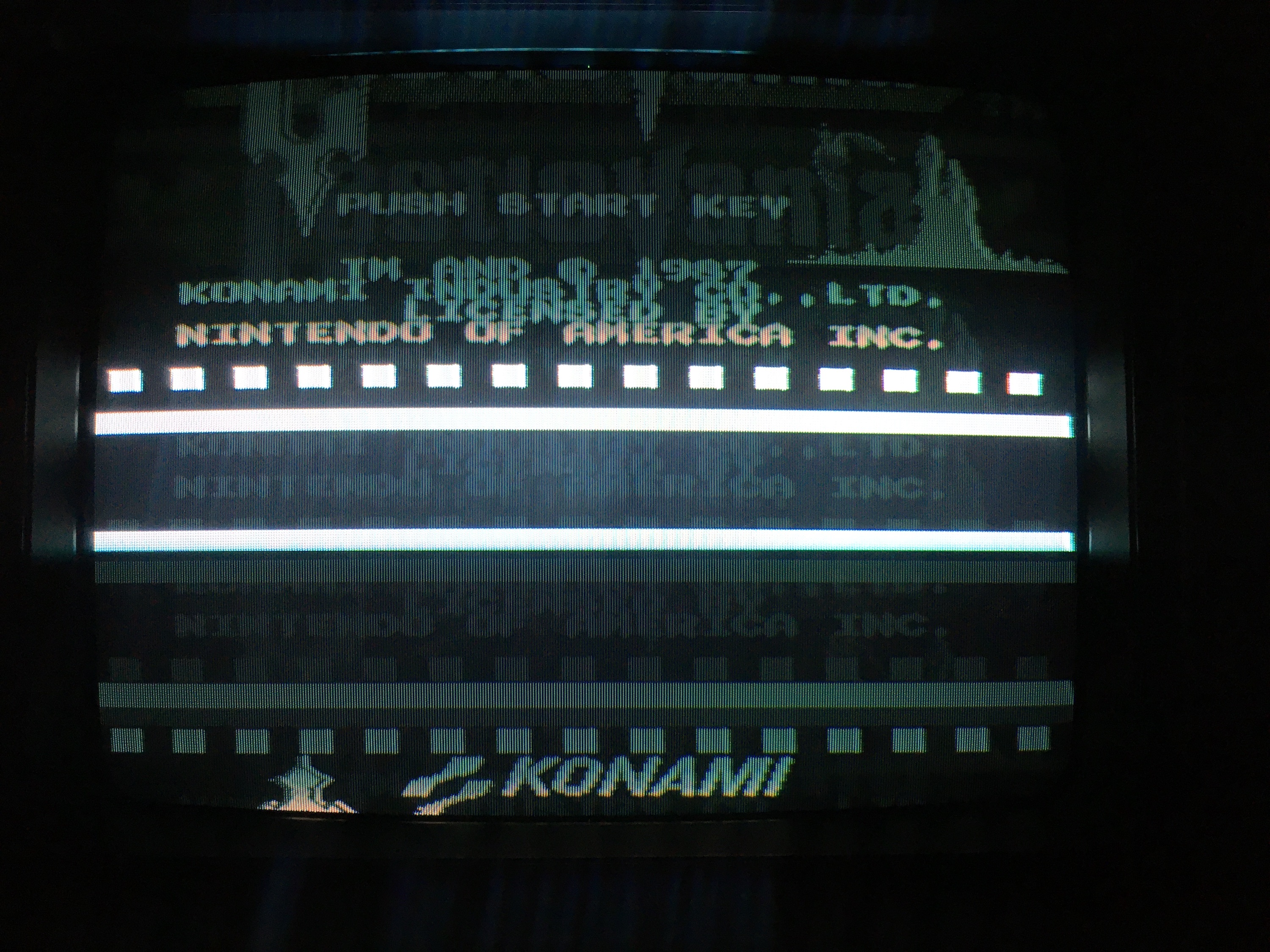
Luckily, televisions this old still had manual vertical hold adjustment knobs, right on the front in this case.

And so a stable black and white picture is easily attained with a quick adjustment, if squashed due to PAL TVs having 576 lines instead of the 480 of NTSC (or 288 instead of 240 in this case due to old consoles running a 240p signal)

But what about the colour?
There are various cheap NTSC to PAL digital adapters available these days. They work, but they add lag and judder, as they’re essentially buffering frames and rebuilding the analogue signal to display 60hz images in standard PAL 50Hz.

What I really needed was a pure composite colour transcoder. Luckily there was a situation that created demand for such a thing.
In the early 90s, a pseudo-standard called ‘PAL60’ was developed to allow people to watch NTSC video tapes. Compatible VCRs would output in PAL colour, but at 60Hz. Most TVs from the mid 90s onwards could handle a PAL60 signal.
This was fine for a VCR, and the standard was utilised by consoles like the Dreamcast and Gamecube which had PAL60 modes for 60Hz gaming. But if you imported an NTSC console, your PAL60 compatible TV would play at the correct speed – but in black and white, because the TV could not understand the NTSC colour.
Enter composite colour transcoders.

It leaves the signal completely alone apart from analogue transcoding the NTSC colour to PAL. Here’s it running on my NTSC NES.

Voila! Stable full colour 60Hz Castlevania on a very old PAL TV.

The picture remains squashed of course. This could be adjusted via the TV’s geometry controls, but it’s also exactly what PAL games looked like back in the day anyway. Only now they play full speed!

Sure it’s got nothing on playing it via RGB.

But this look has historical value, since it’s what these games looked like for 99% of people in the 80s.

Of course it also works great on the Sega Mark III.

Super Famicom

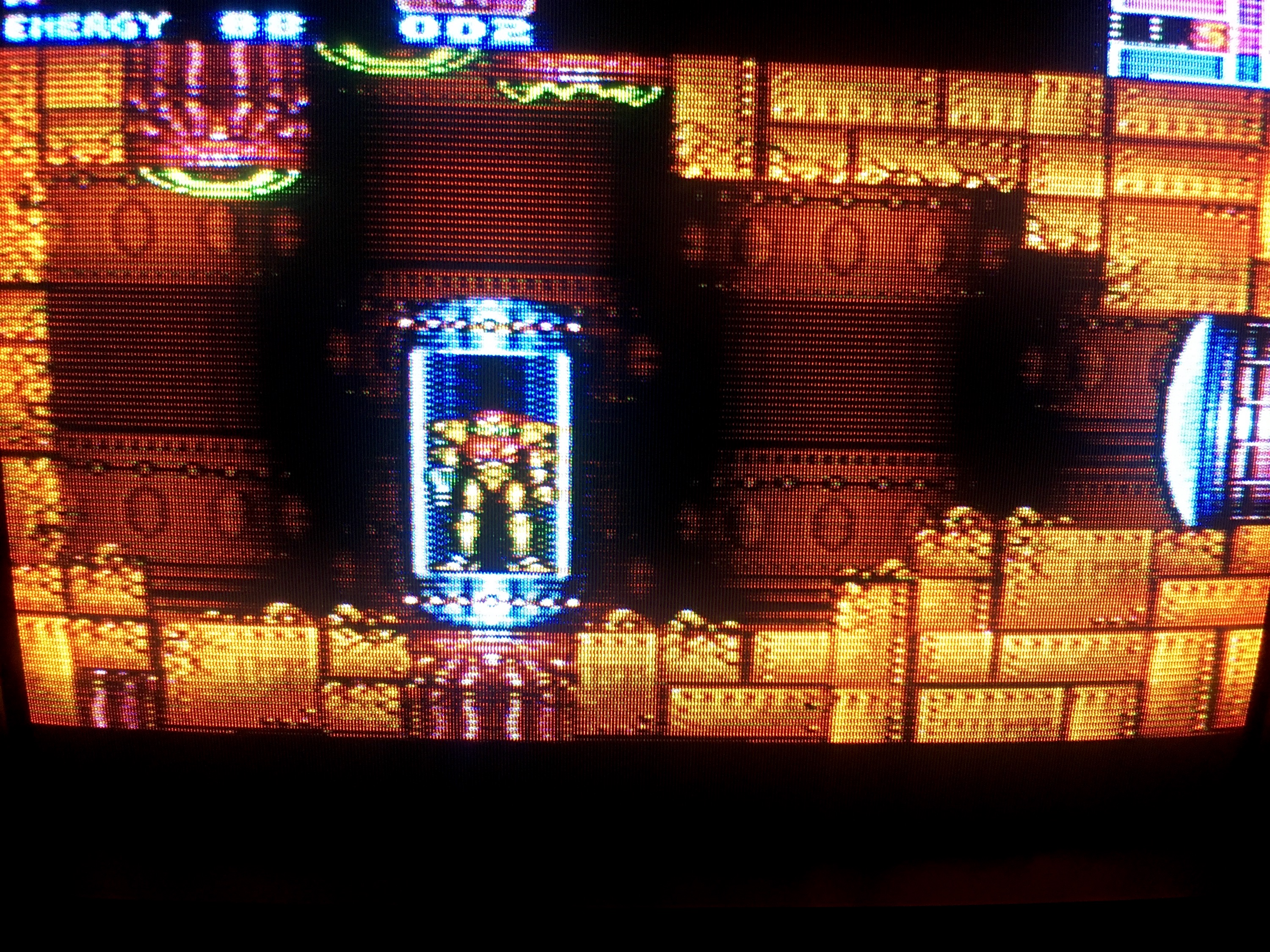
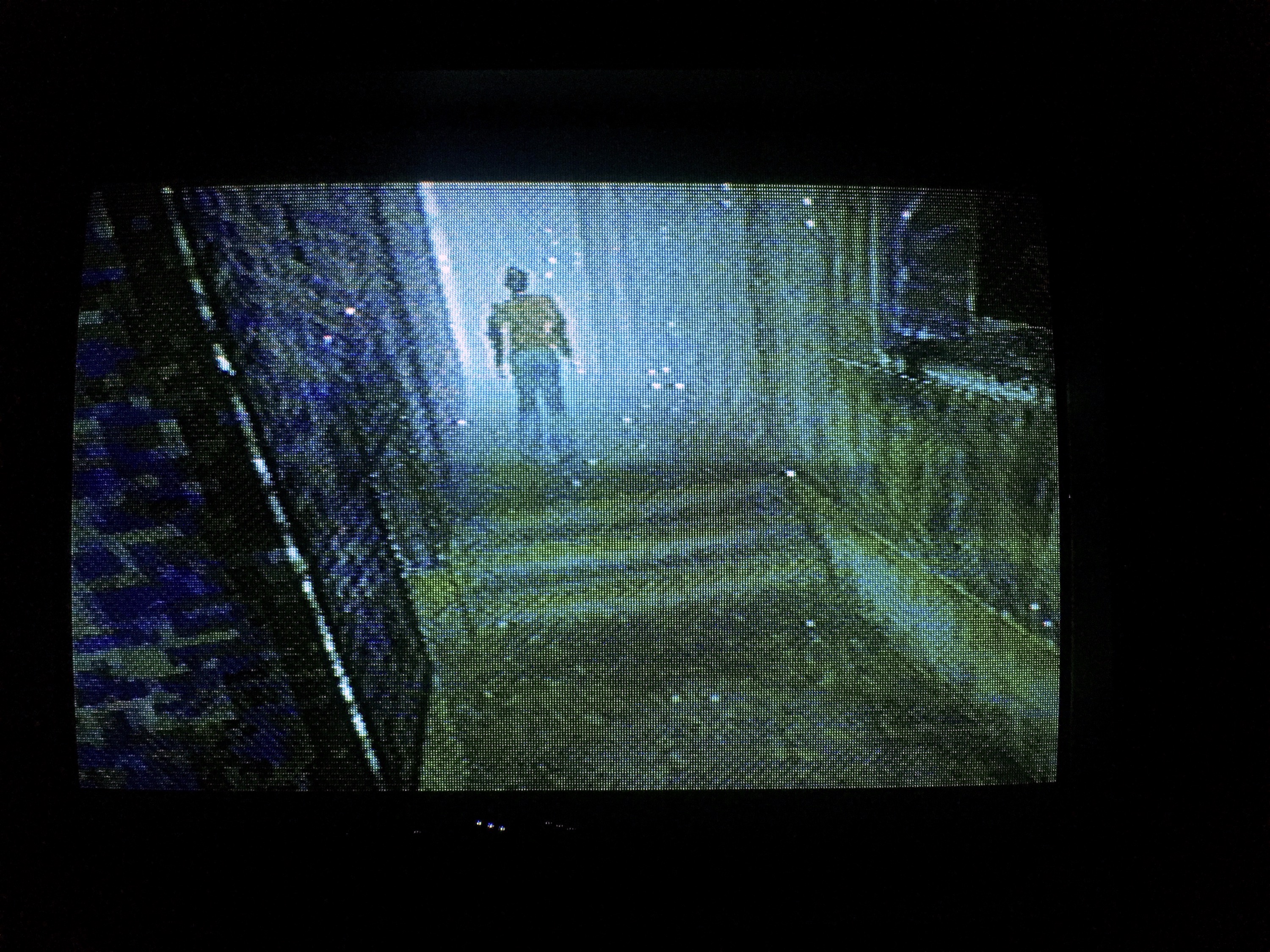
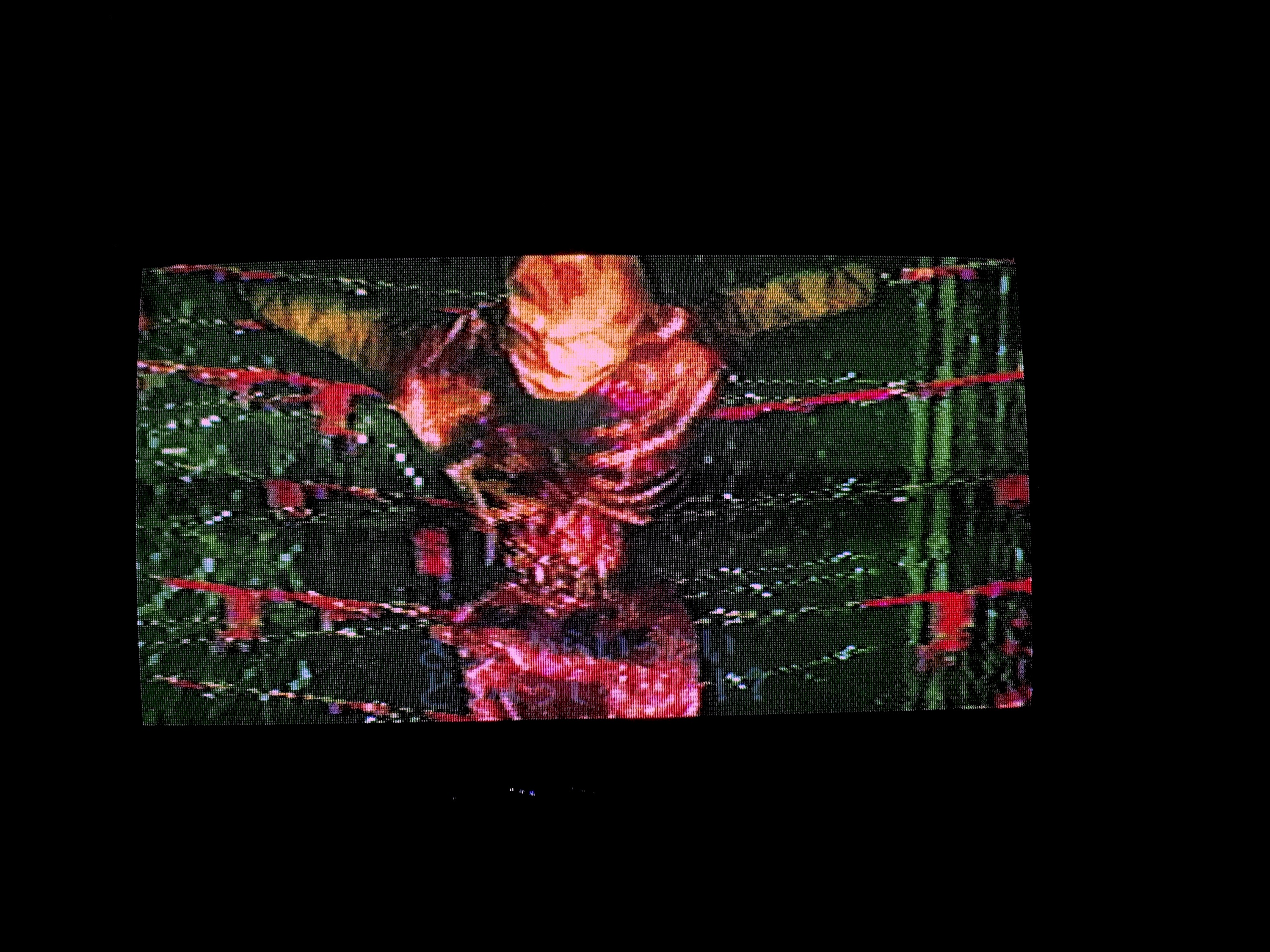
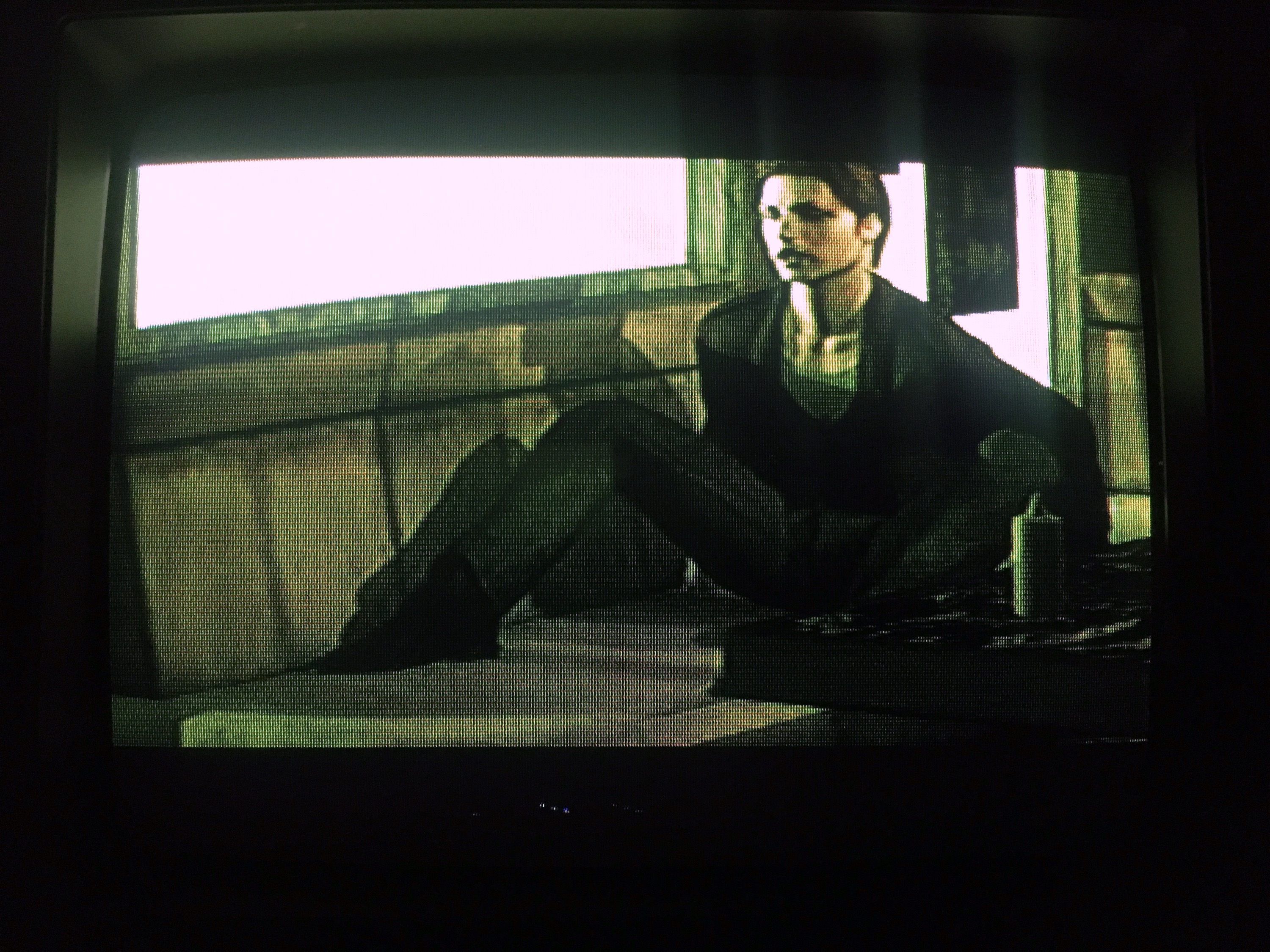
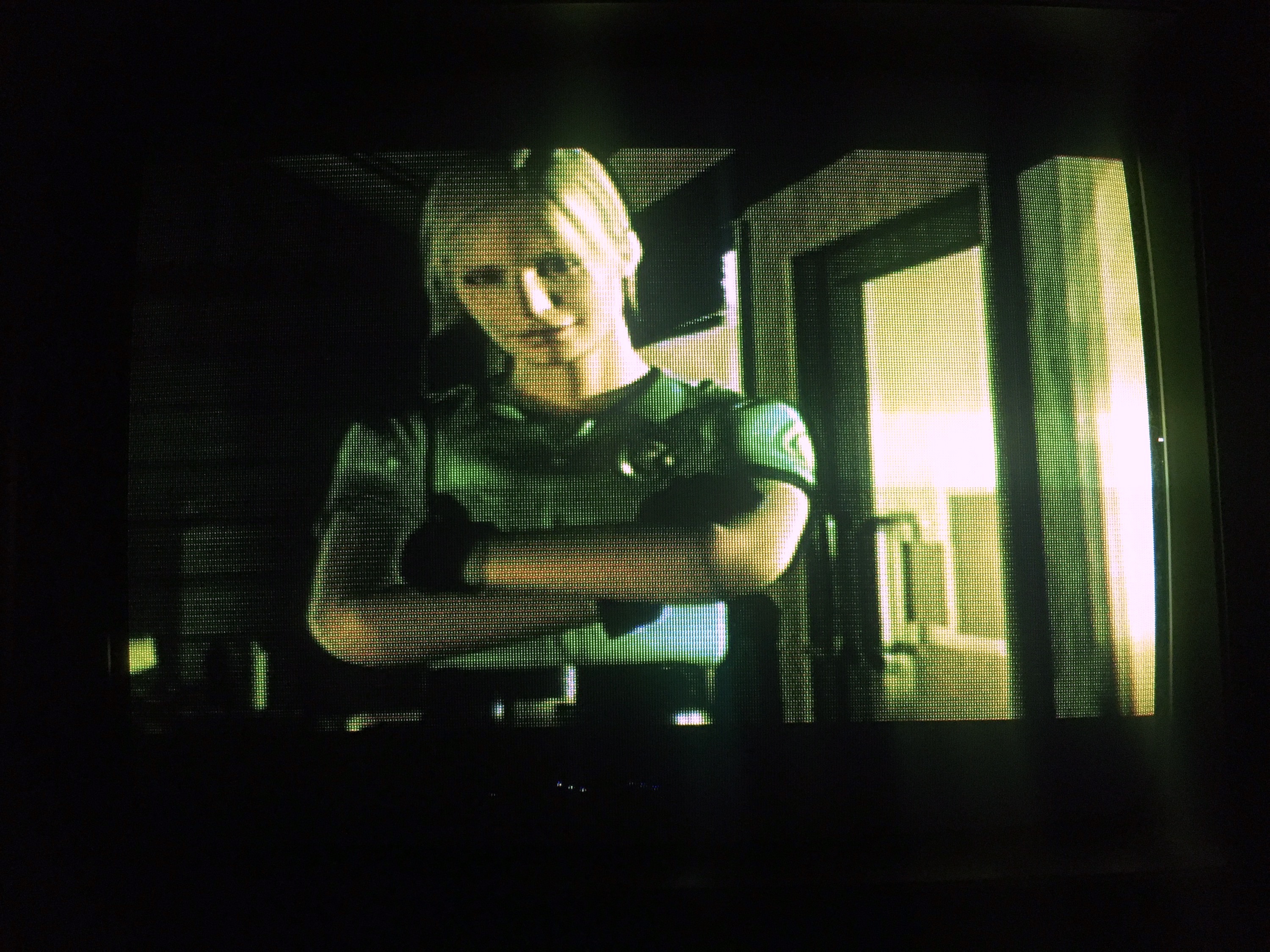
And any console all the way through to the end of the analogue era. Playing Silent Hill on this screen works beautifully, looking even more like the pulpy VHS experience it was always designed to be.
A few years ago I completed my collection of every Konami Famicom game released. While that set included a boxed copy of every Konami Famicom game, there were a few loose ends.
Today, one of those ends is loose no more. I have managed to obtain a copy of the complete Exciting Boxing package. Including the legendary inflatable controller.

Inside the huge box is quite a kit.

The contents are the game itself (in its own regular box), a Konami collector card, the manual, two sets of knitted gloves, a foot pump, and of course the main event: a large inflatable boxing bag/man controller!

The box had a bit of wear, but the inflatable controller is in unbelievably good condition for its age. There was a small air leak but a bit of tape fixed it up no problem.

A cord comes out this box at the front to plug into the Famicom expansion port.

And we’re ready to play!

The game appears to have some kind of fitness (or at least progress) focus, as you enter your name and your stats are saved at all times (via an annoying long password).


The first option is just to view your saved stats, the second is training, so I jumped in here to see how well it works.


Well, the hits registered… sometimes. I have no idea how the technology works – it is presumably pressure, rather than motion. Yet movement is what seemed to register half the time. Pressing what look like ‘button’ points on the boxing bag appear to do nothing, but punching does work, just not particularly reliably. Perhaps it being this elderly factors into it and when new it worked better? Or perhaps not.
Now onto the main game, the first matchup.


And we’re off.

So how well does it work in battle? Not very. A sheet of green plastic attached to the base extends out the front to stand or kneel on to play and anchor the bag. But even when it does work, he often falls over from hits good enough to register, especially hooks.

So expect to see a whole lot of this.


And that’s it! I will not play this often, if only to maintain the condition, so my stats are likely to remain permanently limited.
In recent years I have also managed to get a boxed copy of the cart version of Akumajou Dracula.

And have a copy of the cart version of Moreo Twinbee on the way. Which means my ultra-complete Konami Famicom set is only one item from 100%. Unfortunately, that item is the single most expensive one, even more than this Exciting Boxing set was – the cartridge version of Bio Miracle Bokutte Upa. Oh well, maybe one day when the house is paid off…
Following my popular Goonies for Famicom Disk ‘retail’ release reproduction, I grabbed a separate copy of the other Konami Disk Writer Kiosk exclusive release, Twinbee, with an eye to making similar packaging for it.
As with Goonies (and most Disk Writer Kiosk releases), it came with a proper printed disk label and fold-out paper manual. The manual sheet is in much nicer condition than my Goonies one, having been more carefully folded 30 years ago.
 Twinbee was one of the earliest third party Famicom games, from the original Konami Orange Box line.

As such, the original box is quite boring, design wise. For more interesting design and logo ideas I looked at the MSX release:

As well as various flyers for the game.


I opened up my Goonies project and whipped up a Twinbee cover in that style.

But it looks a bit fancy for such an early release. Twinbee is old enough that its original cartridge release even had the old Konami logo, so looking so bold didn’t really fit. Instead I looked to its sequel, Moreo Twinbee, which was originally released on Famicom Disk System as one of Konami’s first games with their new logo.

This style would be more period-appropriate, given this edition of Twinbee on FDS was released in 1988.

Pretty soon I had it done and the result back from the printers.

At the same time and on the same sheet did a minor update to the Goonies print to adjust the size slightly, and remove Twinbee’s name from the spine.

Cut to size

Scored for the disk holder

And the end result, for both disc and outer box:

The two retail release reproductions together:


And Twinbee FDS with the sequel Moreo Twinbee.

Now both can be home with their Konami Famicom Disk brethren.

Until the mid 1980s, console gaming was dominated by the American company Atari, and their home platform the Video Computer System, or VCS for short.

Ports of Atari’s own arcade games were the main selling points of the system, alongside Atari’s made-for-home efforts and eventually games by the first third party developer, Activision.

The VCS was not officially supported in Japan in the 70s (it was eventually released in 1983 as the 2800, far too late), but was sub-distributed in the country by Epoch, who also had their own line of consoles at the time. Nintendo was still releasing their single game Color TV Game series consoles. Japan was pretty much just a minor regional market in the grand scheme of things.
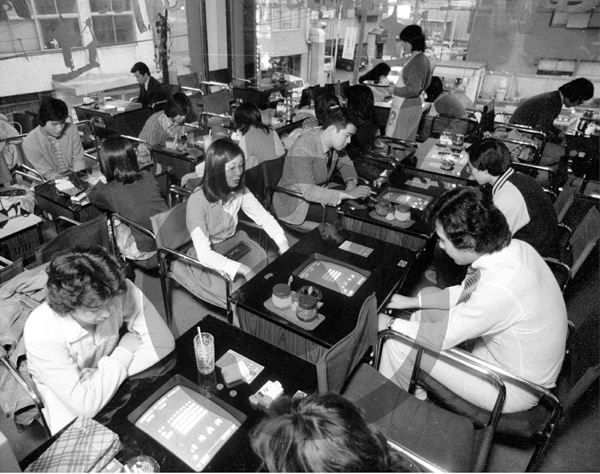
However, this changed in 1978, when Space Invaders by Taito became the biggest video game hit of all time to that point.

It was so big in Japan that entire arcades opened dedicated to that single game, but it was a huge hit everywhere in the world where games were played. Space Invaders was the start of what would eventually become Japanese dominance of the video game industry.
It was ported to the VCS in 1980 in the first ever licensing deal, and became the killer app for the system.
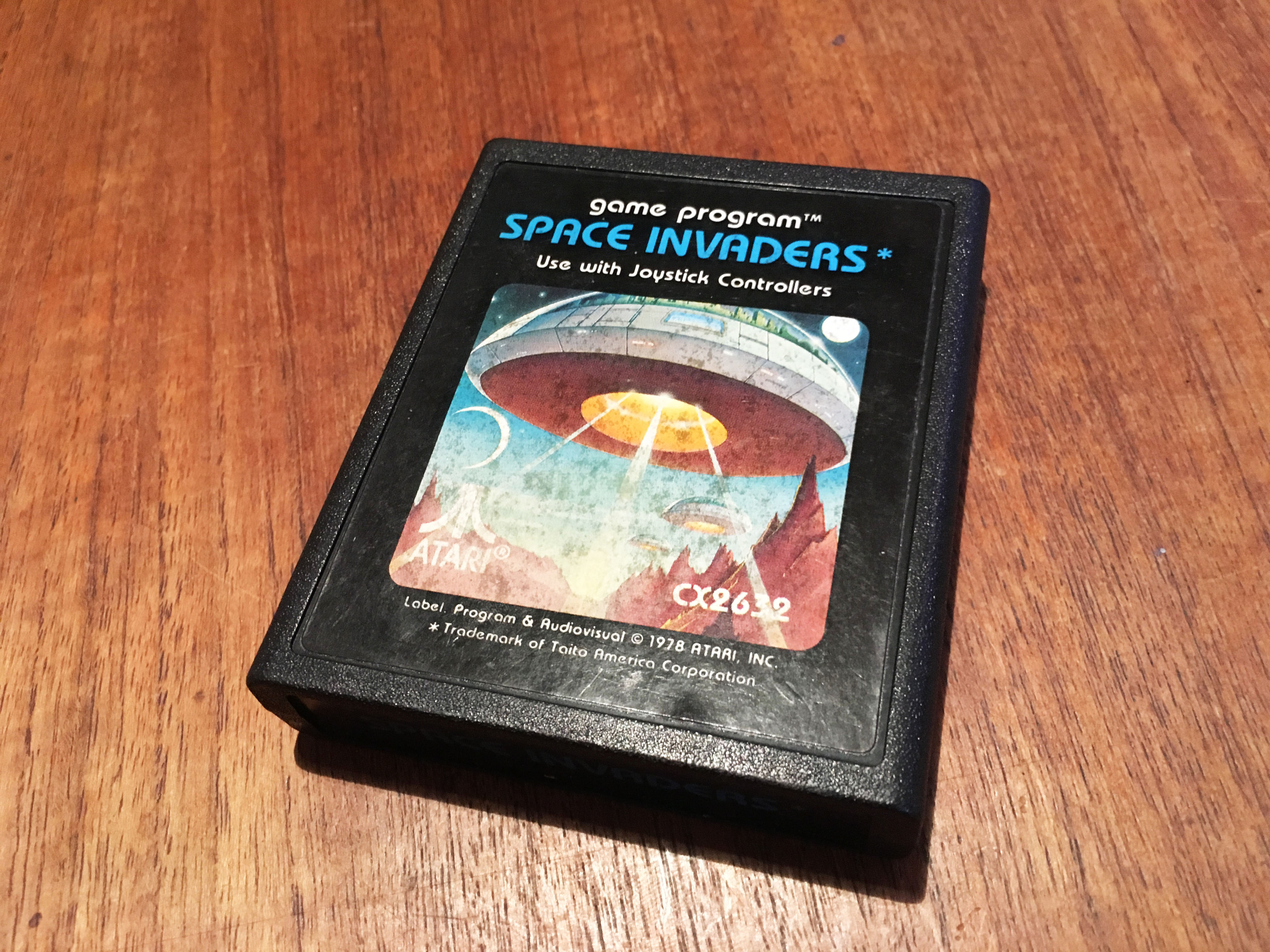
It was a decent port that resembled the arcade game well.

And was packed in with every console, leading sales to increase substantially.

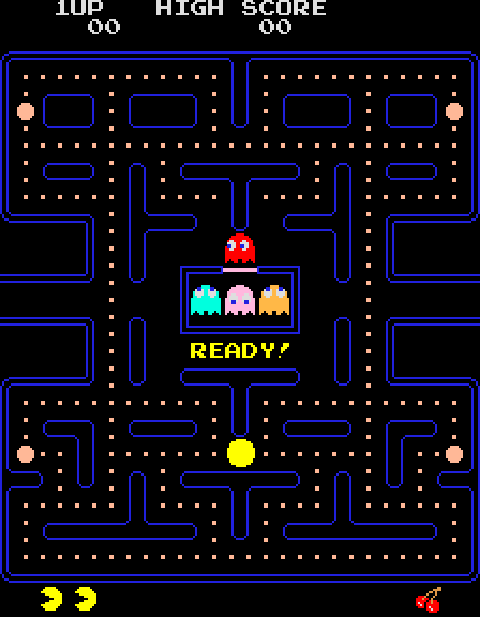
From then on, all the biggest games seemed to come from Japan. Nacmo’s Puck Man (renamed Pac Man for the west) was the next big name, followed by Nintendo’s Donkey Kong.

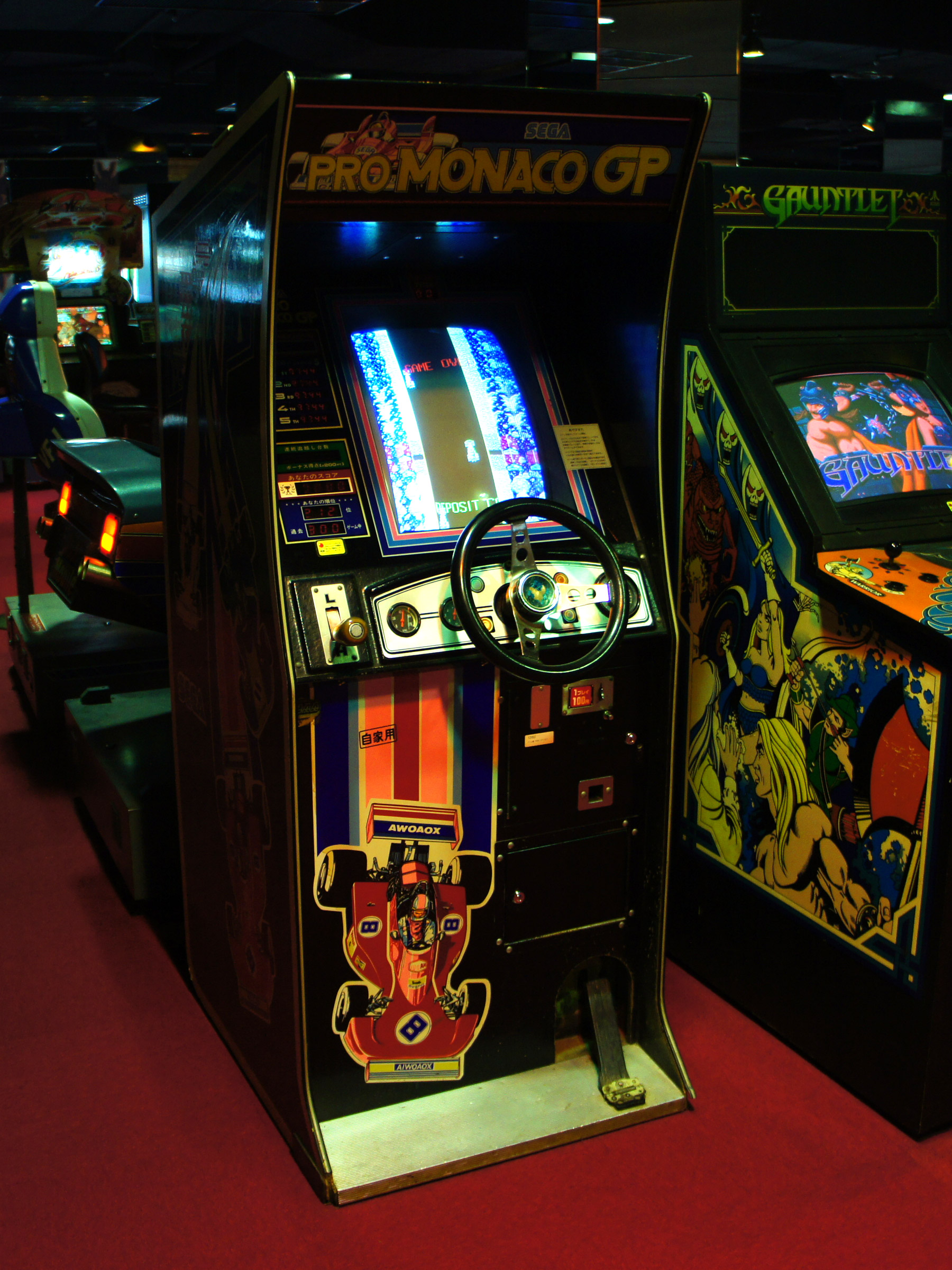
Another small Japanese firm named Sega were also making a name for themselves too, particularly with racing games like Monaco GP and Turbo. Having previously made mechanical arcade games, Sega games were known for fancy custom arcade hardware.
All these Japanese companies’ games made their home debuts on American systems. Pac Man had an infamously bad VCS port which was the start of a downward trajectory for Atari.

Coleco managed to sign up the rights for Donkey Kong and several Sega games for their Colecovision system, but also published them on the VCS. Though the ageing VCS hardware and shoddy ports did not do the games justice.

This was the last time for decades Nintendo and Sega games were officially published on the same platform, though some of Sega’s games turned up on Nintendo platforms in roundabout ways, such as Sunsoft’s publishing of some Sega games on the Famicom.

And thanks to Nintendo taking over Japan and then the world with the Famicom/NES, and then Nintendo or Sony winning every generation since, to this day Japanese consoles have dominated. Though admittedly western software has regained sales dominance worldwide in the last decade.
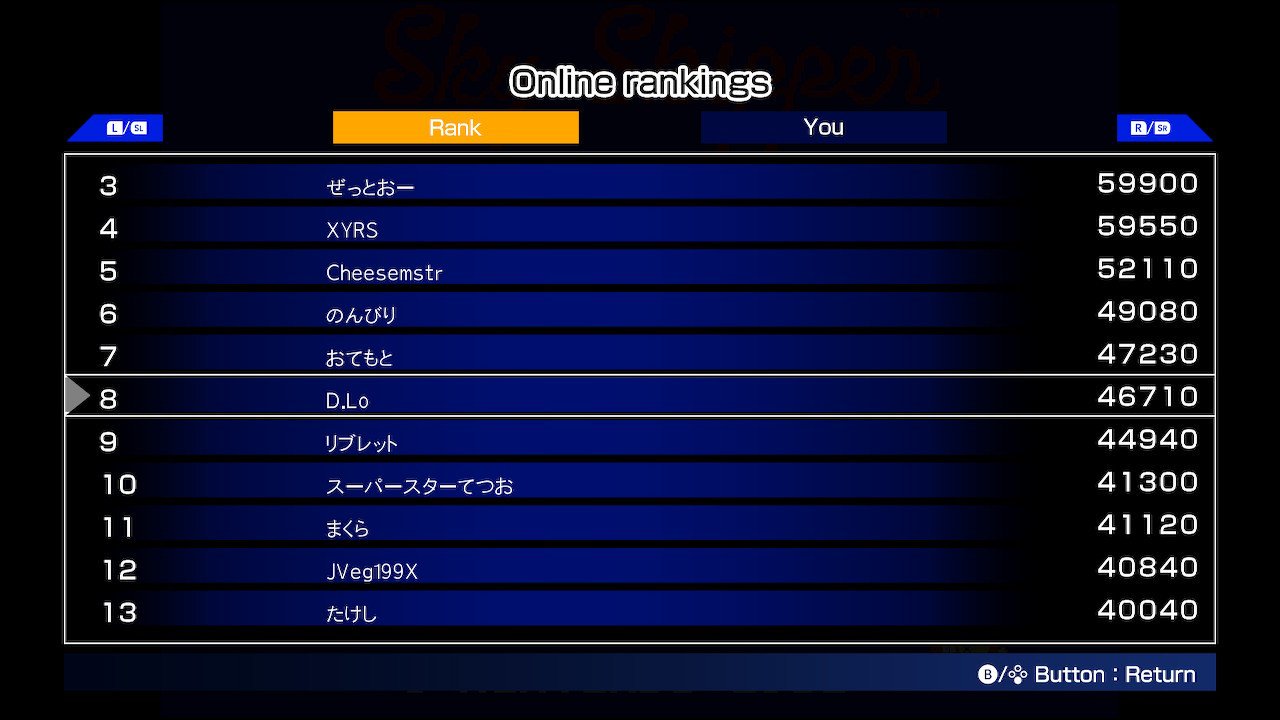
One final interesting note is that due to some licensing deals of the era, a Nintendo game was released on Atari VCS that never saw a release elsewhere. A 1981 Nintendo game called Sky Skipper was never released in arcades following poor reviews in location testing.

But a port by Parker Brothers made its way onto Atari’s system.

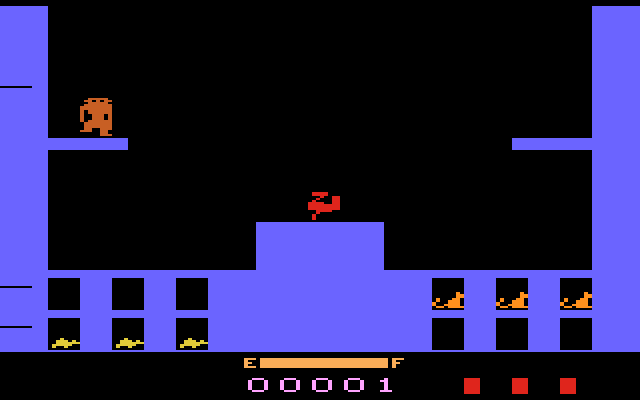
Sky Skipper was never released or ported to any other platform for 35 years, until it was finally released as part of the Arcade Archives series on Nintendo Switch in 2018.
The 1969 Electronic Love Tester is Nintendo’s first electronic toy. Designed by Nintendo legend Gunpei Yokoi (the man who sent Nintendo into toys with the Ultra Hand and later created the Game & Watch and Game Boy), it’s a novelty device ‘for young ladies and men’ that alleges to test the ‘love’ between a couple by measuring their electrical conductivity.
 It’s presented in a box with oh-so 60s styling, and comes with the device, instructions, and faux-leather carry case.


 The instructions show how to play and how to set it up. It’s powered by a single AA battery.

 It is possibly the most 60s looking toy ever made, right out of The Jetsons. This one still has the original metal ties for the cords. The cords are a bit stiff after over fifty years, as is the vinyl case.

 The cords unwind and couples take one sensor each in hand, and hold hands with their other to get a reading.

 To change the battery and access the internals, it’s much like an old transistor radio from the same era, and requires removing the back plate via a single screw. Internally it’s very simple of course.


The Love Tester makes a cameo appearance in the Gamecube and Wii game Pikmin 2, described by Captain Olimar as a ‘Prototype Detector’.
And like many of the older Nintendo products, appears in the WarioWare series, as a souvenir in WarioWare Twisted on Game Boy Advance, and as a minigame in WarioWare Gold on 3DS.

There was also a 2010 re-release, which came in a recreation of the original box. You can tell the new one by the additions to the box design.


One of the famous Nintendo ‘Ultra’ line toys, the Nintendo 1967 Ultra Machine (ウルトラ マシン) forms part of Nintendo’s transition between card manufacturing to toys in the 60s and 70s.
As may be obvious from the box art, it’s an automatic baseball pitching machine.
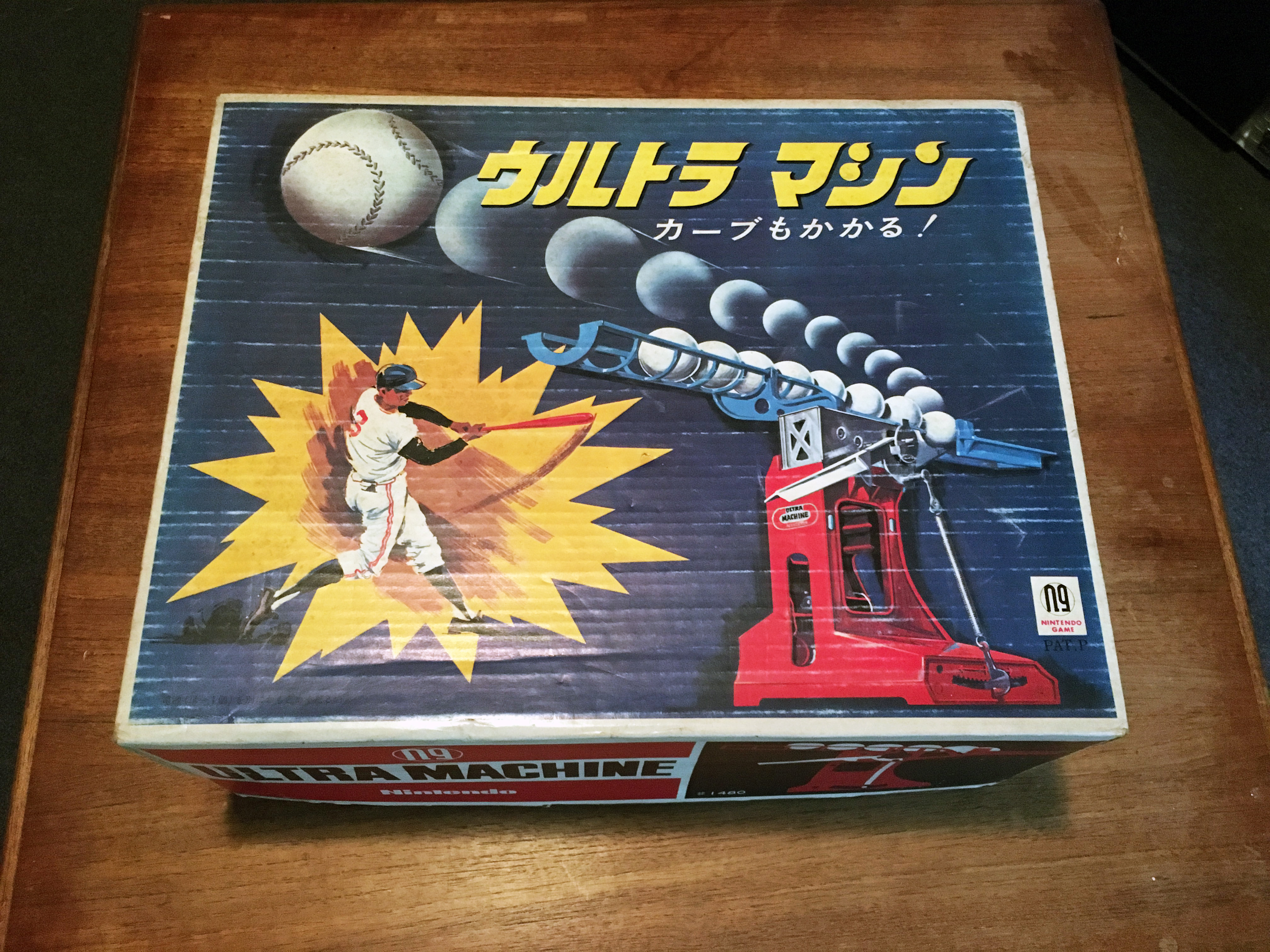 It of course comes semi-assembled so as to fit in the box, the packable design and packaging layout is particularly elegant.

Fully assembled, with Nintendo branded bat.


A line up of included plastic balls (with slight shape variations to affect their trajectory) collect in the basket, and fall one by one into position for the flicking mechanism.
Speed selection
Here on the battery compartment is the first ever instance of the modern Nintendo logo appearing on a product. It hasn’t yet got the ‘racetrack’ border, but sits inside a squashed hexagon.


It’s one of those ‘what you see is what you get’ kind of products. The motor doesn’t work in mine but you can manually set a ball to be launched, and it throws the balls quite well.
The Ultra Machine has made several guest appearances in Nintendo video games in the years since, most often in the Warioware series

But more recently in Splatoon 2, where a jury-rigged Ultra Machine serves as a bomb launcher.

 Nintendo Sega Japan!
