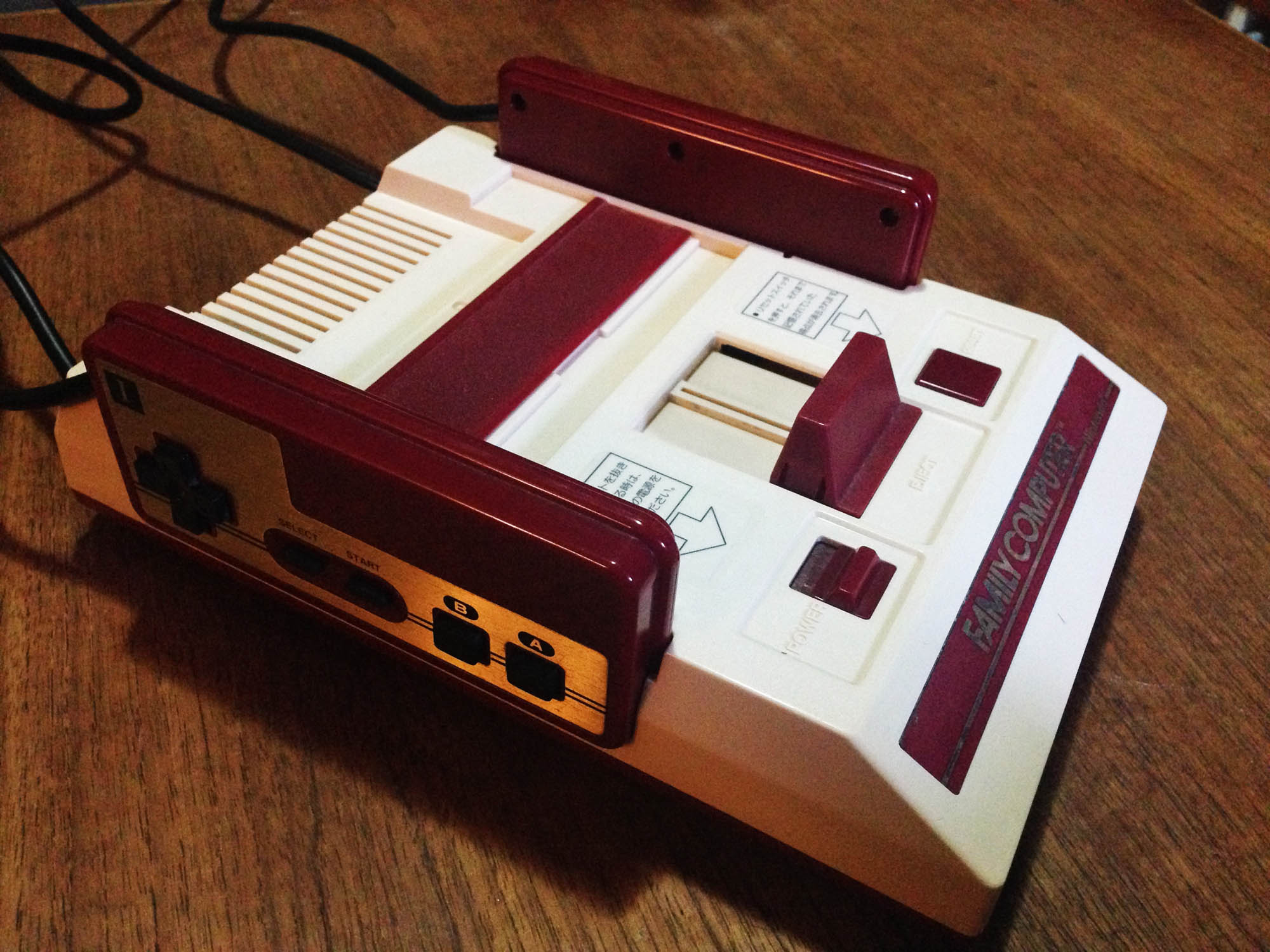
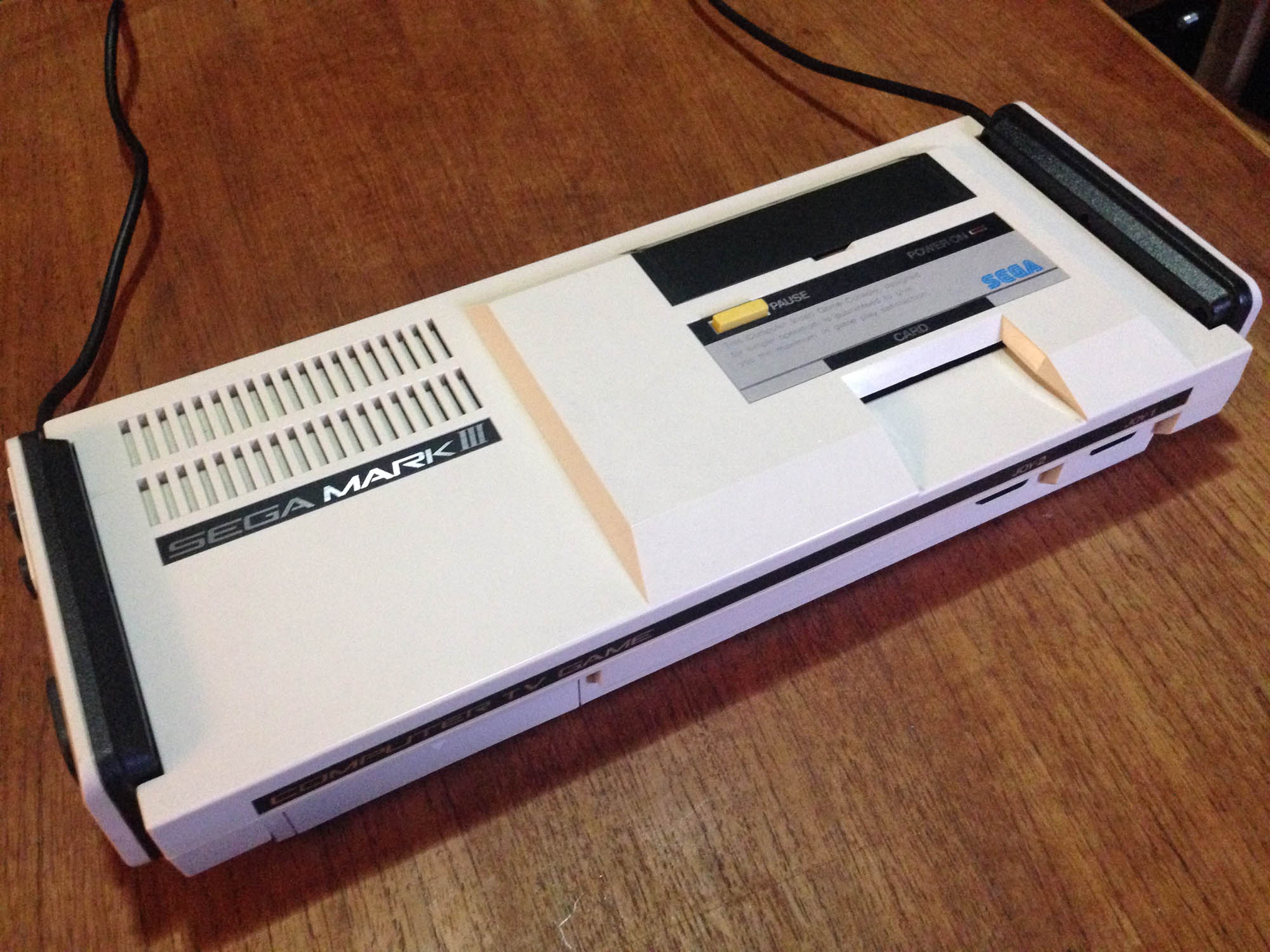
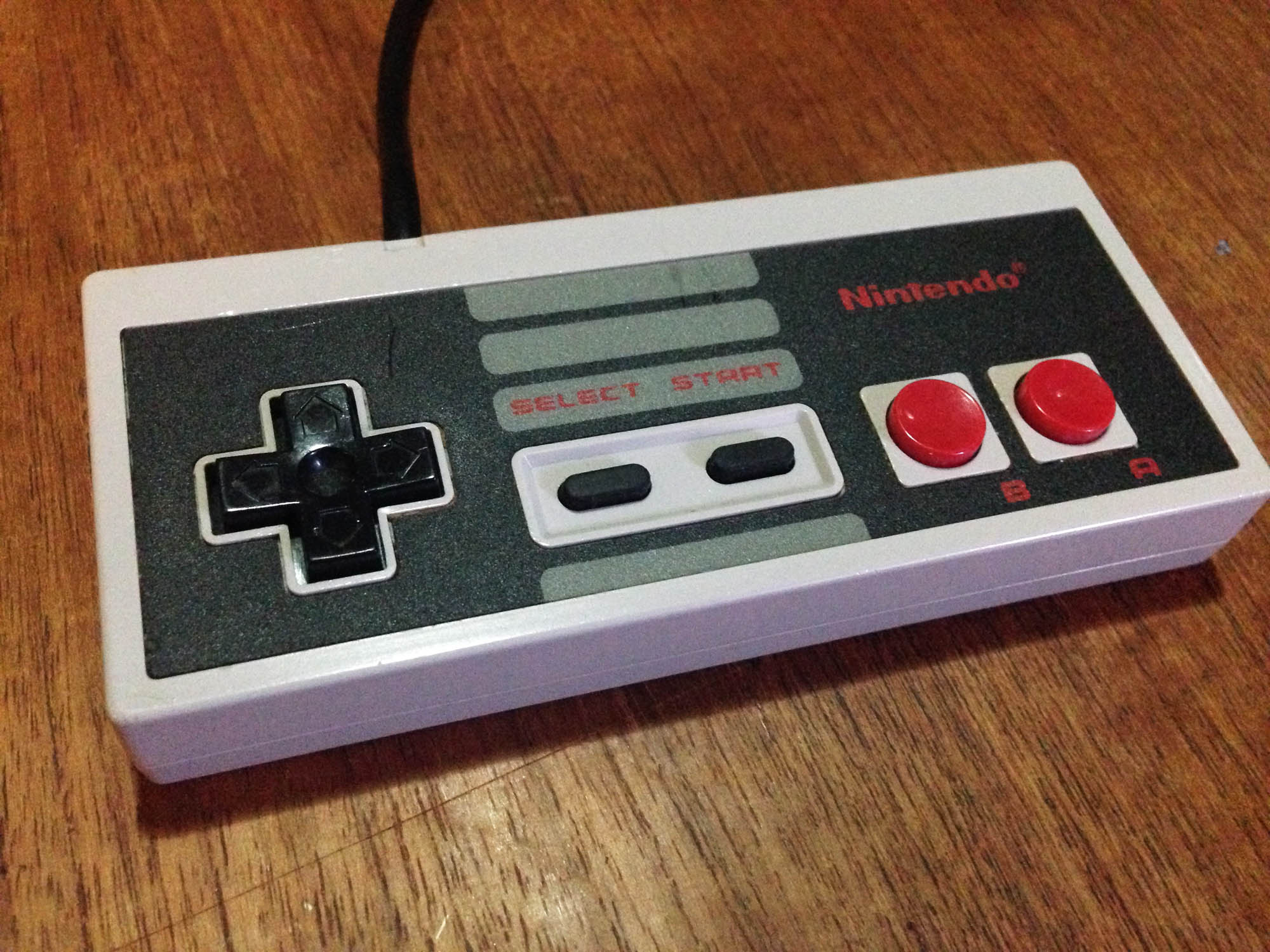
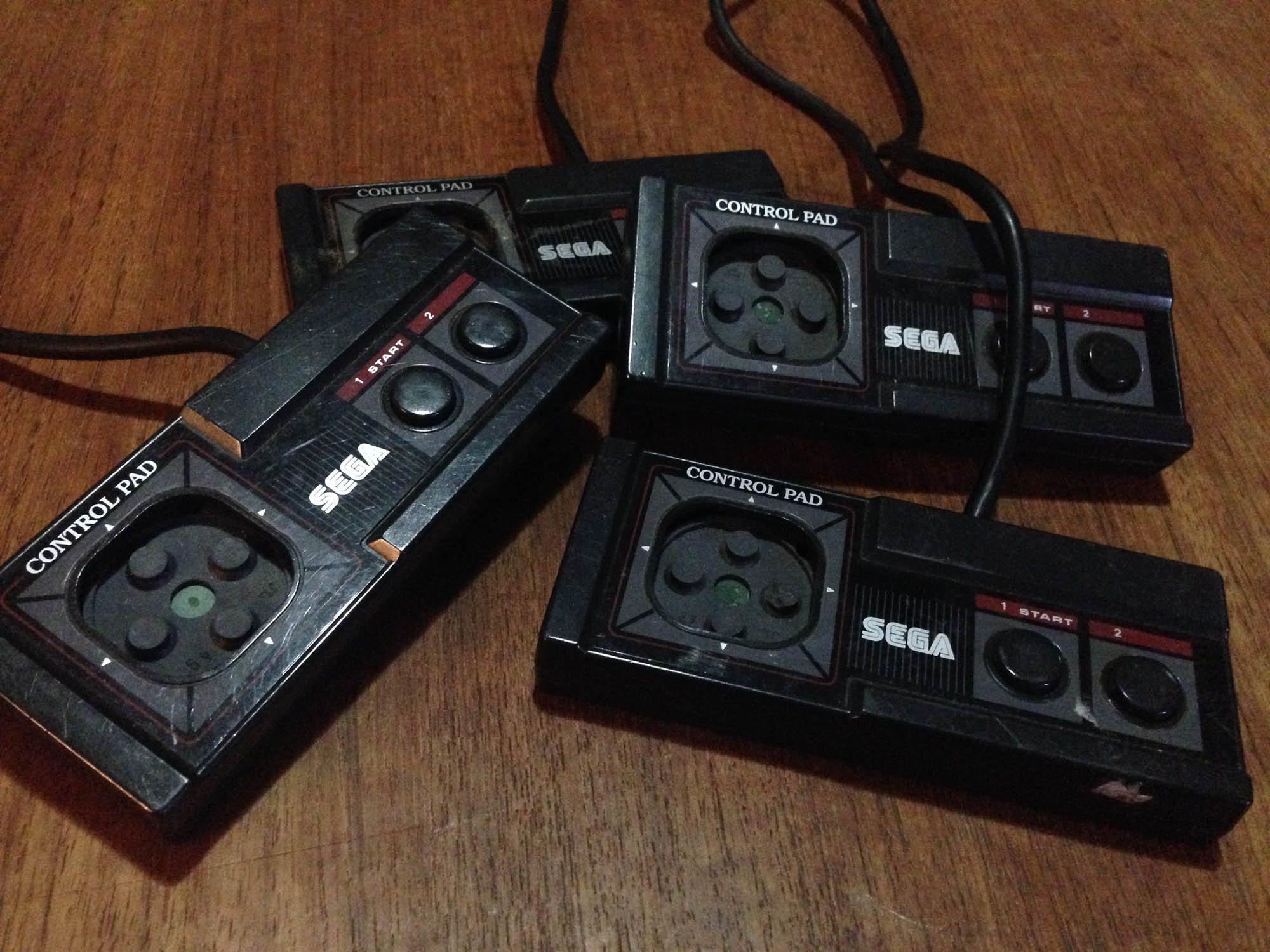
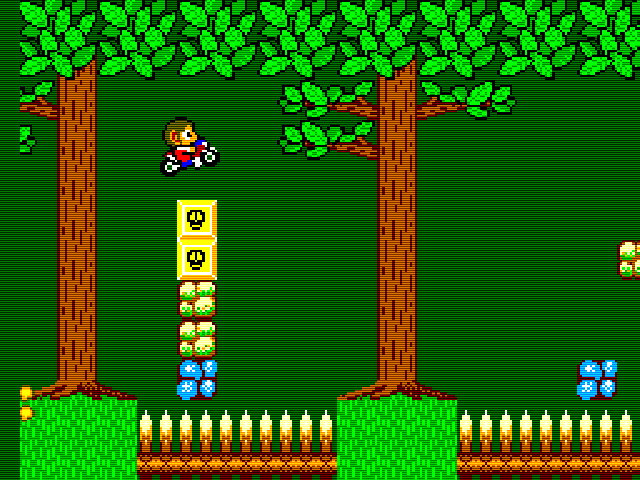
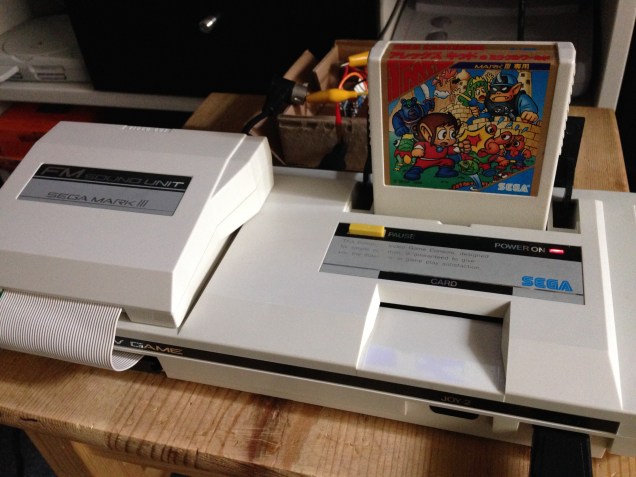
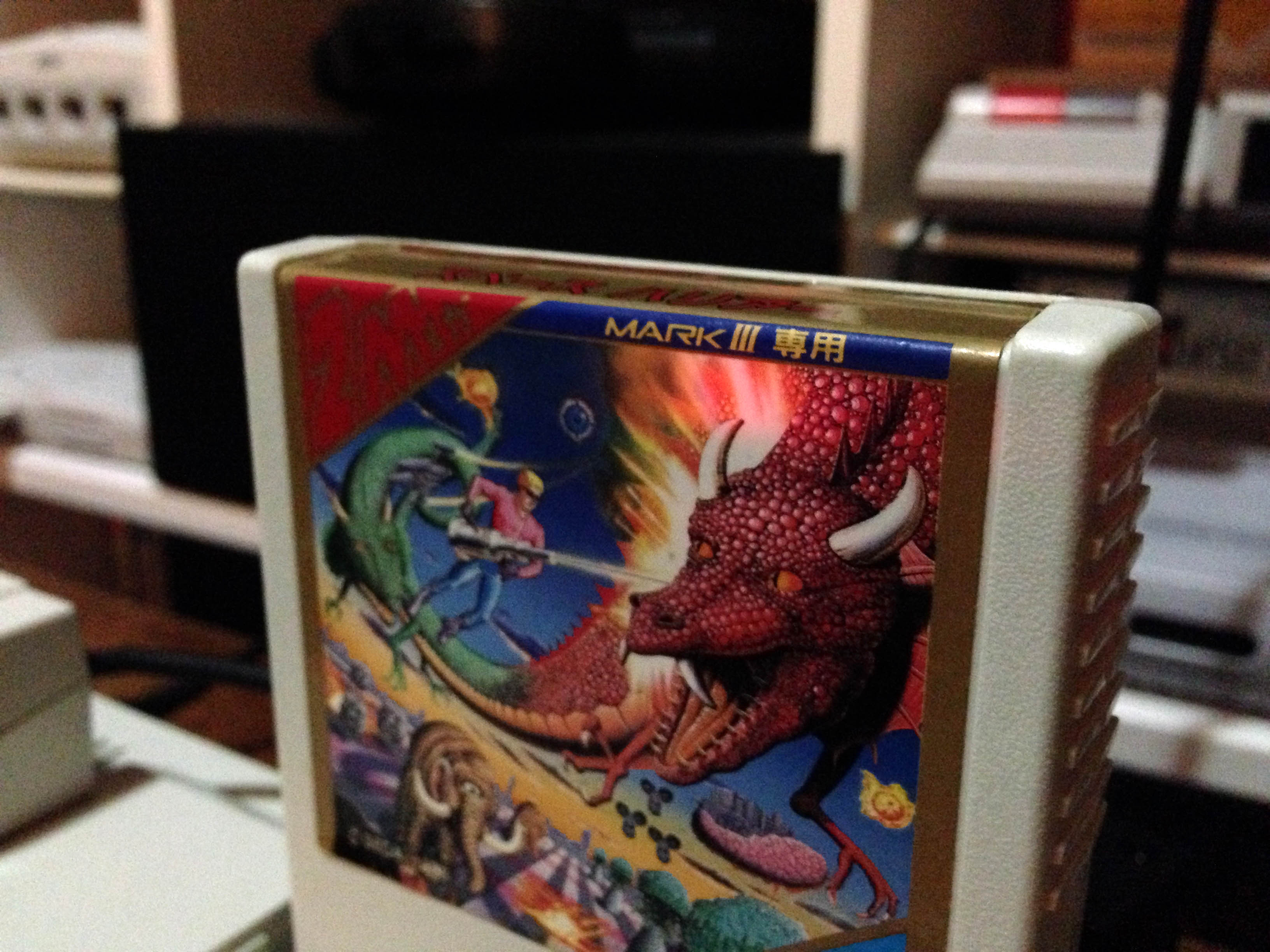
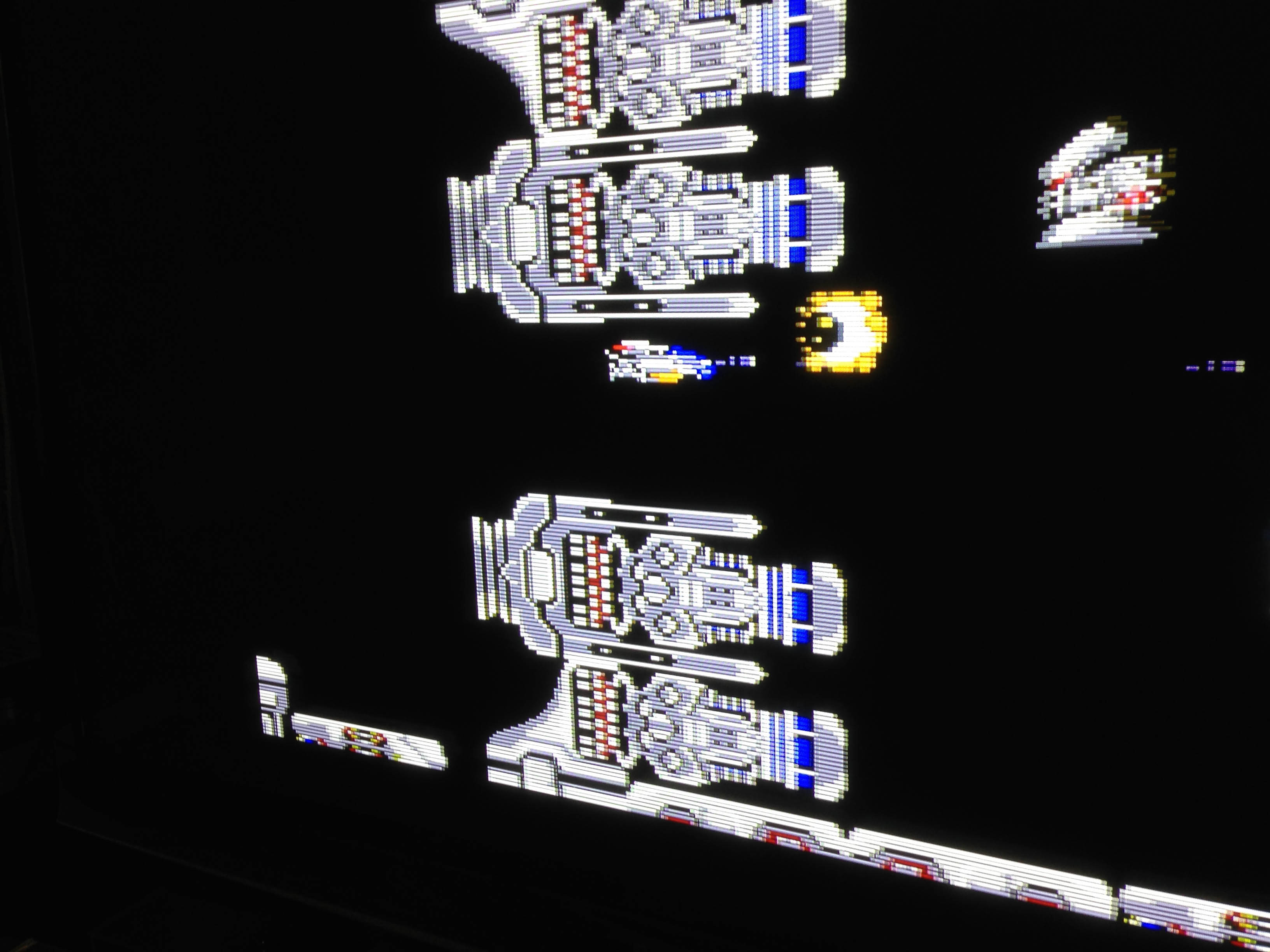
There’s a Mark III 3DS theme out. Looks perfect on a white New 3DS.
Now we just need some Mark III faceplates. It’s still crazy to me to see the Sega and Nintendo brands together like this, even after all these years of it being normal (the dual branded F-Zero GX launch screen was the first real time they co-branded, back in 2003!)
It was in 1983 that this website’s co-namesake entered the home video game market, with their first machine, the Sega SG-1000.
Released the same month as the Famicom (some sources claim the same day), it was a generation behind it in technology and design, featuring performance equivalent to the ColecoVision and first generation MSX. Sega couldn’t have predicted hurricane Famicom was about to redefine video games.
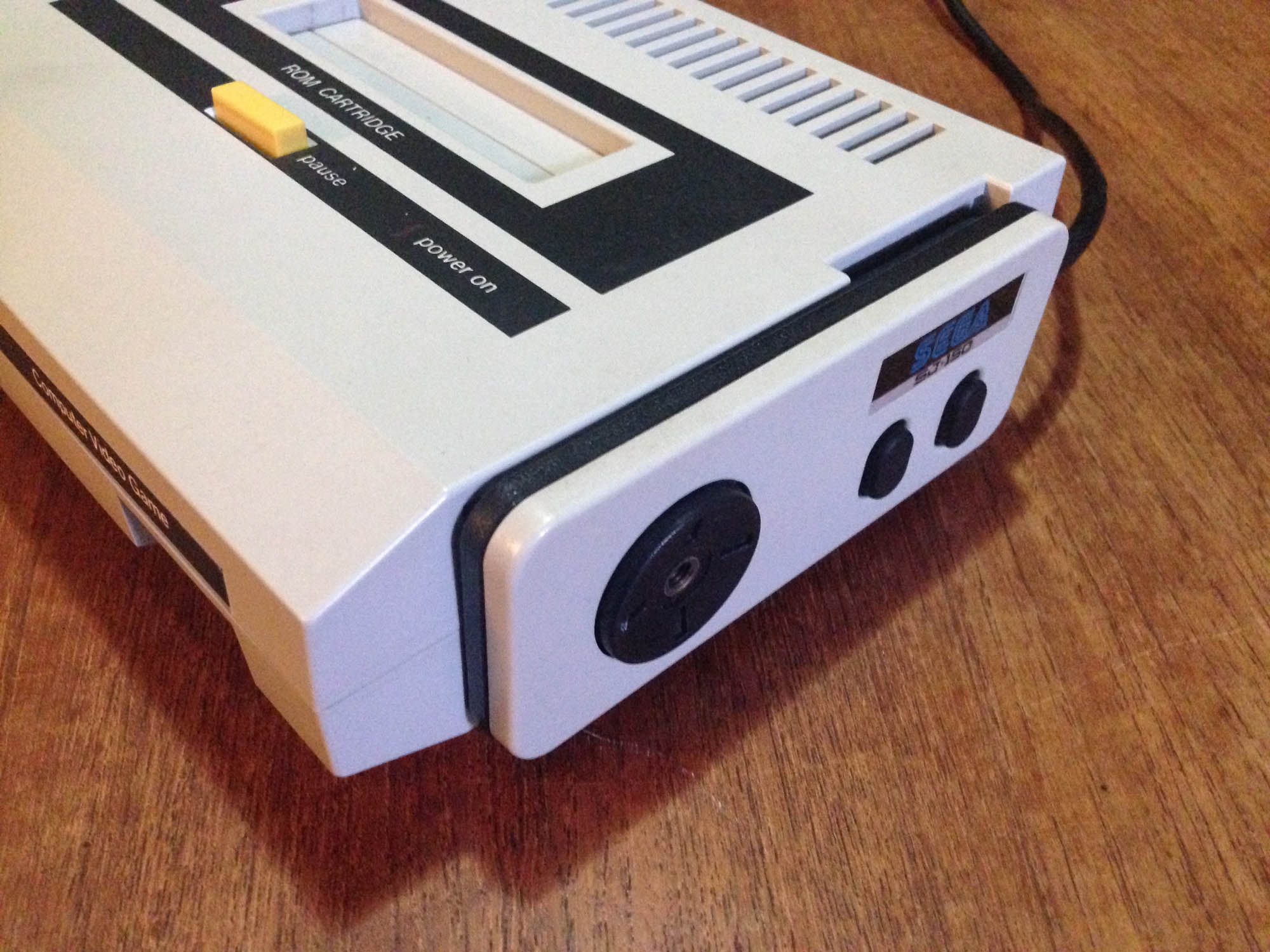
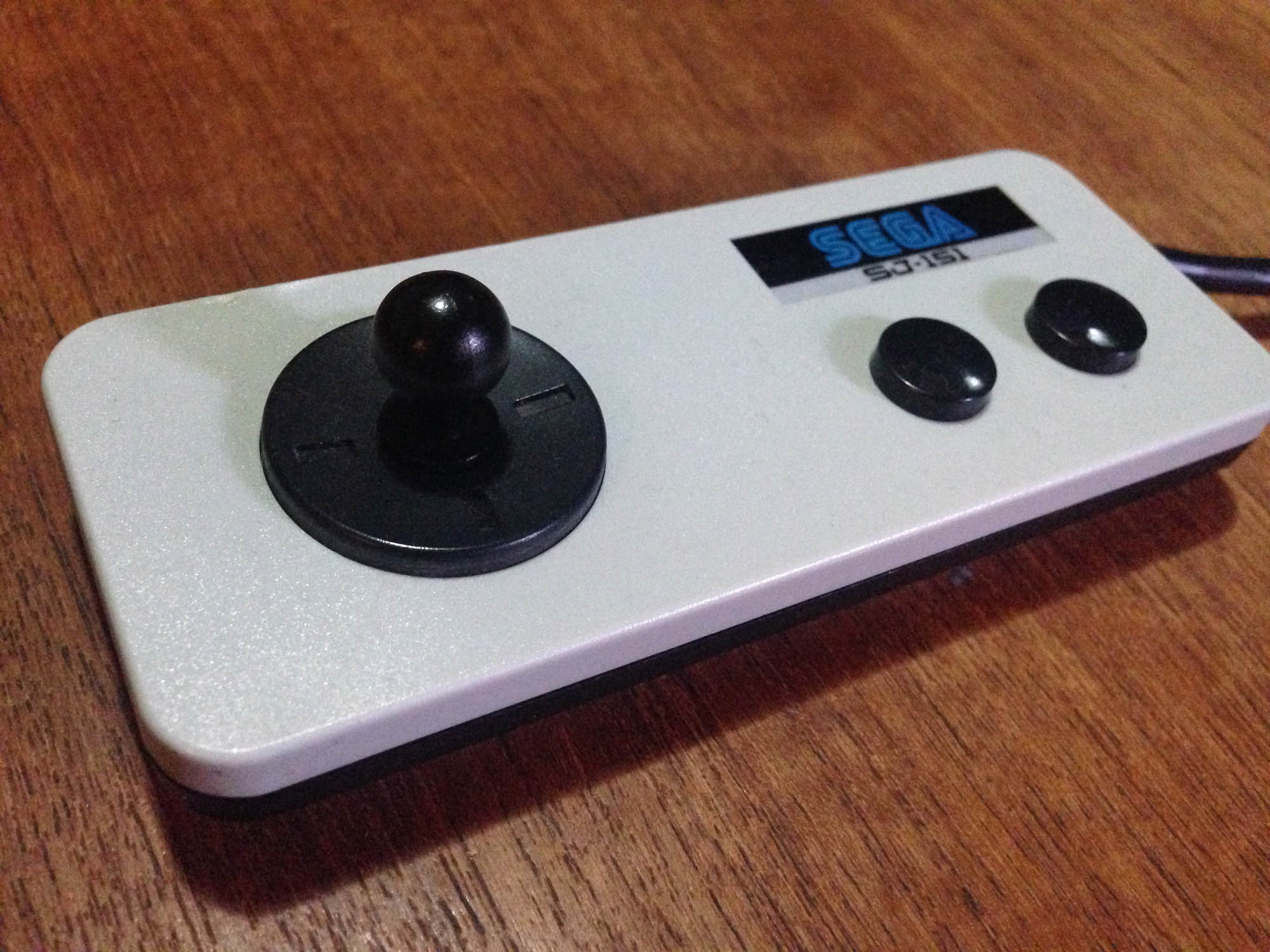
It plays Atari-style tall cassettes (cartridges), and features and Atari style joystick which is tethered to the left of the console.
The back features a port to attach a keyboard. ‘Home computer’ versions of the hardware with the keyboard integrated were released as the Sega SC-3000.
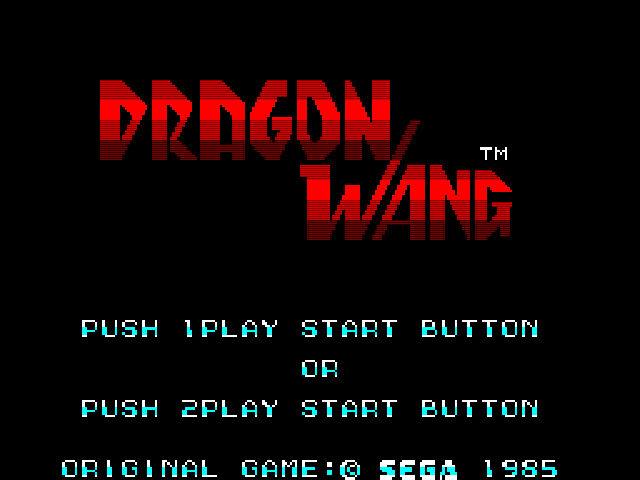
It can also play Sega My Card software (like Dragon Wang here) with the ‘Card Catcher’ adapter, which was released to coincide with the launch of the SG-1000 II a year later.
About that SJ-200 joystick – it’s pretty awful. Very similar in responsiveness to an original Atari VCS joystick, but with a worse design. Both the joystick and buttons are stiff and unresponsive, even in a perfectly working controller. Inside it uses a primitive bending metal ‘leaf connector’ system, which was cheap but no substitute for the microswitches in arcade joysticks, or the innovative rubber membrane system Nintendo utilised in its Game & Watch series and brought to the Famicom.
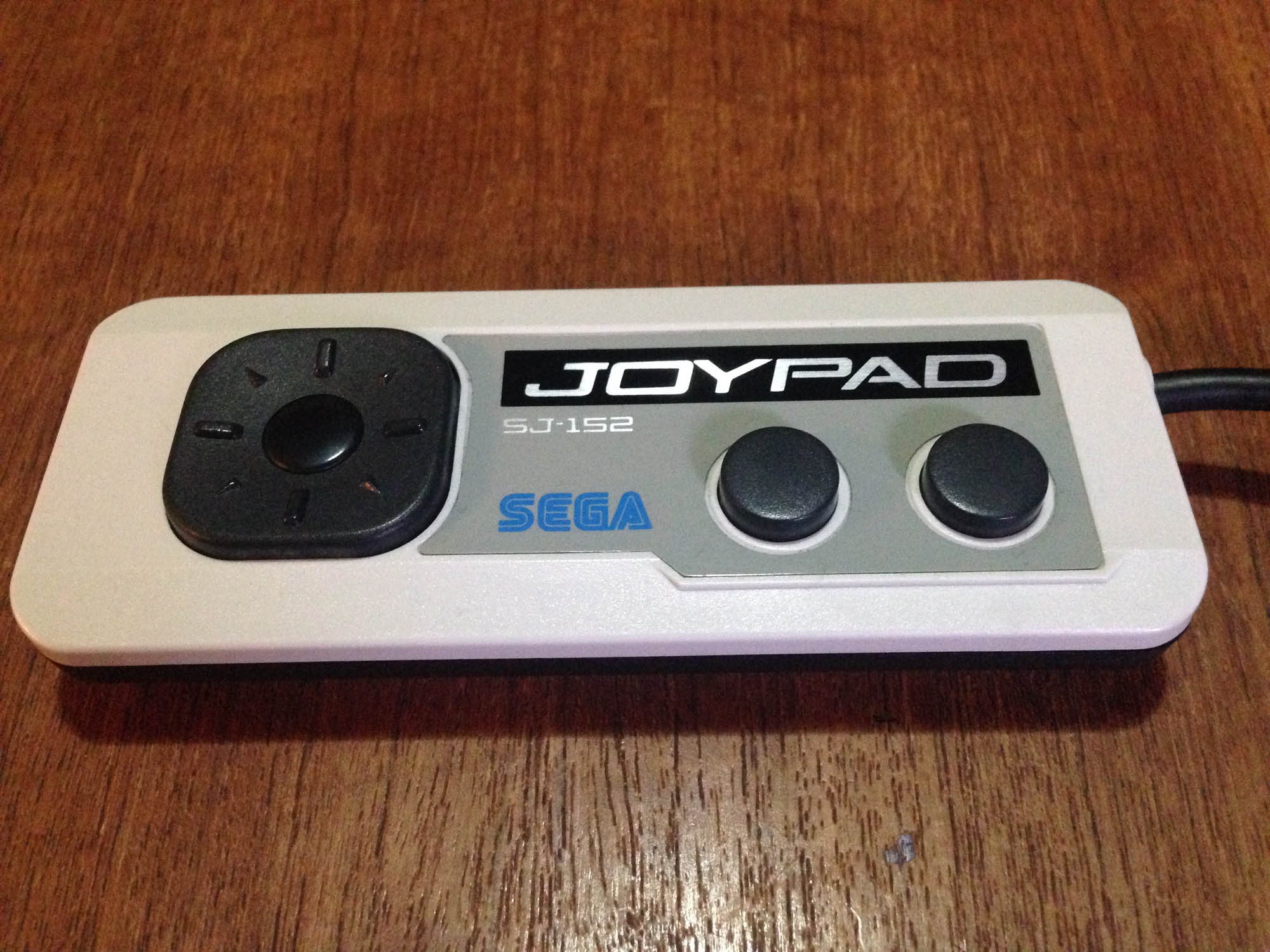
On the right of the console there’s a standard Sega controller connector plug, which unfortunately is only for player 2. Sega actually released an adapter that allowed you to open the console and replace the player 1 SJ-200 with another controller port, but it’s apparently impossible to find. I might try and make up a home-made one to use Mark III controllers.
Size-wise it’s comparable to a Mark III, and deceptively flat.
Output is RF-only, which means a classic fuzzy picture, if you can even tune it in (depending on where you live).
The Konami game ‘High School Graffiti: Mikie’ where you play as a teen heart throb, to the tune of Beatles classics.
It’s a pretty cool collector piece, but due to the joystick and RF-only output is not the best choice to actually play on. The Mark III is fully backward compatible with SG-1000 games, has the card slot built in, and (with a bit of ingenuity) has very nice RGB graphics output.
Here’s the very first model of the Sega Mega Drive.
That little ® next to ‘Sega’ at the bottom right means it is the first, Japan-only model.
The next batch of models, like this one, are missing the ®.
Sega loved covering the top of their consoles with semi-nonsensical text. For the Mega Drive it’s ‘AV Intelligent Terminal High Grade Multipurpose Use’.
Following the the tradition of the Mark III‘s amazing console top-promise (pic taken from my Mark III restoration article, hence no reset button and cassette slot flap)
And of course the inaccurate and needlessly complicated usage diagram on the top of the Master System.
Time for some launch games. The only true Alex Kidd sequel may be dated, but would have been pretty impressive in 1988. Especially because the early, made in Japan models have far better audio than later made in Taiwan models.
For more info on the numerous Mega Drive models, see this legendary Sega 16 thread.
Sega were king of the arcade for most of the coin-op format’s history, and their console efforts often attempted to leverage their arcade success into home success. While this would eventually lead them to release one of their arcade boards as a console (the Mega Drive is basically a cut-down Sega-16 board), on their first two consoles it meant ports.
And so we have the Mark III release of Shinobi.
It’s a late enough Mark III release to have the Master System co-branding.
Shinobi is a basic 2D side scrolling action game, which was already a fairly recognisable format by 1987. It stars Joe Musashi, on a mission to stop bad guys who are kidnapping children from his ninja clan.
You move along the stage, attacking bad guys with swords and ninja stars while freeing the kidnapped kids. The game’s gimmick is multiple ‘planes’ of action, and at certain points in stages you can switch between planes with a giant ninja jump. Luckily the bad guys are nice enough to pause and wait for your jump to complete (it’s really supposed to be a sort of ninja movie slow-motion effect I think). Otherwise controls are decent, solid but standard.
It’s broken into five missions of three or four stages each, with a boss at the end of each mission. Along the way you can power up your life bar and weapons, swapping out ninja stars for bombs and a knife, and your sword for nunchucks and eventually what appears to be a Castlevania-style chain whip.
Some later stages can get quite frustrating, introducing bottomless pits and annoying enemy placements. Enemies get weirder and more supernatural as you progress, including some zombie-ninjas and demons.
Bosses are quite good, and largely rely on you working out attack patterns and counter-attacking. With one exception – a giant wall of hindu (Vishnu?) statues. After a million attempts I finally worked out the only solution was to spam it with knives, which worked. Frustrating.
There’s also a very difficult bonus stage once a mission, where you throw ninja stars at two planes of ninjas, shooting gallery style.
Graphically it’s decent, but nothing special. Pretty middle of the road for the Mark III. Some incredibly strange palette choices make some parts, especially the first stage, look quite garish, but other stages are fine.
What is up with these colours?
The Mark III version is a reasonable interpretation of the arcade game. The arcade game is a much faster, more fluid experience, whearas the home version is a slower and more methodical. There are less enemies, but despite the very different feel, the levels have been recreated quite faithfully.
The graphics have also taken a hit from the 16-bit arcade game, but the bright Mark III colours arguably make it more appealing in parts than the drab original.
One disappointing element is a common one for Mark III games – small cartridge size. The Mark III had some design flaws that meant it got less graphical tiles from the same amount of ROM than most consoles, and on top of that Sega often chose cheap small cart sizes. What this means is only a couple of tunes for the whole game (much like Makai Retsuden). And what happens when you beat the final boss, the Masked Ninja?
You get this amazing ending:
Wow, what a reward.
The tunes at least have FM instrument support, and sound pretty cool if you have an FM Unit.
Overall it’s a pretty nice early ninja game, and pretty fun, even if incredibly difficult at points.
Alex Kidd – Sega’s most direct answer to the popularity of Mario
Much has been written about Sega’s history of creating ‘answers’ to Nintendo’s ideas. The reality is almost everyone in the space has copied Nintendo to some extent and in some capacity, it’s just that Sega was the closest similar competitor for longer than anyone else, so the examples pile up higher.
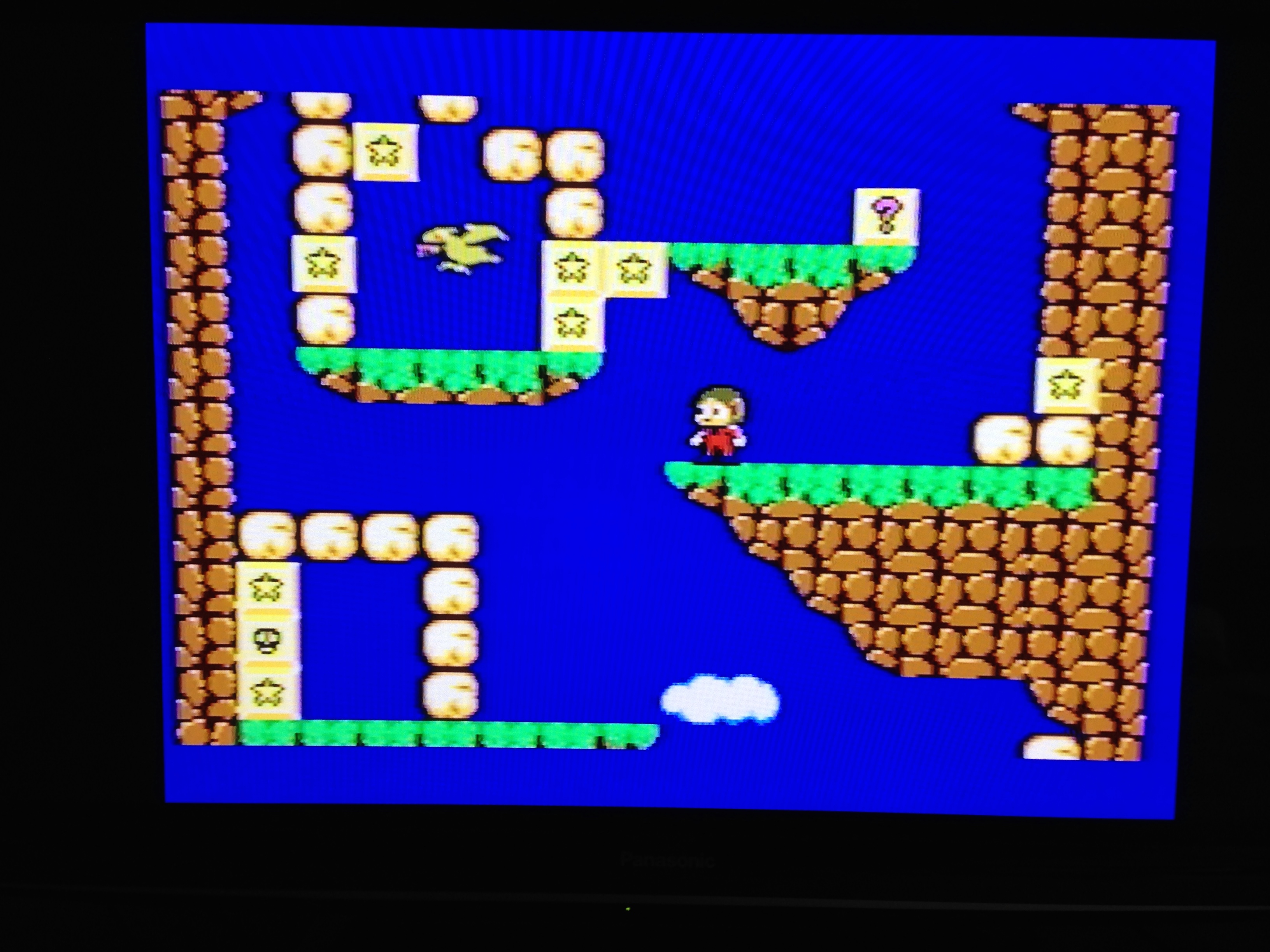
Which brings us to Alex Kidd in Miracle World, released a year into the life of the Mark III, and in the wake of Super Mario Bros. explosive popularity. Miracle World is such a straightforward answer to Super Mario Bros. nobody ever tried to deny it.
One of these things is a lot like the other…
Starring a red-jumpsuited monkey boy clearly designed to evoke ‘young Mario’
It’s quite typical of the platfomers released on Super Mario’s wake.
It has the destroyable blocks with money and power ups in them, plus land based platforming and swimming levels. Its efforts to differentiate itself from Mario include vertically scrolling levels and stores in which to buy power-ups.
It also has its own combat method (punching), and jump and attack are reversed from Mario’s rapidly-growing standard layout. You get used to it, and it can actually be advantageous depending on how you hold the pad, but it’s jarring to start with. In a later western release of the game, the buttons are reversed to the Mario standard in a full admission of defeat.
Jumps are a bit floaty, and movement a bit mushy overall, but the controls are decent. Moving carefully you can make your way through the game fairly easily, punching away at enemies with relative success.
It seems likely the game was developed by the same team as Ghost House, since the controls and graphics, and even main character, are quite similar.
What Alex Kidd has going for it are a variety of environments and gameplay styles. As mentioned, just like Mario there are swimming levels, but Alex has a few vehicles available as well. The motorcycle is an optional power-up, purchasable using the in-game cash at stores in some levels. It works somewhat like the skateboard in Wonder Boy, in that you career headfirst at a super fast pace until you hit a hard object and the bike evaporates. There’s also the Ballon Fight like helicopter levels and a water based motorcycle equivalent in the speedboat.
While the game is otherwise mostly a standard meandering platformer with fairly mediocre level design, some later levels resemble action puzzlers, such as Utopia’s Montezuma’s Revenge, or Konami’s Goonies, except much more basic. Overall it’s fairly boring from a gameplay perspective, even with the gimmicks.
Boss battles are the worst feature of the game. Instead of any kind of action, in most cases the battles are largely decided by a paper scissors rock game. It’s like you leave action-game land and enter a casino where your opponent can view your moves. Following the ‘Janken’ match, most bosses then attack physically in a limited fashion, usually by throwing their disembodied head around the screen in a random pattern.
It’s a pretty good game graphically for 1986. Nicely dawn characters with lots of detail, and colourful worlds to explore.
The music isn’t that great. While the tunes are catchy, they’re no Mario theme, and like SMB there are only a few pieces that repeat throughout the adventure. The Mark III has worse sound hardware than the Famicom, and unfortunately there’s no FM soundtrack.
Alex Kidd’s first adventure also unfortunately remains his best. A bunch of what were essentially spin-offs followed, none of which were much good. The only actual sequel was a 1988 Mega Drive launch game, known as The Enchanted Castle in the west, and while it’s easily the second best ‘Kidd, it’s pretty janky.
Alex Kidd in Miracle World didn’t set the world on fire in Japan, but is a fondly remembered game in many PAL territories due to it being built-in game of the majority of Master System consoles released. But while the original game isn’t exactly a classic, it’s surprising Sega never did a revival.
The Segamaku had a pretty short life, but lots of wacky stuff was released in that time, including some pretty nice 3D glasses.
Unbelievably, the active glasses are pretty much the same tech as used by most 3D TVs today! They use the same left-right alternating shutter technology, and even use the same 1.5mm stereo plug as current corded glasses. You can actually plug them into a TV or laptop that supports active 3D and they work. Alternatively, you can use modern 3D glasses on your Mark III or Master System.
The Mark III needed an adapter to use them. This adapter was built into the later Master System, which was somewhat of a waste, since the glasses came packaged with the adapter anyway.
I was introduced to Kung Fu Kid when my family rented a Sega when I was young. It wasn’t the first console game I ever played, but it was the first one I ever played in my own house (i.e. the first game I played for hours and hours in a single night).
The ‘amazing’ western box art…
It’s a fun little ‘Kawaii’ rendition of the classic Kung Fu Master template (kick waves of bad guys and move up levels) starring a Chinese kung fu master called Wang. It adds in a dash of platformer with a much higher jump, more variety to the settings (not just a tower) and quite nice colourful graphics.
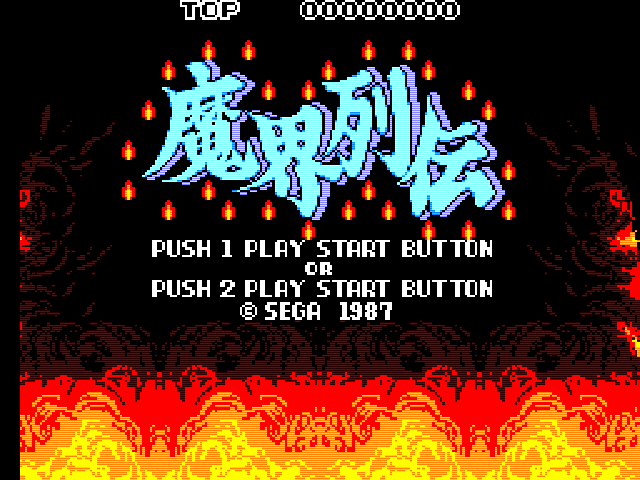
Years later I found out it was actually called Makai Retsuden (Demon World Story) in Japan and was a sequel to an SG1000 game called Dragon Wang(!). Thanks to eBay and Yahoo Auctions I now have my own copies of both, and it’s time for a write-up.
Dragon Wang (ドラゴン-ワン)
It turns out Sega were quite accurate in their translations, and the original game was named after Wang.
It came on the SG1000 card format
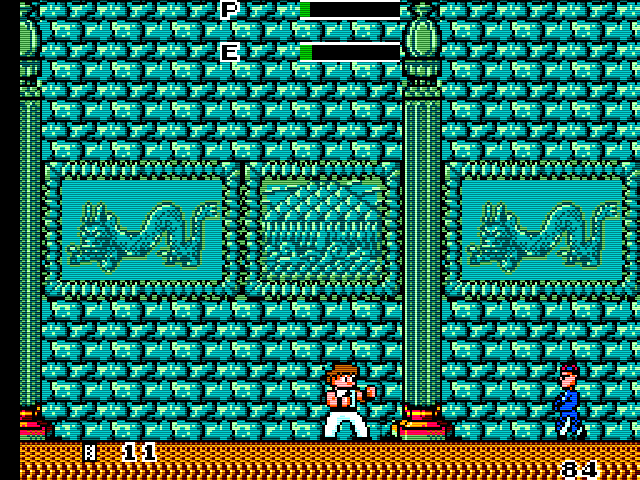
The title of Kung Fu Kid now makes more sense, as Dragon Wang is very much a straightforward clone of Irem’s Kung Fu Master, with a tower to climb, full of bad guys to kick. This format was itself based on the unfinished Bruce Lee movie Game of Death, hence ’Dragon’ in the title. As with most action games on the primitive SG1000 hardware, the graphics are quite simple, the scrolling is choppy, and it is very difficult to progress.
You fight through waves of regular bad guys, and on each level you pick a fight against a couple of bosses, like nunchucks guy here.
D-Wang…
It’s pretty limited and clunky, but it has a nice rhythm in the way bad guys attack, and can be fun in shorter bursts.
Makai Retsuden (魔界列伝)
I love it how the ‘Gold Cartridge’ is white…
While the original game was a pretty straightforward kung fu romp, For the Mark III sequel, Sega got weird, and it’s a ghost/zombie martial arts game. After saving the day in the first game, Wang could afford to relax and put a shirt on. But an ancient evil named Mandala has awoken and brought with him an undead army.
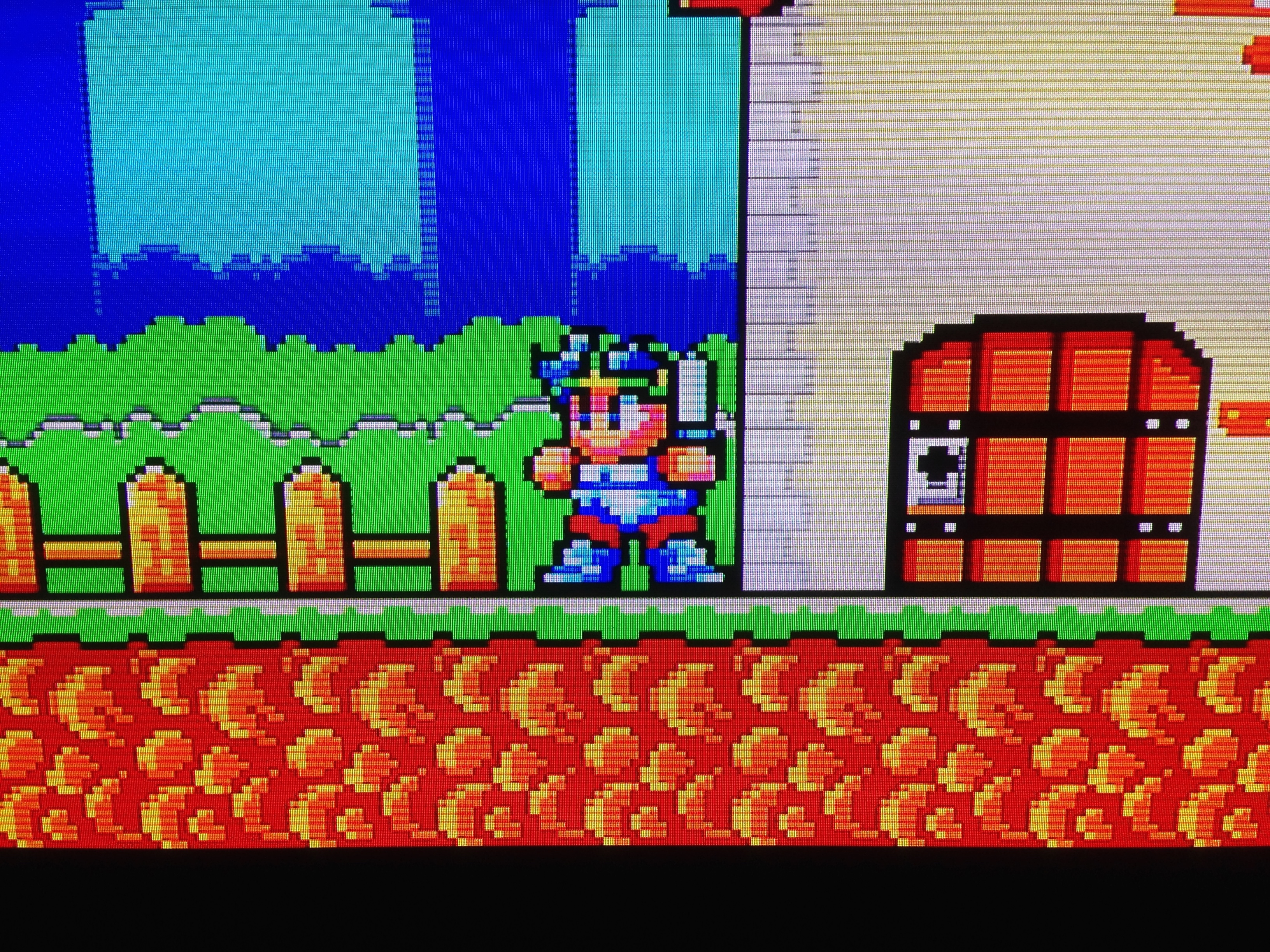
Instead of nunchuck guys, you now fight various Chinese-themed ghosts and zombies and possessed creatures. As a kid I missed all this and just thought it was standard Japanese weirdness, like a Mario game. The game was released in the wake of Mario, and you can see Nintendo’s influence here – jumping is now a much bigger part of the game. Wang has one of the highest jumps in 8-bit games.
The first two levels are straight left to right affairs, but after that it returns mostly to the more claustrophobic ’tower climb’ structure of the first game.
The graphics are great, the music catchy, the mechanics solid and fun, and like most Sega games of this era it’s a mean challenge. Overall a top Mark III effort.
It does have RGB out, using the same pinout as the Master System and Mega Drive.
Unfortunately, unlike later Sega consoles, it’s an unamplified signal. So while Master System and Mega Drive RGB cables fit, the picture comes out far too dark.
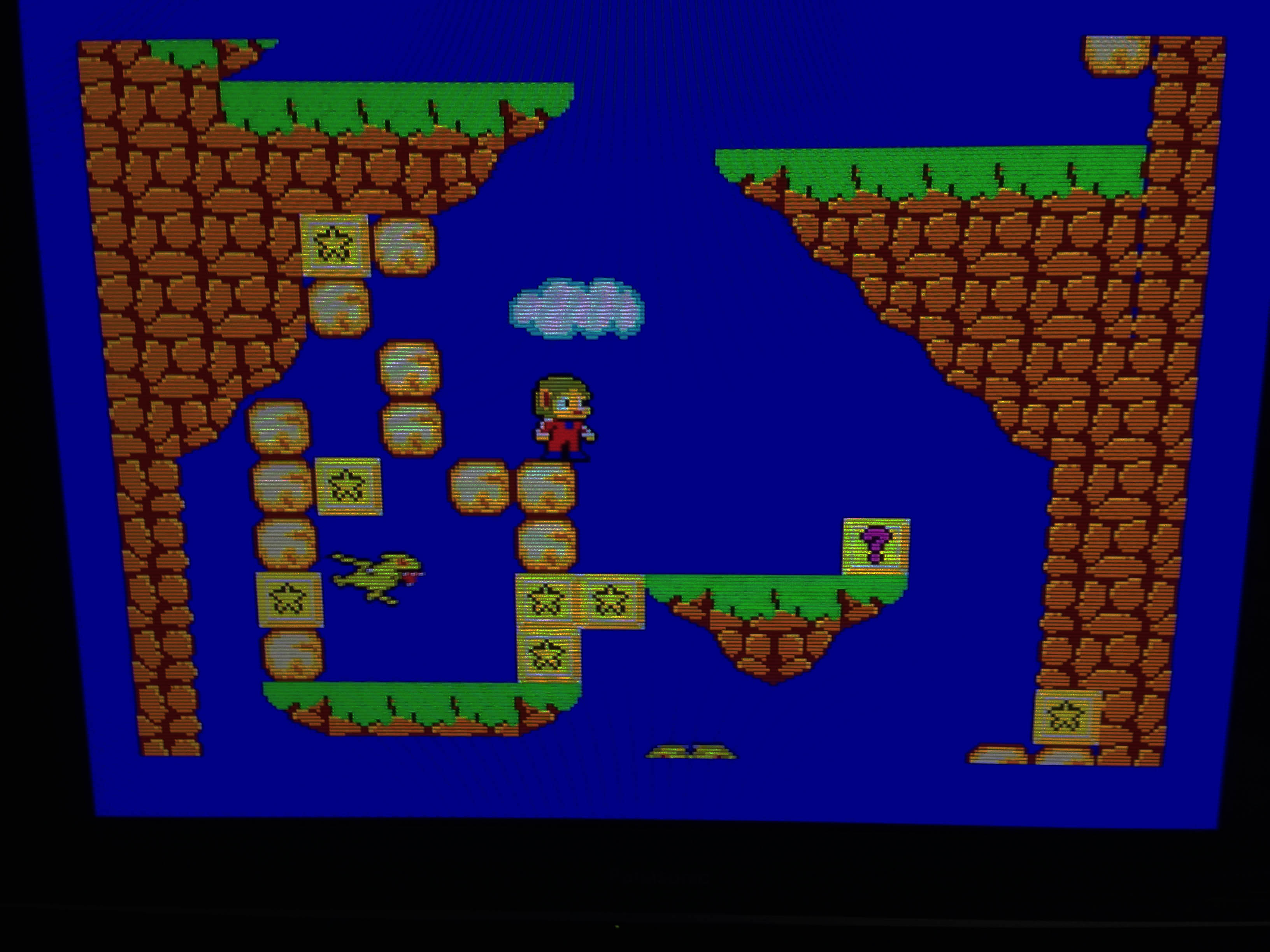
I didn’t grab a picture of the native RGB output, but it looks something like this:
Rather than tamper with the console internally, I had a theory I could use the 5V and ground pins of the output to power an external RGB amplifier. I grabbed a cheap RGB cable and did a quick and dirty splice in of a THS7314 based amplifier circuit (commonly used to RGB mod Nintendo 64s), powered and grounded by the console.
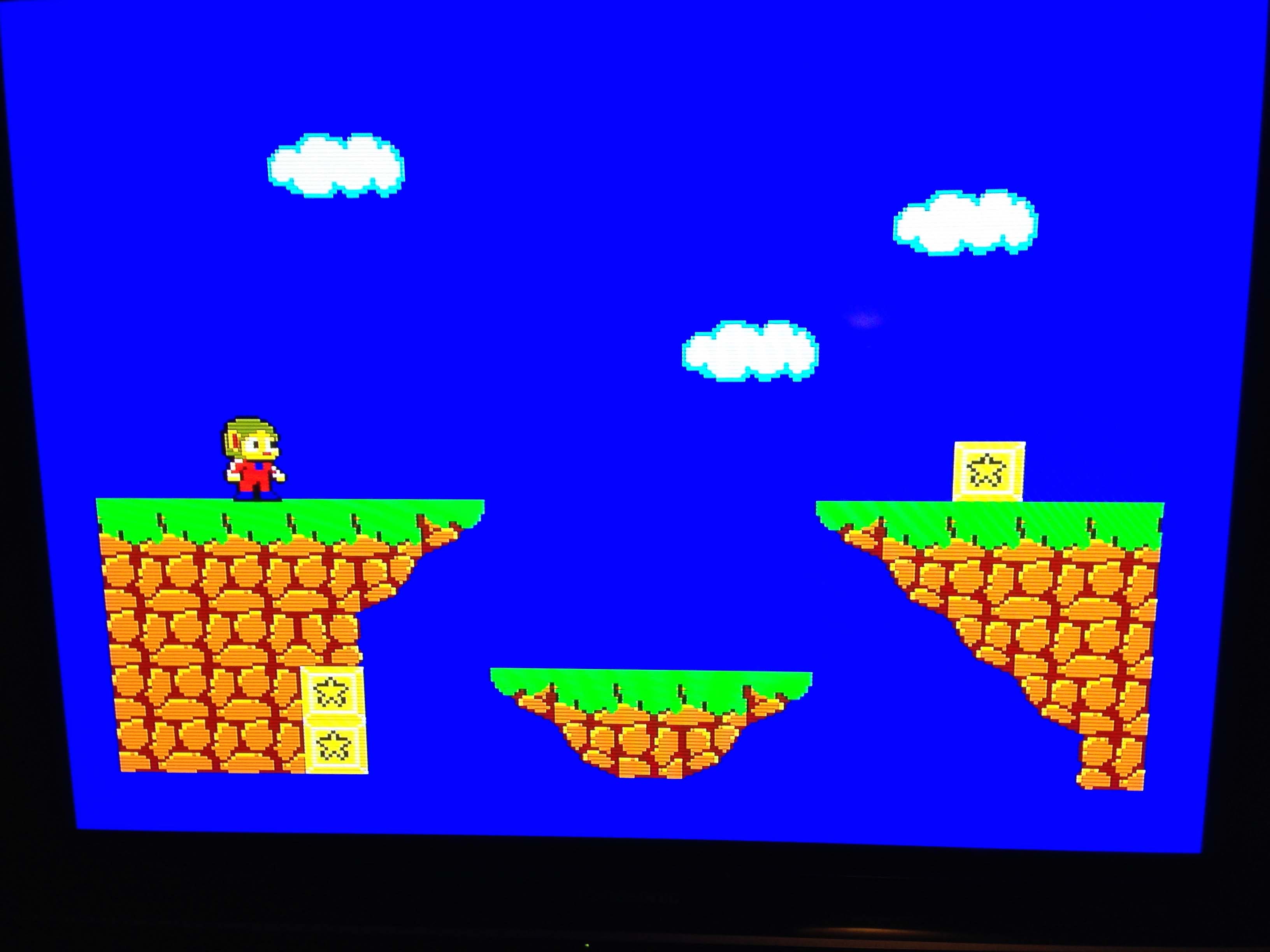
Success!
The only issue was that like many older Sega consoles, it has a weak sync signal, and on my XRGB Mini some sync dropouts occurred. I needed to boost the sync as well. I was feeling lazy so rather than do this myself, I ordered a Mega Drive RGB cable with boosted sync built into the scart plug. It is also powered by the 5V output of the console, but I’ll wire my amp in parallel and there should be plenty of current available.
An additional complication is that when using the FM unit, you only get composite video. You route video through the FM unit, which mixes in the FM audio when appropriate and outputs both video and audio from its own AV out. But it’s only a 5 pin din, so no RGB.
I did some quick tests, and due to the way the circuit of the FM unit is designed, you can tap the FM audio from both the input and the output. So I’ll be able to use the existing cable of the FM unit as my FM sound source.
Works perfectly! But doesn’t look too nice like that…
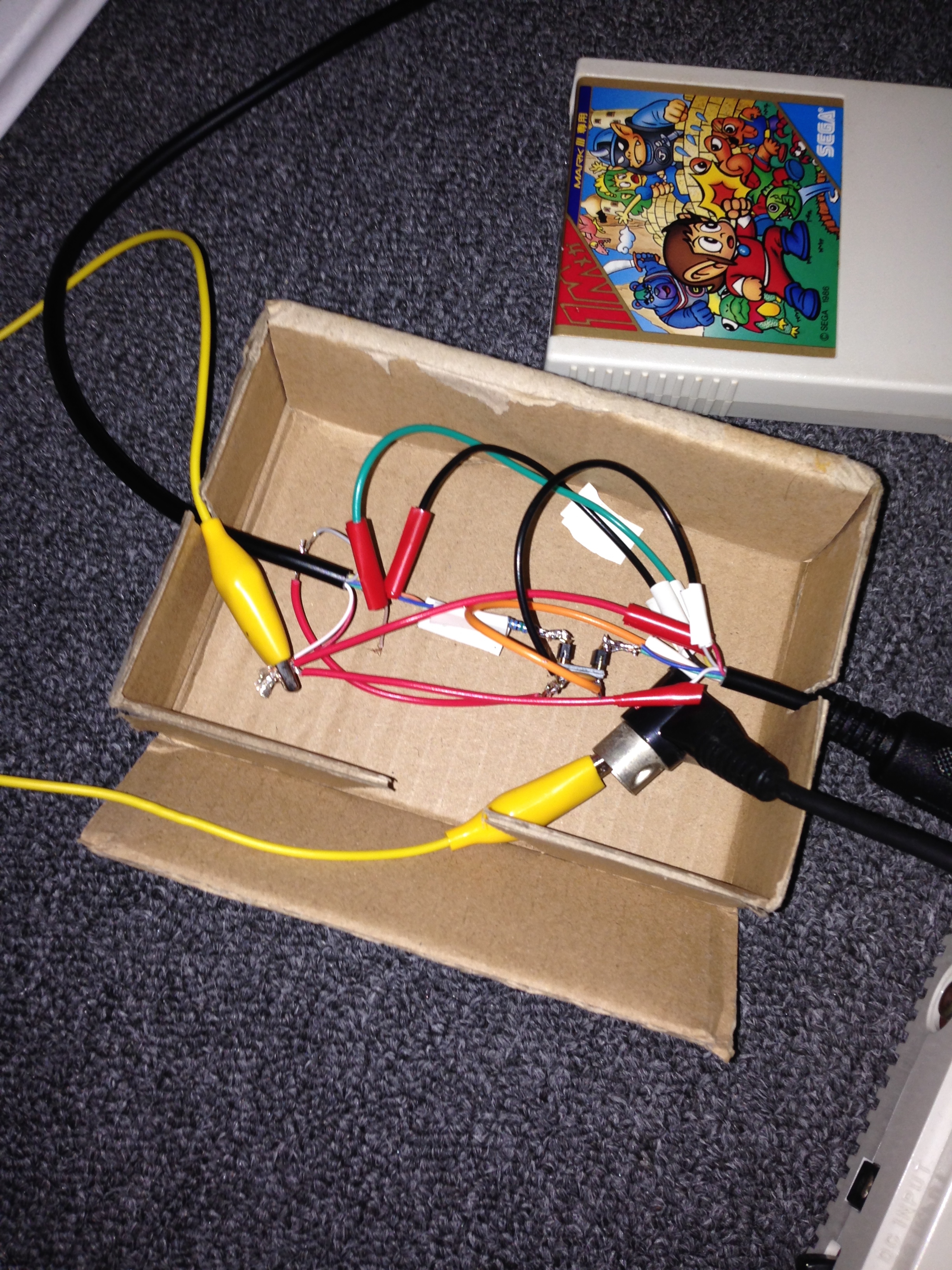
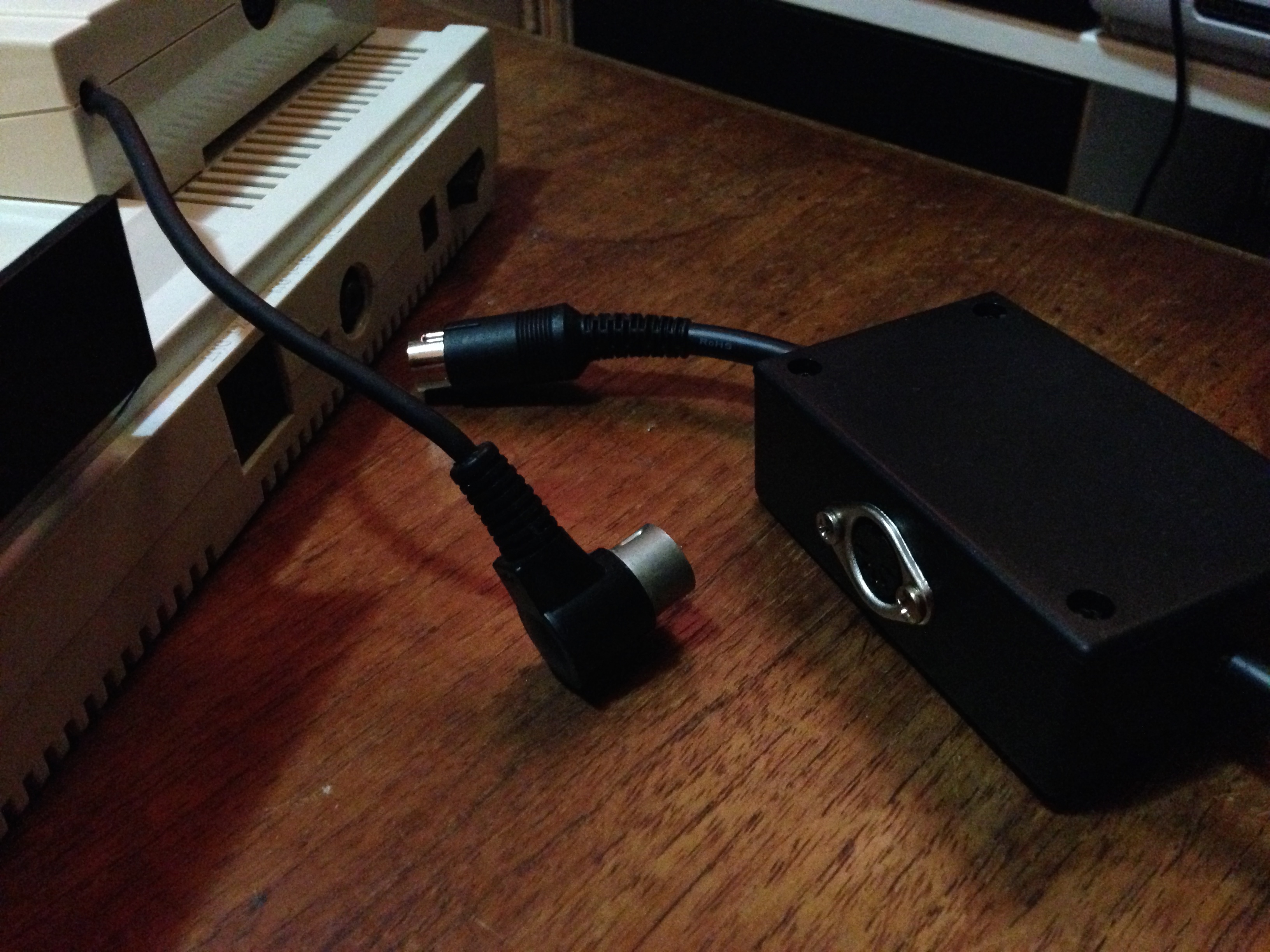
So now I have to get the whole thing into a little project box. I drilled the holes and sliced up my new (nicely shielded) RGB cable. In this pic you can see I’ve added a 5-pin DIN socket to one side, with four of the output pins removed. This is where I’ll splice in the FM audio.
So many wires to fit in. Red, blue, green, sync, 5V, audio… luckily most of the rest are ground, so I can just solder them together and connect them with a single wire. I could just leave them disconnected, but I want good grounding to prevent possible interference, which is common for poorly grounded scart cables.
With the video circuit working, I also lined up the wires and glued them in place, so nothing can be pulled out by the inevitable cord-trip that will happen sometime in the future.
Disaster struck just before I finished – the picture was too bright! It turned out my new scart cable was wired differently, and was missing some 25 ohm resistors on the RGB lines. So I pulled them from the old one and spliced them in carefully, in series with the 75 ohm resistors already built into my amp circuit. Now what was once a halfway neat job became a mess again, oh well.
I also completed the audio circuit, spliced in the FM audio pin of the din socket, and closed up the box.
It connects like so. I have oriented it toward the right of the console, because the power cable connects on the left.
And the results, all through an XRGB Mini to my Panasonic Plasma:
My preferred manner of playing Sega 8-bit games is on the original Sega Mark III. It’s just a great looking system, and with RGB and FM Audio I have a pretty nice set up. I wanted to reduce stress on the cartridge port to prolong its life, so a flash cart would be a good solution. Unfortunately there is no dedicated Mark III or SG1000 flash cartridge.
I needed to downgrade the firmware to version 5. It seems from version 6 and up, developer Krikz changed the video mode slightly, and the game select menu no longer works on a Mark III or other non-Master System hardware (e.g. a Game Gear in Game Gear mode via a modified converter).
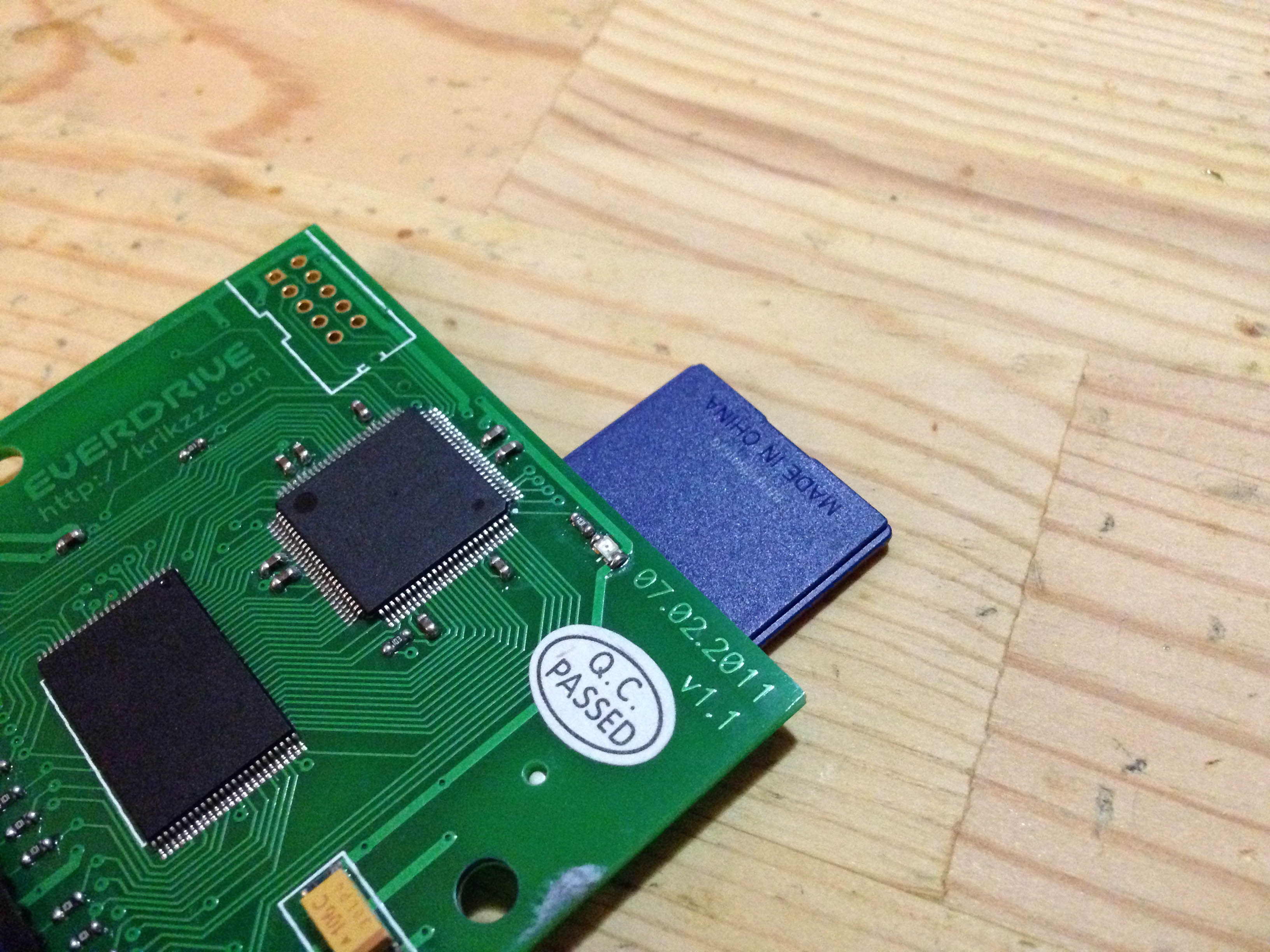
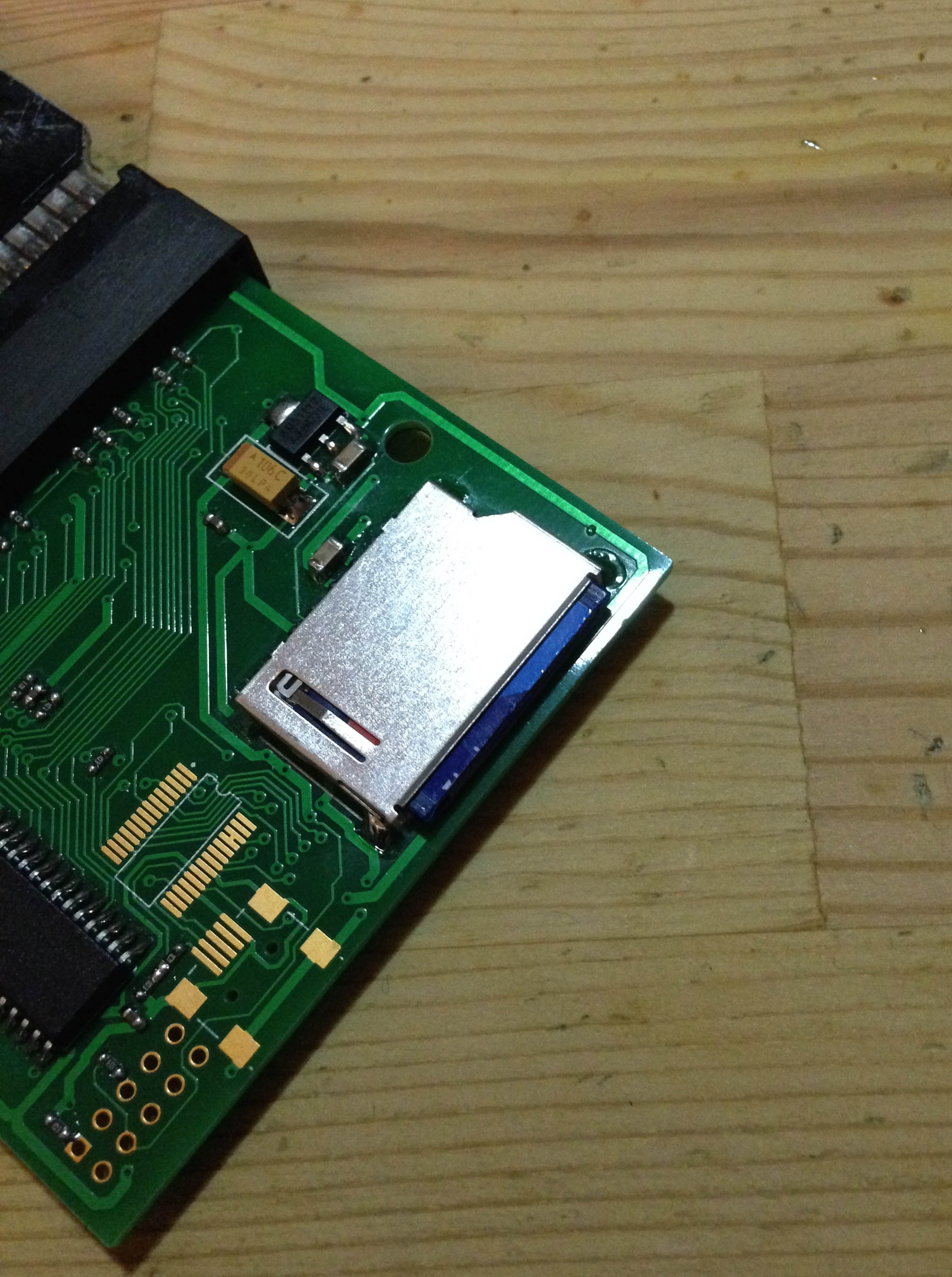
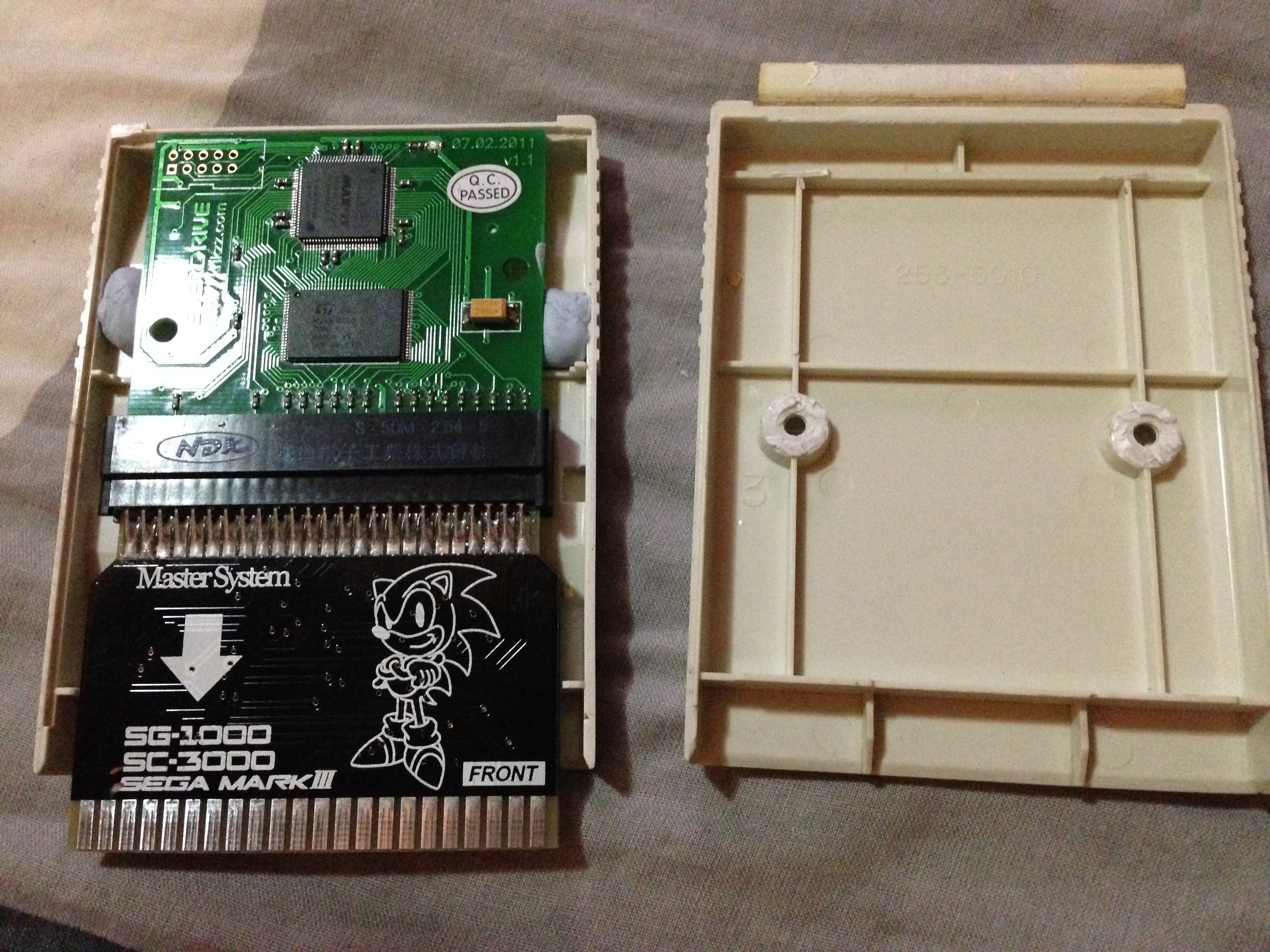
However, the combined cart/converter was a long way from fitting into a regular Mark III cartridge shell. First of all, the SD card sticks out.
I looked around for a micro sd card adapter that would work, but a couple I got didn’t fit, or were not low profile enough. Then I came across this. Many SD cards can simply be cut in half! Sure enough, the 2GB SD I was using was just empty plastic in the top 2/3, so I sliced off the excess plastic.
Now it sat well clear of the edge. This extra gap became very important later on, as I needed that extra few millimetres of clearance on the case.
Next I had to open up the shell I was going to use – a cheap copy of Space Harrier was my sacrificial lamb. To open Mark III carts you have to access some screws under the label, so I used a hairdryer to warm up the label glue, then a pin to start peeling the label.
It’s fairly easy this way, with no damage to the label or cart.
After getting inside, I sliced away all excess plastic, but the combined cart/converter was still sticking out the bottom of the shell quite a lot.
I gained a couple of millimetres by shaving down the top plastic rim
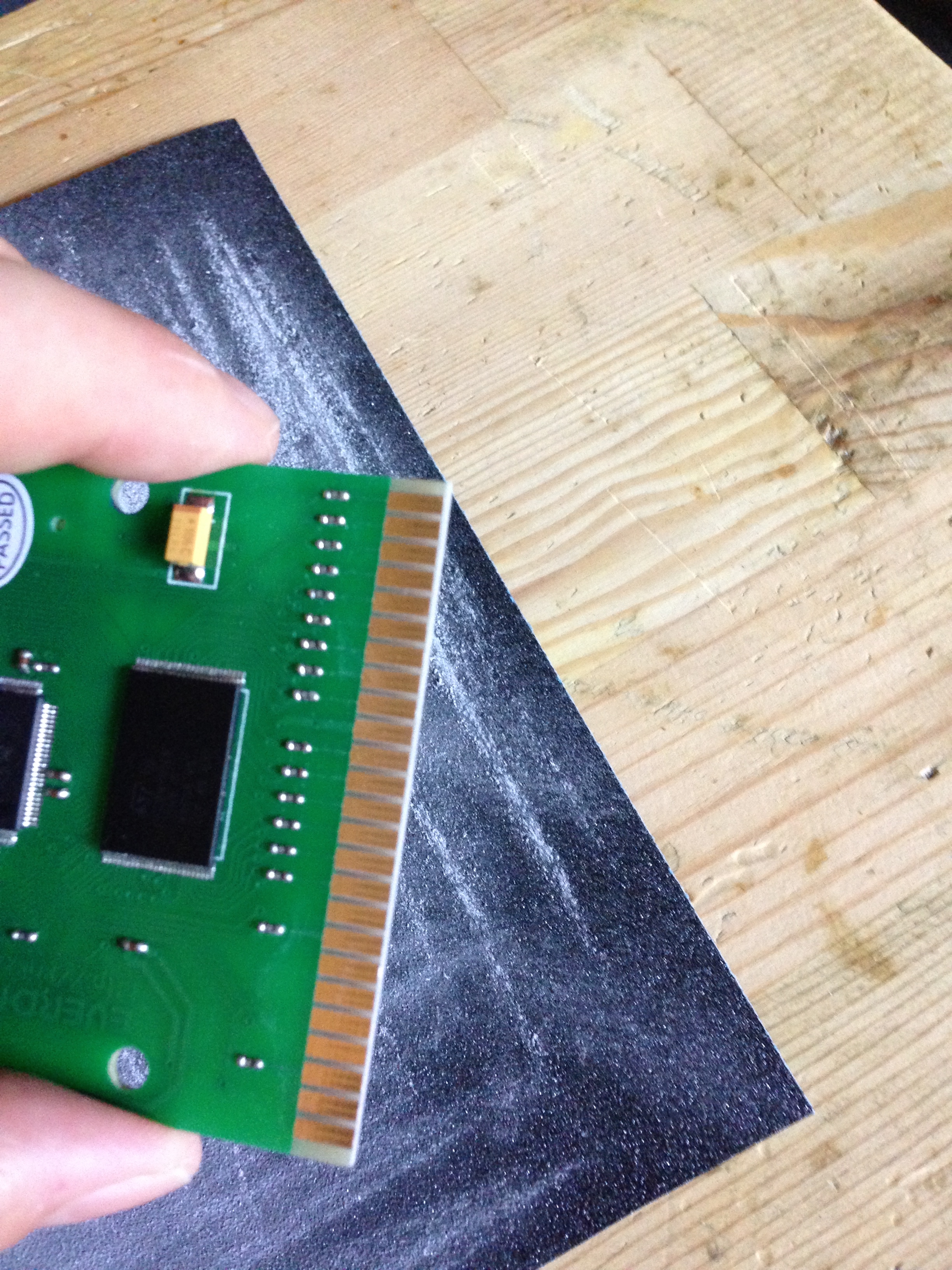
But the real gains would be had by filing/sanding back the contact pins on both the flash cart and the adapter. Contact pins are often far longer than they need to be, they really only need 1-2mm – just enough to make a solid connection. Wear and tear is much less of an issue than back in the day, as I won’t be inserting and removing the flash cart from the adapter ever again, and the cart itself will stay in the console most of the time. So I brought them down to about half their original height.
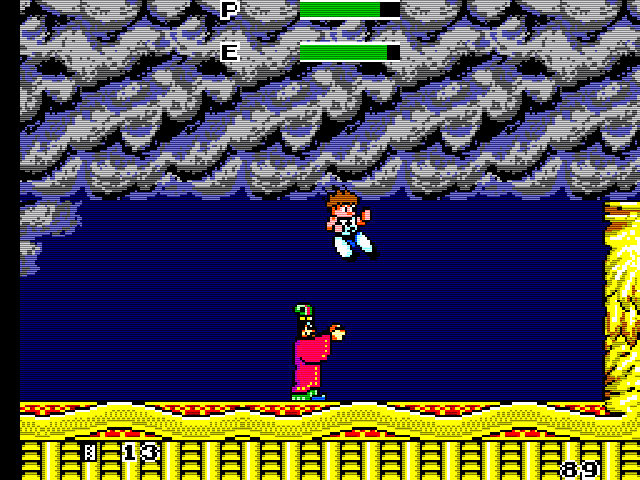
And now it’s going to sit just 3-4mm higher than a regular cart would! I could have gone further, but wasn’t going to push it too far and risk damaging the flash cart or adapter beyond repair.
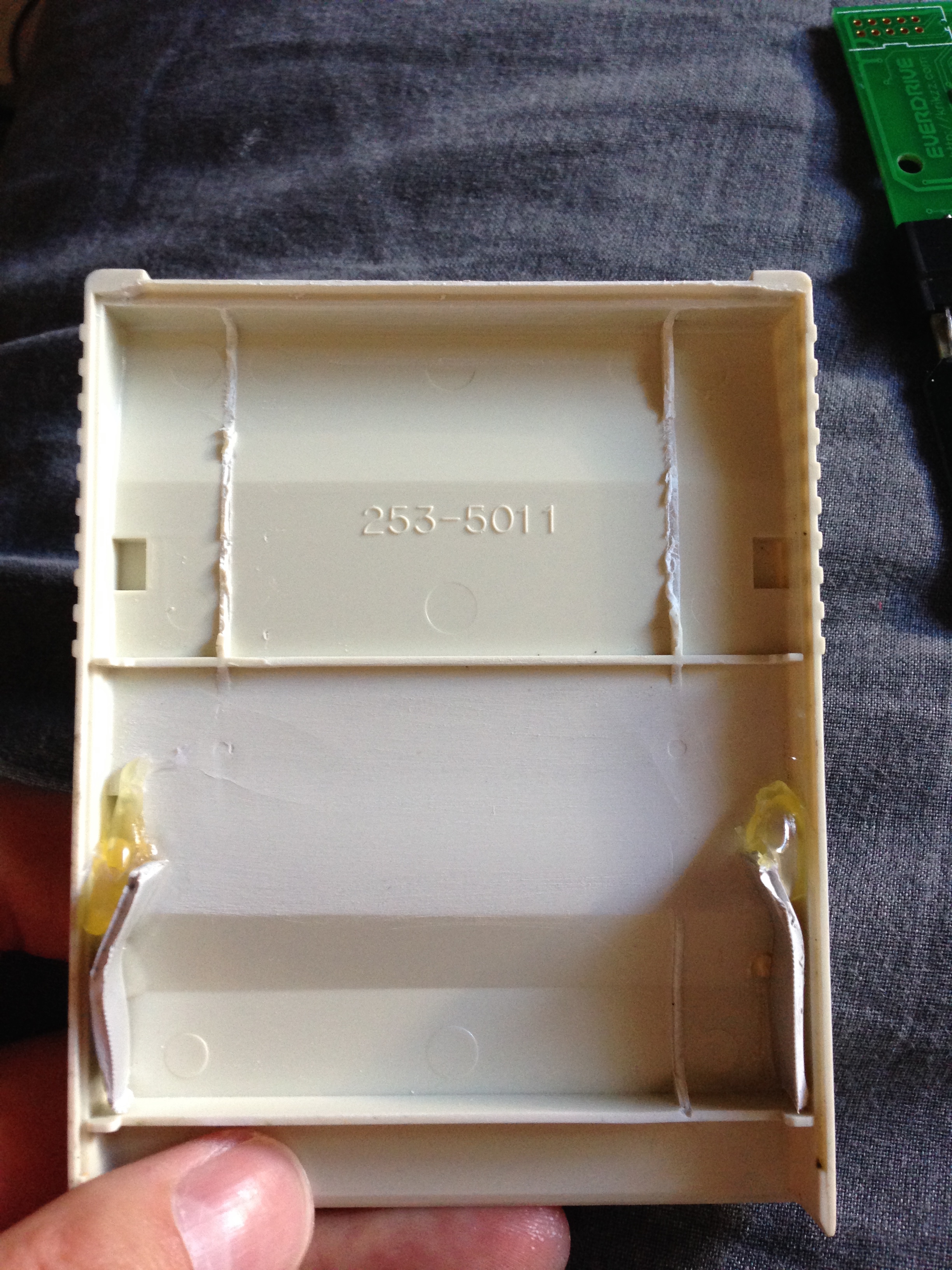
Next up I had to brace the combined cart inside the shell. I superglued some plastic that I cut to a shape that would hold the board well, braced them against the bottom of the cart shell, and backed it with hot glue for support from the sides.
It slots in under the adapter’s slot section, and holds flawlessly, so now I have a snug but secure brace for the board! The braces push slightly outward at the front, and combined with the label over the top, also keep the cart securely closed, so it needs no additional screws or glue with regular handling (it would probably open if dropped however).
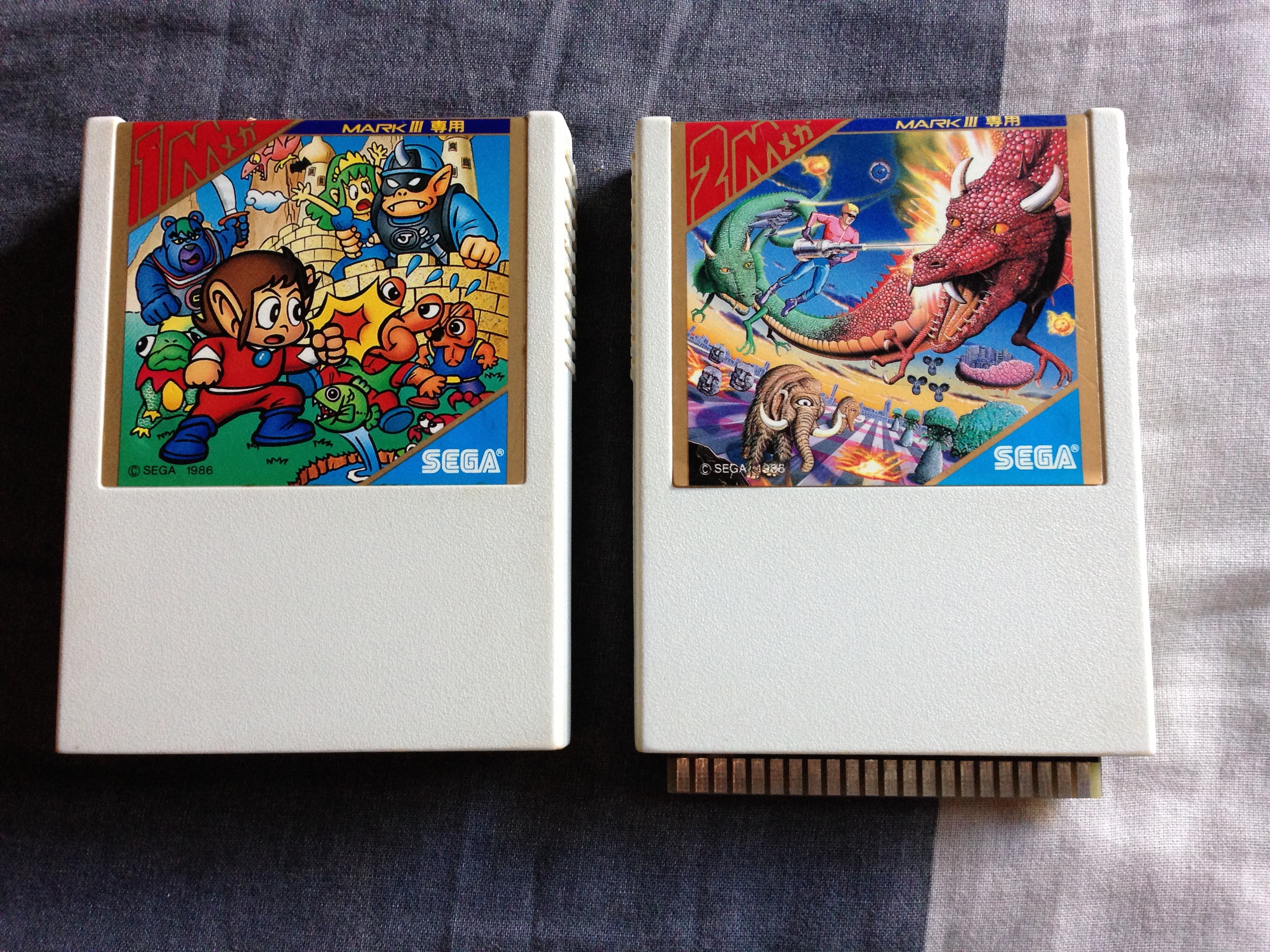
Close up the cart for the finished product! It sits slightly higher than a regular cart, but low enough to be quite stable within the cart slot, as it still sinks into the slot about 10mm. It sits lower than an unplugged cart resting on the cart slot, for example. At a glance you can’t even tell.
The LED when the everdrive loads shies through the explosion behind the dragon on the label too, which is nice.